美国的医疗体系堪称全球最昂贵的医疗体系,而未来其费用还将进一步上涨。接下来几周,约1.6亿通过雇主获得医疗保险的美国人将登录各自的福利门户网站,挑选2027年度的保险计划。即便是对医疗费用持续上涨习以为常的人,看到的结果恐怕也会大吃一惊:预计明年雇主提供的医疗保险费用将上涨8%至10%,这一涨幅为20多年来的最高水平,也是2010年代以来平均涨幅的两倍。
American healthcare, the priciest healthcare system in the world, is set to get even more expensive In the coming weeks, the roughly 160 million Americans who get health insurance through work willto their benefits portals and pick a plan for 2027. Even for people used to rising healthcare costs, what they see may come as a shock. Employer health plan costs are projected to rise 8 to 10% next year, the largest increase in more than 20 years and double the average increase of the 2010s.
此次费用飙升只是医疗成本与保险覆盖情况接连遭遇的三轮冲击中的第二轮。第一轮冲击发生在2026年1月,当时2430万名通过《平价医疗法案》设立的医疗保险市场购买保险的人发现,扣除政府补贴后的保费平均涨幅高达114%。第二轮冲击便是如今雇主提供的医疗保险费用的大幅上涨,这已是连续第三年出现如此大幅度的增长。第三轮冲击将于明年1月到来:届时医疗补助计划的相关工作申报要求将正式实施,据美国国会预算办公室预测,这一举措最终将导致近600万人失去医疗保险。
This spike is just the second in a series of three successive shocks to healthcare costs and coverage. The first came in January 2026, when the 24.3 million ACA Marketplace enrollees saw their after-subsidy premiums rise by an average of 114%. The second is the sharp increase in premiums and out-of-pocket costs for those who get insurance at work, the third year in a row of elevated increases. The third comes next January, when Medicaid work-reporting requirements take effect, which CBO projects will eventually push nearly 6 million people out of coverage.
历史经验表明,美国政治体系大约每代人就会尝试一次医疗改革。1945年,哈里·杜鲁门总统力推全民医疗保险;1965年,林登·约翰逊总统签署了《医疗保险法》与《医疗补助法》;1994年,比尔·克林顿总统也积极推动医疗改革;2010年,巴拉克·奥巴马总统促成了《平价医疗法案》的通过。鉴于医疗费用已然成为选民最关心的议题之一,这一系列冲击或许能为新一轮医疗改革创造良机。
History suggests that the American political system makes a bold attempt to reform healthcare about once a generation. President Harry Truman fought for national health insurance in 1945. President Lyndon B. Johnson signed Medicare and Medicaid into law in 1965.
在此期间,即将到来的医疗费用上涨将如何影响各类人群的保险支出呢?以下便是具体影响情况。
President Bill Clinton pushed for reform in 1994. And President Barack Obama passed the Affordable Care Act in 2010.
如果你自行购买医疗保险:此前通过2021年《美国救援计划法案》及2022年《通胀削减法案》得以延长的保费税收抵免政策,已于2025年12月31日到期。由于国会未能在《一项宏伟而美好的法案》中重新批准该政策,相关优惠措施就此终止。
With healthcare costs already among voters' top concerns, these shocks may create the next generational window for reform. In the meantime, here’s how the looming healthcare hike will impact insurance costs, wherever you get your coverage.
据KFF估算,这一决定导致补贴后的保费上涨了114%,即每年多出约1,000美元的开支。受此影响,部分民众退出保险市场,参保人数随之下降12%,从2,180万人减至1,920万人。新墨西哥州是唯一一个用本州资金取代联邦补贴的州,也是唯一一个参保人数有所增长的州。其他州的民众虽然转而选择保障程度较低的保险计划,但仍需支付更多费用。选择保障最少的“青铜级”保险计划的参保者比例从30%升至40%,平均免赔额也增加了1,000多美元,达到3,786美元。
If you buy your own insurance The enhanced premium tax credits were first passed in the 2021 American Rescue Plan Act pandemic relief bill, then extended in the 2022 Inflation Reduction Act. They expired on December 31, 2025, after Congress declined to renew them in the One Big Beautiful Bill Act (OBBBA). KFF estimates this decision raised after-subsidy premiums by 114%, or about $1,000 a year. In response, some people left the market and enrollment fell 12%, from 21.8 million to 19.2 million. New Mexico, the one state that replaced the federal subsidies with its own money, was the only state where enrollment grew.
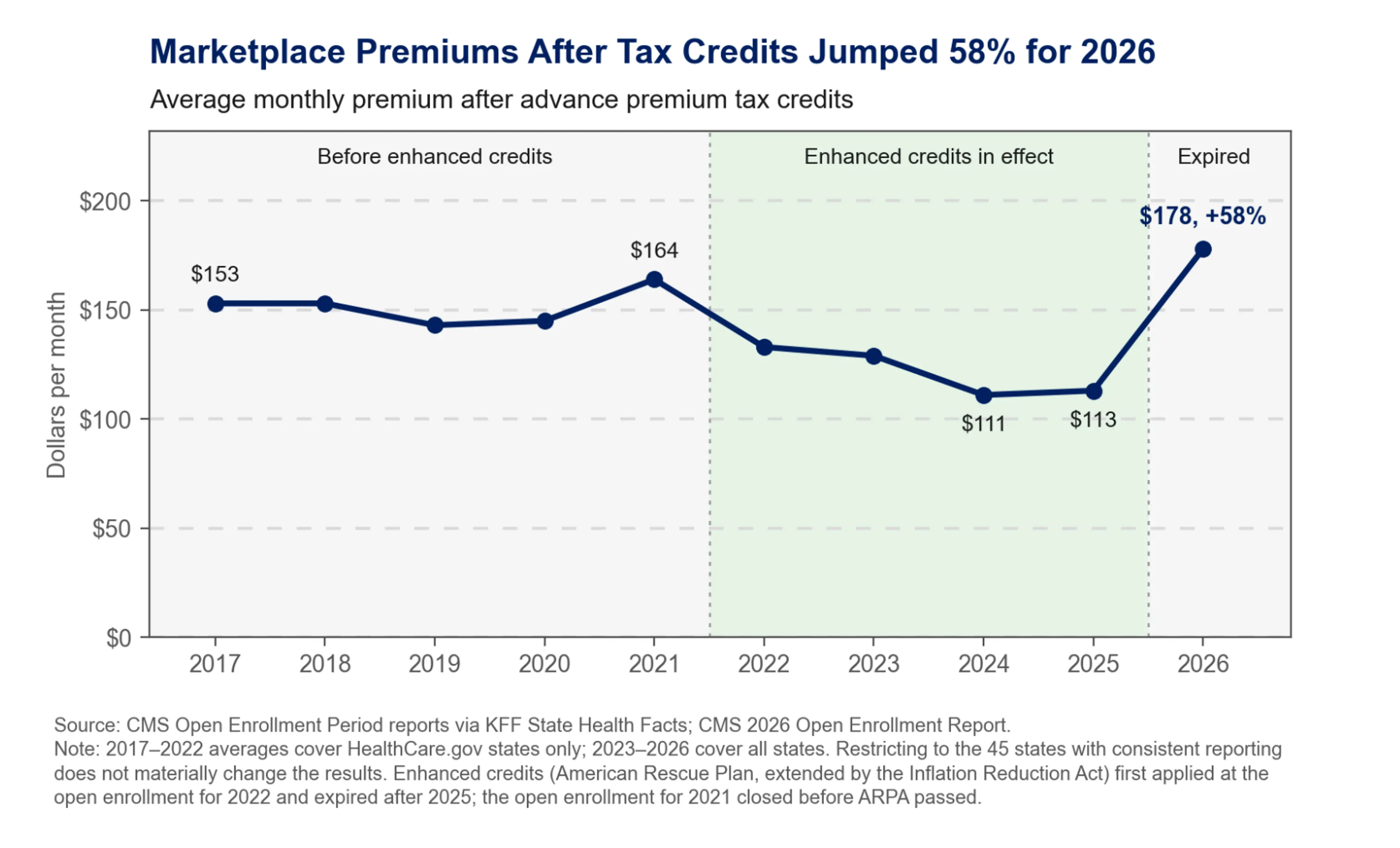
即便经历了大量人员退出或更换保险计划的情况,2026年保险市场上参保者的平均月保费仍达到178美元,较2025年高出58%,也高于2021年——即补贴政策实施前的水平(164美元)。选择退保的群体健康状况普遍优于留下来的参保者,因此保险公司提议2027年再上调15%的保费,这将在今年20%的涨幅基础上进一步增加负担。
Others traded down to skimpier plans, but still are paying more. The share of enrollees in the least generous bronze plans went from 30% to 40%, and the average deductible rose by more than $1,000 to $3,786.
约有1.6亿美国人通过雇主获得健康保险。大多数雇主会在10月或11月开启为期两至三周的投保期,所购保险自次年1月1日起生效。
Even after all that switching and leaving, the average premium paid by people on the Marketplaces hit $178 a month in 2026, 58% higher than in 2025 and above the $164 people paid in 2021, the last year before the enhanced credits. Those who left were healthier than those who stayed, so insurers have proposed another 15% increase for 2027, stacked on top of this year’s 20% If you get insurance through work About 160 million Americans get health insurance through an employer.
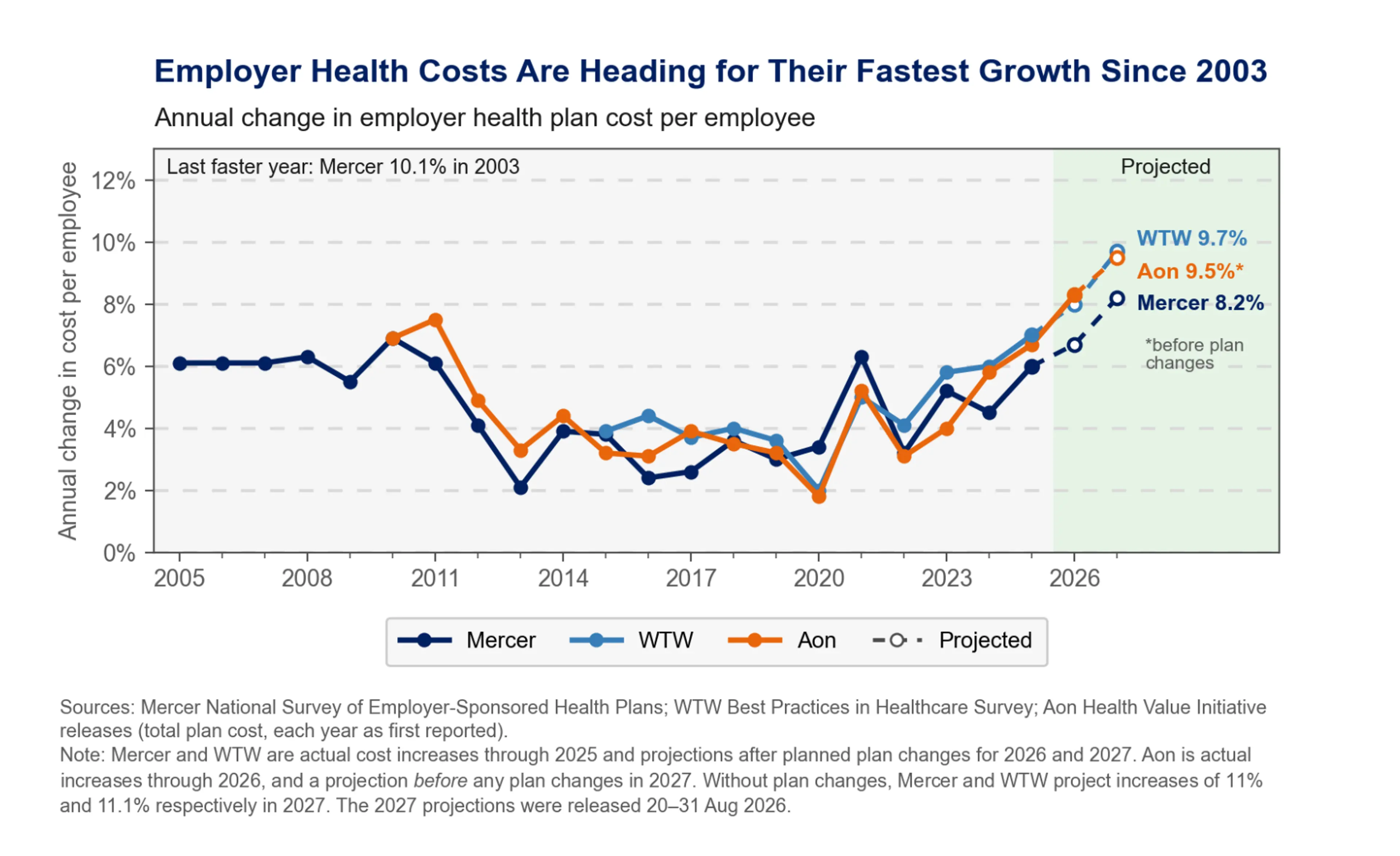
关于2027年的保险费用,目前最可靠的数据来自大型福利咨询公司。这些公司预测,明年整体保险成本将上涨8%至10%,这一涨幅为2003年以来最高,也是2010年代平均涨幅的两倍。他们指出,医疗需求增加、新型高价药物的使用、GLP-1类药物的普及、医院行业整合以及人工智能在计费流程中的应用都是导致成本上升的原因。对普通员工而言,这一涨幅意味着明年需多支付约400至500美元。
Most employers hold open enrollment for two or three weeks starting in October or November, for the plan year beginning Jan. 1. The best data we have on 2027 costs comes from the large benefits consulting firms. They project total costs will rise 8 to 10% next year, the largest increase since 2003 and double the average increase of the 2010s. These firms point to more use of care, expensive new drugs, GLP-1s, hospital consolidation, and AI-assisted billing.
上述预测数值为整体保险成本,包含了员工需缴纳的保费以及雇主承担的部分。现有数据显示,员工个人需支付的费用同样出现类似增长趋势。此外,经济学研究也表明,由于工资涨幅受限,员工实际上也在间接承担雇主应承担的保险费用。
For a typical worker, an increase that size works out to roughly $400 to $500 more next year. These projections are for total cost, which combines what workers pay in premium contributions and what employers pay. The available data on workers' costs show similar increases.
而且这些总数还低估了成本的全面上涨,因为许多雇主为了控制成本,已经制定了保障力度较低的计划。一个常见的变化是提高免赔额,这把成本转嫁给了工人。另一个变化是削减保障范围。例如,为肥胖症提供GLP-1药物报销的大型雇主比例已从72%降至60%。咨询公司估计,如果不算这些调整,成本还会再上升一个到三个百分点。
Moreover, economic research shows that workers also indirectly pay the employer share through smaller wage increases. And these totals understate the full cost increase, since many employers have made plans less generous to hold costs down. One common change is to raise deductibles, which shifts costs onto workers. Another is to cut back on what's covered. The share of large employers covering GLP-1s for obesity, for example, has fallen from 72% to 60%.
如果你参加了医疗白卡(Medicaid)第三个冲击波针对的是医疗白卡计划。从2027年1月1日起,OBBBA要求扩大医疗白卡的44个州(包括华盛顿特区),要求通过该扩面计划获得保障的成年人证明每月有80小时的工作、学校或社区服务时间。国会预算办公室(CBO)估计,到2034年,这项要求将把约570万人挤出医疗白卡计划,导致另外530万人失去医疗保险。
Remove those changes, and the consulting firms estimate costs would have climbed another one to three percentage points. If you’re on Medicaid The third shock is to the Medicaid program. Starting January 1, 2027, OBBBA requires the 44 states (including Washington, D.C.) that expanded Medicaid to require adults covered by the expansion to document 80 hours a month of work, school, or community service.
这些人中的大多数本不该失去保障。种种迹象表明,他们本来符合标准,却因为繁琐的官僚文书负担而失去了保障。阿肯色州在2018年实施工作要求时,就业率并未发生变化。相反,在七个月内,有1.8万多人失去了保障,尽管其中95%的人要么达到了工作要求,要么符合豁免条件。
The CBO estimates that the requirement will push about 5.7 million people off Medicaid by 2034, leaving 5.3 million more people uninsured. Most of those people should not lose coverage. The evidence suggests they will meet the criteria and lose coverage anyway because of the paperwork burden. When Arkansas imposed a work requirement in 2018, employment did not change.
工作要求并不是唯一的医疗白卡削减措施。OBBBA还要求将资格审查频率从每年一次改为每半年一次,缩短追溯保障期,并限制各州用于资助其分担费用的医疗服务提供者税。算上这些条款,国会预算办公室预计,到2034年将有750万人失去医疗保险。所有这一切都意味着我们正处于医疗成本大暴涨的风暴中心。今年1月,平价医疗法案交易市场上扣除补贴后的保费上涨了114%。
Instead, more than 18,000 people lost coverage within seven months, even though 95% either met the requirement or qualified for an exemption. The work requirement is not the only Medicaid cut. OBBBA also requires eligibility checks every six months instead of once a year, shortens retroactive coverage, and limits the provider taxes states use to fund their share of the program. Counting those provisions, CBO projects 7.5 million more people will be uninsured by 2034 All of this means we are in the middle of the great healthcare cost hike. In January, after-subsidy premiums on the Marketplaces rose 114%.
今年秋天,我们预计通过工作获得保险的1.6亿人将迎来一代人中最大幅度的保费上涨。明年1月,工作申报要求将开始把数百万民众挤出医疗白卡。这些冲击将使家庭预算捉襟见肘。
This fall, we expect the 160 million people who get insurance at work will see the largest increase in a generation. Next January, work-reporting requirements will start pushing millions of people off Medicaid. These shocks will strain family budgets.
他们还将创造一次跨代际的改革机遇。我们能做的最好的事情,就是抓住它。
They will also create a generational opportunity for reform. The best thing we can do is seize it.