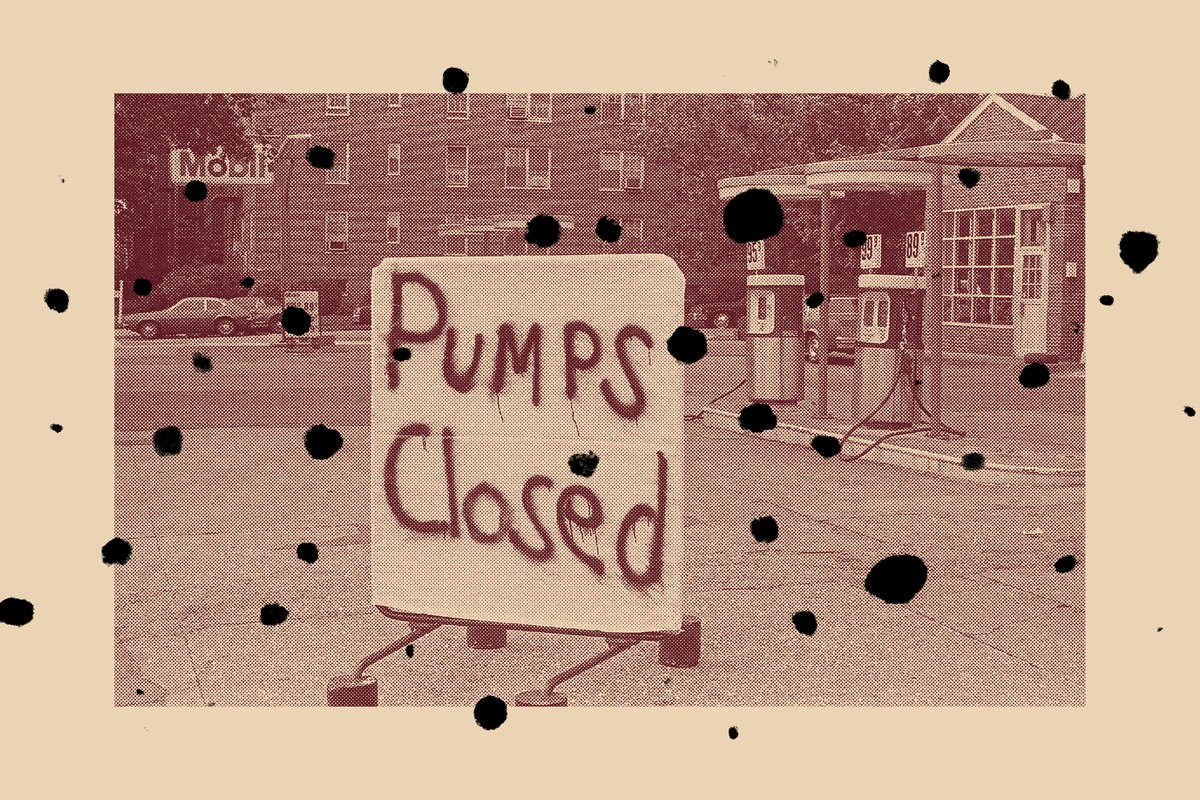
1987年,两位作家预测了一条实现能源独立、摆脱中东依赖的道路。但他们并未预料到,美国为了达成这一目标会采取怎样的行动。
In 1987, two writers predicted a path to energy independence from the Middle East. What they didn’t anticipate was what the U.S. would do to get there.
作者:Rafaela Jinich 1987年12月,《大西洋》杂志向读者带来了一些令人安心的消息:下一场石油危机未必会发生。
By Rafaela Jinich In December 1987, The Atlantic had some reassuring news for readers: The next oil crisis didn’t have to happen.
美国已经经历了20世纪70年代的石油冲击,而当时还是夫妻的环保主义者Amory B. Lovins和L. Hunter Lovins在这本杂志中认为,美国已经从那段经历中吸取了教训。美国已经实现了对海外石油来源的多样化,而且美国经济实现增长所需的石油量也在减少。洛温斯夫妇认为,这一转变主要得益于效率的提升,例如建筑保温性能更好、汽车燃油效率更高。
The United States had already endured the oil shocks of the 1970s, and Amory B. Lovins and L. Hunter Lovins, a pair of then-married environmentalists, argued in this magazine that the country had learned from the experience. The U.S. had diversified its sources of foreign oil, and the American economy needed less oil to grow, a shift that the Lovinses attributed mainly to efficiency gains, such as better-insulated buildings and more fuel-efficient cars.
非石油输出国组织(OPEC)国家的石油产量有所增长,从而降低了世界对波斯湾石油的依赖。即便是20世纪80年代两伊战争的冲突焦点——霍尔木兹海峡,似乎对全球石油供应的威胁也变小了。到1987年,通过该海峡运输的石油量已少于该十年早期的水平,而洛温斯夫妇相信,石油储备和替代路线能够帮助弥补地缘政治紧张局势可能引发的任何突然中断。
Oil production had grown outside OPEC, an organization of oil-exporting states, reducing the world’s reliance on Persian Gulf oil. Even the Strait of Hormuz, a flash point in the Iran-Iraq War of the ’80s, appeared less threatening to the global supply. By 1987, less oil was passing through the waterway than earlier in the decade, and the Lovinses believed that reserves and alternative routes could help make up for any sudden cutoffs caused by geopolitical tensions.
这一时刻为作者们所称的“独特机遇”提供了可能:全球石油供应暂时摆脱了中东的主导地位。“如果这段窗口期被白白浪费,”他们警告说,“最终可能导致美国在替代方案耗尽后,比以往任何时候都更加依赖中东石油。”近四十年后,美国对外国石油供应中断的脆弱性已大幅下降,但如今又陷入全球石油危机,霍尔木兹海峡再次成为焦点。
The moment offered what the writers called a “unique opportunity”: a reprieve from Middle Eastern dominance of the global oil supply. “If this interval is frittered away,” they warned, “it could end with the United States, its alternative options expired, needing Middle Eastern oil more than ever.”Nearly four decades later, America is far less vulnerable to foreign-oil disruptions, but it is once again caught in a global oil crisis, and the Strait of Hormuz is back at the center.
伊朗战争爆发前,全球约四分之一的海上石油运输需经过该海峡,这一日流量约为1987年的三倍。该水道实际上已被封锁,导致自2月以来全球石油库存减少了超过5亿桶,美国民众也感受到了影响——柴油、航空旅行、食品和其他商品的价格都在上涨。
Before the Iran war, about a quarter of the world’s maritime oil passed through the strait, roughly three times the daily volume that had passed through in 1987. The effective closure of the waterway has resulted in global oil inventories falling by more than 500 million barrels since February, and Americans are feeling the effects, as the costs of diesel, air travel, food, and other goods all rise.
不过,洛夫恩斯夫妇的担忧并未全部成为现实。与20世纪80年代相比,美国对外国石油的依赖已大幅下降;水平钻井和水力压裂技术的进步催生了页岩油繁荣,释放了大量国内石油资源,从21世纪初开始彻底改变了美国的能源市场。去年,美国原油产量达到创纪录的每日1360万桶,而波斯湾国家仅占美国原油进口量的8%。
But not all of the Lovinses’ worries have come to pass. America has become far less reliant on foreign oil than it was in the ’80s; the shale boom, precipitated by advances in horizontal drilling and hydraulic fracturing, unlocked large amounts of domestic oil, transforming the U.S. energy market beginning in the 2000s. Last year, American crude production reached a record 13.6 million barrels a day, and Persian Gulf countries supplied just 8 percent of U.S. crude imports.
与20世纪70年代相比,这一差异极为显著:1977年,更广泛的欧佩克国家曾供应美国85%的原油进口。正如我的同事罗热·卡尔马在三月份报道的那样,美国日益增长的能源独立性似乎说服了特朗普政府,使其在伊朗战争前相信美国能够承受波斯湾供应中断的影响。“我们从霍尔木兹海峡已经不再获得任何石油,”内政部长道格·伯格姆去年十月在捍卫美国当年早些时候对伊朗核设施发动打击的决定时说道。
The contrast with the 1970s is stark: In 1977, the broader group of OPEC countries supplied 85 percent of American crude-oil imports. As my colleague Rogé Karma reported in March, America’s growing energy independence appears to have helped convince the Trump administration ahead of the Iran war that the U.S. could withstand a disruption in the Persian Gulf. “We don’t get any oil anymore out of the Strait of Hormuz,” Interior Secretary Doug Burgum said last October, in defense of America’s decision to strike Iran’s nuclear facilities earlier that year.
洛夫恩斯夫妇曾设想过一条实现能源安全的不同路径。他们将这一路径称为“替代”:通过持续提高建筑和车辆的能源效率,减少整体对石油的需求,并用天然气或替代燃料取代石油。他们认为,提高效率可以为美国争取时间,使其摆脱对外国石油的依赖。美国最终确实实现了这一目标的大部分,但方式却是通过增加石油产量,而非减少消耗。
The Lovinses had imagined a different route to energy security. They called it “substitution”: reducing the need for oil overall by continuing to improve energy efficiency in buildings and vehicles, and replacing oil with natural gas or alternative fuels. They argued that efficiency could buy the country time to free itself from dependence on foreign oil. America ultimately achieved much of that goal, but by producing more oil rather than using less.
在1973年欧佩克实施石油禁运后,理查德·尼克松总统启动了“独立计划”,旨在减少美国对外国石油的依赖。国会通过了新的节能措施,吉米·卡特则将减少能源消耗作为其总统任期的核心议题,同时开始放松对石油价格的联邦管制,以释放更多国内产量。1979年,卡特甚至承诺,美国绝不会再“使用的国外石油”超过1977年的水平。
After OPEC’s 1973 oil embargo, President Richard Nixon launched “Project Independence” with the goal of reducing the country’s reliance on foreign oil. Congress adopted new conservation measures, and Jimmy Carter made reducing energy consumption a centerpiece of his presidency, while also beginning to lift federal controls on oil prices to free up more domestic production. In 1979, Carter went so far as to promise that the country would never again “use more foreign oil” than it had in 1977.
就任总统几天后,罗纳德·里根总统便取消了石油价格上剩余的联邦管制。这一策略似乎奏效了:到20世纪80年代初,美国的石油消耗量已降至十多年来最低水平。
Days after taking office, President Ronald Reagan eliminated the remaining federal controls on oil prices. The approach appeared to be working: By the early 1980s, U.S. oil consumption had fallen to its lowest level in more than a decade.
然而,推动节能的条件很快发生了变化。石油需求减弱和供应增长导致市场出现过剩,1986年油价因此暴跌。随着石油价格下跌,节能的经济压力也随之减弱,过去十年取得的效率提升也开始停滞。政治策略也在发生转变。里根政府大幅削减了联邦节能研究经费,这是20世纪80年代政府主导能源计划全面收缩的一部分。
But the conditions that encouraged conservation soon changed. Weaker oil demand and growing supply contributed to a glut that sent oil prices plunging in 1986. As oil became cheaper, the economic pressure to conserve diminished, and the efficiency gains of the previous decade began to level off. The political approach was changing too. Reagan’s administration sought deep cuts to federal conservation research, part of a broader retreat from government-led energy programs during the 1980s.
能源节约从来都不是这个国家应对石油冲击的唯一方案。决策者同时试图提高国内产量并实现能源供应的多样化。1979年,卡特主张,这个国家既需要“更多生产”,也需要“更多节约”。但最终真正延续下来的,并非让国家摆脱对石油依赖的雄心,而是使美国对外国供应方依赖程度降低这一目标。
Conservation had never been the country’s only answer to the oil shocks. Policy makers were simultaneously trying to increase domestic production and diversify the country’s energy supply. Carter argued in 1979 that the country needed to “produce more” as well as “conserve more.”What ultimately endured was not the ambition to wean the country off oil, but the goal of making America less vulnerable to foreign suppliers.
4月,我的同事伊德里斯·卡伦写道,这个国家已经处于一个能够向其他国家施加能源“冲击”而自身却感受不到太多痛苦的位置,但美国人并未免受国际石油短缺的影响。无论原油来自何处,汽油价格仍会随着全球油价上涨。与此同时,那些更依赖海湾地区能源的国家则承受了更多动荡带来的影响。通过霍尔木兹海峡的原油大多运往亚洲,而非美国。菲律宾因能源短缺宣布进入紧急状态,日本面临更高的石油成本,而欧洲国家则因天然气运输中断导致价格飙升。
In April, my colleague Idrees Kahloon wrote that the country is at a point where it can administer energy “shocks to other countries without feeling much pain itself,” but Americans have not been spared the effects of an international oil shortage. Gasoline prices still rise with global oil prices, regardless of where the crude comes from. Countries that are more dependent on Gulf energy, meanwhile, have borne more of the disruption. Most of the crude oil passing through Hormuz was headed to Asia, not the United States. The Philippines declared a state of emergency in response to energy shortages, Japan faced higher oil costs, and European countries saw disruptions to natural-gas shipments push prices up.
这并非洛夫因斯夫妇所设想的未来,但也不是他们所担忧的未来。他们明白20世纪80年代的平静只是暂时的喘息,而非问题的最终解决。四十年后,美国已从20世纪70年代的危机中崛起,成为世界最大的石油生产国,对中东的依赖大幅降低,但仍离不开燃料本身。美国或许不再像以前那样容易受到国外动荡的影响,但只要石油仍在全球市场交易,这个国家就无法完全隔绝于国界之外发生的一切。
This is not quite the future the Lovinses imagined, but neither is it the one they feared. They understood the calm of the 1980s as a reprieve, not a resolution. Four decades later, the United States has emerged from the crises of the ’70s as the world’s largest oil producer, far less dependent on the Middle East but still dependent on fuel itself. America may not be as vulnerable to disruptions abroad, but as long as oil is traded on a global market, the country cannot fully insulate itself from what happens beyond its borders.