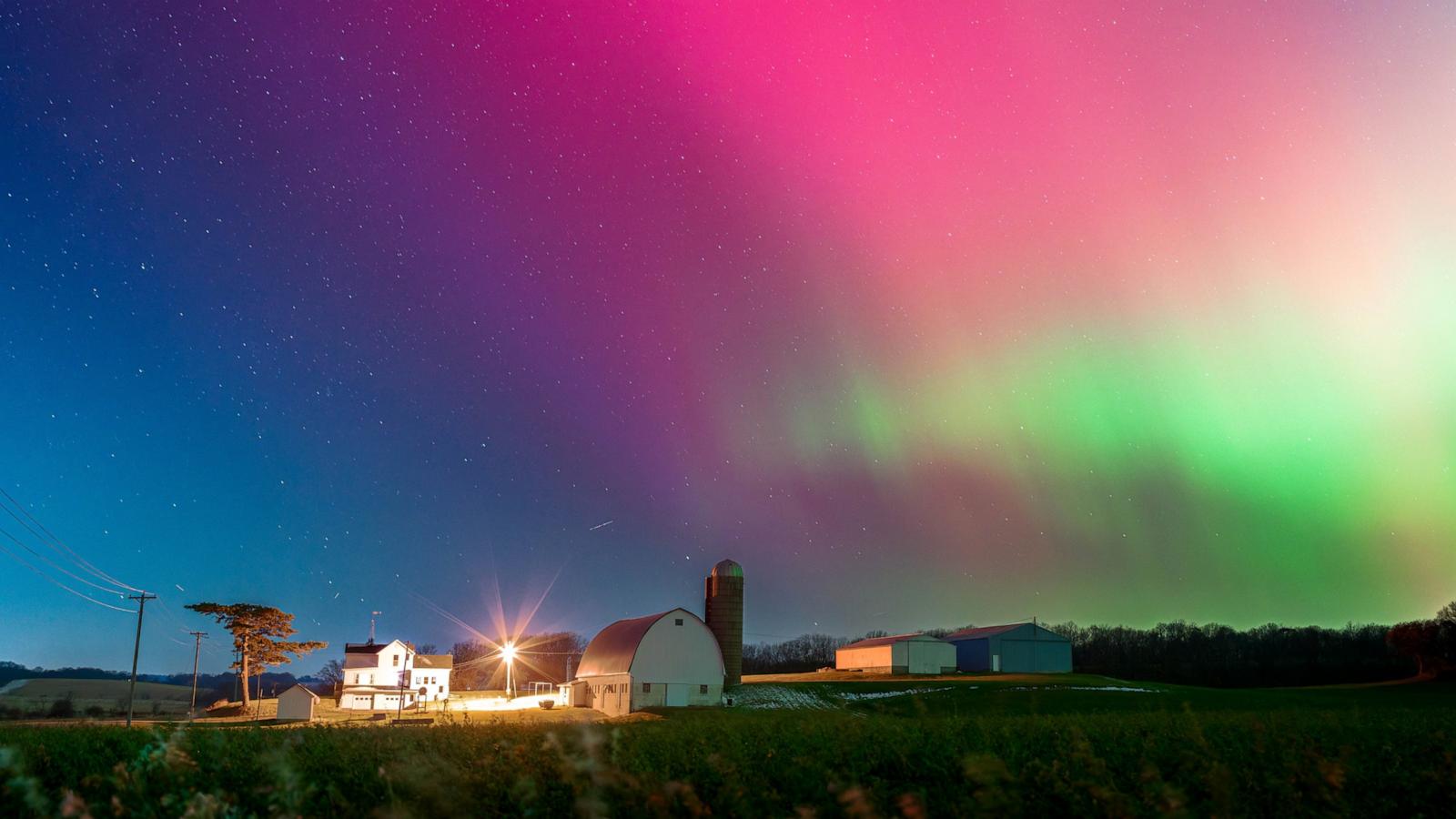
多次太阳爆发可能从今晚开始在美国北部引发极光。此次喷发与一次中等强度的太阳耀斑有关。
Multiple solar eruptions could spark auroras across the northern US starting tonight The ejection is associated with a moderate solar flare.
太阳最近相当活跃,对于美国北部和中西部上游一些州的极光观测者来说,10月9日(周四)夜间至10月10日(周五)早晨,增强的太阳活动可能让他们有机会一睹那著名的绚丽天空。
It's been a busy week for the sun, and aurora watchers in some northern and upper Midwest states looking for a glimpse of the famed colorful sky could benefit from enhanced solar activity Thursday night into Friday morning, Oct. 9.
周二,一次日冕物质抛射(CME)——即大量嵌入磁场中的带电粒子猛烈喷发——离开太阳,正朝地球飞来。
On Tuesday, a coronal mass ejection (CME), a massive burst of charged particles embedded in a magnetic field, departed the sun bound for Earth.
美国国家海洋和大气管理局(NOAA)的空间天气预报中心(SWPC)已发布中等强度地磁暴预警,从周四傍晚持续到周五,这是此次日冕物质抛射的结果。
The National Oceanic and Atmospheric Administration's Space Weather Prediction Center (SWPC) has issued a moderate Geomagnetic Storm Watch beginning Thursday evening into Friday, as a result of the CME.
据NOAA称,地磁暴是“地球磁层的一种重大扰动,当太阳风与地球周围空间环境之间发生高效能量交换时就会出现”。该机构表示,大部分活动将是轻微的,但也可能出现中等强度的风暴活动。英国气象局表示,甚至有小概率出现强G3级别。
According to NOAA, a geomagnetic storm is "a major disturbance of Earth's magnetosphere that occurs when there is a very efficient exchange of energy from the solar wind into the space environment surrounding Earth." While the agency says much of the activity will be minor, there could be periods of moderate storm activity. The UK Met Office says there's even a slight chance of strong G3 levels.
SWPC表示,此次太阳活动可能对我们的技术基础设施造成轻微影响,但“总体可控”。好的一面是,当太阳的带电粒子撞击地球大气层时,夜空中出现的北极光可能会在通常看不到它的地区显现。
The SWPC says the solar activity could create minor impacts to our technological infrastructure, but it's "mainly manageable." On the bright side, the aurora borealis, which appears in the night sky when electrically charged particles from the sun hit Earth's atmosphere, could be visible in areas that don't normally experience it.
“极光可能出现在纽约、威斯康星州到华盛顿州等低纬度地区,”SWPC在其警报中表示。
"Aurora may be seen as low as New York to Wisconsin to Washington state," SWPC said in its alert.
另一次与较小太阳耀斑相关的日冕物质抛射也正朝地球飞来,但据英国气象局称,预计只会在周末带来“擦边球”式的影响。
Another CME linked to a smaller solar flare is also headed toward Earth but is only expected to deliver a "glancing blow" over the weekend, according to the UK Met Office.
未来几天,这些太阳天气将让地磁条件保持不稳定到活跃状态。但你是否能看到极光,取决于日冕物质抛射到达的确切时间、云层覆盖情况以及日冕物质抛射磁场的磁方向。当地磁活动增强时,极光有时会比平时出现在更靠南的地方。
All this solar weather will keep conditions unsettled to active over the next few days. But whether you'll be able to see the auroras depends on exactly when the CME arrives, the cloud cover and the magnetic orientation of the CME's magnetic field. When geomagnetic activity becomes stronger, the aurora can sometimes be seen farther south than usual.