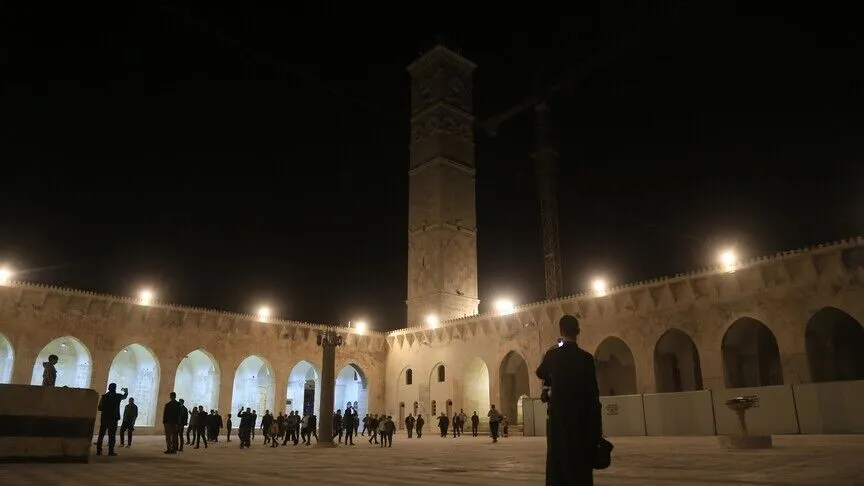
周四,叙利亚重新开放了位于北部城市阿勒颇的历史悠久的大倭马亚清真寺。该清真寺在叙利亚内战期间遭到严重破坏,因此自13年前起便停止使用。
Syria reopened the historic Great Umayyad Mosque in the northern city of Aleppo on Thursday, 13 years after it was taken out of service following extensive damage during the country's civil war.
据叙利亚官方电视台报道,阿勒颇省省长阿扎姆·加里布出席了重新开放仪式。加里布表示:“今天,我们很荣幸能重新开放这座真主的殿堂,让阿勒颇的大清真寺在历经多年破坏后重获新生。”
Aleppo Governor Azzam al-Gharib attended the reopening ceremony, according to state-run Alikhbariah TV. “Today, we are honored to reopen one of the houses of God, restoring Aleppo's great mosque after difficult years in which it was subjected to destruction,” al-Gharib said.
这座清真寺建于倭马亚王朝时期,几个世纪以来一直是这座历史名城的学术与宗教活动中心。省长还提到,在2011年3月开始的叙利亚抗议运动中,反对前政权的示威活动也正是在此发起。
He said the mosque, dating to the Umayyad era, had for centuries served as a center of learning and religious life in the historic city. The governor also recalled the mosque's role during the Syrian uprising that began in March 2011, saying demonstrations against the former regime had emerged from the site.
2012年至2016年间,前政权军队与反对派武装在此地展开了激烈交战,导致清真寺及其周边区域多次易主。2013年,由于战火与炮击造成圆顶、拱廊及历史悠久的宣礼塔严重受损,清真寺被迫关闭。
The mosque and its surroundings witnessed intense fighting between former regime forces and opposition factions from 2012 to 2016, repeatedly changing hands. It was taken out of service in 2013 after suffering extensive damage, including to its dome, arcades and historic minaret, during fighting and bombardment.
2024年12月8日巴沙尔·阿萨德政权倒台后,阿勒颇宗教基金管理局随即启动了修复工程,旨在保护该清真寺的建筑与历史价值。
Following the fall of the Bashar Assad regime on Dec. 8, 2024, Aleppo's Endowments Directorate began restoration work aimed at preserving the mosque's architectural and historical character.
大倭马亚清真寺又被称为阿勒颇大清真寺,是叙利亚最古老且最具重要意义的清真寺之一。其建造历史可追溯至8世纪初的倭马亚王朝时期,多数史料记载该寺由哈里发苏莱曼·伊本·阿卜杜勒-马利克下令修建。
The Great Umayyad Mosque, also known as the Great Mosque of Aleppo, is one of Syria's oldest and most significant mosques. Its construction dates to the Umayyad period in the early eighth century, with most historical accounts attributing its establishment to Caliph Sulayman ibn Abd al-Malik.