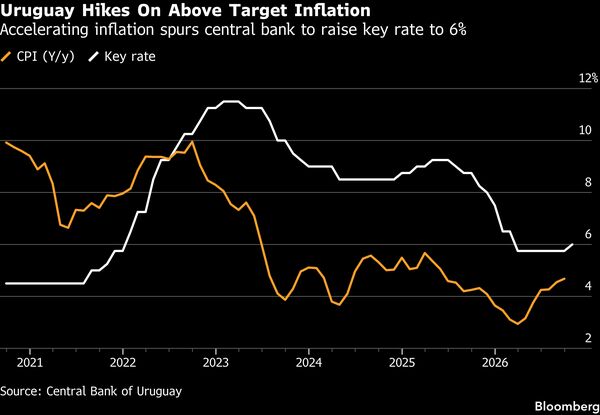
乌拉圭中央银行将基准利率上调了25个基点至6%,以在经历两个月的通胀超标后,稳定消费者价格预期。
Uruguay’s central bank raised its benchmark interest rate by a quarter-point to 6% to keep consumer price expectations anchored after two months of above target inflation.
周四的决定标志着自2025年4月货币当局因消费价格回升而加息25个基点以来的首次借贷成本上调。这一举措在很大程度上符合分析人士的预期。
The Thursday decision marked the first increase in borrowing costs since April 2025, when the monetary authority tightened by a quarter-point following an uptick in consumer prices. The move was widely expected by analysts.
在3月触及70年来的低点后,受食品价格上涨推动,9月份通胀率加速升至近4.7%的16个月高点。央行的通胀目标为4.5%,容忍区间为正负1.5个百分点。
After reaching a 70-year low in March, inflation accelerated to a 16-month high of nearly 4.7% in September on higher food prices. The central bank targets 4.5% inflation with a tolerance range of plus or minus 1.5 percentage points.
决策者认为,通胀将暂时保持在目标之上,但仍处于容忍区间内,随后将在央行24个月的政策期限内向目标收敛。
Policymakers see inflation temporarily remaining above target but within the tolerance range before converging to the goal within the central bank’s 24-month policy horizon.
决策者在一份声明中表示,此次加息“并不是为了逆转能源和食品价格暂时上涨的直接影响,而是为了采取积极主动的措施,限制其持续性,防止其蔓延至其他价格和通胀预期”。
The rate hike “isn’t intended to reverse the direct impact of temporary increases in energy and food prices, but rather to act proactively to limit their persistence and prevent them from spilling over into other prices and inflation expectations,” policymakers said in a statement.
在此次转向收紧货币政策之前,央行曾采取激进的宽松政策,在2025年7月至3月期间七次下调借贷成本(累计下调3.5个百分点),此举旨在遏制导致通胀低于目标的货币升值。
The central bank’s pivot to tighter monetary policy follows an aggressive easing campaign that saw it cut borrowing costs seven times — totaling 3.5 percentage points — between July 2025 and March in a bid to curb an appreciation of the currency that pushed inflation below target.
决策者表示,面对暂时影响经济增长的特定行业和气候相关冲击,经济表现出了韧性。
Policymakers said the economy has proven resilient in the face of sector-specific and climate-related shocks that have temporarily affected growth.