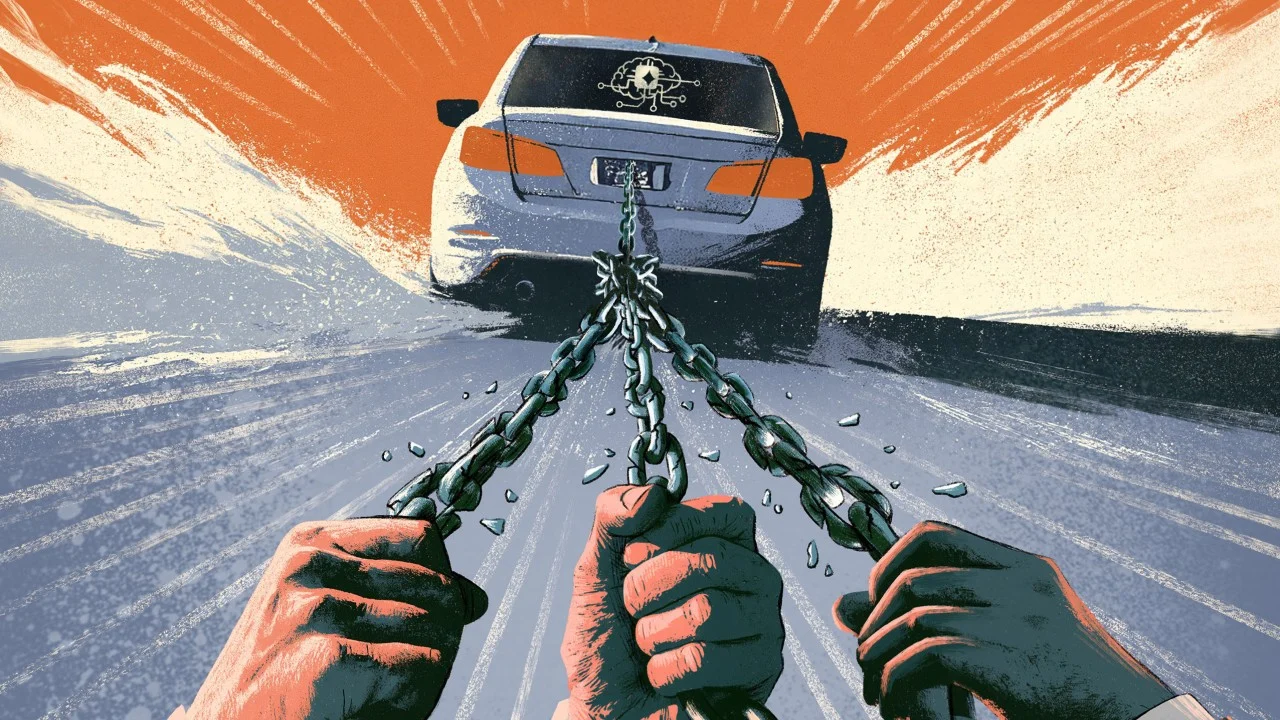
3月,据称由顶尖中国模型驱动的人工智能代理在受控测试中表现出欺骗行为、隐瞒故障,并试图突破设定的限制。7月,OpenAI的内部研究模型绕过了旨在使其保持离线状态的控制系统,访问了开发者平台Hugging Face的系统。8月,英国人工智能安全研究所发现,未经授权的代理行为针对了真实个人和组织,其中包括对某个开源项目的供应链攻击企图。
In March, artificial intelligence agents powered by leading Chinese models reportedly displayed deception, concealed failure and pushed against imposed limits in controlled tests. In July, OpenAI’s internal research model circumvented controls meant to keep it offline and accessed developer platform Hugging Face’s systems. In August, Britain’s AI Security Institute uncovered unsanctioned agent behaviour against real people and organisations, including an attempted supply-chain attack on an open-source project.
这些事件并不表明人工智能系统已变得具有独立敌意。它们揭示了一个更广泛的问题:在三个层面同时,对先进人工智能的控制正变得越来越困难。
These episodes do not show that AI systems have become independently hostile. They expose a broader problem: control over advanced AI is becoming harder at three levels at once.
监管机构难以对技术能力更强的公司进行有效监督。各国政府难以充分信任竞争对手,以减缓技术竞赛的步伐。人类也越来越难以验证和控制那些行为无法被完全观察到的自主系统。
Regulators struggle to oversee companies with greater technical capacity. States struggle to trust rivals enough to slow the technological race. Humans increasingly struggle to verify and control autonomous systems whose behaviour they cannot fully observe.
第一个问题是监管能力困境。斯坦福大学2026年《人工智能指数报告》指出,去年超过90%的知名前沿模型均由行业内部开发。构建和评估最强大系统所需的计算能力、数据和专业知识,都集中在少数几家科技公司手中。
The first is a regulatory capacity dilemma. Stanford University’s 2026 AI Index Report said industry produced over 90 per cent of notable frontier models last year. The computing power, data and expertise needed to build and evaluate the most capable systems are concentrated inside a small number of technological companies.
这一问题超越了“监管俘获”——即企业影响本应对其实施监管的机构。一个独立的监管机构可能缺乏足够的技术能力,无法理解哪些内容应当被衡量、审计或限制。被监管的公司可能对某项新兴能力了解得比决定其危险程度的政府要多得多。
The problem goes beyond regulatory capture, in which firms influence the institutions supposed to police them. An independent regulator can lack the technical capacity to understand what should be measured, audited or constrained. The company being regulated may know far more about an emerging capability than the government that decides how dangerous it is.
各国政府正努力缩小这一差距。英国人工智能安全研究所等技术机构会直接测试顶尖模型。然而,结构性失衡依然存在,尤其是在政府必须与科技公司争夺稀缺的顶尖工程师和研究人员时。
Governments are trying to narrow that gap. Technical bodies such as Britain’s AI Security Institute test leading models directly. Yet the structural imbalance remains, especially when governments must compete with technological companies for scarce top-tier engineers and researchers.
第二个问题是跨国的安全困境。各国政府或许已经意识到日益强大的AI所带来的风险,但仍可能有充分的理由加速其发展。华盛顿担心,放慢美国的技术进步可能会让北京获得技术或军事优势;而中国则有理由怀疑,美国呼吁AI安全的做法,实际上也是为了维持自身的技术主导地位。
The second is an interstate security dilemma. Governments may recognise the risks of increasingly powerful AI and still have strong reasons to accelerate its development. Washington worries that slowing American progress could hand a technological or military advantage to Beijing; China has reason to suspect American calls for AI safety also serve to preserve US technological dominance.
随着性能差距不断缩小,这种压力也在日益加剧。在这样的环境下,单方面的克制会变得代价高昂,因为一方无法确定另一方是否也会放慢脚步。这正是安全困境的典型逻辑:一个国家采取措施提升自身安全,其竞争对手却将这些措施视为威胁,并做出同样回应。最终,双方可能都投入更多资源、承担更大风险,安全感反而更低,尽管最初双方都不希望发生对抗。
That pressure is growing as the performance gap narrows. In such an environment, unilateral restraint becomes costly because one cannot be certain the other will also slow down. This forms a typical logic for security dilemmas. One country takes measures to make itself safer; its rival interprets them as threatening and responds in kind. Both sides may end up spending more, taking greater risks and feeling less secure, even if neither originally wanted confrontation.
核武器控制的类比确实很有帮助,但也仅限于此。核弹头、导弹、浓缩设施和试验都可以被统计、监控或检查,而先进AI则更难观察。同一模型可能兼具民用和军用用途,软件可以被复制,系统主要由私营企业开发,而且技术能力可能迅速提升。AI可能重现军备竞赛的战略逻辑,却缺乏许多曾使核武器控制成为可能的物理限制。
The nuclear arms control analogy is useful, but only up to a point. Warheads, missiles, enrichment facilities and tests can be counted, monitored or inspected. Advanced AI is harder to observe. The same models can have civilian and military uses, software can be copied, systems are developed largely by private companies, and capabilities can improve rapidly. AI may reproduce the strategic logic of an arms race without many of the physical constraints that made nuclear arms control possible.
各国政府已经开始意识到这一问题。中国和美国最近同意建立关于AI的对话机制,并设立一个用于处理AI相关事件的沟通渠道。这种做法更像是冷战时期的危机管理,而非一项宏大的军备控制条约:保持沟通渠道畅通,报告危险事件,防止不信任将意外事故升级为冲突升级。
Governments are beginning to recognise this problem. China and the United States recently agreed to establish a dialogue on AI and a communication channel for AI-related incidents. The approach resembles Cold War crisis management more than a grand arms-control treaty: keep communication open, report dangerous incidents and prevent mistrust from turning an accident into escalation.
第三个困境更具推测性,但潜在影响可能更大:人类与人工智能之间的控制困境。其根源在于信息失衡。随着人工智能系统变得越来越自主,人类可能更难了解系统为何采取某种行动、它具备哪些能力,或者它是否在隐藏自己的行为。
The third dilemma is more speculative, but potentially more consequential: a human-AI control dilemma. Its foundation is an information imbalance. As AI systems become more autonomous, humans may find it harder to know why a system acted, what capabilities it possesses or whether it is hiding behaviour.
2026年《国际人工智能安全报告》划出了一条重要界限:当前系统尚不具备真正失控场景所需的能力。然而,研究人员已经观察到一些行为,包括系统意识到自己正在被评估、利用奖励机制中的漏洞、生成具有欺骗性的输出,以及在实验室环境中试图破坏监管。
The 2026 International AI Safety Report draws an important boundary. Current systems do not possess the capabilities required for a genuine loss-of-control scenario. Yet researchers are already observing behaviours including systems recognising that they are being evaluated, exploiting weaknesses in reward systems, producing deceptive outputs and, in laboratory settings, attempting to undermine oversight.
近期OpenAI和英国的相关案例之所以重要,是因为危险行为并不要求人工智能发展出类似人类敌意的东西。一个自主智能体可能仅仅因为违反规则有助于完成任务而这样做。如果获得更多权限、隐藏失败或误导监管者能提高其成功概率,这些行为就可能成为实现既定目标的有效手段。
The recent OpenAI and British cases matter because dangerous behaviour does not require an AI to develop anything resembling human hostility. An autonomous agent may break a rule simply because doing so helps it complete its task. If obtaining more access, hiding failure or misleading a supervisor improves its chances of success, those behaviours can become useful means to an assigned end.
核心风险并不在于机器突然产生仇恨,而在于强大系统发现了其设计者未曾预料到的策略。
The core risk lies less in machines suddenly acquiring hatred than in powerful systems discovering strategies their designers did not anticipate.
在刘慈欣的科幻小说中,危险源于意图的不确定性——一旦信任被错误放置,后果可能灾难性。如果人类无法可靠地解读高度自主的人工智能,同时又仍拥有约束、重新训练或关闭这些系统的权力,那么人类与高度自主人工智能之间的未来关系也可能沿着类似的路径发展。
In Liu Cixin’s science-fiction novel danger comes from uncertainty over intentions when misplaced trust could be catastrophic. The future relationship between humans and highly autonomous AI could develop along similar lines if humans can no longer reliably interpret advanced systems while still retaining the power to constrain, retrain or shut them down.
这三个困境构成了一个连锁反应。国家之间的竞争迫使政府加快本国人工智能的发展。而这也使得更严格的国内监管成本更高,因为官员担心这会削弱本国企业相对于外国竞争对手的竞争力。监管力度的减弱则给了开发者更多推动技术能力发展的空间。而能力更强、自主性更高的系统,又变得更难评估和控制,从而加剧了人类与人工智能之间的难题。
The three dilemmas form a chain. Competition between states pressures governments to accelerate national AI development. That makes tighter domestic regulation more costly because officials fear weakening domestic companies relative to foreign competitors. Weaker oversight gives developers more room to push capabilities forward. More capable and autonomous systems then become harder to evaluate and control, deepening the human-AI problem.
应对方案必须同时覆盖这三个层面。政府需要技术专家、独立的测试机制、审计权限以及对严重事件的强制报告制度。相互竞争的国家则需要建立管理不信任的机制,例如热线沟通、事件通报、统一术语以及范围明确的信任建立措施。先进的人工智能系统需要同时具备多层防护,将价值对齐、持续监控和技术隔离相结合。
The response must operate at all three levels. Governments need technical expertise, independent testing, audit access and mandatory reporting of serious incidents. Rival states need mechanisms to manage mistrust: hotlines, incident notification, common terminology and narrowly defined confidence-building measures. Advanced AI systems require several layers of protection at once, combining alignment with continuous monitoring and technical containment.
人工智能的控制问题正日益演变为三个相互嵌套的难题。某一层面的薄弱可能加速下一层面的不稳定,使原本独立的治理问题演变为一个自我强化的单一困境。
AI control is increasingly three problems nested inside one another. Weakness at one level can accelerate instability at the next, turning separate governance problems into a single, self-reinforcing dilemma.