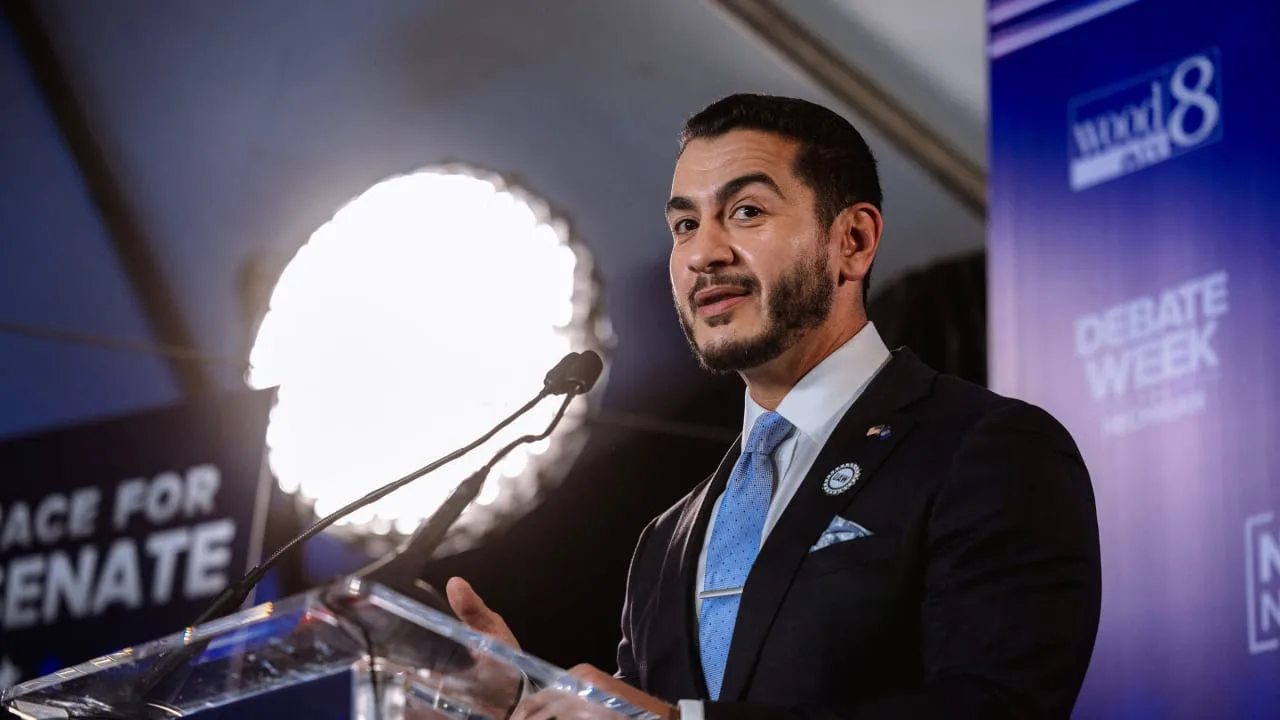
在密歇根州参议院辩论中,民主党候选人阿卜杜勒·埃尔-赛义德与共和党候选人迈克·罗杰斯围绕以色列、伊朗及美国在中东政策展开了一场尤为激烈的交锋。最尖锐的时刻之一出现在主持人里克·阿尔宾再次提及埃尔-赛义德此前被问过的一个问题:以色列和伊朗,哪个国家对美国构成更大的威胁?埃尔-赛义德再次拒绝在这两者之间做出选择。
A particularly heated exchange over Israel, Iran, and US policy in the Middle East erupted during the Michigan Senate debate between Democratic candidate Abdul El-Sayed and Republican candidate Mike Rogers. One of the sharpest moments came when moderator Rick Albin returned to a question El-Sayed had previously been asked: Which country poses a greater threat to the United States, Israel or Iran? El-Sayed again refused to choose between the two."
“里克,我还是要说,这是一个荒谬的假设,”他说,“我们名义上的盟友以色列曾游说我们向伊朗开战。而我们也眼睁睁看着伊朗通过轰炸中东各国,进而切断全球能源供应作为回应。”“我不想被以色列逼入战争,也不想与伊朗开战,”他补充道。当阿尔宾再次追问——“以色列还是伊朗?”——埃尔-赛义德答道:“这又是一个荒谬的问题。我认为两国都以各自的方式证明了危险性。一方可能攻击我们,另一方则把我们拖入本不该参与的战争。”
And again, Rick, I'm just going to say that that's a ridiculous hypothetical," he said. "Our ostensible ally in Israel has lobbied us to go to war with Iran. We have watched as Iran has responded by bombing all kinds of countries in the Middle East and then choking off the world's energy supply.""I don't want to be pushed into war by Israel, and I don't want to be in a war with Iran," he added.
埃尔-赛义德进一步表示,如果一个国家将美国卷入本不该打的战争,他就不认为这个国家是盟友。“我不会把一个把我们拖入不必要战争的国家视为盟友,”他说。埃尔-赛义德称,伊朗发动攻击后他也不会向以色列提供武器。当被问及伊朗发动攻击后是否会向以色列提供武器时,埃尔-赛义德表示不会。在辩论早些时候,有人直接问他:如果以色列次日遭到伊朗或其他国家实体的攻击,他是否会投票支持提供必要的防御武器以保护以色列人民?
When Albin pressed him again - "Israel or Iran?" - El-Sayed replied: "That's, again, a ridiculous question. I think both of them have proven dangerous in their own way. One, at risk of attacking us. One, getting us into wars we have no business fighting." El-Sayed went further, saying he doesn't consider a country an ally if it pulls the United States into wars it shouldn't be fighting. "I don't consider an ally a country that takes us to wars we don't need to fight," he said. El-Sayed says he would not arm Israel after Iranian attackAsked if he would arm Israel after an Iranian attack, El-Sayed says noEarlier in the debate, El-Sayed was asked directly whether, if Israel were attacked the following day by Iran or another state actor, he would vote to provide the defensive weapons necessary to protect the Israeli people.
埃尔-赛义德起初没有直接回答“是”或“否”,而是表示希望将美国纳税人的钱花在国内。“我已经表达得非常清楚。我希望我们的税款用于建设这里的学校。我说的‘这里’指的是密歇根州,而不是佛罗里达州,”他说。“我希望确保我们这里有优质的学校和医疗服务。”
Rather than initially answering yes or no, El-Sayed said he wanted American tax dollars spent at home."I've been absolutely clear. I want our tax dollars spent here to provide schools here. And by here, I mean Michigan, not Florida," he said.
“我想确保我们在这里能够照顾好民众。这是我的首要任务。”他接着指责以色列将美国推入了与伊朗的当前战争之中。“但让我们坦诚面对这里发生的一切。正是以色列把我们推向了与伊朗的战争,”埃尔-赛义德说。“以色列有明确的战争目标。他们希望我们与他们开战。而他们的战争目标是什么?是吞并黎巴嫩南部吗?问问自己,那场战争真的让我们更安全了吗?”
"I want to make sure we've got good schools here and health care here. I want to make sure that we are taking care of people here. That is my priority." He then accused Israel of pushing the United States into the current war with Iran." But let's be honest about what happened here. Israel has pushed us to go to war in Iran," El-Sayed said. "Israel had clear war aims. They wanted us to go to war with them.
当阿尔宾再次追问,如果以色列遭到攻击,他是否会向其提供防御性武器时,埃尔-赛义德给出了直接的回答。“我不希望我们的税款被用来为其他国家购买武器。我不知道这有什么难以理解的。答案是否定的。”罗杰斯立即回应道:“我来回答这个问题。当然会。”
And their war aims were, what, the annexation of southern Lebanon? Ask yourself, are we safer because of that war?" When Albin pressed him again and asked whether he would provide defensive weapons to Israel if it were attacked, El-Sayed gave a direct answer."I don't want our tax dollars buying weapons for other countries. I don't know what's so hard about that.
他不会。 “埃尔-赛义德说伊朗战争可以通过外交结束”。中东冲突最早在埃尔-赛义德被问及如果霍尔木兹海峡未完全开放且伊朗仍有能力制造核武器,战争是否能结束时就已经开始。 “我可能有点老派,但我相信外交,”埃尔-赛义德说,并指出奥巴马政府曾谈判达成一项防止核扩散的安排,随后唐纳德·特朗普总统撤回了该安排。
That's a no." Rogers immediately responded: "I'll answer the question. Absolutely. He won't." El-Sayed says Iran war can end through diplomacyThe Middle East clash began earlier when El-Sayed was asked whether the war with Iran could end if the Strait of Hormuz were not fully open and Iran still had the ability to produce a nuclear weapon."I might be old-fashioned, but I believe in diplomacy," El-Sayed said, arguing that the Obama administration had negotiated an arrangement that prevented nuclear proliferation before President Donald Trump withdrew from it.
他称当前的战争“完全没有必要”,并说特朗普“为了上帝也不知道的理由跳进了这场战争”。当阿尔宾要求对是否在海峡未开放且伊朗仍保有核武能力的情况下战争能否结束给出是或否的答案时,埃尔-赛义德说:“可以,我们应该在外交的边缘而不是在提升油价和食品价格的战争中解决”。相反,罗杰斯表示如果伊朗仍具备核武能力,战争就不可能结束,并辩称现有信息显示伊朗的核计划已经倒退了大约二十年。
He called the current war "completely unnecessary" and said Trump had "jumped into this war for God knows what reason." When Albin demanded a yes-or-no answer on whether the war could end without the strait being open and while Iran retained the ability to produce a nuclear weapon, El-Sayed said: "Yes, and we do that at the edge of diplomacy rather than war that's raising our gas prices and our grocery rates." Rogers, by contrast, said the war could not end if Iran still had a nuclear weapons capability, while arguing that available information showed its nuclear program had been set back by roughly 20 years.
关于哈马斯和10月7日的冲突罗杰斯在辩论中多次指责埃尔-赛义德未能明确谴责哈马斯、真主党、伊斯兰革命卫队和穆斯林兄弟会。埃尔-赛义德在多个时点回击这些指控,告诉罗杰斯不要“编造东西”。当罗杰斯提到10月7日大屠杀的三周年纪念时,双方的争论尤为激烈。
Clash over Hamas and October 7Rogers repeatedly accused El-Sayed during the debate of failing to clearly condemn Hamas, Hezbollah, the Islamic Revolutionary Guard Corps and the Muslim Brotherhood. El-Sayed pushed back on those accusations at several points, telling Rogers not to "make stuff up." The exchange became especially heated when Rogers invoked the third anniversary of the October 7 massacre."
“这就是你应该感到极度愤怒的原因,”罗杰斯说,指责埃尔-赛义德未能承认“痛苦、恐怖主义、强奸、谋杀”。
This is why you should get absolutely angry," Rogers said, accusing El-Sayed of failing to acknowledge "the pain, the terrorism, the rape, the murders."
埃尔-赛义德回答:“我已经谴责了”。随后他指责罗杰斯把问题变成政治戏剧。
El-Sayed answered: "I've condemned that." He then accused Rogers of turning the issue into political theater."I didn't turn it into political theater like you just did," El-Sayed said.
“我没有像你刚才那样把它变成政治戏剧,”埃尔-赛义德说。“我不是那种把别人的痛苦当作政治戏剧的人”。
"I'm not somebody who tries to make political theater out of other people's pain."
在整个辩论过程中,罗杰斯对以色列的立场表现出截然不同的观点。
Rogers presented a sharply different position on Israel throughout the debate.
他表示自己“坚定”支持以色列存在的权利,“即犹太国家存在的权利,以及在极其复杂的地区环境中自卫的权利。”当被问及以色列采取何种行动会导致他撤回对美国军事援助的支持时,罗杰斯说:“如果他们谈论使用核武器,那肯定会失去我的支持。不过,我从未听说过他说过这样的话。”这场辩论在格兰德拉皮兹的WOOD-TV演播室举行,并通过NewsNation在全国范围内播出。辩论一度激烈到,阿尔宾在一次广告休息后评论说,在他主持辩论的30年里,还从未见过一场争论会持续到广告休息时间。
He said he "staunchly" supports Israel's right to exist, "the right to exist for the Jewish state, and the right to defend itself in a very difficult neighborhood." Asked whether there was any action Israel could take that would cause him to withdraw support for US military assistance, Rogers said: "If they're talking about using nuclear weapons, they would definitely lose my support. I've never heard him say that, though." The debate, held at the WOOD-TV studios in Grand Rapids and broadcast nationally on NewsNation, became so contentious that Albin remarked after one commercial break that in 30 years of moderating debates, he had never seen an argument continue through the break.