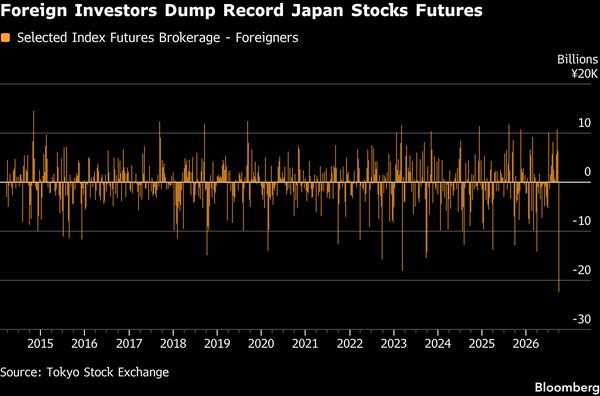
据Aya Wagatsuma报道,海外投资者上周抛售了创纪录数量的日本股票,同时在对股市是否能继续上涨的日益不确定的情况下买入了现金股票。
Overseas investors dumped the most Japanese stocks on record last week while buying up cash equities amid growing uncertainty over whether a rally in shares will continue.
外国人在截至10月2日的一周内创纪录地卖出2.24万亿元人民币(约142亿美元)的日本股指期货。同期,他们净买入9560亿元人民币的现金股票。现金股票和期货的净卖出总额约为1.28万亿元人民币。
Foreigners sold a record ¥2.24 trillion ($14.2 billion) of Japanese equity futures in the week ended Oct. 2, according to data from Japan Exchange Group Inc. In the same week, they bought a net ¥956 billion of cash stocks. Net selling of cash equities and futures combined was around ¥1.28 trillion.
瑞士券商Swissquote的高级分析师Ipek Ozkardeskaya表示:“我认为这种分歧反映了对下一轮涨势的更大谨慎,而不是对日本股票的彻底失去兴趣。”
“I would read the divergence as greater caution about the next leg of the rally, rather than an outright lack of appetite for Japanese equities,” said Ipek Ozkardeskaya, senior analyst at Swissquote.
她补充说:“从现在开始,收益需要证明涨势的合理性,尤其是人工智能和半导体公司——这与全球同行一致。”她指出,接下来的收益季将是关键考验。
“From here, earnings will need to justify the rally, particularly among AI and semiconductor names — consistent with global peers.”Upcoming earnings will provide a key test, she said.
日本的收益季刚刚开始,存储芯片制造商Kioxia Holdings Corp.将在本月末公布财务表现。11月的中期选举结果也可能将焦点转向人工智能领域。
Earnings season is just ramping up in Japan, with memory maker Kioxia Holdings Corp. set to announce its financial performance at the end of this month. The outcome of November’s midterm elections may also bring focus to the artificial-intelligence picture.
三菱UFJ摩根士丹利的高级投资策略师Kohei Onishi表示:“我的印象是这些动作反映了仓位调整,而不是风险规避情绪的突然上升。”
“My impression is that the moves reflected position adjustments rather than a sudden increase in risk-off sentiment,” said Kohei Onishi, a senior investment strategist at Mitsubishi UFJ Morgan Stanley.
他指出,由于今年美国中期选举增加了不确定性,投资者更倾向于进行此类调整。
“With the US midterm elections this year adding uncertainty, investors were also more inclined to make such adjustments.”
英国日本股票分析师Pelham Smithers表示,期货卖出也可能部分反映了海外经纪公司在9月除息期后通常买入现金股票,并通过卖出期货对冲这些头寸。
The futures selling may also partly reflect overseas brokerages typically buying cash equities after the September ex-dividend period and hedging those positions by selling futures, said UK-based Japan equity analyst Pelham Smithers.