2014年,香港大学一个研究团队眼睁睁看着两年的珊瑚礁修复工作在西贡付诸东流。
In 2014, a University of Hong Kong research team watched two years of reef restoration work collapse in Sai Kung.
渔农自然护理署曾要求研究人员加快珊瑚恢复。水泥结构被放置在海床上,珊瑚开始生长。但随着珊瑚群体变大,它们变得不稳定。
The Agriculture, Fisheries and Conservation Department had asked the researchers to speed up coral recovery. Cement structures were placed on the seabed and coral began to grow. But as the colonies became larger, they became unstable.
“它们没有根,”当时该项目的博士生余碧芬说。“它们长得越大,就越不稳定。” 这次失败最终促使余碧芬联合创立了Archireef公司。
“They have no roots,” said Vriko Yu Pik-fan, then a doctoral student on the project. “The bigger they got, the less stable they were.”That failure eventually led Yu to co-found the company, Archireef.
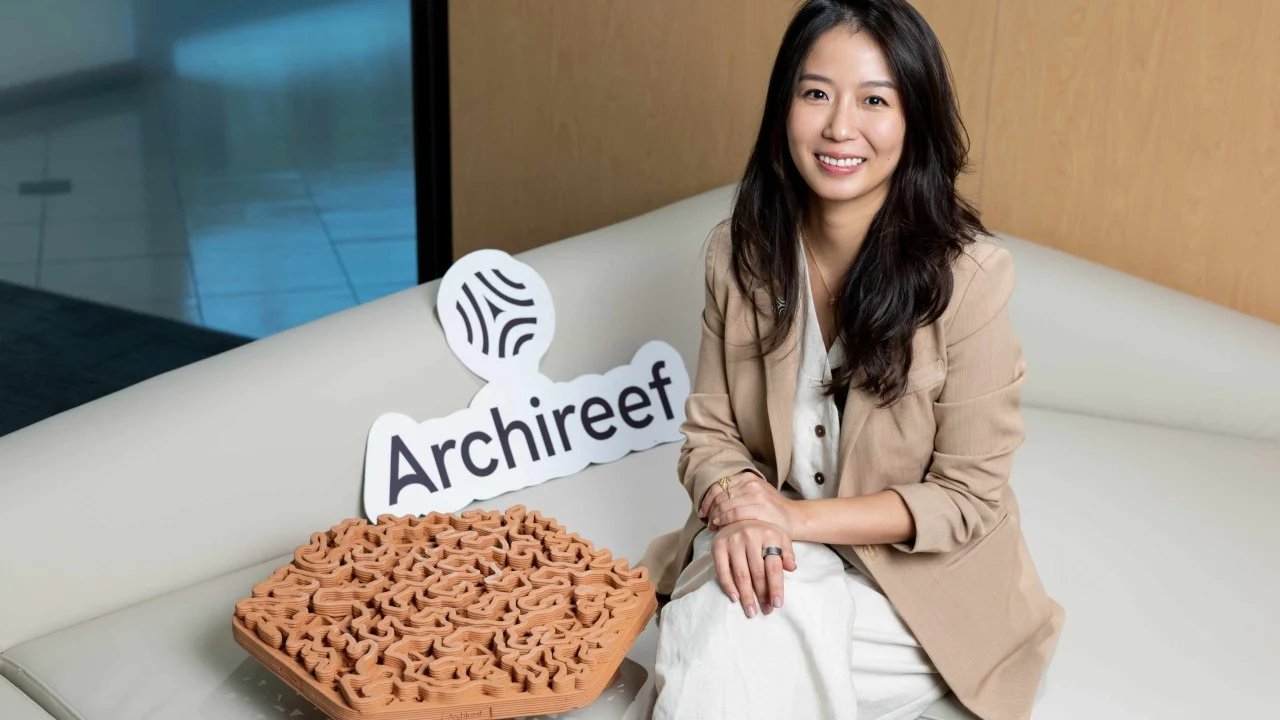
在尝试过水泥、金属和塑料后,余碧芬的团队转向了陶土。利用3D打印技术,他们制造了陶土礁石砖,旨在为珊瑚幼虫提供一个多孔、pH值中性的附着表面。该公司于2020年在香港注册成立,旨在将研究成果商业化。“一个有用的解决方案不应局限于实验室,”余碧芬说。
After cement, metal and plastic had all been tried, Yu’s team turned to clay. Using 3D printing, they produced terracotta reef tiles designed to give coral larvae a porous, pH-neutral surface to attach to. The company was incorporated in Hong Kong in 2020 to commercialise the research. “A useful solution should not be confined to the lab,” Yu said.
她的工作使她入围了今年“香港精神奖”可持续发展类别的决赛名单。该奖项由信和集团和《南华早报》联合主办,于2013年设立,旨在表彰为香港及其社区做出贡献的个人和组织。
Her work has earned her a place among the finalists of this year’s Spirit of Hong Kong Awards in the sustainability category. The awards, co-organised by Sino Group and the South China Morning Post, were launched in 2013 to recognise individuals and organisations whose work contributes to Hong Kong and its communities.
据Archireef称,该公司已在香港、新加坡、阿拉伯联合酋长国和沙特阿拉伯保护或修复了近10公顷(24.7英亩)的海洋栖息地。
According to Archireef, close to 10 hectares (24.7 acres) of marine habitat have been conserved or restored across Hong Kong, Singapore, the United Arab Emirates and Saudi Arabia.
如今,其大部分价值体现在砖块部署之后。港口运营商、开发商及其他因法律要求必须减轻项目环境影响的客户,越来越需要证据来证明什么存活了下来、什么物种回归了,以及修复是否奏效。
Today, much of its value comes after the tiles have been deployed. Port operators, developers and other clients who are legally required to mitigate the environmental impact of their projects increasingly need evidence of what has survived, what species have returned and whether restoration has worked.
“我们帮他们少花钱,或少亏损,”余说。“海洋成本过去不在账面上。” Archireef 现在利用环境 DNA、摄影测量和经软件分析的相机图像来监测海洋生物。据公司称,在受监测的香港站点,部署的珊瑚在安装三年后仍有 95% 存活。
“We help them spend less, or lose less,” Yu said. “The cost of the sea used to stay off the accounts.”Archireef now uses environmental DNA, photogrammetry and camera imagery analysed by software to monitor marine life. At monitored Hong Kong sites, 95 per cent of deployed coral was still alive three years after installation, according to the company.
“修复是干预手段,”余说。“产品在于确凿地知道它是否奏效。” 这家扎根香港的公司现在拥有三家海湾子公司,并将研发团队留在香港。
“Restoration is the intervention,” Yu said. “The product is knowing, defensibly, whether it worked.”The Hong Kong-ed company now owns three Gulf subsidiaries and keeps its research team in the city.
“我们的根基在这里。我们的研发团队在这里,”余说。“拥有合适的人才组合是我们留下来的原因。” 她还将香港水质的改善归功于让珊瑚修复成为可能。提及海港区污水处理计划,她将保育比作改善个人健康。“如果一个人吸烟,他们得先戒烟,”她说。“然后再锻炼。”文/吉米·周
“Our roots are here. Our research team is here,” Yu said. “The availability of the right mix of talent is why we stay.”She also credits improvements in Hong Kong’s water quality with making coral restoration possible. Referring to the Harbour Area Treatment Scheme, she compared conservation with improving personal health. “If a person smokes, they stop first,” she said. “Then they exercise.”