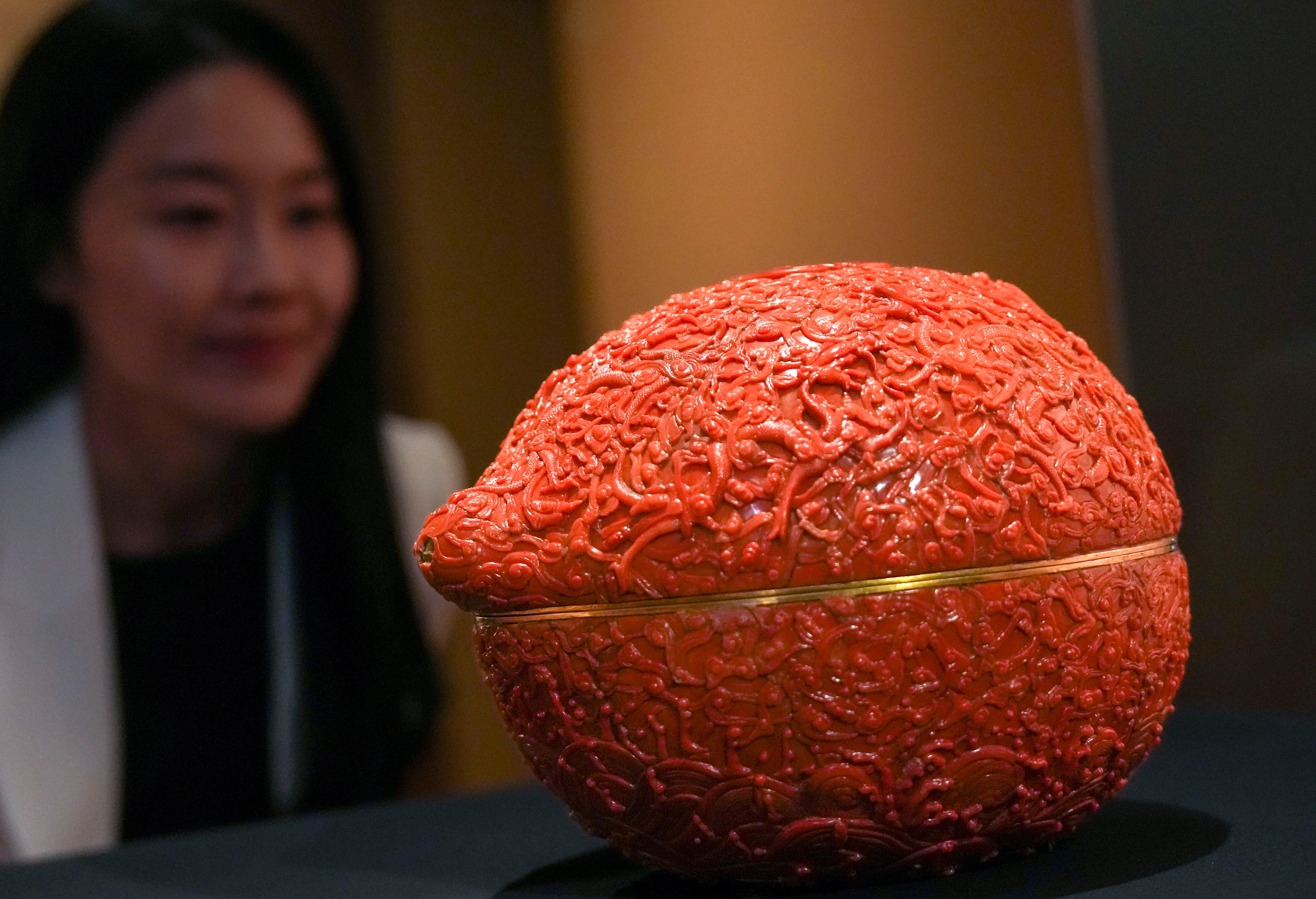
乍看之下,这个镶嵌珊瑚的桃形盒似乎是用红漆雕刻而成。但这件专为庆祝雍正皇帝(1678-1735)寿辰而制的器物,实际上是一个鎏金胎盒,表面覆盖着红珊瑚。每一块色泽鲜艳的宝石碎片都经过精确切割和镶嵌,接缝几乎不可见,形成了一层闪烁着斑驳深红光泽的“肌肤”。
At first glance, the peach-shaped box with coral inlay appears to be carved from red lacquer. But the piece – made specifically to celebrate the birthday of the Yongzheng Emperor (1678-1735) – is, in fact, a gold-bodied box with a surface overlaid with red coral. Each fragment of the vivid gemstone is cut and set so precisely that the joins almost disappear, creating a shimmering mottled crimson skin.
这是一件刻意为之的克制之作,完全由单一材质制成,且不同寻常的是,这件御用器物完全未加装饰:没有珐琅、没有鎏金、没有雕刻纹饰,只有器身简洁紧致的线条、一个简朴的提梁,以及抛光金属散发的冷冽灰色光泽。
It is a deliberate exercise in restraint, executed entirely in one medium and, unusually for an imperial commission, left completely unadorned: no enamel, no gilding, no carved decoration, just the clean, taut lines of the vessel, a simple handle and the cool grey sheen of polished metal.
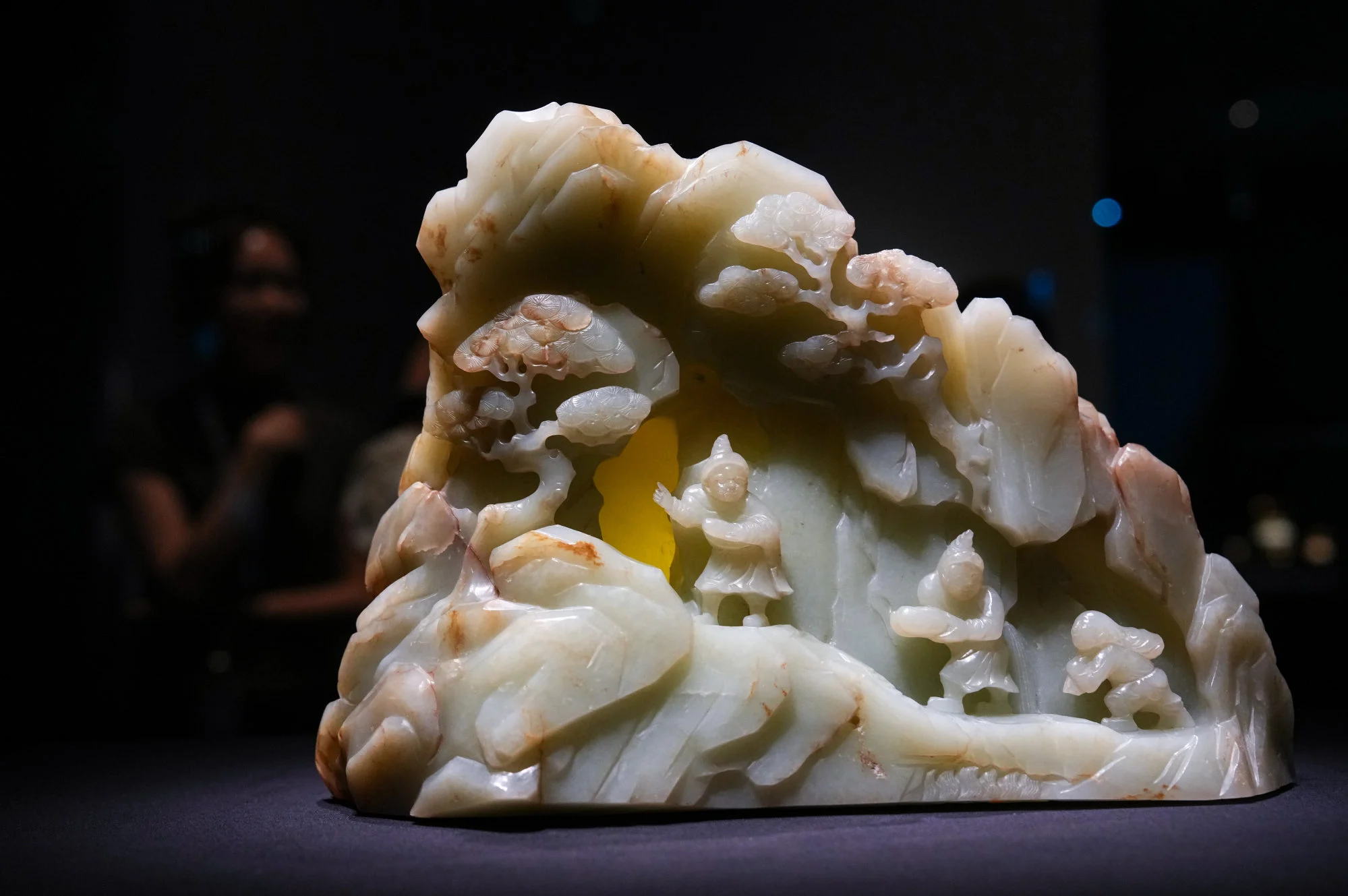
它是目前在香港故宫博物馆展出的157件国宝之一,属于“匠心独运——清宫内造办处文物特展”的展品。其他必看展品还包括精美的玉器,如镶嵌十二生肖的“万寿无疆”盒。
It is one of 157 national treasures currently on show at the Hong Kong Palace Museum as part of the “Design for the Forbidden City: Imperial Workshops of the Qing Court” exhibition. Other must-sees include beautiful jade works such as the “Myriad Cycles” box with 12 zodiac animals.
这些展品由北京故宫博物院藏品借展,讲述了为宫廷提供从日常必需品到装饰杰作的庞大生产网络的故事。展览不仅展示了那个时代最杰出的工匠技艺,也如这件红珊瑚盒所体现的,折射出他们那位至关重要的客户——皇帝的审美品味。
On loan from the Palace Museum in Beijing, the collection tells the story of the sprawling production network that supplied the court with everything from daily necessities to ornamental masterpieces. It showcases not only the era’s finest artisans and, as in the case of the red coral box, the taste of their very important client – the emperor.
香港故宫博物馆策展人侯怡莉博士表示:“通过其中一些展品,你甚至能窥见他们的个性。”
“Through some of these items, you can even see their personalities,” Hong Kong Palace Museum curator Dr Yi-Li Hou says.
这些被称为“造办处”的御用作坊,作为高端定制工作室运作,在宫内为宫廷生产奢侈品。
Known as the Zaobanchu – Office of Manufacture – these imperial workshops operated as high-end custom studios that produced luxury goods inside the palace, for the palace.
它们建立于17世纪末康熙皇帝(1654-1722)时期,随后200年里,清廷运营着一个相当于垂直整合的制造帝国。在鼎盛时期,它包含40多个专业作坊,生产从御袍、玉雕到火器、天文图等一切物品。
They were established in the late 17th century under the Kangxi Emperor (1654-1722), and for the next 200 years, the Qing court ran what amounted to its own vertically integrated manufacturing empire. At its peak, it encompassed more than 40 specialised ateliers producing everything from imperial robes and jade carvings to firearms and astronomical maps.
侯女士说:“你会看到清朝人完全是折衷主义的。他们混合材质、风格、影响,在很多方面都非常现代。”最早的作坊设在内廷的养心殿,但并不局限于紫禁城。雍正年间(1722-1735年),圆明园设立了分部;到了乾隆时期(1735-1796年),又增建了数百间房屋,京城的作坊也迁往那里。
“You’ll see that the Qing people were completely eclectic,” Hou says. “They mixed materials, styles, influences, which were, in many ways, very modern.”The first workshops were in the Yangxin Dian, or the Hall of Mental Cultivation, within the inner court, but they were not confined to the Forbidden City. A branch was established at the Yuanmingyuan, the Old Summer Palace, during the Yongzheng reign (1722-1735), and by the Qianlong period (1735-1796), hundreds of rooms were added and workshops in the capital had also been relocated there.
该机构还运作着一个全国性的生产网络,将图纸和模型发送给苏州、杭州、广州等地的专业作坊,制作特定工艺品。
The institution also operated a national production network, sending designs and models to specialised facilities in Suzhou, Hangzhou and Guangzhou for certain crafts.
在这一行政层级之下,作坊分为作坊、处、厂、堂等单位。编制随时间变化,但现存档案记载了40多个不同单位,包括玻璃厂、钟表处、珐琅作坊、玉器作坊、军械处、火炮作坊、地图处,甚至还有眼镜作坊。
Beneath this administrative layer, the workshops were divided into ateliers, offices, factories and halls. The roster changed over time, but surviving records list more than 40 distinct units, including a glass factory, clockmaking office, enamel workshop, jade workshop, armoury, cannon workshop, map office and even an eyeglasses workshop.
“皇帝绝不犹豫亲自告诉他们该怎么做。”香港故宫文化博物馆策展人侯怡丽博士说。御用作坊生产三大类物品。第一类是定制御用物品,即皇帝亲自下令制作的私人用品,不计成本。
The emperor would not hesitate to tell them himself exactly how he wanted them to do itHong Kong Palace Museum curator Dr Yi-Li Hou The imperial workshops produced three broad categories of goods. First were the bespoke imperial commissions, the personal objects ordered by the emperor himself, without regard to cost.
第二类是需大量制作物品的样品。对于这些,造办处确定装饰、形制和规格,常先制作样品,再将设计交给其他官方作坊批量生产——例如王公服饰和陈设,便由造办处定式后,再由外部作坊制造。
Second were prototypes for items needed in larger quantities. For these, the Zaobanchu determined the decoration, form and specifications, frequently producing a sample before passing the design to other official workshops for mass production – princely robes and furnishings, for instance, were standardised through the Zaobanchu before being manufactured elsewhere.
第三,或许也是最具深远影响的,是技术的发展。在康熙皇帝统治时期,西方艺术家和工匠——其中包括意大利耶稣会传教士、画家郎世宁——与中国工匠并肩工作,绘画珐琅、某些瓷器釉色及御用玻璃器等技艺在造办处得以发展或改良。
Third, and perhaps most consequentially, came technological development. Under the Kangxi Emperor, Western artists and craftsmen – among them the Italian Jesuit missionary and painter Giuseppe Castiglione (Lang Shining) – worked alongside Chinese artisans, and techniques such as painted enamel, certain porcelain glazes and imperial glassware were developed or refined within the Zaobanchu.
侯明昊表示:“档案显示皇帝采取非常亲力亲为的方式,会根据自己的喜好和风格直接指示大臣该怎么做。皇帝绝不犹豫,会亲自明确告诉他们想要如何制作。”这些展品极具个人色彩,既揭示了皇帝的品味与性情,也展现了清代工艺水平。香港故宫文化博物馆的此次展览呈现了康熙、雍正、乾隆三朝皇帝统治下的作坊运作。
“Archives reveal a very hands-on approach, and emperors would directly tell their ministers what to do, according to their own preferences and styles,” Hou says. “The emperor would not hesitate to tell them himself exactly how he wanted them to do it.”The objects are intensely personal and reveal as much about the emperors’ tastes and temperaments as about Qing craftsmanship. The exhibition at the Hong Kong Palace Museum showcases the workshops that operated under Qing emperors Kangxi, Yongzheng and Qianlong.
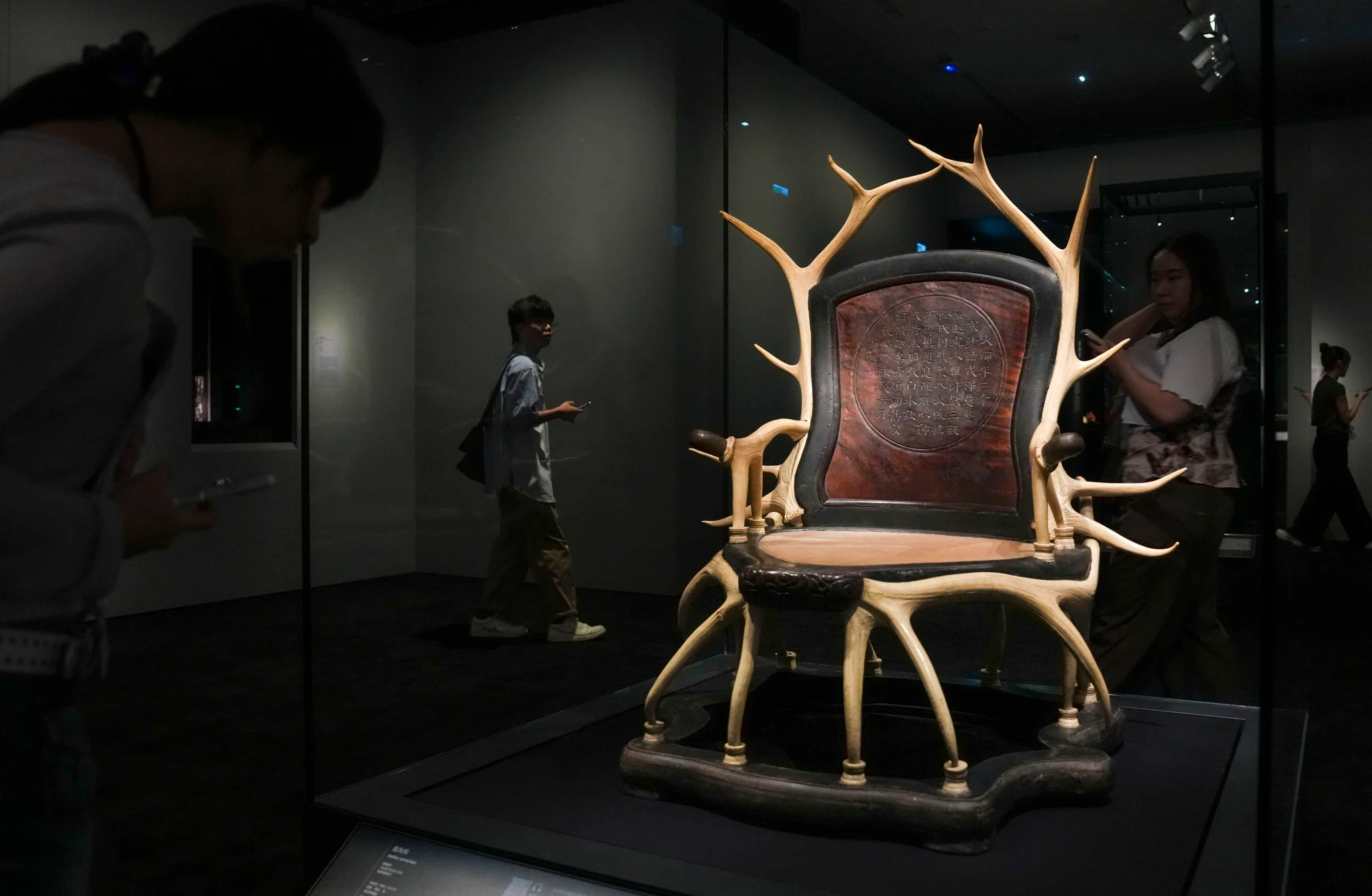
一大亮点是一把鹿角扶手椅,原料取自康熙皇帝亲自猎杀的鹿。椅架并非由整块木材雕刻而成,而是由鹿角的分叉部分组装而成,经过塑形与拼接,让鹿角天然的弯曲与分叉构成椅子的扶手、腿部与支撑。成品呈现有机且近乎骨骼般的形态,表面保留了生鹿角粗糙不平的纹理。
One highlight is an antler armchair built from deer hunted by the Kangxi Emperor. Rather than being carved from a single block of wood, its frame is assembled from the branching antlers of the deer, shaped and fitted so that the natural curves and forks of the horns form the arms, legs and supports of the chair. The result is a piece that looks organic and almost skeletal, its surface retaining the irregular texture of raw antler.
数十年后,他的孙子乾隆皇帝更换了椅背,并题刻御制诗,将一件家具转化为对祖父的私人纪念。诗中写道:“不敢时时坐,钦慕意何如。”
Decades later, his grandson, the Qianlong Emperor, replaced its backboard and inscribed it with a poem, transforming a piece of furniture into a private memorial to his grandfather. In it, he writes that he “dare not sit upon it, ever in awe and admiration”.
当时的观察者对人才的汇聚印象深刻。作坊——俗称“百工作坊”——招募了全帝国最优秀的工匠,并为他们提供红木、紫檀、金、银、宝石、珍珠母等顶级材料。
Contemporary observers were struck by the concentration of talent. The workshops – colloquially known as the or “workshop of 100 crafts” – recruited the finest craftsmen from across the empire and gave them access to premium materials such as rosewood, red sandalwood, gold, silver, gemstones and mother-of-pearl.
造办处现存的档案——被称为《活计档》,即“工作档案”——记录了御前与作坊之间持续不断的对话。
The Zaobanchu’s surviving archives – known as the , or “work records” – capture a running dialogue between the throne and the workshops.
它们不仅记录制作了何物,还记录了是谁下的单、用了什么材料、耗时多久,关键的是,还记录了皇帝对成品的看法。档案条目屡屡显示皇帝退回成品、下令修改,或要求彻底重作。
They record not only what was made, but who ordered it, what materials were used, how long it took and, crucially, what the emperor thought of the result. Entries frequently show emperors rejecting finished pieces, ordering modifications, or demanding that an object be remade entirely.
档案中还保存着一份意想不到的人性记录:个体工匠的身份信息。造办处是紫禁城内戒备森严的区域,入内管控极严。
The archives also preserve something unexpectedly human: the identities of the individual craftsmen themselves. The Zaobanchu was a high-security precinct within the Forbidden City and entry was strictly controlled.
工匠们没有照片可供识别,因此被发放木质识别牌——称为“牙牌”——上面记录了他们的籍贯和面部显著特征。这些朴素的木牌是展览中为数不多的纪念这些能工巧匠的实物之一。
Craftsmen had no photographs to identify them, so they were issued wooden identification tablets – known as – that recorded their place of origin and distinguishing physical features. These modest wooden tags are among the few objects in the exhibition that commemorate the talented artisans themselves.
侯女士说:“以前没有照片,所以会写你是哪里人——为御用作坊效力,你是哪个地方的工匠——以及你长什么样貌特征。我们看到了这块牌子,上面写着有位艺人面黄有须。”文/Chloe Loung
“They didn’t have photographs before, so they would write where you were from – for the imperial workshops, which place you were a craftsman from – and what facial features you had,” Hou says. “We saw this tablet. On it was written that one of the artists was yellow-complexioned and bearded.”