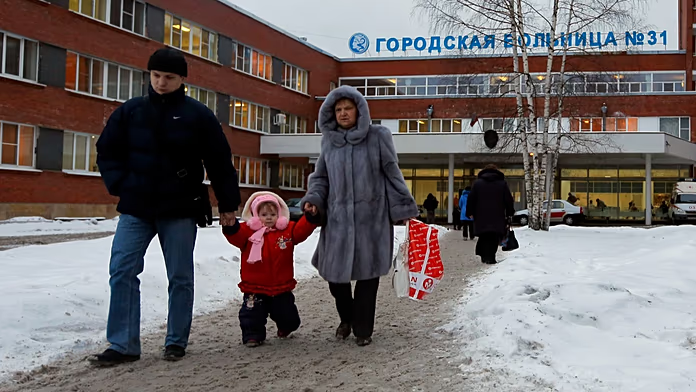
根据联邦预算草案,俄罗斯计划在2027年将国家癌症防治项目的资金削减近十二倍,从449亿卢布(约4.705亿欧元)降至38.7亿卢布(约4050万欧元),与此同时,国防开支占比达到苏联解体以来的最高水平。
Russia is cutting funding for its national cancer programme nearly twelvefold in 2027, from 44.9 billion roubles (€470.5m) to 3.87 billion roubles (€40.5m), according to the draft federal budget, as defence spending reaches its highest share since the collapse of the Soviet Union.
与去年相比,削减力度更大:该项目在2025年获得了1485亿卢布(约15亿欧元)资金,这意味着如果预算按提案通过,联邦在癌症防控上的支出将在两年内骤降约38倍。
The reduction is even sharper compared to last year: the programme received 148.5 billion roubles (€1.5bn) in 2025, meaning federal spending on cancer control would have fallen roughly 38-fold in two years if the budget passes as proposed.
预算预测显示,此后资金将部分回升——2028年增至57.6亿卢布,2029年增至127.8亿卢布——但这两个数字仍远低于当前水平。
Funding is projected to recover partially thereafter — rising to 5.76 billion roubles in 2028 and 12.78 billion in 2029 — but both figures remain far below current levels.
自启动以来,联邦癌症防治项目一直为诊断设备、癌症中心和早期筛查项目提供资金。
Since its launch, the federal cancer project has funded diagnostic equipment, cancer centres, and early screening programmes.
根据2027-2029年新预算,剩余资金预计主要用于诊断和放射设备,而中小城镇和农村地区的专科单位将面临削减,这种分配方式可能会进一步加大主要联邦中心与偏远地区之间本已显著的癌症医疗差距。
Under the new 2027-2029 budget, the remaining money is expected to go mainly to diagnostic and radiology equipment, while specialised units in smaller towns and rural areas face cuts, a distribution likely to deepen an already significant gap between cancer care in major federal centres and outlying regions.
资金挪用官方表示,部分成本将转移至强制医疗保险体系(OMS)和其他预算科目,而非完全取消。
Rerouting roublesOfficials have said some costs will be transferred to the compulsory health insurance system (OMS) and other budget lines rather than eliminated entirely.
患者组织和部分专家质疑新机制能否完全抵消联邦层面的削减,并指出将成本转嫁给地方预算和OMS,会使医疗质量更直接地挂钩各个地区的财力。
Patient organisations and some experts have questioned whether the new mechanisms could fully offset the federal reduction, and noted that shifting costs to regional budgets and the OMS ties the quality of care more directly to the financial strength of individual regions.
拟议削减之际,新数据显示俄罗斯癌症患者已承担越来越多的治疗费用。
反癌运动非政府组织的一项研究发现,2019年至2025年间,患者自费购买了大约每六到七盒抗癌药物中的一盒。
The proposed cuts come as new data show Russian cancer patients are already bearing a growing share of treatment costs.A study by the NGO Movement Against Cancer found that between 2019 and 2025, patients bought roughly one in every six or seven packs of cancer medicines out of pocket.
仅在2025年,家庭在抗肿瘤药物上的支出就从88亿卢布增至114亿卢布,自行购买的药盒数量从500万盒增至580万盒。这些药物中约94%列入基本药物清单,本应免费提供。研究作者指出,自付费用的产生并非因患者选择更昂贵的药物——大多数购买涉及仿制药——而是由于供应中断和供给缺口。俄罗斯法律保障癌症患者免费获得所需药物,但实际操作中,患者和医生长期反映采购延迟和地区预算短缺。
In 2025 alone, household spending on anti-tumour drugs rose from 8.8 billion to 11.4 billion roubles, and the number of packs bought independently increased from five million to 5.8 million. Around 94% of those drugs are on the list of essential medicines and should be provided free of charge. The study's authors attribute the out-of-pocket spending not to patients choosing more expensive options — most purchases involved generics — but to supply disruptions and gaps in provision. Russian law guarantees cancer patients free access to the medicines they need, but in practice, patients and doctors have long reported procurement delays and regional budget shortfalls.
国家采购规模仍然可观:官方数据显示,2025年政府通过基本医疗保险(OMS)体系采购了3280万盒药品,价值3360亿卢布。但自付支出的增长趋势表明,在计划中的联邦削减实施前,患者负担已在上升。根据2027年草案预算,国防开支将达到17.1万亿卢布,约占联邦总支出的35%——创后苏联时代新高。莫斯科全面对乌战争已持续四年多,逐步改变了俄罗斯的公共支出结构,包括医疗和医疗基础设施在内的民生项目被迫让位于国防开支的持续扩张。
State procurement remains substantial: official figures show the government bought 32.8 million packs of medicines worth 336 billion roubles through the OMS system in 2025. But the trajectory in out-of-pocket spending suggests the burden on patients is already rising ahead of the planned federal cuts. Defence spending in the 2027 draft budget is set to reach 17.1 trillion roubles, or roughly 35% of all federal expenditure — a post-Soviet record. More than four years of Moscow's all-out war in Ukraine have progressively shifted Russia's public spending, with civilian programmes including healthcare and medical infrastructure taking a backseat to continued expansion of defence outlays.