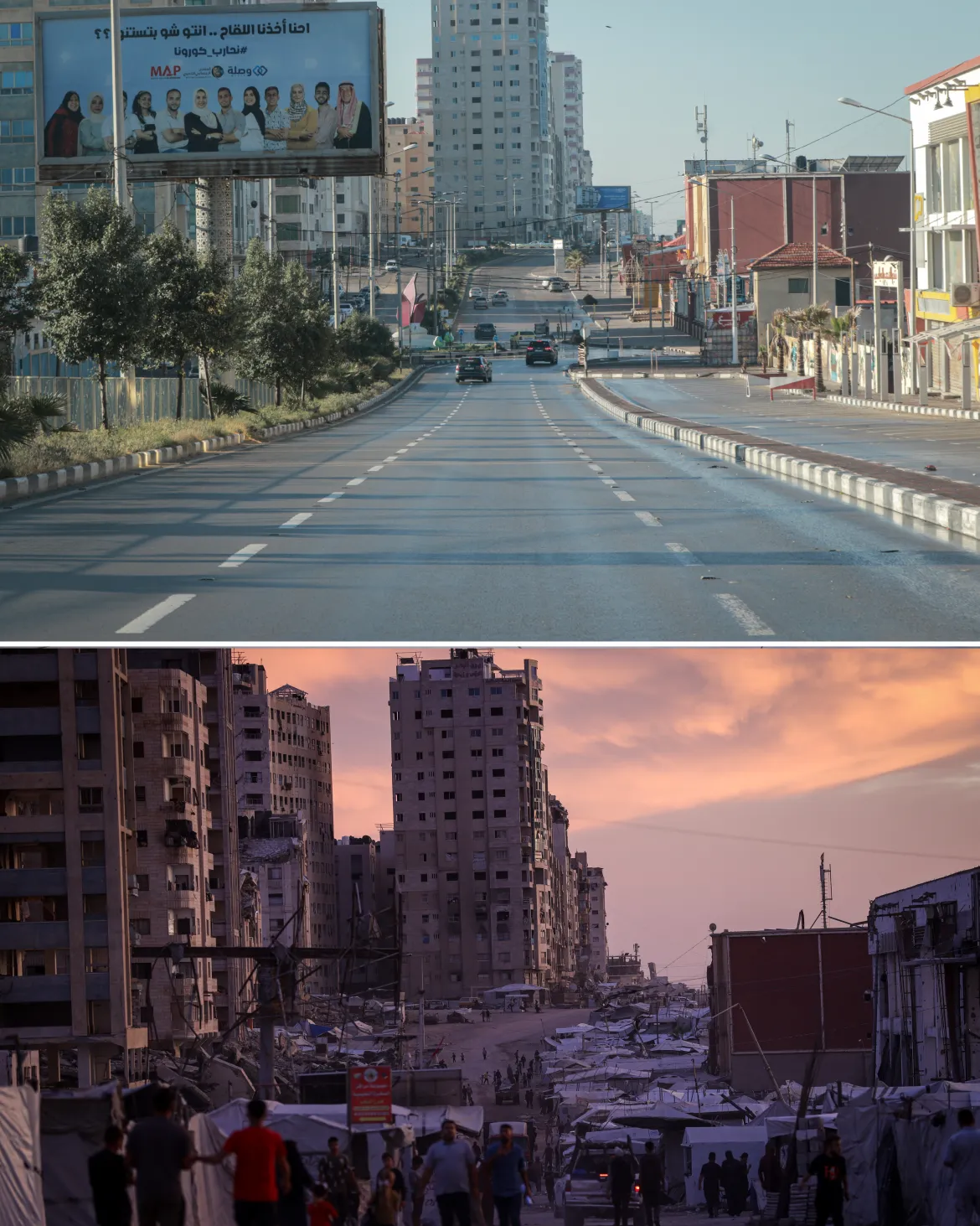
自2023年10月以色列对被围困的加沙地带发动战争以来,巴勒斯坦中央统计局数据显示,超过80%的加沙建筑已受损或被毁,整个社区化为废墟,基础设施大部分被摧毁。
More than 80 percent of Gaza’s buildings have been damaged or destroyed since Israel launched its war on the besieged enclave in October 2023, according to the Palestinian Central Bureau of Statistics, turning whole neighbourhoods into rubble and wiping out much of its infrastructure.
几代人以来,加沙的街道、市场、学校、医院和公共空间一直是日常生活的背景,人们在此工作、学习、购物、会友聚亲,留下记忆。
For generations, Gaza’s streets, markets, schools, hospitals and public spaces formed the backdrop to everyday life. They were places where people worked, studied, shopped, met friends and family, and built memories.
许多熟悉的地标也承载着更悠久的历史,反映出加沙作为不同文明交汇点的数千年历史。
Many of the city’s familiar landmarks also carried a much longer history, reflecting Gaza’s thousands of years as a crossroads of different civilisations.
战争同样改变了加沙的面貌,损毁或毁坏了许多历史性和标志性建筑。
The war has also changed the face of Gaza by damaging or destroying many of those historic and recognisable landmarks.
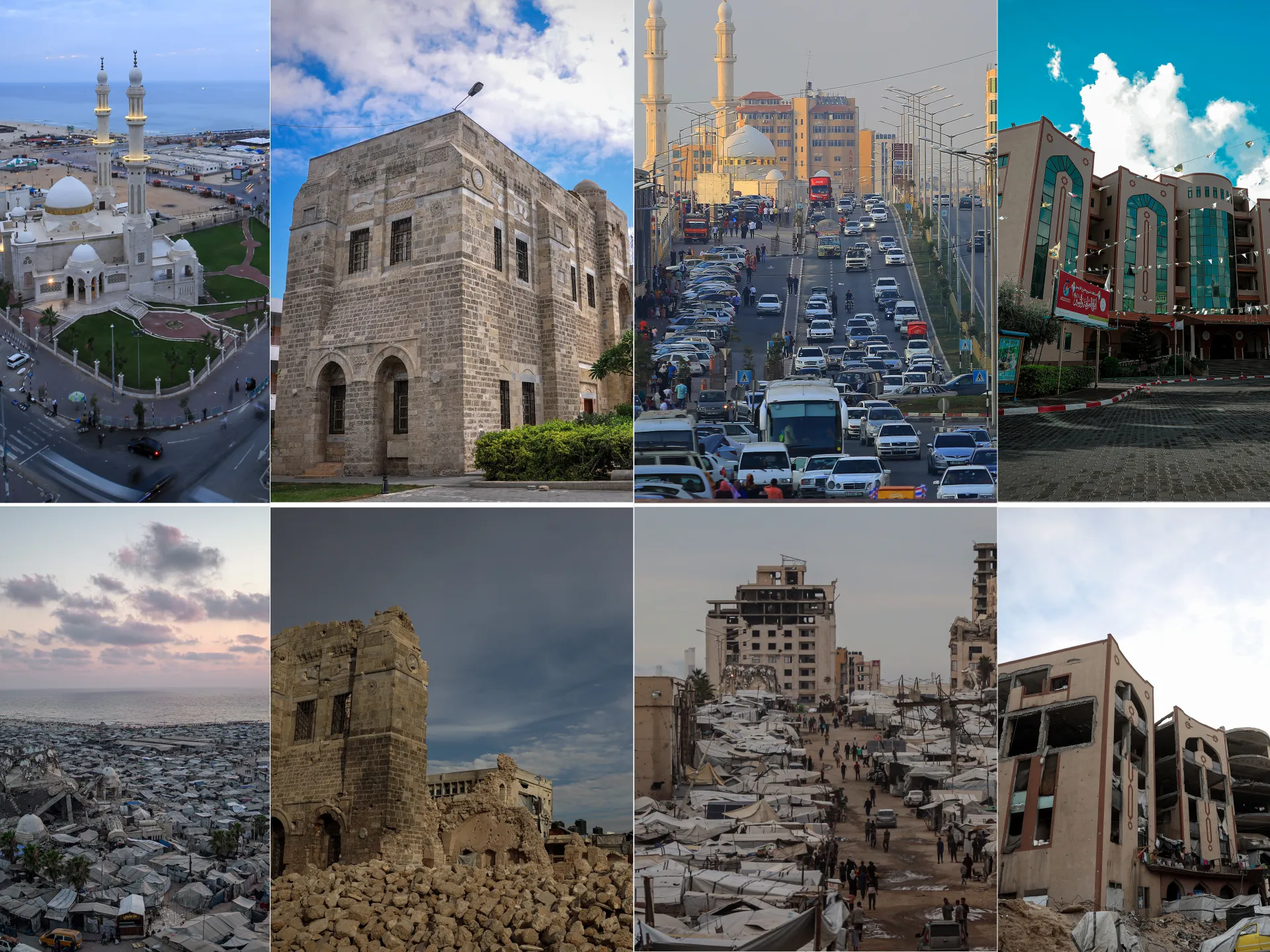
自2023年10月以来,联合国教科文组织已确认164处文化遗址受损,其中包括128座具有历史或艺术价值的建筑、14处宗教场所、9座纪念碑、8处考古遗址、2座博物馆和3个可移动文化财产库。
UNESCO has verified damage to 164 cultural sites since October 2023, including 128 buildings of historical or artistic interest, 14 religious sites, nine monuments, eight archaeological sites, two museums and three depositories of movable cultural property.
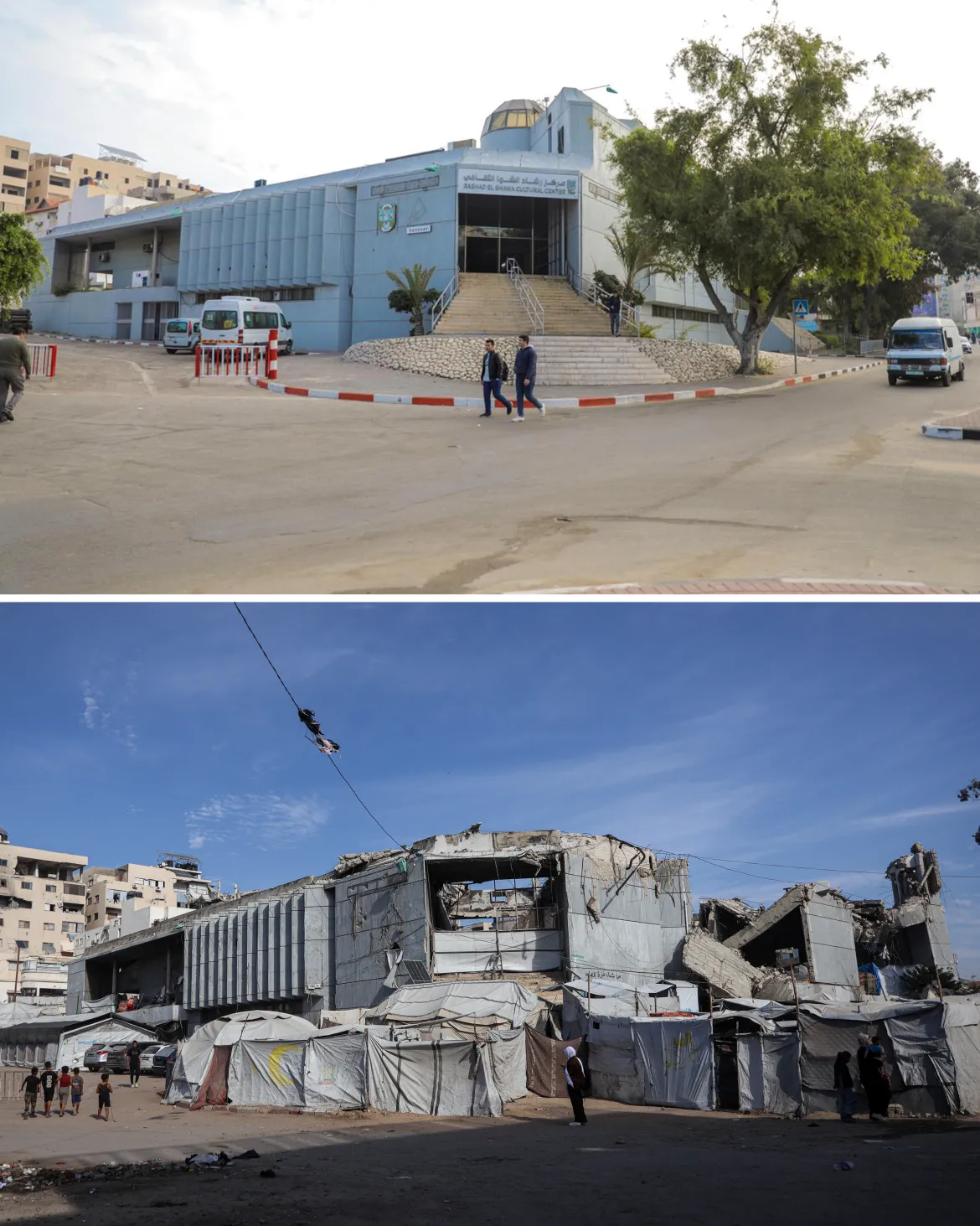
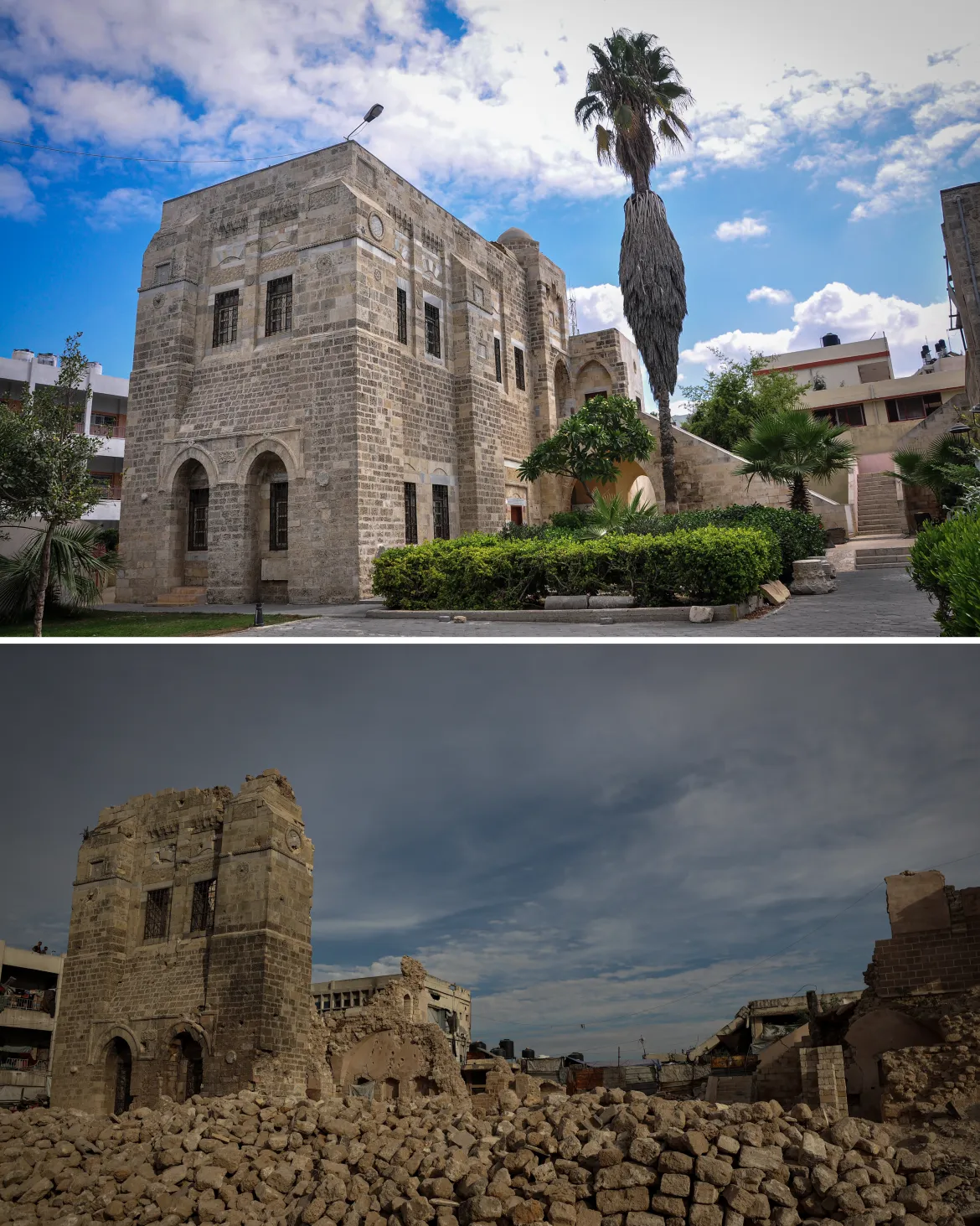
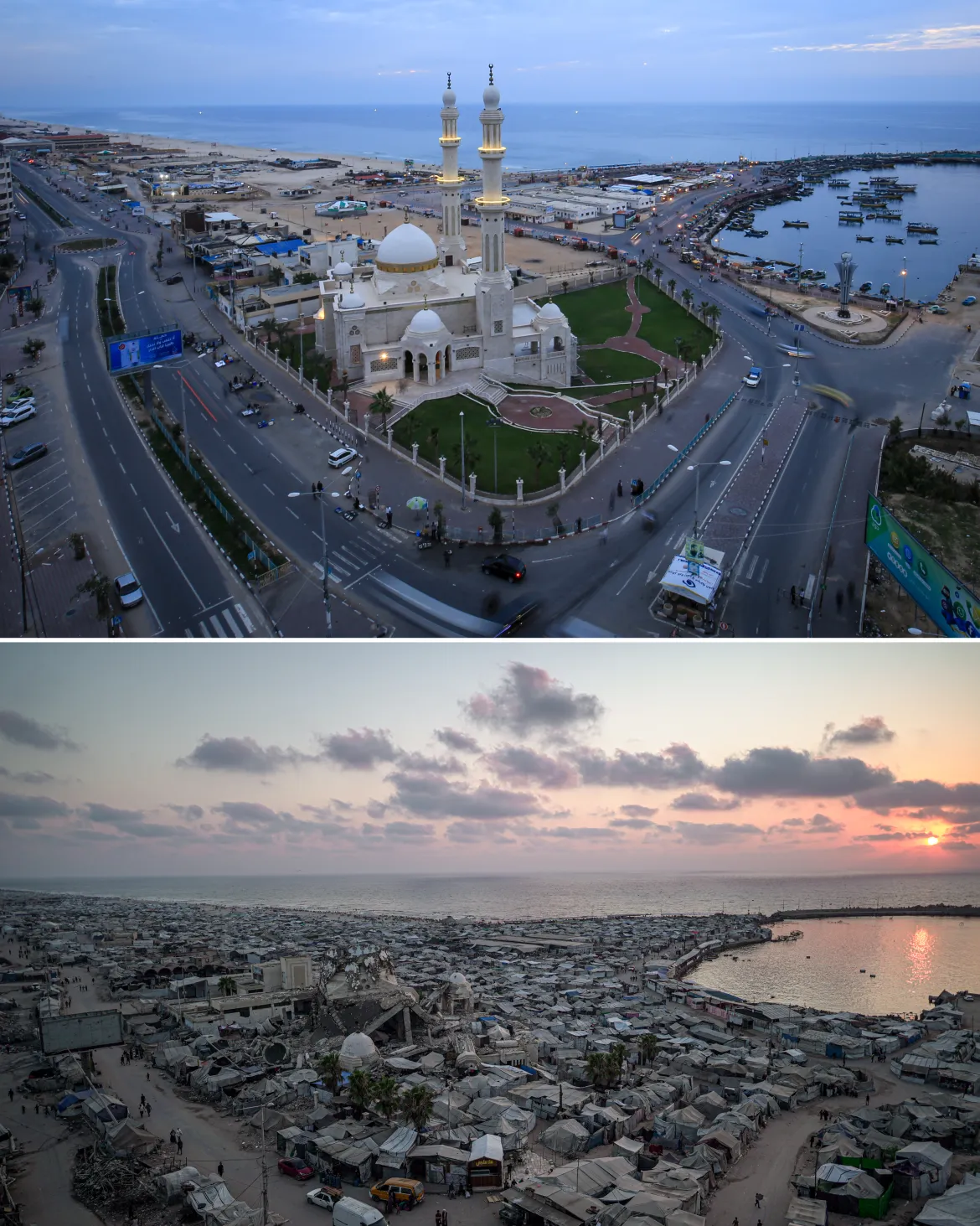
受损的包括加沙最古老的清真寺——大奥马里清真寺、巴沙宫、古老的撒马利亚浴场、阿尔·基萨里亚市场以及圣波菲里乌斯教堂综合体。这些地点有的已化为废墟,有的虽仍屹立却损毁严重。
Among them are the Great Omari Mosque, Gaza’s oldest mosque, Qasr al-Basha, the ancient Samaritan Bathhouse, al-Qissariya Market and the Church of Saint Porphyrius complex.
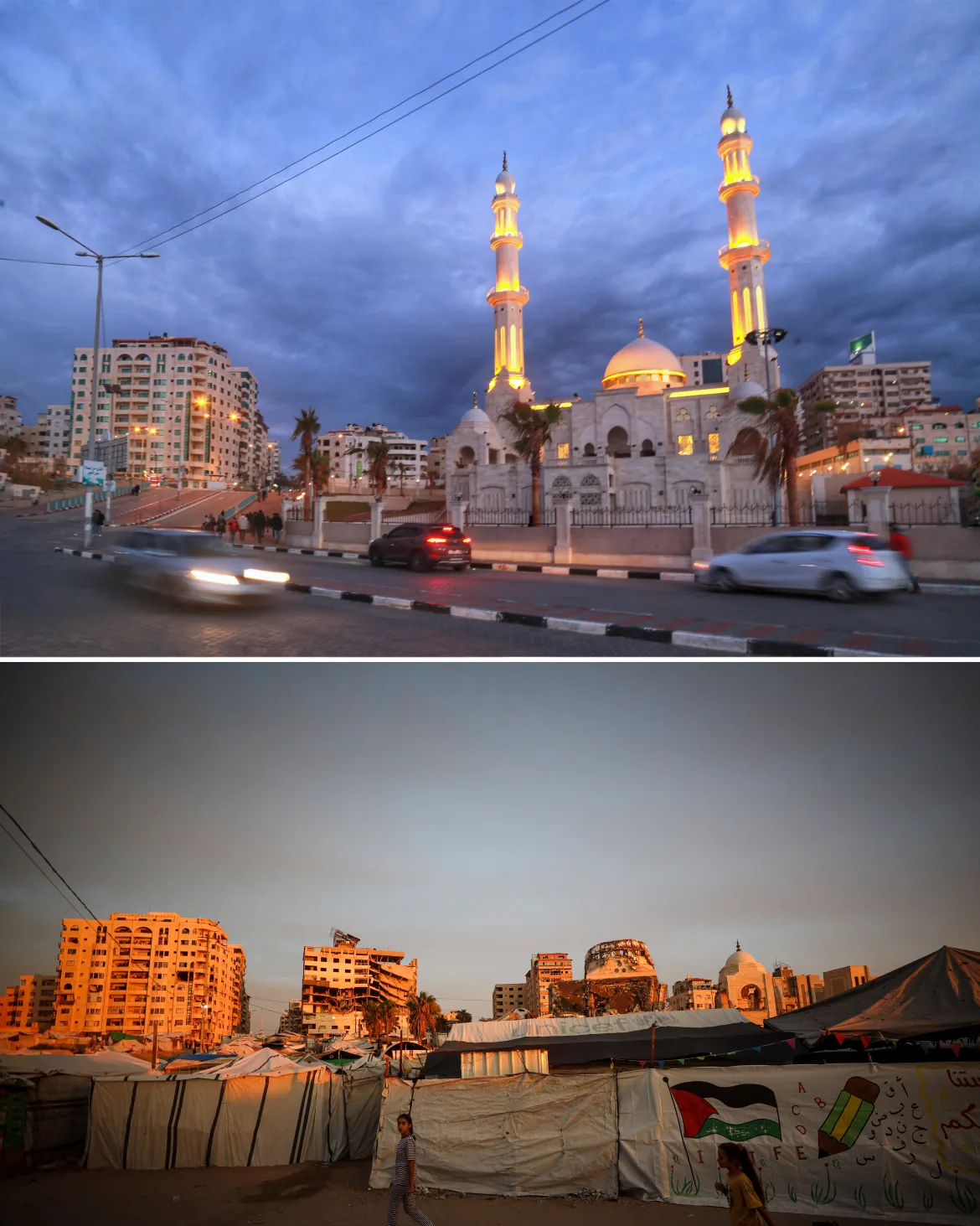
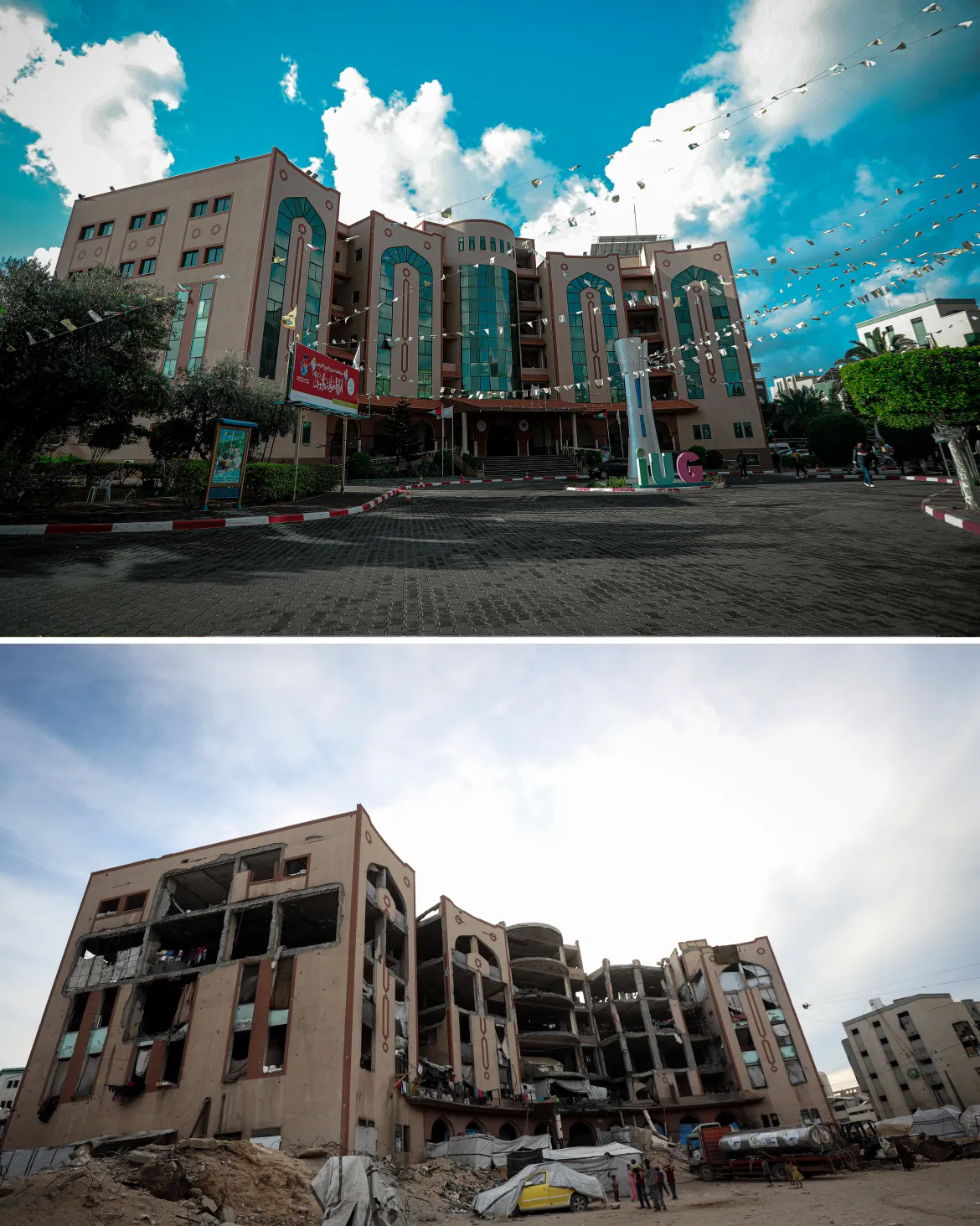
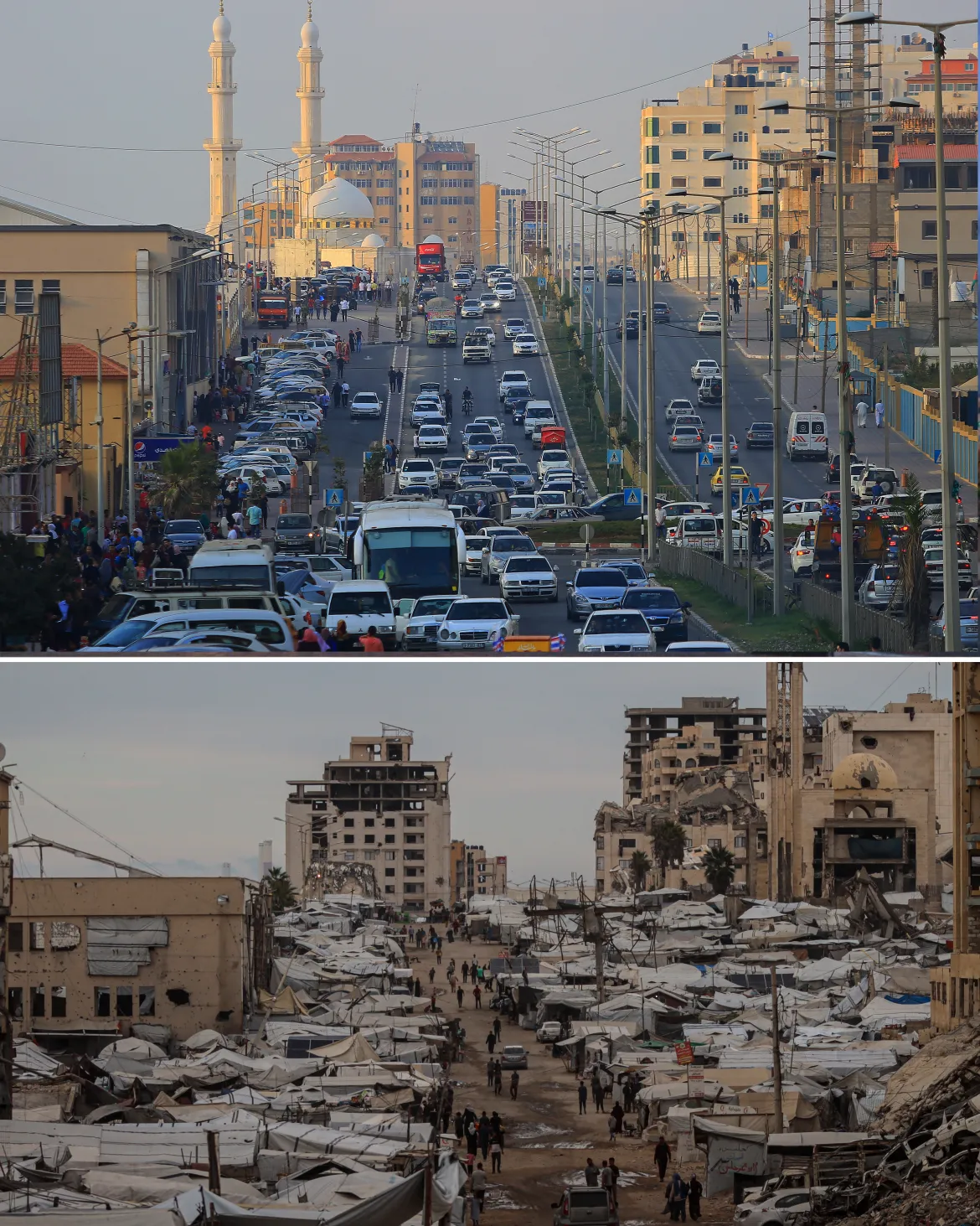
毁灭不仅改变了单个建筑,也改变了其周边的街道和社区,抹去曾帮助人们识别和导航城市的地标。
Some of these places have been reduced to ruins, while others remain standing but heavily damaged. The destruction has altered not only individual buildings but the streets and neighbourhoods around them, removing landmarks that once helped people recognise and navigate their city.
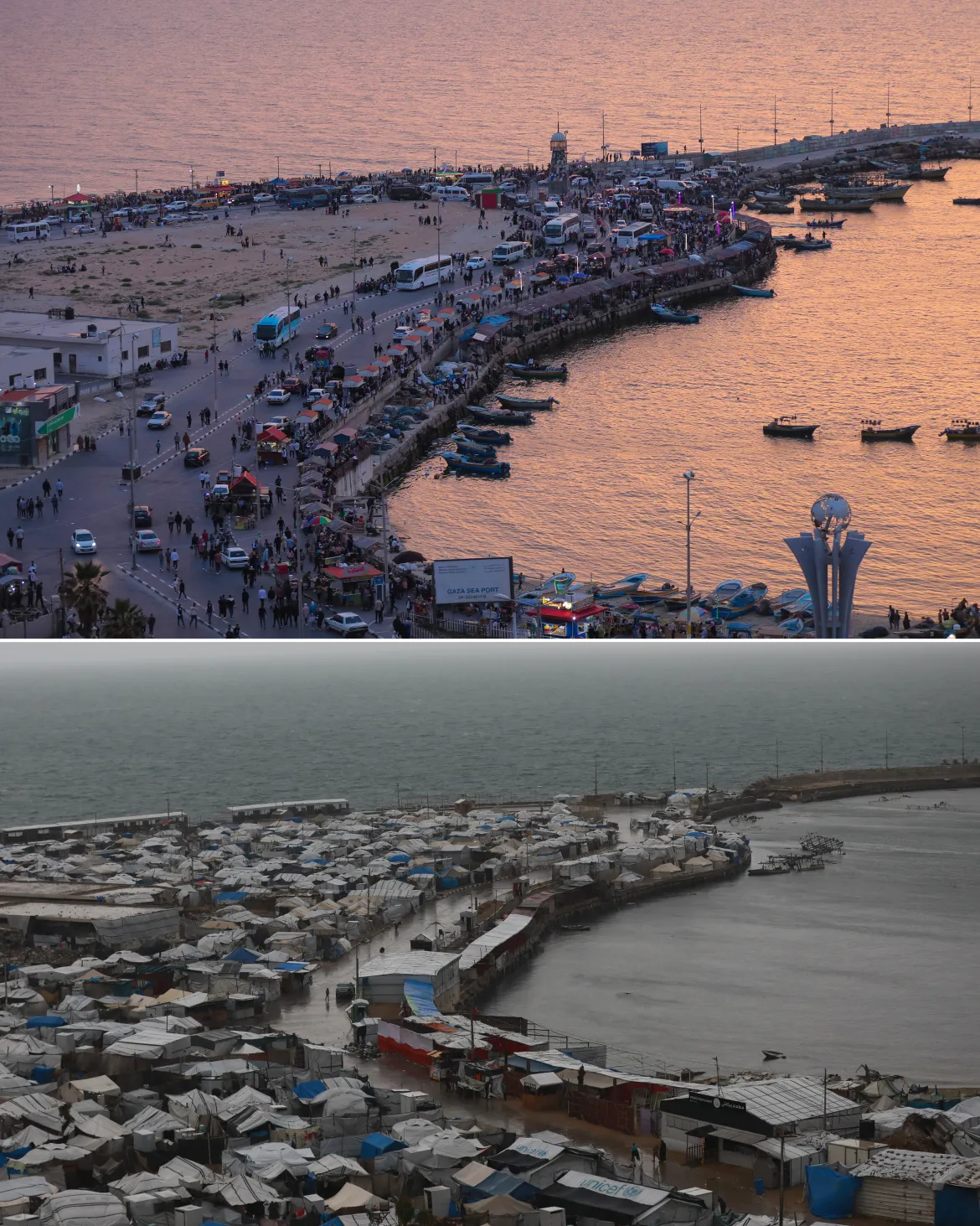
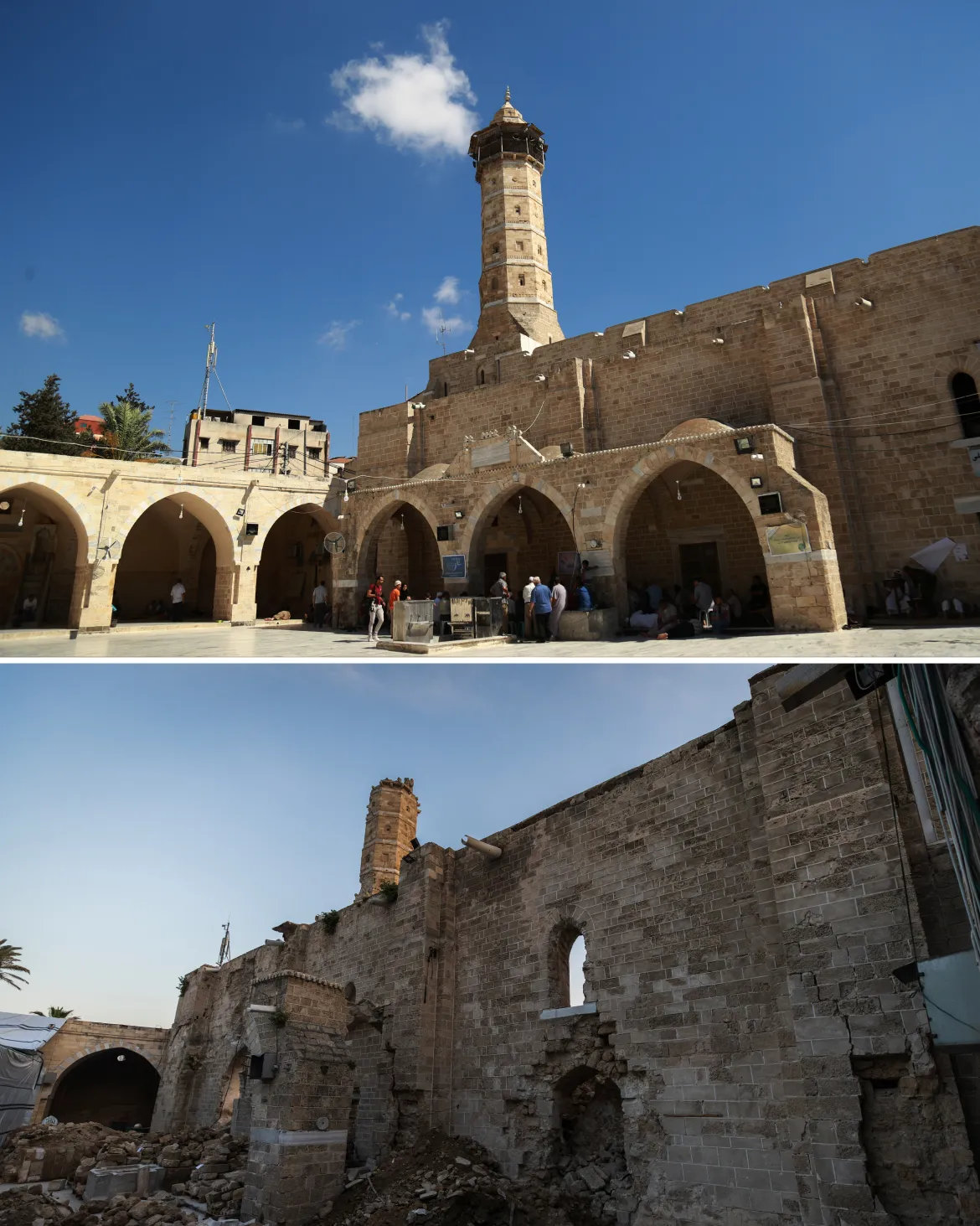
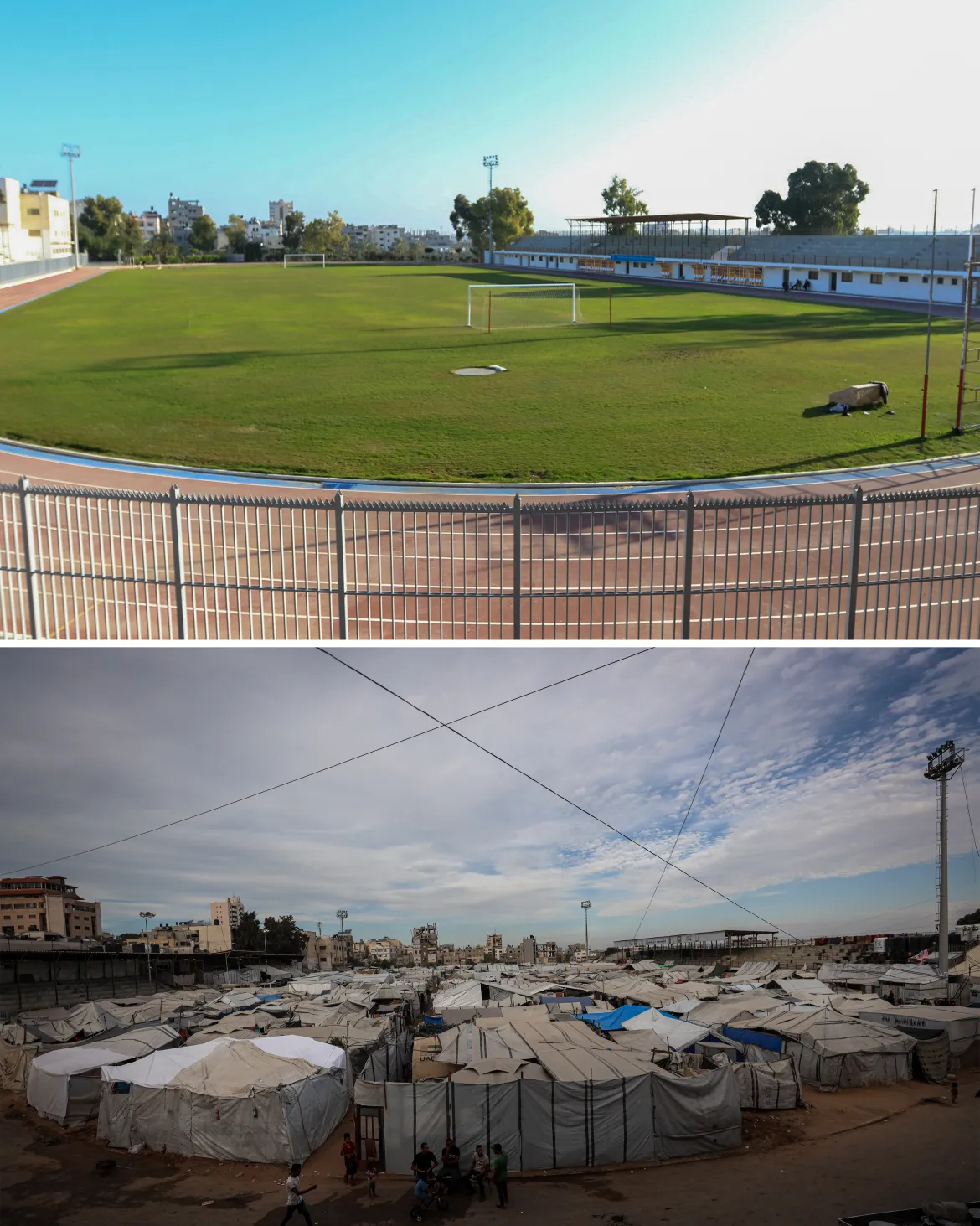
该照片系列将加沙一些最具辨识度的街道、市场和公共建筑的档案图像与战争三年后拍摄的新照片进行对比,展示这些熟悉场所在多年轰炸和毁灭后的变化。
This photo series contrasts archive images of some of Gaza’s most recognisable streets, markets and public buildings with new photographs taken three years into the war, showing how these familiar places have changed after years of bombardment and destruction.