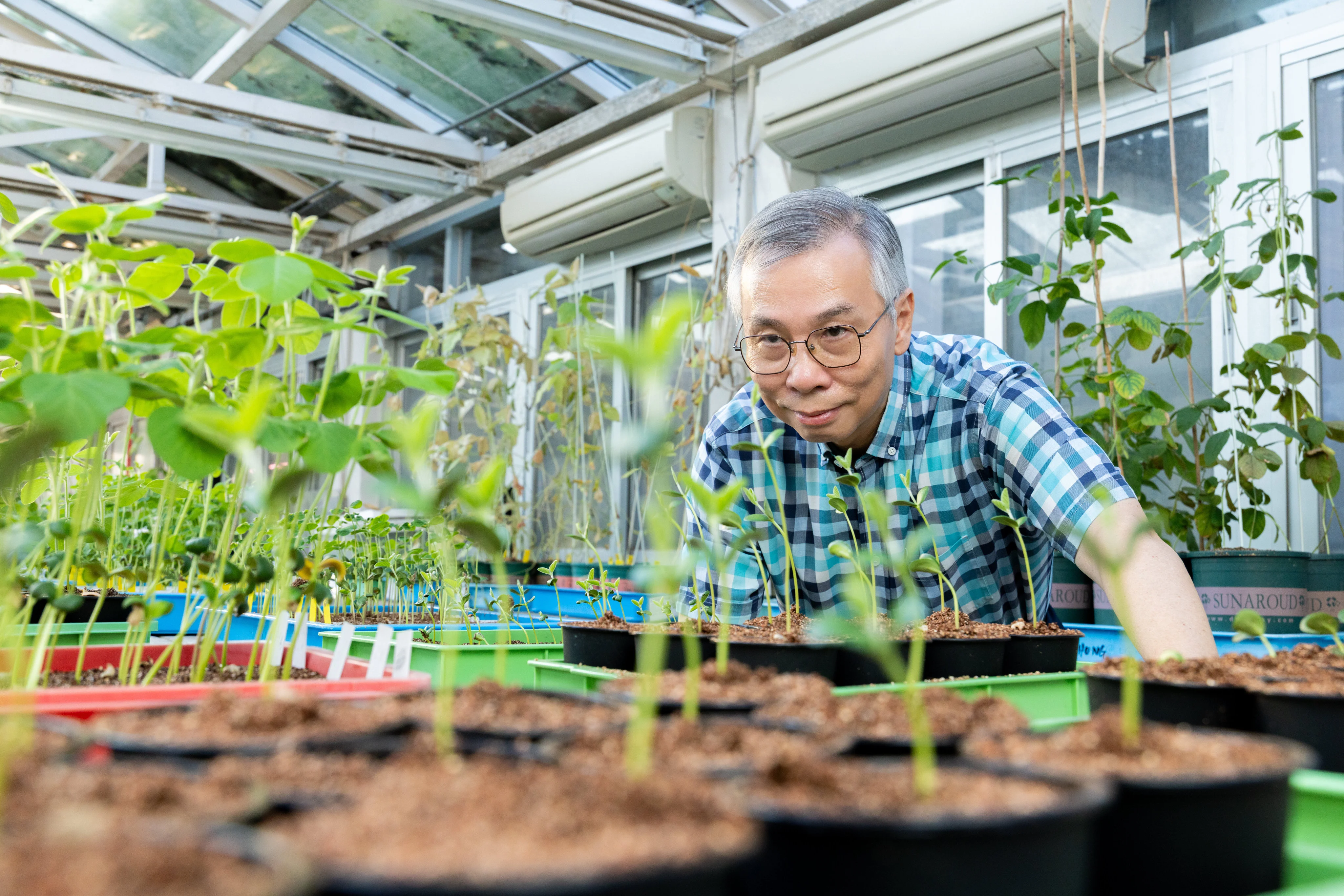
当林汉明教授于1997年在美国完成博士后工作后返回香港时,他专注于一个问题:科学如何帮助养活国家和世界?
When Professor Lam Hon-ming returned to Hong Kong after completing postdoctoral work in the United States in 1997, he was fixated on one question: how can science help feed the country and the world?
他发现大豆提供了部分答案。除了营养价值外,这种作物还能固氮,降低对化肥的依赖,并且一些品种可以通过育种耐受干旱和盐碱。
He found that soybeans offered part of the answer. In addition to its nutritional value, the crop can fix nitrogen levels in the soil, reducing reliance on chemical fertiliser, and some varieties can be bred to tolerate drought and salinity.
林教授随后近三十年致力于大豆遗传学研究,培育适合边际土地的品种。
Lam went on to spend almost three decades studying soybean genetics and developing varieties suited to marginal land.
“我想从事农业研究,因为它对每个人都很重要,尽管从事这方面的人相对较少,”他在香港中文大学国家农业生物技术重点实验室担任主任时说。
“I wanted to work in agricultural research because it is important for everyone, although relatively few people were doing it,” said Lam, the director of the Chinese University of Hong Kong’s State Key Laboratory of Agrobiotechnology.
“我自己来自香港的低收入家庭,深知粮食和机会的获取对弱势群体的重要性。”他的研究此后已远超实验室。
“Coming from a low-income family in Hong Kong myself, I understood how important access to food and opportunities can be for people from disadvantaged backgrounds.”His research has since moved well beyond the laboratory.
2010年,林教授及其合作者在《Nature Genetics》上发表了关于野生和栽培大豆基因组多样性的研究。
Lam and his collaborators published work in the scientific journal Nature Genetics in 2010 examining genetic diversity across wild and cultivated soybean genomes.
四年后,他的团队在《Nature Communications》上报道了一种与野生大豆耐盐性相关的基因。
Four years later, his team reported a gene associated with salt tolerance in wild soybean in another publication, Nature Communications.
普通大豆在土壤盐分积累的地区无法生长。灌溉和干旱天气会留下盐分,导致中国西北地区的大面积农田无法种植常规作物。
Ordinary soybeans fail where salt has built up in the soil. Irrigation and dry weather leave that salt behind, and large stretches of farmland in northwestern mainland China cannot support a normal crop.
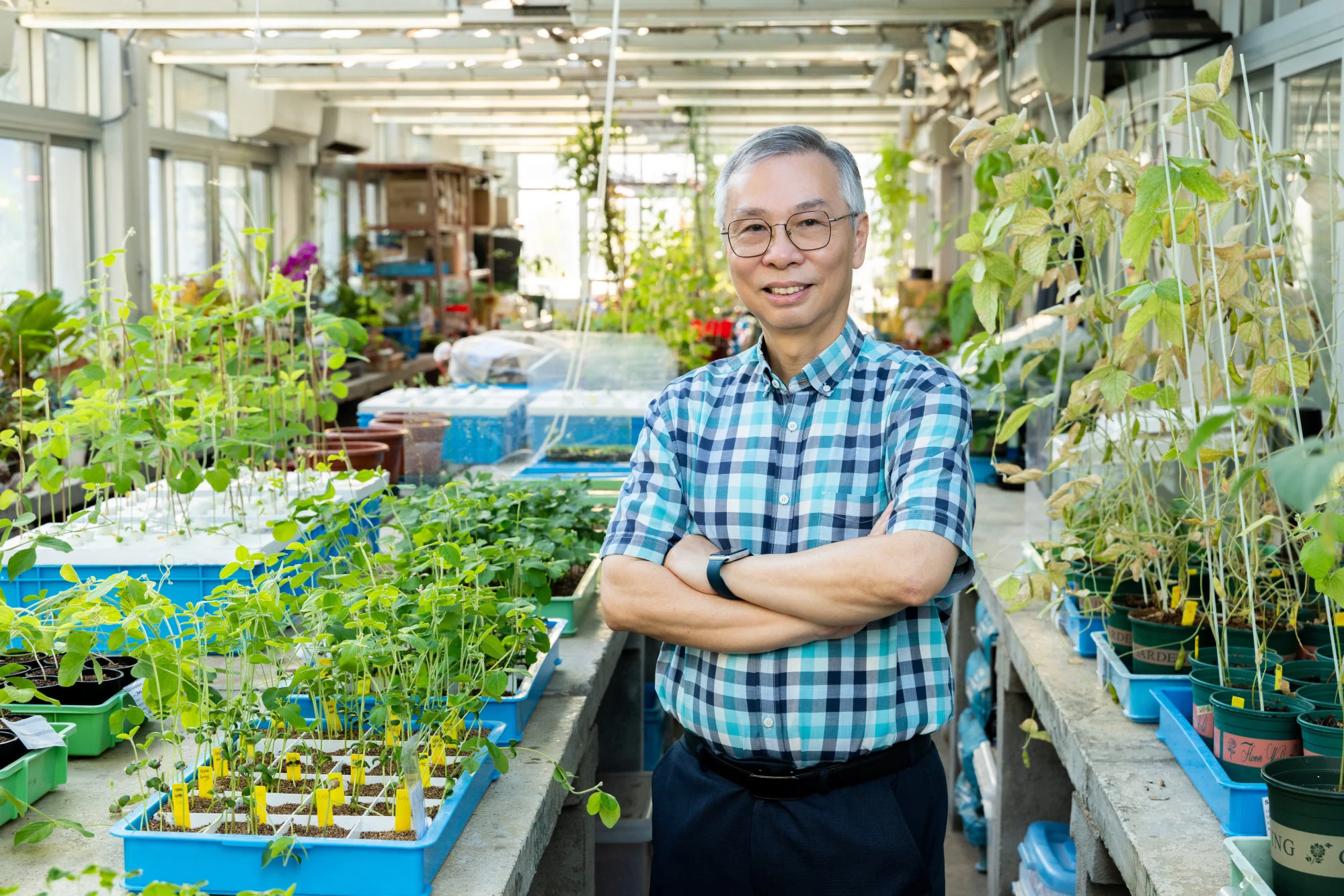
这些科学成果已被用于培育非转基因的大豆品种,以适应艰苦的生长环境。
That science has been applied to breeding non-genetically modified soybean varieties that can cope with difficult growing conditions.
与大陆合作伙伴共同培育的多个品种已获批准在包括甘肃省在内的地区种植。2016年至2024年,三种品种累计种植面积超过10万公顷(247,105英亩)。
Several varieties produced with mainland partners were approved for cultivation, including in Gansu province. From 2016 to 2024, the cumulative area planted with three varieties exceeded 100,000 hectares (247,105 acres).
“对我而言,这展示了香港科学可以为大陆农业做出的贡献,”林教授说。
“To me, it shows what Hong Kong science can contribute to mainland agriculture,” said Lam.
林博士在大豆研究领域的贡献,使他荣获2025年第50届日内瓦国际发明展的金奖及评审团嘉奖。
Lam’s soybean work received a Gold Medal with Congratulations of the Jury at the 50th International Exhibition of Inventions Geneva in 2025.
“不能简单地命令农民该怎么做,”他说,“必须与他们合作,了解他们的需求,找到适合当地环境的方法。”正是这种理念促使他的研究走向海外:如今他在巴基斯坦、孟加拉国和柬埔寨均有合作团队,还在南亚及东南亚其他地区开展项目并展开研讨。
“You cannot simply come in and tell farmers what to do,” he said. “You have to work with them, understand what they need and find something that works locally.”That approach has also taken his research overseas, with collaborators in Pakistan, Bangladesh and Cambodia, as well as projects and discussions elsewhere in South Asia and Southeast Asia.
“各地的土壤、气温及生长季节各不相同,”林博士指出,“必须根据当地条件挑选品种,有时甚至要经过两三个生长季的测试,才能确定其是否适用。”他总是乐于将功劳归于他人。他回忆道,当初进行早期田间试验时,妻子曾用自己的工资予以支持。罗桂祥基金会与利希慎基金会也为他的实地研究提供了资助,这两家机构长期致力于科学、技术、工程、艺术及数学(STEAM)教育的发展。
“Every place has different soil, temperatures and growing seasons,” Lam said. “Varieties have to be selected for local conditions and sometimes tested for two or three seasons before anyone can be sure they will work.”Lam is quick to share the credit. He recalls his wife supporting him when he used his own salary for early field trials. The Lo Kwee Seong Foundation and Lee Hysan Foundation also supported his field work, and the two organisations generally contribute to science, technology, engineering, arts and mathematics (STEAM) education.
近年来,越来越多的同行及私人投资者也开始支持那些需要长期投入的农业研究项目。
More recently, colleagues and private investors have backed projects over the longer timelines common in agriculture.
凭借出色的研究成果,林博士还入围了由信和集团与《南华早报》联合举办的“香港精神奖”创新类奖项的最终评选。
His work has earned him a place as a finalist in the innovation category of the Spirit of Hong Kong Awards, co-organised by Sino Group and the South China Morning Post.
目前,他正致力于推动多年研究成果走出学术论文的范畴,通过农业及食品领域的商业化应用实现持续传承。
Lam is now working to ensure years of research can continue beyond academic papers and his own career, including through commercial applications in agriculture and food.
“年轻时,我总想做那个冲锋在前的人,”他说,“如今,我只想为后来者创造继续前行的条件。只要下一代能比我走得更远,我就心满意足了。”
“When I was younger, I always wanted to be the one charging ahead,” he said. “Now I want to create the conditions for others to take the work forward. If the next generation can carry it further than I did, that is enough for me.”