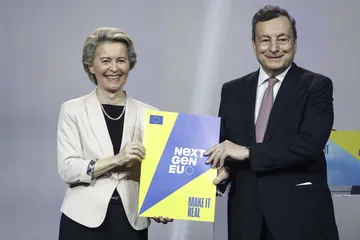
编辑部:六年前,欧盟推出了规模达8000亿欧元的战后复苏计划,这一雄心勃勃的举措被一些人誉为欧盟的“汉密尔顿时刻”。如今资金即将告罄,客观冷静的评估才更为恰当。
By The Editors Six years ago, the European Union’s ambitious €800 billion post-Covid recovery program was hailed by some as the bloc’s “Hamiltonian moment.”As the money runs out, a humbler verdict makes more sense.
该计划的核心部分是“复苏与韧性基金”,它提供了5730亿欧元的拨款与贷款,分阶段发放给各成员国政府。这些资金的使用附带条件:成员国必须达成各项“阶段性目标”(比如推行养老金改革)以及具体的量化指标(如培训一定数量的技术工人或完成一定数量的房屋节能改造)。截至8月底,已有约4400亿欧元拨付到位,剩余款项预计于年底发放完毕。那么,这项计划的成效究竟如何呢?
The core of the program, the Recovery and Resilience Facility, provided €573 billion in grants and loans, disbursed in stages to national governments. The money came with strings attached: Member states had to meet “milestones” (say, passing pension reforms) and quantitative “targets” (a certain number of workers trained or homes insulated, for example). Some €440 billion had been paid out by the end of August, with final payments due by year-end. So how has the program fared?
从宏观经济层面来看,其效果确实存在,但较为有限。欧盟统一举债的做法为欧洲央行的“疫情紧急购债计划”提供了有力支撑,表明欧盟整体愿意通过分担财政风险来配合债券购买行动。据国际货币基金组织估算,该基金去年促使欧盟整体经济增长率提升了0.3个百分点;在希腊和克罗地亚,这一增幅更是超过了1个百分点。
Its macroeconomic effects were real, but modest. The common borrowing supported the European Central Bank’s Pandemic Emergency Purchase Program by showing that the EU collectively stood by its bond-buying efforts with fiscal risk-sharing. The International Monetary Fund reckons the facility added 0.3 percentage points to EU growth last year, and more than a full point in Greece and Croatia.
更为重要的成效体现在改革层面。由于大额拨款设有明确期限,各国财政部得以借此向那些多年来一直阻碍改革的利益群体施加压力。西班牙顺利推行了承诺已久的劳工改革。在公共服务效率向来不高的意大利,欧洲央行的一项研究显示:经过司法体系及公共采购制度的改革后,相关领域出现了“显著且具有经济意义”的改善。
The bigger story is reform. Deadlines attached to large checks gave finance ministries leverage over constituencies that had blocked reform for years. Spain passed long-promised labor reform. In Italy, not known for its efficient public service, an ECB study found “robust and economically meaningful” improvements after overhauls of courts and public procurement.
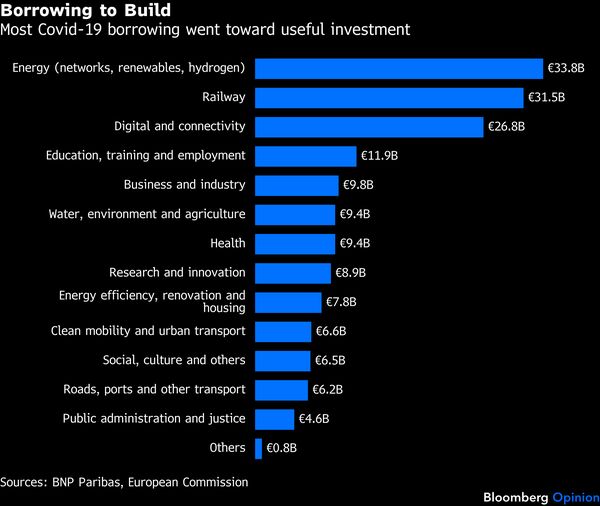
投资方面的成果同样值得肯定。到2025年,该基金将共同资助总计3100亿欧元的支出项目,其中74%用于基础设施建设,尤其是交通、能源及数字基础设施领域。各国实施的举措中,平均有41%致力于推动绿色转型。希腊利用这笔资金翻新医院并升级学校的数字化设施;波兰则着力扩大可再生能源产能及电网容量。总体而言,该基金约80%的资金均用于实施新项目——这与最初规划完全一致,而非单纯用于填补各国预算缺口。
There were also positives in the investment ledger. Of €310 billion in cofinanced spending through 2025, 74% went toward capital projects, especially in transportation, energy and digital infrastructure. An average of 41% of measures in each country supported the green transition. Greece financed hospital renovations and digital upgrades for schools. Poland expanded renewables and grid capacity. About 80% of the facility’s spending was used for new projects — as planned — rather than for backfilling budgets.
当然,这一举措并非尽善尽美。有些项目的实际支出低于预算,这说明最初的预算估算存在虚高成分(按规定,政府可将节省下来的资金留存自用)。还有些项目则将资金转向原先已规划好的项目。有时计划过于宏大而超出实际执行能力,迫使相关计划不得不做出调整。正如欧洲审计院多次指出的那样,成本追踪机制也仍有诸多待改进之处。
It wasn’t perfect, of course. Some plans seemed to run below their budgeted cost, suggesting estimates were padded (under the rules, governments kept the difference). Others shifted spending toward previously planned projects. Ambitions sometimes outran capacity, forcing plan revisions. And cost-tracking efforts, as the European Court of Auditors has repeatedly found, left much to be desired.
不过总体而言,这一举措的成功程度超出了许多人的预期。或许最重要的是,它证明了欧盟有能力大规模举债,并能借助共同资金促使各成员国完成那些难度较大的任务。对政策制定者而言,当前的挑战在于:在现有成果基础上,利用规模更大的欧盟预算来保障那些欧盟最具优势的公共产品供给;而非将危机应急基金演变为长期补贴各国预算的手段。
All told, though, the effort was more successful than many had expected. Perhaps most important, it showed the EU can borrow at scale and use common funds to get governments to do hard things. For policymakers, the challenge now is to build on this progress with a bigger EU budget spent on ensuring the public goods that the bloc is best placed to provide, not turn a crisis fund into a standing subsidy for national budgets.
事实上,这一复苏与韧性基金模式正在广泛推广。它已被纳入欧盟的其他支出项目,比如社会气候基金以及对乌援助机制。未来,同样的原则很可能主导欧盟委员会的下一轮预算规划:目前十多项现有基金有望整合为一项总额达8650亿欧元的拨款机制,并沿用各国需达成的“阶段性目标与指标”这一框架。现有的复苏债券到期后也应进行再融资,目标是打造出真正的欧洲安全资产。
In fact, the RRF model is already spreading. It has been incorporated into other EU spending projects, such as the Social Climate Fund and the Ukraine facility. The same principles look set to govern much of the European Commission’s next budget, with more than a dozen existing funds likely to be streamlined into a single €865 billion grant-making vehicle, using the same framework of national “milestones and targets.”The existing stock of recovery bonds should be refinanced as they mature, with the goal of creating a true European safe asset.
新增借款则可用于那些能够促进私人投资或提升欧盟安全水平的公共项目。资金拨付给各国政府时,应以推动其消除资本流动、服务业发展及企业创办方面的障碍作为前提,如此才能让布鲁塞尔拥有应对各国保护主义行为的筹码——这些保护主义行为至今仍在阻碍单一市场的建设。
New borrowing can be reserved for public goods that (for example) encourage private investment or enhance the bloc’s security. Where money flows to governments, it should reward reforms that dismantle barriers to capital, services and business formation, giving Brussels leverage against the national protectionism that continues to obstruct the single market.
虽说这或许算不上具有汉密尔顿式的历史意义,但欧洲针对新冠疫情所采取的积极应对措施,确实为构建一个更具韧性的欧盟奠定了基础。在这样一个充满风险的时期,这无疑是朝着正确方向迈出的一步。
Perhaps it wasn’t a Hamiltonian moment, but Europe’s ambitious response to the Covid-19 crisis has nonetheless laid the groundwork for a more durable union. At an otherwise perilous moment, it’s a step in the right direction.
如需联系负责彭博社观点版块社论内容的主编,请致信蒂莫西·L·奥布赖恩,邮箱:tlobrien@bloomberg.net
To contact the senior editor responsible for Bloomberg Opinion’s editorials: Timothy L. O'Brien at tlobrien@bloomberg.net