迈克尔·姆西卡和莱文·斯塔姆报道 看来奢侈品行业的最大品牌在年终将缺乏强劲的推动力,投资者可能要等到2027年才会看到潜在的回升。
It seems there’ll be few fireworks to spark a strong year-end for luxury’s biggest names, leaving investors to wait until 2027 for any potential upswing.
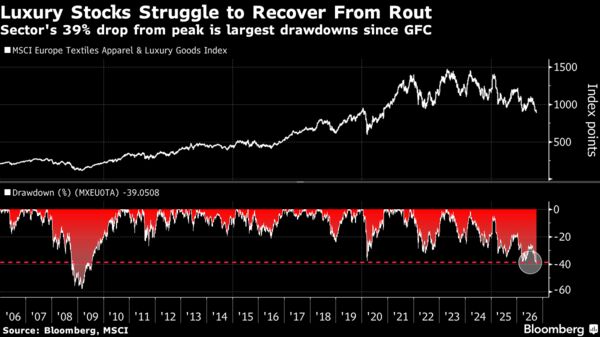
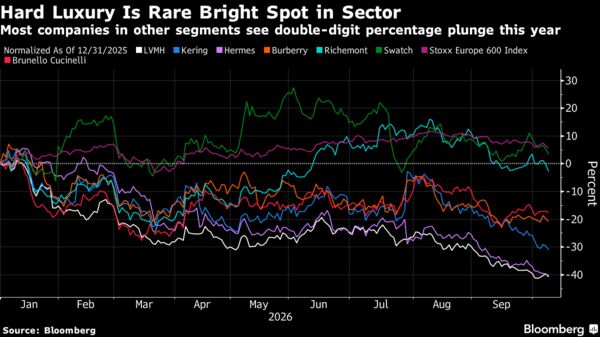
MSCI欧洲纺织服装与奢侈品指数今年下跌了25%,似乎无法维持最近几个月的技术性反弹。其跌幅甚至超过了汽车板块的21%跌幅,后者是Stoxx 600表现最差的子指数。
The MSCI Europe Textiles Apparel and Luxury Goods index is down 25% this year, seemingly unable to sustain a series of technical bounces in recent months. The slump is deeper than the 21% drop by the auto sector, the Stoxx 600’s worst-performing subindex.
中国需求低迷、地缘政治环境动荡,加上利率上升和定价能力下降,导致复苏希望受挫。随着奢侈品股价从上一次历史高点跌去近40%,多头将寄望即将到来的财报季能带来好消息,至少阻止跌势继续。
Subdued Chinese demand and the troubled geopolitical context have combined with rising interest rates and reduced pricing power to derail hopes of a resurgence. With luxury stocks down almost 40% from their last record high, bulls will be looking to the coming earnings season for some good news to at least stem the slide.
瑞银集团分析师团队(由Zuzanna Pusz领衔)表示:“伊朗冲突、行业自救进展放缓以及夏季需求走软进一步延迟了复苏。”该团队此前对今年早些时候盈利趋稳的信心被证明为时过早。“我们仍然认为这次下行是周期性的,而非结构性的。”失望情绪促使他们将对2027年的预期重新设定,分析师称,“关注点正日益转向更弱的趋势”。
“The Iran conflict, slower industry self-help and softer trends over the summer have further delayed the recovery,” said UBS Group AG analysts led by Zuzanna Pusz. Confidence the team had in an earnings stabilization earlier this year proved premature. “We continue to view the downturn as cyclical rather than structural.”The disappointment has prompted a reset in expectations for 2027, where the “focus is increasingly shifting” to reflect weaker trends, the analysts said.
他们对硬奢侈品最为乐观,偏好买入评级的历峰集团(Richemont SA)和瑞士手表集团(Watches of Switzerland Group Plc)。他们最近将爱马仕国际(Hermes International SCA)降级为卖出,因为有迹象表明其盈利状况正日益受到经济周期的影响。
They are most positive on hard luxury, favoring buy-rated Richemont SA and Watches of Switzerland Group Plc. They recently downgraded Hermes International SCA to sell because of indications that its earnings profile is becoming increasingly linked to economic cycles.
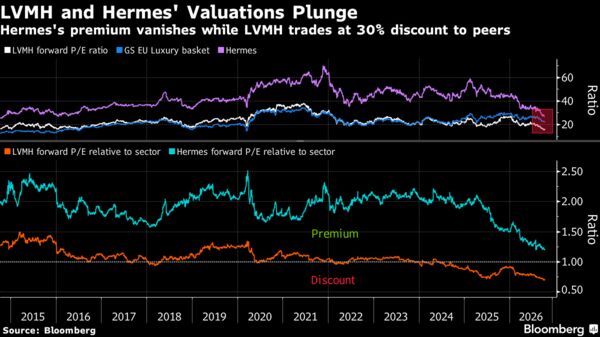
时代变迁的一个明显迹象便是:曾备受市场青睐的两大奢侈品巨头股价大幅下挫。今年,路威酩轩与爱马仕的股价均下跌了40%,两家公司的估值水平也跌至12年来的最低点。路威酩轩的颓势尤为显著:目前其股价较整个奢侈品行业平均水平低了30%,创下历史最大折价幅度;其预期市盈率也已降至16以下。与此同时,爱马仕相对于行业的溢价水平也在迅速缩水,短短18个月内便从100%降至仅22%。
In a sign of the times, shares in two former darlings of the sector have collapsed. Both LVMH and Hermes are down 40% this year, dragging their respective valuation levels to the lowest in 12 years. The fall in grace for LVMH is particularly stark: it now trades at a record 30% discount to the broader luxury sector. Its absolute forward price-to-earnings ratio has slid below 16. Meanwhile, Hermes’s premium to the sector has been vanishing fast, from 100% to just 22% in a mere 18 months.
“鉴于宏观经济环境趋弱,加之行业面临诸多结构性阻力,奢侈品消费的消化周期也相应延长,我们预计未来12个月内行业估值倍数很难出现扩张。”摩根士丹利分析师纳塔莎·博内特等人指出,“我们依然看好那些最能受益于‘K型复苏’、且能从人工智能带来的财富增长中获益的企业。”正是基于这一判断,该机构对法拉利、历峰集团以及布鲁内洛·库奇内利均维持超配评级。
“With a softening macro backdrop and the luxury digestion cycle lasting longer given apparent structural headwinds facing the sector, we see little scope for multiple expansion over the next 12 months,” said Morgan Stanley analysts including Natasha Bonnet. “We continue to favor the names most exposed to the K-shape, driven by AI wealth creation.”That view underpins overweight stances on Ferrari NV, Richemont and Brunello Cucinelli SpA.
在博内特团队看来,二手奢侈品日益流行、奢侈品品牌提价能力减弱,以及他们所称的“奢侈品消费疲劳”,都是行业面临的额外挑战。此外,消费者日益倾向于购买与健康、长寿相关的产品,这也分流了原本用于奢侈品消费的可支配支出。
For Bonnet’s team, the growing popularity of second-hand luxury, a reduced ability to hike prices and what they termed “luxury fatigue” are added challenges. They also noted a shift in toward wellness and longevity purchases that’s competing for discretionary spending.
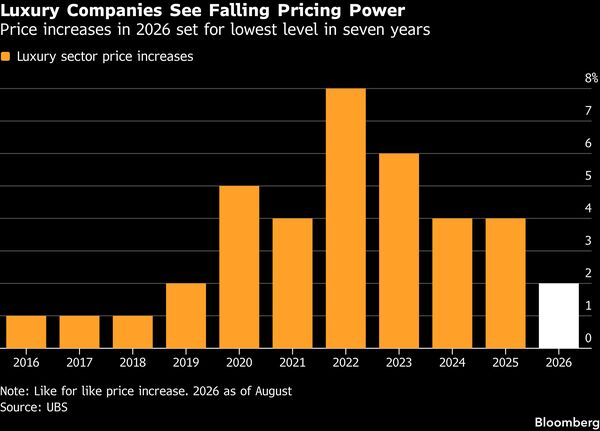
如今,看好奢侈品行业的人士也越来越难以维持乐观情绪。利率持续上升以及油价上涨引发的通货膨胀,正在削弱中产阶级的消费能力与信心。与此同时,在经历了数个季度的低迷之后,今年奢侈品需求仅出现温和复苏。对于路威酩轩与爱马仕这类企业而言,重新恢复往日强大的定价能力似乎也不太可能;预计今年它们的提价幅度也将创下2019年以来的新低。
It’s getting harder for bulls to sustain their optimism. Rising interest rates and higher inflation caused by elevated oil prices are denting middle-class consumer spending and confidence. Meanwhile, appetite for luxury items has shown only a tepid recovery this year after several quarters in the doldrums. Plus, a return to the heydays of strong pricing power for the likes of LVMH and Hermes seems unlikely. Increases this year are set to be the lowest since 2019.
整个奢侈品行业的前景在很大程度上取决于中国消费者支出的复苏情况。然而近期这一领域又传来了负面消息:初步数据显示,在本月的国庆黄金周期间,中国消费者的旅游与娱乐支出表现平平。
Much of the outlook for the sector hinges on a long-awaited recovery in Chinese consumer spending. But there was more bad news on this front recently, as early data pointed to muted travel and softer entertainment spending patterns during this month’s Golden Week holiday.
“中国奢侈品市场的挑战是结构性的,而非周期性的,”贝伦堡分析师团队在尼克·安德森的带领下表示。中国第三季度的疲弱数据不应令人惊讶,他们说,这意味着数据往往会继续令人失望。“这很重要,因为共识和许多企业仍然预计中国消费者将在2030年代成为全球增长的关键驱动力。因此,行业共识的风险仍然坚定地偏向下行,正如我们一直所论证的那样。”
“The Chinese luxury market is defined by structural not cyclical challenges,” said Berenberg analysts led by Nick Anderson. Weak third-quarter readings from China shouldn’t come as a surprise, they said, tipping the data to continue to disappoint more often than not. “This matters as consensus and many corporates still expect the Chinese consumer to be a key driver of global growth into the 2030s. The risk to sector consensus thus remains firmly to the downside, as we have consistently argued.”
第三季度的报告季将在周一收盘后公布路威酩轩(LVMW)的更新。市场预期整个行业的有机增长率将放缓。硬奢侈品和高端品牌预计将再次表现出比软奢侈品更强的韧性。开云集团(Kering SA)最近的收盘前电话会议传递了谨慎基调,背景恶化且中国持续疲软。
The third-quarter reporting season kicks off with LVMH’s update due after market close on Monday. Street expectations are for slower organic growth rates across the sector. Hard luxury and high-end brands are forecast to be more resilient than soft luxury again. Kering SA’s recent pre-close call set a cautious tone, with a worsening backdrop and persistent weakness in China.
尽管如此,仍有一些令人鼓舞的迹象。例如,私营的香奈儿有限公司上半年实现了16%的出色销售增长,这与软奢侈品同行如路威酩轩形成鲜明对比,更接近卡地亚母公司历峰(Richemont)的硬奢侈品复苏。更广泛的逆转需要宏观经济趋于稳定,并且公司解决其内部的特有问题。高盛集团的分析师是看到这一前景的其中之一。
For all that, there are a few encouraging signs. Privately owned Chanel Ltd., for instance, produced stellar first-half sales growth of 16%, a sharp contrast to soft luxury peers like LVMH, and more in line with the hard luxury recovery seen at Cartier-owner Richemont. A broader turnaround would need the macro economy to stabilize and for companies to address their in-house idiosyncratic issues. Goldman Sachs Group Inc. analysts are among those seeing scope for this to play out.
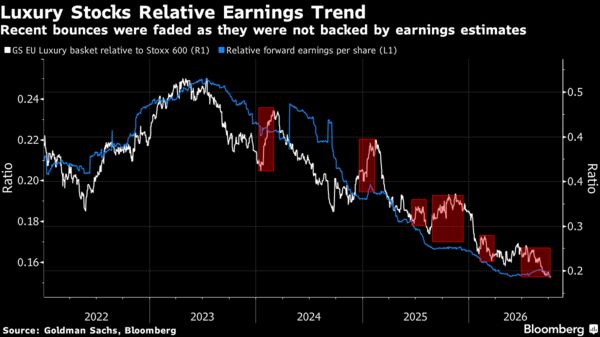
“激进的定价、战略惰性和有限的产品创新,加上宏观逆风,限制了奢侈品行业的销售动能。行业能否恢复到体面的增长?我们相信可以,”埃尔万·兰布尔格(Erwan Rambourg)领衔的团队表示。“我们认为2027年将是后疫情三年规范化后的转折点,届时行业将回归中等单位数的有机销售增长。原因是什么?主要是因为行业正逐步解决此前拖累增长的公司特定因素。”
“Aggressive pricing, strategic inertia and limited product innovation, combined with macro headwinds, have constrained sales momentum across the luxury sector. Can the sector return to decent growth? We believe so,” said a team led by Erwan Rambourg. “We see 2027 as a turning point after three years of post-COVID normalization, with the sector reverting to mid-single digit organic sales growth. Why? Primarily because the sector is gradually addressing company-specific factors that had previously weighed on growth.”