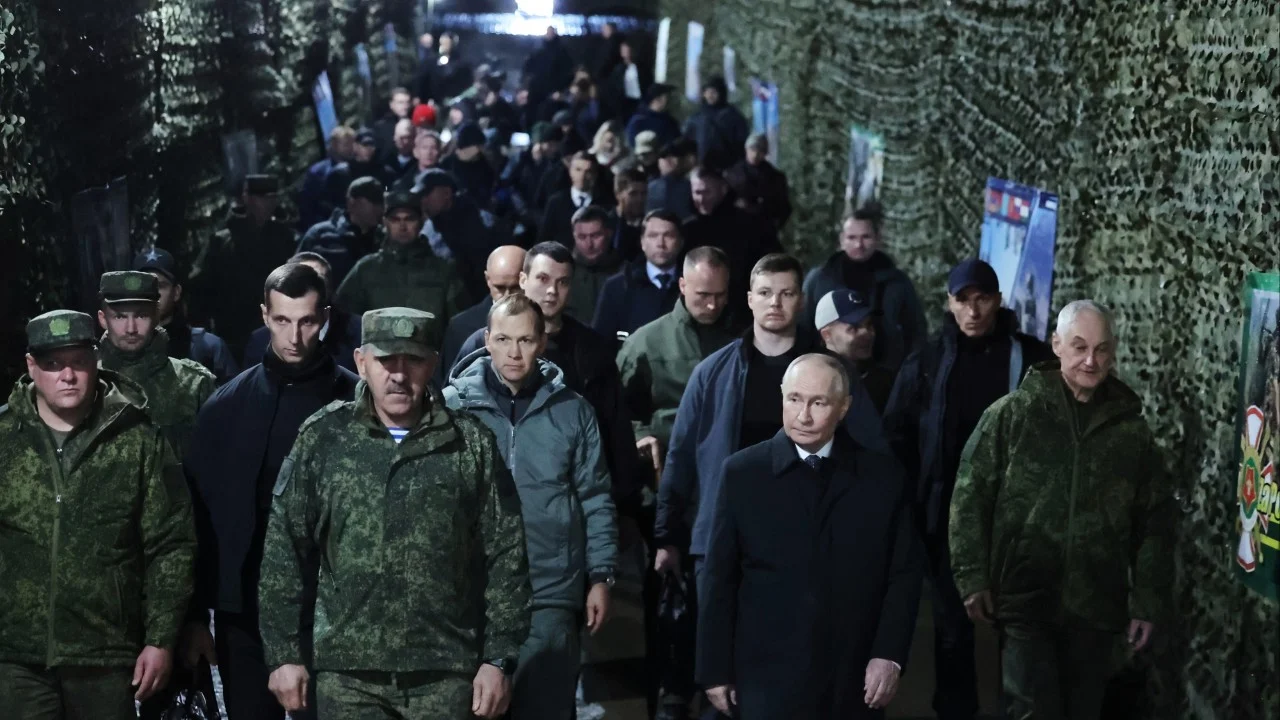
最近,俄罗斯总统弗拉基米尔·普京在乌拉尔地区观摩了大规模“中心-2026”军事演习的最后阶段,而中国军队则与俄罗斯、白俄罗斯及其他国家的部队一同进行训练。超过4.7万名军事人员参加了此次演习,其中融入了乌克兰战争的经验教训。
As Russian President Vladimir Putin watched the final stage of the massive Tsentr-2026 military exercise in the Urals recently, Chinese troops were training alongside forces from Russia, Belarus and other countries. More than 47,000 military personnel joined the exercise, which incorporated lessons from the war in Ukraine.
这种象征意义并不仅限于车里雅宾斯克。从俄罗斯入侵乌克兰,到中国与白俄罗斯举行军事演习,再到如今中国参与与俄罗斯和白俄罗斯军队共同举行的“中心-2026”演习——欧亚大陆的发展正在将两个曾被认为基本独立的战略区域连接起来:欧洲-大西洋地区与印太地区。
The symbolism extends beyond Chelyabinsk. From Russia’s invasion of Ukraine to Chinese military exercises with Belarus – and now China’s participation alongside Russian and Belarusian forces in Tsentr-2026 – Eurasian developments are connecting two strategic theatres once considered largely separate: the Euro-Atlantic and Indo-Pacific.
在此背景下,美国、日本和波兰之间正悄然形成一个新的战略三角。
Against this background, a new strategic triangle is quietly taking shape among the United States, Japan and Poland.
这既不是一个正式的三方联盟,也未必是另一场冷战。相反,它可能代表了一种新的威慑架构,正如我在书中所述,这是美国与中国之间长期竞争的一部分——这场竞争通过贸易、技术、外交、军事准备、联盟以及对国际秩序的不同愿景展开。
It is neither a formal trilateral alliance nor necessarily another cold war. Rather, it may represent a new architecture of deterrence in what I described in my book as the long competition between the US and China – a contest conducted through trade, technology, diplomacy, military preparedness, alliances and competing visions of international order.
这场“和平战争”发生在我所称的“碎片化相互依赖”时代。这些国家在战略上相互竞争,同时又在经济和技术上彼此依赖。然而,华盛顿-华沙-东京三角关系的直接催化剂,与其说是中国,不如说是俄罗斯。
This peaceful war unfolds within what I call an age of “fragmented interdependence”. These nations compete strategically while remaining economically and technologically dependent upon one another. Yet the immediate catalyst for the Washington-Warsaw-Tokyo triangle lies less in China than in Russia.
俄罗斯2022年入侵乌克兰改变了波兰的安全环境。作为与乌克兰、白俄罗斯及俄罗斯加里宁格勒地区接壤的北约前线国家,波兰加快了军事现代化进程,并深化了与华盛顿的关系。华沙已批准为与美国就永久军事基地的谈判做准备;波兰目前已在波兹南设有美国陆军第五集团军的前方总部,并在波维茨拥有重要的美国基础设施。
Russia’s 2022 invasion of Ukraine transformed Poland’s security environment. As a frontline Nato state bordering Ukraine, Belarus and Russia’s Kaliningrad region, Poland accelerated military modernisation and deepened its relationship with Washington. Warsaw has authorised preparations for negotiations on a permanent US military base; Poland already hosts the forward headquarters of the US Army’s V Corps in Poznan and major American infrastructure at Powidz.
随后,印太地区出人意料地变得更加紧密。2024年7月,中国军队在白俄罗斯与波兰边境附近的布列斯特地区,与白俄罗斯共同举行了“鹰击”演习。北京方面称这是一次反恐训练,并非针对跨大西洋安全联盟北约的行动。然而,中国军队正是在一个为俄罗斯入侵乌克兰提供便利的国家进行演习的。如今,“中心-2026”演习则进一步将中国训练与俄罗斯和白俄罗斯军队在俄罗斯领土上的行动结合在了一起。
Then the Indo-Pacific moved unexpectedly closer. In July 2024, Chinese troops conducted the Eagle Assault exercise with Belarus near Brest, close to Poland’s frontier. Beijing described it as counterterrorism training – not an operation directed against Nato, the transatlantic security alliance. Yet Chinese forces were exercising in a country that facilitated Russia’s invasion of Ukraine. Tsentr-2026 now adds Chinese training alongside Russian and Belarusian forces on Russian territory.
这有助于解释为何波兰与日本迅速发展的关系值得更多关注。华沙与东京之间的联系并非新鲜事。在1904年至1905年的日俄战争期间,波兰的独立领袖们曾将日本视为沙皇俄国的对手。
That helps explain why Poland’s rapidly developing relationship with Japan deserves greater attention. The Warsaw-Tokyo connection is not new. During the Russo-Japanese War of 1904-05, Polish independence leaders looked to Japan as imperial Russia’s adversary.
最具人道主义意义的一章则出现在1940年。当时担任日本驻立陶宛领事的重光葵签发了过境签证,使数千名波兰犹太人得以经由苏联和日本逃离被德国占领的波兰。早在如今的战略伙伴关系建立之前,波兰与日本的利益——以及人类的命运——就已经在大国冲突的压力下,于欧亚大陆相互交织。
The most compelling humanitarian chapter came in 1940. Chiune Sugihara, Japan’s consul in Lithuania, issued transit visas that enabled thousands of Polish Jews to escape German-occupied Poland through the Soviet Union and Japan. Long before today’s strategic partnership, Polish and Japanese interests – and human destinies – were intersecting across Eurasia under pressure from great-power conflict.
今年4月,波兰总理唐纳德·图斯克与日本首相高市早苗将双边关系提升为全面战略伙伴关系。值得注意的是,双方在联合声明中宣布,欧洲-大西洋地区与印太地区的安全紧密相连,反对通过武力或胁迫改变现状的企图,谴责俄罗斯对乌克兰的侵略,并呼吁与志同道合的伙伴深化合作,加强与美国的联盟,以提升国家国防能力。
In April this year, Polish Prime Minister Donald Tusk and Japanese Prime Minister Sanae Takaichi elevated bilateral relations to a comprehensive strategic partnership. Significantly, their joint statement declared Euro-Atlantic and Indo-Pacific security to be closely interconnected, opposed attempts to change the status quo by force or coercion, condemned Russia’s aggression against Ukraine, and called for deeper cooperation with like-minded partners and stronger alliances with the US to enhance national defence capabilities.
外交部长拉多斯瓦夫·西科尔斯基曾指出:“波兰国家利益的捍卫——包括波兰主权的捍卫——往往始于距离我们边境1000公里之处。”这一战略逻辑正是他当时观察所得。他的这一表述有助于解释华沙为何加强与东京的战略伙伴关系,并更广泛地参与与其他印太伙伴的合作。
This strategic logic was captured by Foreign Minister Radoslaw Sikorski when he observed that “the defence of Poland’s national interest – including the defence of Polish sovereignty – often begins 1,000km from our borders”. His formulation helps explain Warsaw’s strengthening strategic partnership with Tokyo and its broader engagement with other Indo-Pacific partners.
日本位于美国联盟体系的东部海上前沿,直面中国和拥有核武器的朝鲜。波兰则位于北约的东部大陆前沿,与俄罗斯势力和白俄罗斯的不稳定局势相对峙。而美国则将两国连接起来。
Japan occupies the eastern maritime frontier of America’s alliance system – facing China and nuclear-armed North Korea. Poland occupies Nato’s eastern continental frontier – confronting Russian power and instability in Belarus. The US connects them.
然而,这并非一个简单的反华联盟。波兰与中国保持着全面战略伙伴关系;日本在经济上仍与中国紧密相连;而华盛顿则同时与北京展开竞争、谈判和贸易。这种看似矛盾的现象,恰恰体现了碎片化的相互依存关系。
Yet this is not simply an anti-China coalition. Poland maintains a comprehensive strategic partnership with China; Japan remains economically intertwined with China; and Washington simultaneously competes, negotiates and trades with Beijing. This apparent contradiction is precisely fragmented interdependence.
因此,美日波三角关系或许更应被理解为一种威慑,而非遏制:波兰为北约东部翼的稳定作出贡献,日本则维护印太地区的战略平衡,而美国则将这两个日益相互依存的战略安全领域连接起来。
The US-Japan-Poland triangle may therefore be better understood as deterrence rather than containment: Poland contributing to stability on Nato’s eastern flank, Japan to the strategic balance in the Indo-Pacific, and the US connecting two increasingly interdependent security theatres.
尽管如此,这种威慑也可能带来危险。如果华盛顿将中国的每一项举措都解读为扩张,而北京则将美国的每一项联盟都视为遏制,那么安全困境就可能使和平竞争演变为军事对抗。波兰和日本可以证明,强大的联盟并不必然需要封闭的经济集团,威慑也可以与对话共存。
Nonetheless, this deterrence may carry danger. If Washington interprets every Chinese initiative as expansion while Beijing sees every American alliance as containment, the security dilemma could transform peaceful competition into military confrontation. Poland and Japan can show that strong alliances need not require closed economic blocs and that deterrence can coexist with dialogue.
因此,21世纪既可能不会由另一场冷战所定义,也——我们希望——不会由一场热战所定义。相反,它越来越类似于我多年前所描述的那种“和平战争”:各强国之间在经济、技术、外交和战略优势上的竞争持续存在,但它们彼此之间的相互联系依然根深蒂固。
The 21st century may therefore be defined neither by another cold war nor – one hopes – by a hot war. Instead, it increasingly resembles the peaceful war I described years ago. It sustained competition for economic, technological, diplomatic and strategic advantage among powers that remain profoundly interconnected.
在这个相互依存却彼此割裂的时代,华盛顿-华沙-东京三角关系或许会成为一种重要的新型威慑架构。其成功不应以美国是否战胜中国,或中国是否在美国面前退让来衡量。更具决定意义的问题是:在“和平战争”持续进行之际,威慑能否维系和平?而大国竞争最终是否能为一个更加和平的世界做出贡献?
In this age of fragmented interdependence, the Washington-Warsaw-Tokyo triangle may become an important new architecture of deterrence. Its success should not be measured by whether America prevails over China or China retreats before America. Rather, the more consequential question is whether deterrence can preserve peace while the peaceful war continues – and whether great power competition can ultimately contribute to a more peaceful world.