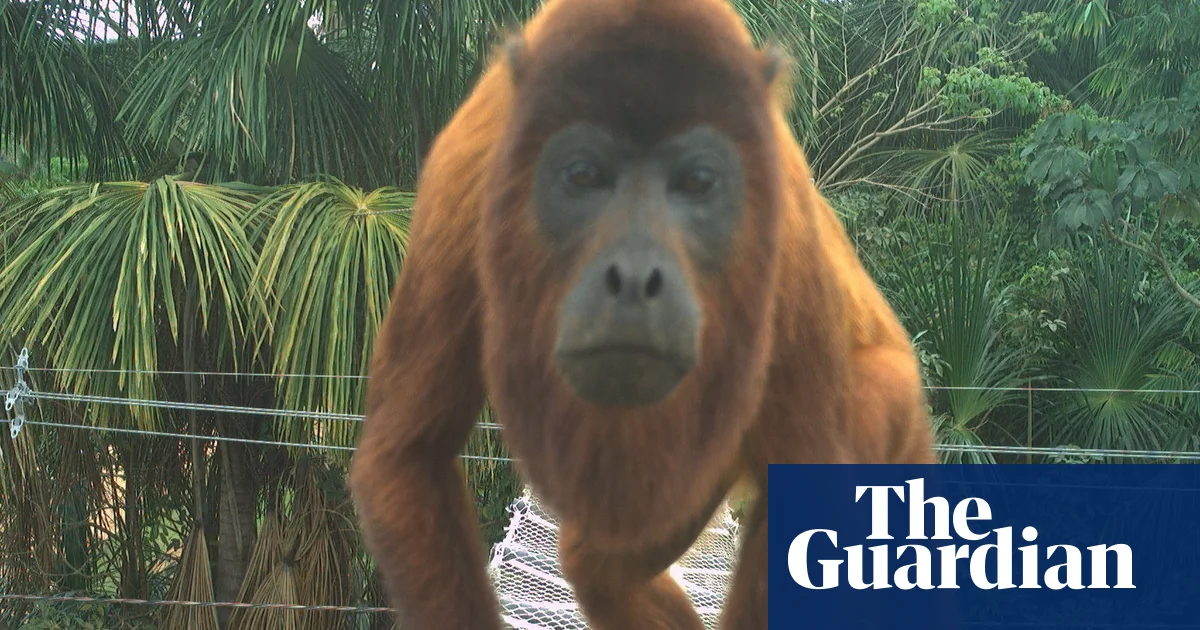
大约早上7点,浓雾笼罩着大地,加布里埃尔·法尔凯托(Gabriel Falquetto)在巴西圣埃斯皮里图州的ES-164公路上已经发现了好几只被车撞死的动物。这位生物学家当时正前往大西洋森林的卡埃特斯(Kaetés)私人自然遗产保护区(RPPN),他在那里负责监测野生动物和道路交通事故。
By about 7am, with dense fog blanketing the landscape, Gabriel Falquetto had already come across several road-killed animals along the ES-164 highway in Brazil’s Espírito Santo state. The biologist was on his way to Kaetés private natural heritage reserve (RPPN) in the Atlantic Forest, where he monitors wildlife and roadkill.
随后,他在路面上发现了一具灵长类动物的尸体。那是一只黄头狨(Callithrix flaviceps),在国际自然保护联盟的红色名录中被列为极危物种。据估计,野外仅存约2500只,使其成为世界上受威胁最严重的灵长类动物之一。
Then he spotted the lifeless body of a primate on the pavement. It was a buffy-headed marmoset (Callithrix flaviceps), a species listed as critically endangered on the International Union for Conservation of Nature red list. An estimated 2,500 individuals remain in the wild, making it one of the world’s most threatened primates.
“这令人极其痛苦和沮丧,”法尔凯托说。“我们每天都会经过这个地区监测野生动物,每当在森林里遇到黄头狨种群,我们都会感到欣喜。但看到一只个体以这种状态死去,只会带来悲伤和无力感。除了失去这只动物本身,这件事也提醒我们,人类活动对生物多样性造成了怎样的影响。”在大约1800英里外,通往马托格罗索州最北部小镇阿尔塔弗洛雷斯塔(Alta Floresta)的一条公路上,自2024年以来,再也没有记录到像黄头狨那样的道路死亡案例。
“It was extremely painful and discouraging,” Falquetto said. “We travel through this region every day monitoring wildlife, and we celebrate every encounter with groups of buffy-headed marmosets in the forest. Finding an individual in those conditions brings a feeling of sadness and helplessness. Beyond the loss of that animal, the incident reminds us of the impacts our activities have on biodiversity.”About 1,800 miles away, on a road leading to Alta Floresta, a small Amazon town in the far north of Mato Grosso state, there have been no cases like the buffy-headed marmoset’s roadkill recorded since 2024.
那一年,当地安装了八座树冠桥,连接了破碎的森林斑块。红外相机拍摄的画面显示,在15个月的时间里,这些空中野生动物通道促成了树栖动物的15000次安全穿越,期间未发生一起道路死亡事故。
That year, eight canopy bridges were installed, connecting fragmented forest patches. Camera trap footage revealed that over 15 months the aerial wildlife crossings enabled 15,000 safe crossings by arboreal animals – and in that time there was not a single road kill.
这些桥梁是“重连项目”(Projeto Reconecta)与市政府、当地组织及企业主共同参与的计划的一部分。他们渴望保护该镇独特的生物多样性并促进生态旅游,此前,野生动物与车辆碰撞事故数量的不断增加曾让他们深感担忧。
The bridges are part of a programme involving Projeto Reconecta and the municipal government, along with local organisations and business owners who are eager to conserve the unique biodiversity of their town and promote ecotourism, and were alarmed by the growing number of wildlife-vehicle collisions.
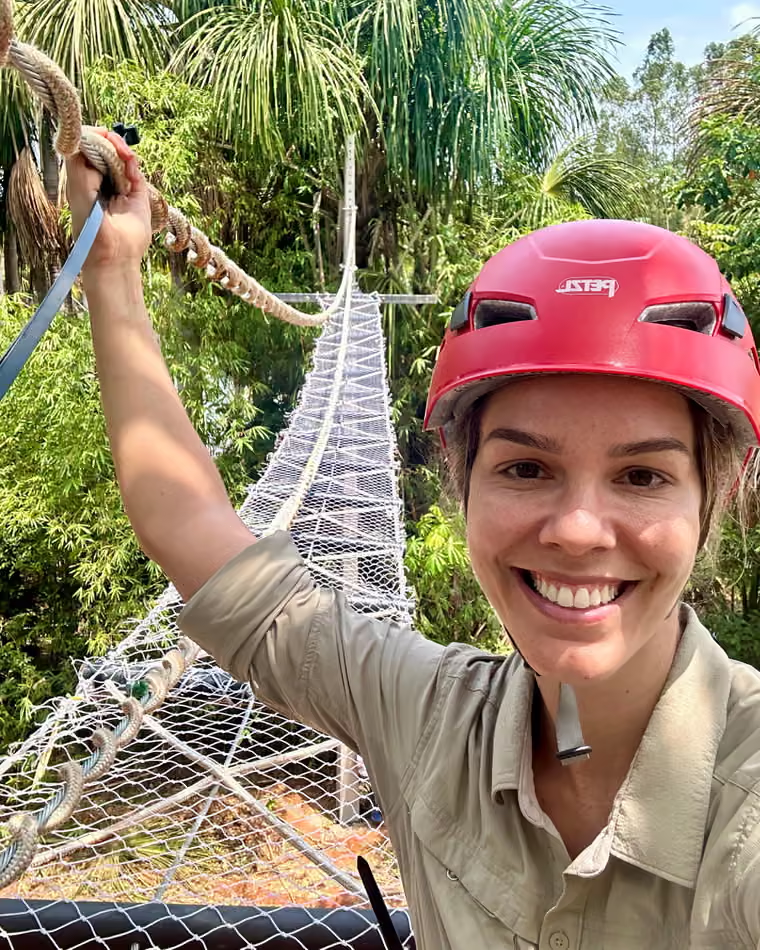
费尔南达·阿布拉(Fernanda Abra)是美国史密森尼国家动物园(Smithsonian National Zoo)和保护生物学研究所(Conservation Biology Institute)的副研究员,同时也是“Reconecta”项目的创始人。她回忆说,在阿尔塔弗洛雷斯塔(Alta Floresta)地区安装第一座桥梁的几个小时前,她发现了两只施耐德狨猴(Mico schneideri)的尸体。这种狨猴是巴西亚马逊地区的特有物种,目前正面临灭绝的威胁。
Fernanda Abra, an associate researcher at the Smithsonian national zoo and the Conservation Biology Institute in the US, and the founder of Reconecta, recalled that just hours before installing the first bridges in Alta Floresta, she found two Schneider’s marmosets (Mico schneideri) dead. The species is endemic to the Brazilian Amazon and is threatened with extinction.
“这些树冠桥具有双重作用,”阿布拉解释道:“首先,它们有助于改善野生动物的活动范围,使动物能够在这些被分割的森林区域之间自由移动;其次,这些桥梁还能减少因交通事故导致的野生动物死亡。”每座桥梁上都安装了两个摄像头:一个面向桥梁的交叉口,用于记录使用桥梁的动物种类;另一个面向森林内部,用于观察那些到达桥梁但选择不通过它的动物。
“A canopy bridge serves two purposes,” Abra said. “The first is to improve connectivity for wildlife, allowing animals to move from one side to the other in these fragmented forest areas. As a result, we also reduce roadkill.”All bridges have two camera traps, one facing the crossing to record which animals are using it and the other facing the forest to observe which animals arrive there but decide not to use it.
在项目实施的最初几个月里,使用这些桥梁的灵长类动物包括黑脸黑蜘蛛猴(Ateles chamek)、普鲁斯红吼猴(Alouatta puruensis)、簇毛卷尾猴(Sapajus apella)、施耐德狨猴以及阿尔塔弗洛雷斯塔提蒂猴(Plecturocebus grovesi)。
Among the primate species recorded using the bridges during the first months of the programme were the black-faced black spider monkey (Ateles chamek), the Purús red howler monkey (Alouatta puruensis), the tufted capuchin (Sapajus apella), Schneider’s marmoset and the Alta Floresta titi monkey (Plecturocebus grovesi).
阿尔塔弗洛雷斯塔提蒂猴是在2019年才被首次发现的,随后很快就被列为极度濒危物种。如今,这种猴子已成为该项目的象征;由于项目取得了积极成果,该项目正进入一个新的阶段。
Described only in 2019 and soon after classified as critically endangered, the Alta Floresta titi monkey has become the symbol of the initiative, which is now entering a new phase thanks to its positive results.
“今年8月,我们将在该城市的市区再安装8座这样的桥梁,”阿布拉说:“唯一的区别是,电力部门需要先降低电线的高度并对其进行绝缘处理,以防止动物从桥上跳到电线上时触电。”在阿尔塔弗洛雷斯塔开展的这个项目并不是“Reconecta”团队的首个环保项目。2021年,该团队还与瓦伊米里-阿特罗阿里(Waimiri-Atroari)原住民合作,在BR-174高速公路上安装了32座树冠桥。这条高速公路横贯阿尔塔弗洛雷斯塔地区,连接巴西的亚马孙州(Amazonas)和罗赖马州(Roraima)两个州。
“In August, we will install eight more bridges in the city’s urban area,” Abra said. “The only difference is that the electric utility will first need to lower the power lines and insulate them so that if animals jump from the bridge on to the wires, they won’t be electrocuted.”The project under way in Alta Floresta is not Reconecta’s first. In 2021, working alongside the Waimiri-Atroari Indigenous people, the team installed 32 canopy bridges over BR-174, the highway that crosses their territory and the Amazon between the Brazilian states of Amazonas and Roraima.
怀米里-阿特罗阿里(Waimiri-Atroari)部落帮助阿布拉(Abra)确定了建造人工桥梁的最佳位置。在过去五年中,安装在桥梁支柱上的摄像头记录了大约1250次灵长类动物的过桥行为,其中包括金手狨猴(Saguinus midas)——这种动物并不完全依赖树栖生活,经常下到地面寻找食物,因此特别容易成为交通事故的受害者。
The Waimiri-Atroari helped Abra identify the best locations for the artificial bridges. Over the past five years, cameras mounted on the bridge poles have documented about 1,250 crossings by primates, including the golden-handed tamarin (Saguinus midas), a species that is not strictly arboreal and often descends to the ground in search of food, making it particularly vulnerable to roadkill.
“BR-174项目的成果令人惊叹,”阿布拉说,“我们测试了多种桥梁设计方案,最终找到了动物们更喜欢的方案。”在巴西高速公路沿线的多年工作中,她一直致力于寻找简单、低成本且耐用的解决方案。目前的桥梁采用了多层设计,能够满足不同移动方式的灵长类动物的需求:既有依靠卷曲尾巴在树冠层中移动的物种,也有像蜘蛛猴这样用手臂荡来荡去的物种(这两种动物在亚马逊地区都很常见),还有那些直接在交叉绳索上行走的物种。此外,还有负鼠、树懒和鼠负鼠等其他小型陆地哺乳动物也被记录到使用这些桥梁。
“The outcomes of the BR-174 project have been incredible,” Abra said. “We were able to test different bridge designs to find out which ones the animals prefer.”After years of working along Brazilian highways, she had always sought a solution that was simple, low-cost and durable. The current bridge features a multilayer design that accommodates primates with different modes of locomotion – from species that rely on their prehensile tails to move through the canopy, to brachiating species such as spider monkeys, which swing using their arms, both of which are common in the Amazon, as well as species that simply walk across the network of crossed ropes. Other small terrestrial mammals including opossums, sloths and mouse opossums have also been recorded using the bridges.
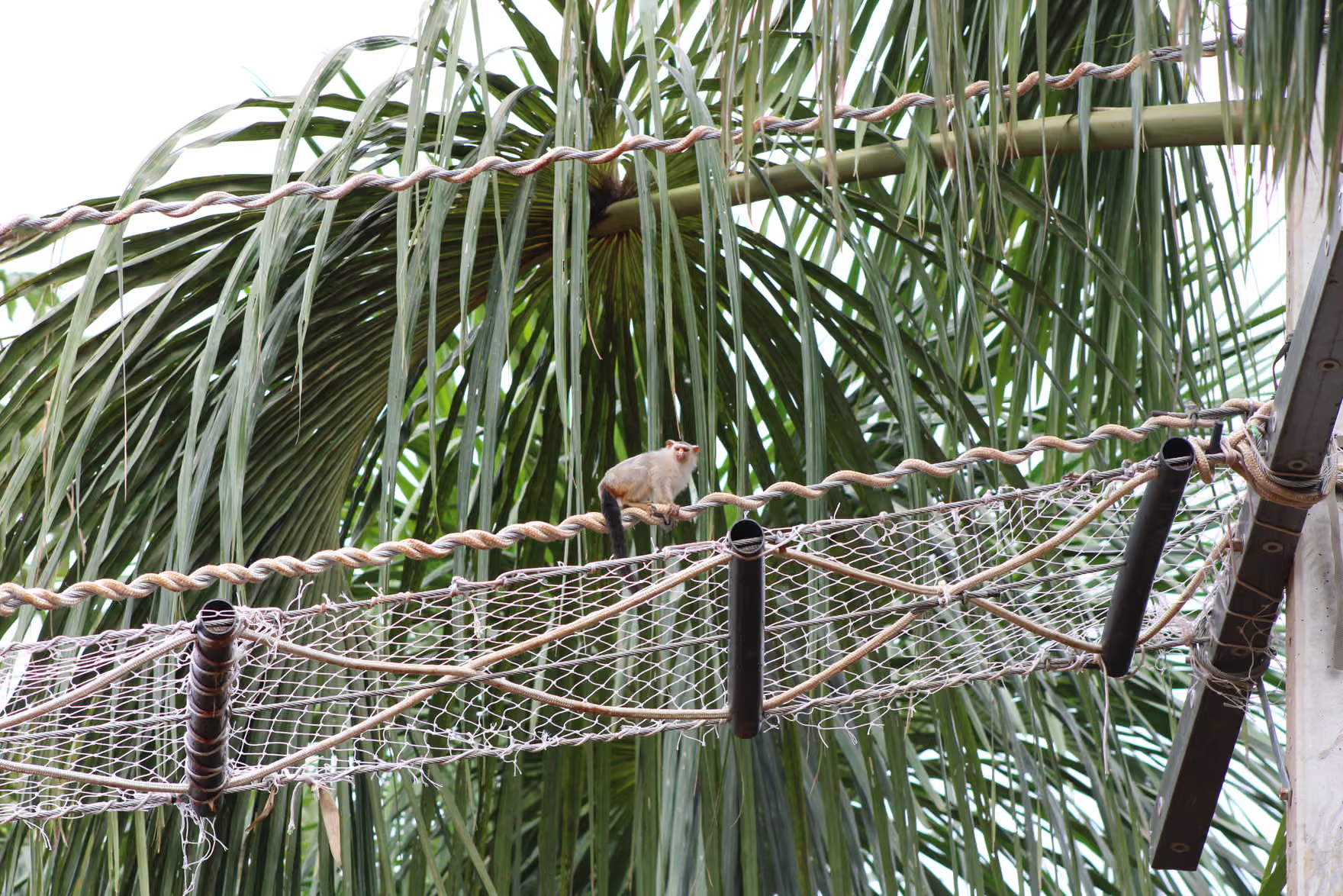
阿布拉强调,这是一个长期项目,其效果并不总是立竿见影的。BR-174大桥建于20世纪70年代,动物们需要时间来适应这种新的过桥方式。Reconecta组织的监测数据显示,这些桥梁的使用率确实随着时间的推移而逐渐增加。
Abra said it was important to keep in mind that this was a long-term project, and results were not always immediate. BR-174 was built in the 1970s, and animals take time to adapt to a new crossing alternative. Reconecta’s monitoring has shown that use of the structures increases over time.
“我们在保护工作中常常过于急切,却忽略了这些变化的实际发生时间,”她说。
“Very often, our sense of urgency in conservation doesn’t take into account the timing of the impact,” she said.
在阿尔塔弗洛雷斯塔(Alta Floresta)地区,簇毛卷尾猴花了整整七个月的时间才第一次使用其中一座桥梁,这可能表明每种动物都有自己的适应速度。
In Alta Floresta, tufted capuchins took seven months before using one of the bridges for the first time, which may indicate that each species has its own pace of adaptation.
作为世界上灵长类动物多样性最丰富的国家,巴西同时也拥有全球第四大的公路网络——这对生活在森林边缘的动物来说是一个致命的威胁,因为这些森林区域被高速公路分割开了。
Home to the world’s greatest diversity of primates, Brazil also has the world’s fourth largest road network – a deadly combination for animals living along forest edges that have been split apart to make way for highways.
“从人类的角度来看,道路意味着连接与发展。但对于野生动物而言,它们代表着隔绝、障碍和生存威胁,”阿布拉(Abra)说道。
“From our human perspective, roads mean connection and development. But for wildlife, they represent disconnection, barriers and a threat to survival,” Abra said.
2022年的一项研究发现,巴西每年有近900万只哺乳动物死于公路上。2025年发表在《自然》(Nature)杂志上的一项数据汇编显示,巴西是陆生脊椎动物道路死亡率最高的国家之一。
Nearly 9 million mammals are killed on Brazil’s roads every year, a 2022 study found. A data compilation published in the journal Nature in 2025 found that the country ranked among those with the highest mortality rates of terrestrial vertebrates killed on roads.
米纳斯吉拉斯州维索萨联邦大学(Federal University of Viçosa)的灵长类动物学家法比亚诺·罗德里格斯·德梅洛(Fabiano Rodrigues de Melo)教授表示:“栖息地丧失是导致种群数量下降的主要驱动因素之一,尤其是在受威胁物种中,但道路交通造成的死亡影响仍被严重低估。”
Prof Fabiano Rodrigues de Melo, a primatologist at the Federal University of Viçosa in Minas Gerais, said: “Habitat loss is one of the main drivers of population declines, especially among threatened species, but the impact of roadkill is still greatly underestimated.”
除了道路死亡,公路还给动物带来了禁锢。巴西联邦保护单位机构ICMBio的环境分析师、“巴西生物多样性基因组学”项目协调员阿梅莉·布兰基尼奥·马丁斯(Amely Branquinho Martins)说:“当种群变得孤立时,它们的规模会缩小,对威胁的抵御能力也会变弱。”其中一个威胁是近亲繁殖,即亲缘关系相近的个体进行繁殖。“栖息地的丧失和退化会阻碍个体从一个种群迁移到另一个种群,即我们所说的基因流。没有基因流,物种的遗传多样性就会下降,”马丁斯说。
Beyond roadkills, highways bring confinement to fauna. Amely Branquinho Martins, an environmental analyst at the ICMBio, Brazil’s federal agency for conservation units, and a coordinator of the Genomics of the Brazilian Biodiversity project, said: “When populations become isolated, they grow smaller and more vulnerable to threats.”One of those threats is inbreeding, which occurs when closely related individuals reproduce. “Habitat loss and degradation can prevent an individual from one population from migrating to another – what we call gene flow. Without it, the species’ genetic diversity declines,” Martins said.
梅洛表示,这些后果会产生多米诺骨牌效应,不断加剧。灵长类动物(尤其是食果物种)的丧失会改变森林的构成,因为它们在种子传播中发挥着关键作用,甚至有助于授粉。“随着这些物种的消失,整个生态相互作用网络最终也会随之丧失,”梅洛说。
The consequences continue to multiply in a domino effect, Melo said. The loss of primates, especially fruit-eating species, can alter forest composition, because they play a key role in seed dispersal and even contribute to pollination. “A whole network of ecological interactions is ultimately lost with the disappearance of these species,” Melo said.
减少野生动物被车辆撞死的希望之一,是巴西国会正在审议的一项法案的通过。该法案旨在制定全国性的野生动物道路安全计划,具体措施包括设置野生动物警示标志、安装减速装置,以及在高速公路沿线修建立交桥、天桥和地下通道。该法案已获得众议院的批准,目前正在等待参议院的投票结果。
One of the hopes for reducing wildlife roadkill is the passage of a bill under consideration in Brazil’s congress that would establish a national road safety plan for wildlife, which calls, among other measures, for the placement of wildlife warning signs, speed-reduction devices and the construction of overpasses, aerial crossings and underpasses along highways. The bill has been approved by the chamber of deputies and is now awaiting a vote in the senate. If approved, the canopy bridge model developed by Reconecta could be implemented nationwide.
如果获得通过,Reconecta公司开发的这种“树冠桥”(canopy bridge)技术将在全国范围内得到推广。2026年,巴西国家交通基础设施部门正式将这种设计指定为高速公路建设的推荐标准。
In 2026, Brazil’s national department of transport infrastructure designated the design as the recommended standard for highways. Abra’s efforts to protect primates have earned international recognition.
Abra在保护灵长类动物方面的努力获得了国际社会的认可:她于2019年获得了“Future for Nature”奖,2024年又获得了被誉为环保领域“奥斯卡奖”的“Whitley Award”;今年6月,她还被授予了“2026年Wayfinder Award”,成为获得国家地理学会资助的项目负责人之一。
She received a Future for Nature award in 2019, followed in 2024 by a Whitley award, often referred to as the Oscars of environmental conservation. In June she was named as one of the recipients of the 2026 Wayfinder award, joining a select group who receive funding from the National Geographic Society for their projects.
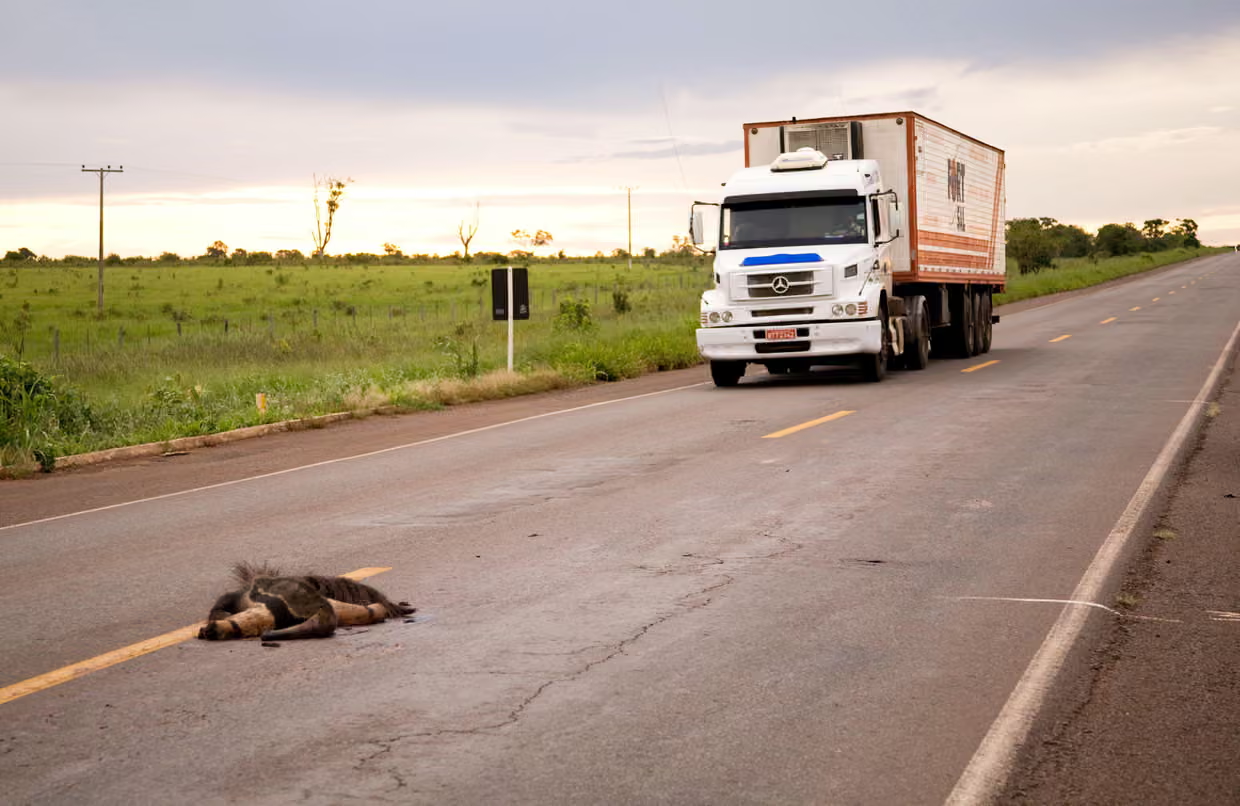
这一支持来得正是时候——Abra计划进一步扩大Reconecta的项目规模,在苏里南和巴西的卢卡斯-杜里奥维德(Lucas do Rio Verde)市新建更多树冠桥。她还希望将这种技术应用于其他生物群落,如潘塔纳尔湿地(Pantanal)和大西洋森林(Atlantic Forest),以保护诸如“灰头狨猴”(buffy-headed marmoset)等野生动物。
The support comes at the right time, as Abra plans to expand Reconecta, including new chapters in Suriname and Lucas do Rio Verde, a municipality in Brazil, which will install 10 canopy bridges. Abra also hopes to bring her canopy bridges to other biomes, including the Pantanal and the Atlantic Forest, helping prevent the deaths of monkeys such as the buffy-headed marmoset.
人们对BR-262高速公路上的树冠桥项目寄予厚望:这条公路是巴西最长的公路之一,穿越潘塔纳尔湿地,被称为“死亡之路”;每年约有2000只动物在这条公路上丧生。
Expectations are especially high for bridges over BR-262, one of Brazil’s longest highways, which cuts across the Pantanal and is known as the “highway of death”.
阿布拉说:“我设想了一个由‘Reconecta’生态保护区组成的未来。我们已经建立了‘Reconecta Amazon’项目,很快还将启动‘Reconecta Pantanal’项目。我还在大西洋森林中规划建造一些‘树冠桥’,为那些生活在那里的灵长类动物(包括受到严重威胁的muriqui猴和吼猴)提供栖息地。”她强调,要实现这一愿景,政府机构、私营企业以及当地社区的持续参与至关重要——这一点在‘Alta Floresta’项目以及Waimiri-Atroari原住民领地的开发过程中同样得到了验证。
Approximately 2,000 animals are killed on the road every year. Abra said: “I envision a future with Reconecta biomes. We already have Reconecta Amazon, and we’ll soon launch Reconecta Pantanal. I also see canopy bridges in the Atlantic Forest for the primates that live there, including muriquis and howler monkeys, which are both highly threatened.”She stressed that for this vision to succeed, the continued engagement of government agencies, private companies and local communities would be essential, just as it was in Alta Floresta and the Waimiri-Atroari Indigenous territory.
“只有当所有人都参与到这个项目中来时,大家才会真正重视这个倡议,并会更加努力地推动它的成功。”
“When everyone is involved, everyone values the initiative and works harder to make it succeed,” she said.