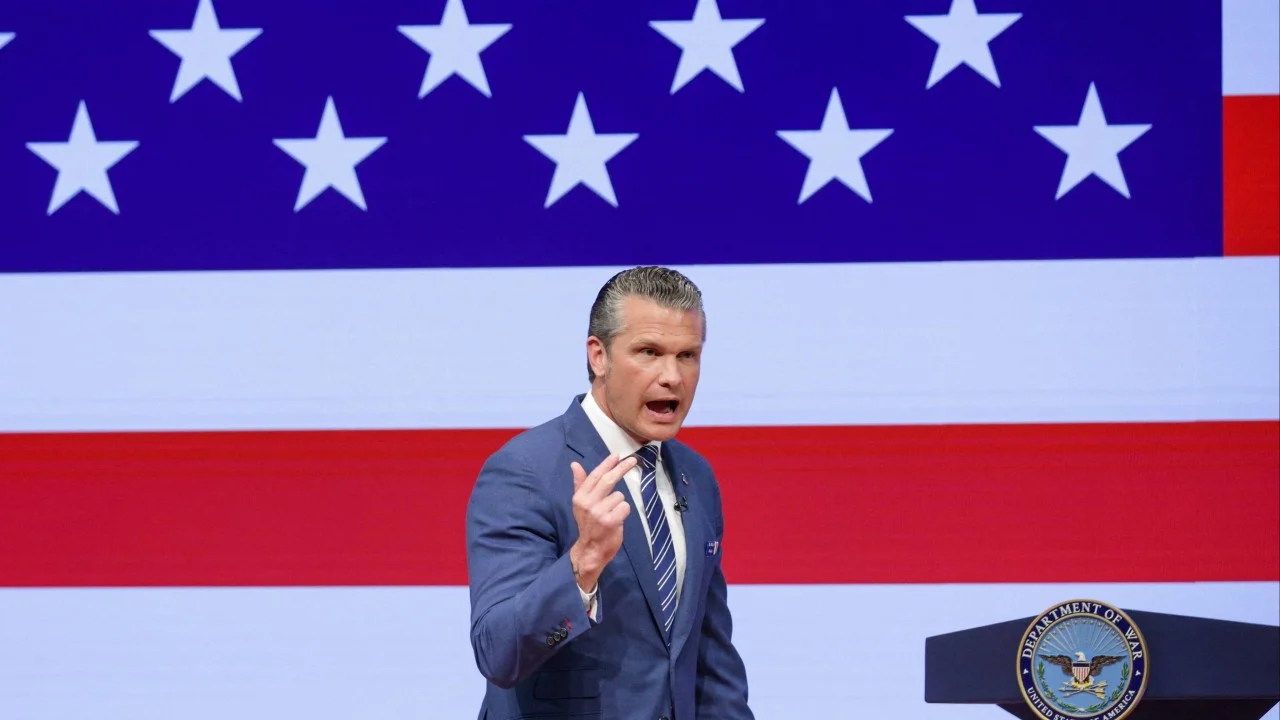
全球首富刚刚被任命为一个五角大楼委员会成员,该委员会将协助决定未来战争的模样。埃隆·马斯克将与安杜里尔工业公司联合创始人帕尔默·勒基以及前众议院议长纽特·金里奇共同领导“子午线项目”。此举遵循了本届白宫的一项战略,即让政府与科技行业更加紧密地结合。
The world’s wealthiest man has just been appointed to a Pentagon commission that will help decide what the future of warfare looks like. Elon Musk, alongside Anduril Industries co-founder Palmer Luckey and former House speaker Newt Gingrich, is to lead “Project Meridian”. It follows a strategy by this White House that moves government and the tech sector ever closer.
子午线项目所涉范围远超防务承包商在华盛顿的影响力。它标志着硅谷开始步入权力殿堂,而战争本身的未来也正在那里被构想。
Project Meridian goes much further than the influence of defence contractors in Washington. It marks the beginning of Silicon Valley arriving at the halls of power, where the future of warfare itself is being imagined.
战后岁月的一个显著特征是,美国防务承包商与政府之间的关系日益紧密。这正是德怀特·艾森豪威尔总统在1961年告别演说中所警告的“结合体”。
The post-war years have been marked by an ever-closer relationship between American defence contractors and the government. This was exactly the convergence president Dwight Eisenhower warned against in his 1961 farewell address.
即便存在行业与政府之间的“旋转门”以及耗资数十亿美元的游说活动,这种关系的结构依然清晰:政府设定方向,承包商竞标执行。
Even with the revolving door between industry and government, and billion-dollar lobbying efforts, the structure of the relationship was clear: government would set the direction and contractors would bid to enact it.
硅谷的创始政治意识形态深受自由主义影响。尽管早期与军方有联系,硅谷仍将自己想象为华盛顿政治权力的制衡力量。通过开发新技术、打破旧惯例,硅谷的领军人物将重新构想并振兴民主精神——至少这是他们对自己讲述的故事。因此,他们将对自身业务的任何监管尝试视为对该文明使命的威胁。
The founding political ideology of Silicon Valley was deeply libertarian. Despite its early ties to the military, the Valley imagined itself as a counterweight to Washington’s political power. By building new technology and tearing down old conventions, the Valley’s leading lights would reimagine and reinvigorate the spirit of democracy, or at least that was the story they told themselves. Consequently, they saw any attempt to regulate their business as a threat to that civilisational mission.
人工智能(AI)时代的到来催生了全球防务经济的新板块——一个蓬勃发展的行业,这些公司的基因既来自硅谷,也来自传统武器制造商。
The dawn of the age of artificial intelligence (AI) created a new part of the global defence economy, a booming sector of companies that carry as much DNA from Silicon Valley as from traditional weapons manufacturers.
这些新兴技术企业搭建起了相关平台,使得武器系统的自动化与简化成为可能。它们公然摒弃了旧有的模式——即由承包商为五角大楼所规划的未来蓝图来开发相应系统。如今,它们正按照21世纪的需求,开发具备人工智能功能的软件,以此助力那个未来愿景成为现实。
These neoprimes create the platforms on which weaponry can be automated and simplified. They have openly rejected the old model, in which contractors create systems for a future defined by the Pentagon. They are building the software – AI-enabled, as is the demand of the 2020s – through which that future can become real.
在这一关键节点上,这些企业发现:自身发展对政府合同的依赖,与硅谷所秉持的“应由科技企业主导未来建设”的理念产生了冲突。正如帕兰提尔联合创始人彼得·蒂尔所言:任何反对这些“颠覆者”对人工智能未来愿景设想的人,都等同于“反基督者”。在他看来,试图为正在构建的新世界设置约束机制实属不可饶恕的罪过。
At this intersection, they find the old dependence on state contracts for their growth clashes with Silicon Valley’s belief that they should be the ones building the future. As Palantir co-founder Peter Thiel put it: anyone opposing these “disrupters” view of the future of AI is tantamount to the Antichrist. To him, it is a mortal sin to put guardrails on the new world being built.
为了实现宏伟抱负,这一新兴行业已摒弃了过往的自由主义理念,转而坚定地认为:不受任何阻碍的快速发展理应凌驾于对其权力的任何制衡之上。
In the pursuit of ambition, this new sector has shed its old libertarian ethos and instead doubled down on its belief that rapid, unencumbered advancement should override any checks on its power.
“子午线计划”正是这一理念的具象化体现。两家旗下企业手握价值数十亿美元五角大楼合同的科技巨头,如今被委以重任:负责规划未来战争所需的技术条件,并由此从中获利。
With Project Meridian, that has been given force. Two tech leaders whose companies hold billions of dollars in Pentagon contracts are now tasked with defining what the future of warfare will require – and thus stand to benefit from it.
在这一层面,美国科技产业与政府之间的关系正逐渐呈现出与中国类似的特征,尽管两者的发展路径截然不同。
Here, the American relationship between technology and the state is beginning to look a lot like its Chinese counterpart, albeit from different directions.
从历史上看,中国科技行业始终将自己视为国家崛起为世界强国的建设力量之一。中国政府负责制定战略方向,众多科技企业也设立了党组织,由此形成了双向互动的格局。
Historically, China’s tech sector has seen itself as part of the national project of its emergence as a great power. Beijing sets the strategic direction, and with many companies having set up Communist Party committees, the phone works both ways.
这种情况在人工智能领域尤为明显:中国政府将人工智能视为本世纪经济转型的先锋力量。中国人民解放军也高度依赖民间人工智能企业及科研机构,试图借助中国民众较高的受教育水平来打造地区内最具实力的军队。
That is especially true for AI, which Beijing sees as the vanguard of its economic transformation in the unfolding century. The People’s Liberation Army has been relying heavily on civilian AI vendors and research institutions as it attempts to leverage China’s well-educated society to build the region’s dominant military.
这两者之间的区别至关重要,因为它们正深陷一场大国博弈之中。如今,中美两国的技术愈发成为各自向世界展现实力的象征。在中国,国家与产业界之间几乎不存在实质性的区别;而美国至少在理论上为民间创新保留了广阔空间。
The distinction between the two matters as they engage in a great power conflict. Chinese and American technology are increasingly a proxy for the kind of power they project into the world. Beijing offers a version in which there is little meaningful difference between the state and industry. Washington, at least in theory, offers open space for private innovation.
这一区别固然仍具意义,但重要性正日益减弱。倘若如今决定战争未来走向的正是美国那些顶尖的人工智能企业,那么“私营企业能保持中立”这一观念便不复存在了。让这些企业的掌舵者来做出重大决策,实际上就是在塑造资助这一进程的国家形态。
That distinction still matters, but less and less. If the most important American AI firms are now the ones deciding the future of war, then the myth of neutrality emerging from the private ownership of these companies is gone. Relying on the leaders of these companies to make important decisions will shape the state that sponsors the process.
长期以来,中国的技术发展模式一直是:由政治体制设定发展方向,民间创新则在这一框架内展开。如今,美国模式也正从另一侧走向同样的融合。正如以往一样,私营部门正凭借自身动力推动国家朝着符合其利益的方向发展。
The Chinese model of technological development has long been one in which private innovation happens inside a political system that sets its direction. The American version is now arriving at the same integration from the other side. The private sector, as it always has, is pulling the state towards its own incentives.
结果便是,美国的技术生态系统在无意间开始与中国模式趋同——尽管路径恰恰相反。两种体系最终都实现了产业界与国家的融合,同时也保留了各自固有的弊端。
The result, accidentally, is that America’s tech ecosystem is beginning to resemble China’s, albeit from the opposite direction. Both systems are arriving at a fusion between the industry and the state while preserving their native pathologies.
这种趋同现象意味着,世界将难以找到能替代当前这种以政治指令为导向的技术体系的其他选择。
That convergence leaves the world without a meaningful alternative to a technological system that operates as an arm of a political mandate.