目前我国正面临诸多关键问题:油价上涨、伊朗持续不断的战争,以及对人工智能无限制扩张的担忧。更不用说移民、医疗和住房负担能力等长期问题,这些问题至今仍未得到解决。
There’s no shortage of vital issues facing our country at the moment: rising gas prices, the ongoing war in Iran, concerns on the unfettered expansion of artificial intelligence. This is to say nothing of longer-term issues like immigration, healthcare and housing affordability, that continue to go untouched.
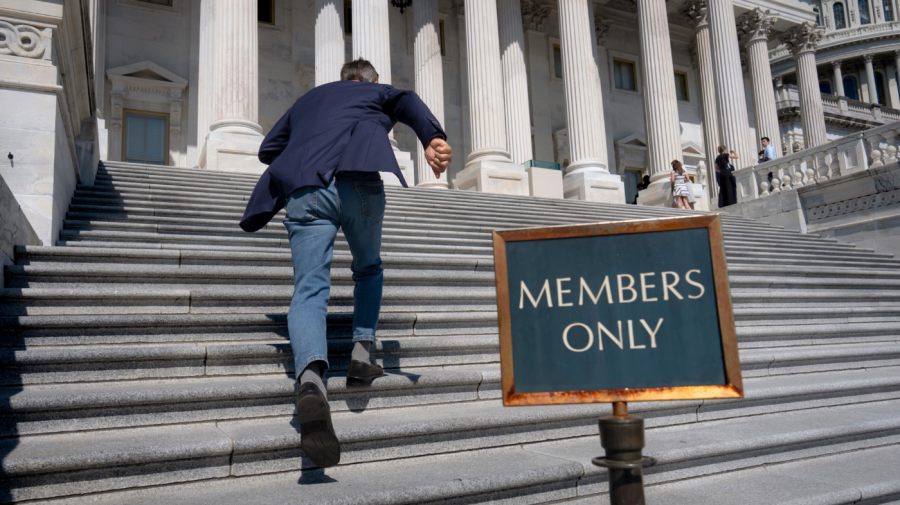
与此同时,宪法上本应负责应对这些棘手国家问题的国会却踪影全无。众议院和参议院均已休会,议员们则忙于竞选连任。
Meanwhile, Congress, the institution constitutionally assigned to tackle these vexing national problems, is nowhere to be found. Both the House and Senate are closed, and their members are off campaigning for re-election.
毫不意外,对国会的贬斥之声从未停歇。仅有16%的美国人认可国会目前的工作表现。批评者声称,议员们要么对履行职责毫无兴趣,要么更热衷于作秀和博取社交媒体关注,而非立法。
Unsurprisingly, the disparagement of Congress is unrelenting. Only 16 percent of Americans approve of the job Congress is doing. Critics claim that members are either uninterested in doing their job or more focused on showboating and gaining social media impressions than legislating.
但或许我们对问题的看法存在偏差。没错,议员们选择了竞选而非治理。没错,他们中的许多人将大量时间花在社交媒体上互相攻击、在听证会上设套抓错,以及出席由财力雄厚的利益集团举办的筹款活动。
But we may be looking at the problem the wrong way. Yes, legislators have chosen to campaign rather than govern. Yes, many of them devote substantial portions of their time to dishing out insults on social media, playing gotcha in hearings and attending fundraisers with deep-pocketed interests.
尽管这些行为令人不齿,但它们却是旨在提高连任几率的理性选择。正如美国企业研究所与约翰斯·霍普金斯大学斯塔夫罗斯·尼亚尔霍斯基金会阿戈拉研究所近期发布的一份报告所指出的,议员们是理性的行动者,他们是在回应眼前的激励因素。
Icky as all those things are, they are rational behaviors designed to improve their odds of being re-elected. As we found in a recent report issued by American Enterprise Institute and the Stavros Niarchos Foundation Agora Institute at Johns Hopkins, members are strategic actors reacting to the incentives before them.
议员们希望说服足够多的选民在投票时选择自己。正因如此,他们才回到本州筹集资金投放竞选广告,而不是坐下来讨论并决定如何解决国家面临的问题。
Legislators want to persuade enough voters to pick them on the ballot. This is why they are back in their home states raising money to run campaign ads rather than debating and deciding what to do about our nation’s problems.
但为何议员们不通过制定良政来谋求连任呢?原因在于制定良政本身极具挑战性,而且何为“良政”也并无明确界定。要让众议院、参议院及总统 majority 同意通过一项法案已属不易,倘若议员们还担心与反对党成员协商会招致选民不满,难度便更上一层楼。
But why are legislators not trying to get re-elected by making good policy? The answer is that making good policy is challenging, and the definition of good policy itself is not clear cut. The sheer math of persuading a majority of the House of Representatives, the Senate and the president to approve a bill is difficult enough. It becomes all the more challenging when legislators feel that voters will punish them for bargaining with members of the other party.
对议员们而言,竞选远比治理容易得多。正因如此,他们回到家乡后便大肆吹嘘美国取得的种种成就——比如家庭收入中位数的上升——却把高利率等负面现象的责任统统推给反对党。
It is far easier for our representatives and senators to campaign than govern. This is why they are back home claiming credit for the good things happening in America, such as the rising median household income, and shifting blame to the other party for the bad things such as high interest rates.
选民们仅靠抱怨和发牢骚无法促使议员们提升工作表现,把不称职的议员赶下台也绝非长久之计。三十多年来,选民们虽不断用新人替换现任议员,也让众议院与参议院的控制权在民主党和共和党之间反复易主。
Voters are not going to make legislators do a better job by grumbling and complaining. Nor is throwing the bums out a long-term solution. For more than three decades, voters have replaced incumbent legislators with fresh faces and shifted control of the House and Senate from Democrats to Republicans and back again.
要想让效率低下的国会转变为高效运转的立法机构,就必须改变政客们的选举激励机制。
To transform an underperforming Congress into a highly productive legislature, we must change politicians’ electoral incentives.
大量证据表明,美国国会选举的体制恰恰加剧了立法效率的低下,而初选便是导致这一问题的关键因素之一。
First, substantial evidence indicates that the structure of our congressional elections exacerbates legislative underperformance. Primary elections are a big part of the dysfunction.
仅有约20%的选民会参与这些初选,这些选民的意识形态倾向往往比普通民众更为极端。他们大多属于单一议题选民,只会投票给那些在堕胎、枪支管控或跨性别者权利等问题上完全支持自己立场的候选人,也只向这类候选人捐款。
Only around 20 percent of voters participate in these preliminary elections, and these voters tend to be more ideologically extreme than the average American. Frequently they also are single-issue voters who will only vote for and donate to a candidate who full-throatedly supports their position on abortion, guns or transgender rights.
不出所料,初选机制促使国会议员采取更为偏左或偏右的立场,并避免与对立政党的议员进行协商。这种机制还往往会阻碍较为温和的候选人参与竞选,却让那些善于从财力雄厚的利益集团处筹款的人获益。
Unsurprisingly, then, primary elections encourage members of Congress to stake out positions that are further to the left and right and to avoid bargaining with members of the opposite political party. They also tend to discourage more moderate candidates from running for Congress and reward those who are skilled at raising money from deep-pocketed interest groups.
其次,美国民众需要认真反思:我们自身正是导致国会激励机制失灵的诱因。在中期选举中,投票率不足半数。大量证据表明,民众在诸多敏感议题上存在严重分歧,而极端分子则误导我们,让我们误以为政治分歧比实际更为严重。
Second, Americans need to take a long look in the mirror and recognize that we are part of Congress’s incentive problem. Fewer than half of us vote in midterm congressional elections. An abundance of evidence indicates that we are polarized around hot button issues, and that political extremists amongst us have fooled us into thinking we are way more divided on politics than we actually are.
最近的一项民调显示,63%的民主党人认同或强烈认同“共和党人不仅对国家有害,简直就是邪恶之徒”这一观点;57%的共和党人也对民主党持有同样的看法。
A recent poll found that 63 percent of Democrats agree or strongly agree that Republicans are not just bad for the country but downright evil, and 57 percent of Republicans agree with the same sentiment about Democrats.
虽然无党派人士的数量多于民主党人和共和党人,但我们的投票行为却与党派立场高度一致。过去,选民们乐于选择最优秀的候选人——1972年至1996年间,每次总统选举都有超过100个选区出现跨党派投票现象。然而到了2024年,在435个选区中仅有16个选区的选民分别支持了不同政党的总统候选人与众议院候选人。
Although more of us as independents than either Democrats or Republicans, we vote like reliable partisans. We voters were once happy to vote for the best candidate — ticket splitting occurred in more than 100 congressional districts in each presidential election from 1972 through 1996. But in 2024, only 16 of 435 congressional districts supported a presidential candidate of one party and a House candidate from another party.
这种情况本不该发生。我们应当改革或废除初选制度,转而采用能更好地激励议员为民众服务的选举机制。同时,我们也应走出家门去投票,不再被误导而把选票投给那些热衷于抨击对手、却不愿解决国家重大问题的政客。
It does not have to be this way. We should reform or replace primaries with electoral systems that better incentivize legislators to work for us. We also should get off the couch and show up to vote and quit letting ourselves be fooled into voting for people who are more interested in trash-talking the other party than trying to solve important national problems.
美国实行的是代议制民主。归根结底,我们选出的国会就是我们应得的国会。
The U.S. is a representative democracy. Ultimately, the Congress we get is the Congress we choose.
斯科特·沃伦是约翰斯·霍普金斯大学斯塔夫罗斯·尼亚尔霍斯基金会阿戈拉研究所的实践教授。凯文·R·科萨尔则是美国企业研究所的高级研究员。两人合著了题为《国会治理陷入困境:是否源于选举机制的诱因?》的报告。
Scott Warren is a professor of practice at the Stavros Niarchos Foundation Agora Institute at Johns Hopkins University. Kevin R. Kosar is a senior fellow at the American Enterprise Institute. They are the authors of the report “Congress Is Struggling to Govern. Are Electoral Incentives to Blame?”