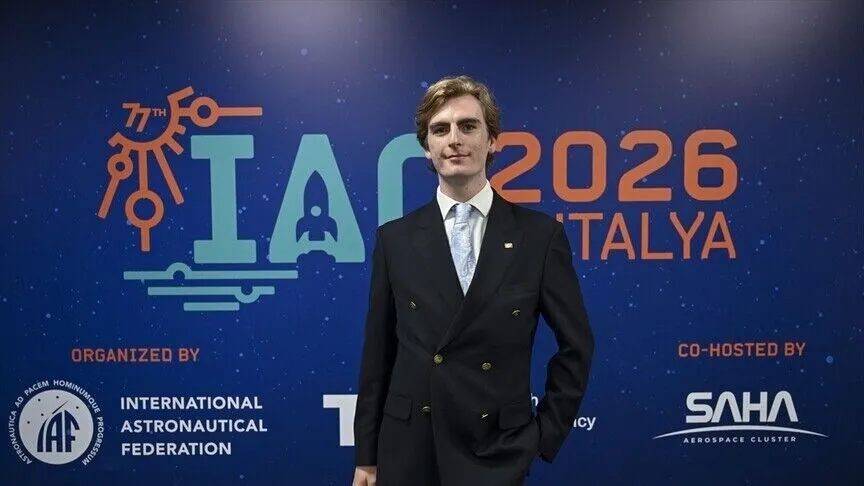
私营航天企业正在未来月球开发基础设施建设中发挥日益重要的作用。不过,一位航天行业高管向阿纳多卢通讯社指出,在缺乏明确法规的情况下,对有限资源及合适选址的争夺可能引发国际争端。
Private aerospace companies are playing an increasingly important role in developing infrastructure for future operations on the Moon, but competition for limited resources and suitable locations could create international disputes without clear regulations, a space industry executive told Anadolu.
福布斯航天公司首席执行官斯特林·福布斯表示,商业企业的广泛参与标志着“第二个太空时代”的开端,这一时代与冷战时期以政府为主导的太空竞赛截然不同。
Stirling Forbes, CEO of Forbes-Space, said the growing involvement of commercial companies marked the beginning of a "second space age," distinct from the government-led competition of the Cold War era.
在安塔利亚举行的第77届国际宇航大会期间,福布斯指出,私营企业正越来越多地为政府及商业用途建设基础设施。
Speaking on the sidelines of the 77th International Astronautical Congress (IAC) in Antalya, Forbes said private companies were increasingly building infrastructure for both government and commercial use.
“这些商业企业正助力打造一个共享且可持续的基础设施体系,从而为地球带来可观回报,”他说道。
"These commercial companies are contributing to the construction of a shared, sustainable infrastructure that will generate returns for Earth," he said.
福布斯列举了多家正在研发运载火箭、月球车、动力系统、通信基础设施及着陆设施的企业。
Forbes pointed to companies developing launch vehicles, lunar rovers, power systems, communications infrastructure and landing facilities.
“这些项目涵盖了从SpaceX或蓝色起源的运载火箭,到Astrobotic与Lunar Outpost的月球车,甚至还包括动力系统、通信网络以及着陆平台等各类设施,”他补充道。
"These missions range from, of course, the rockets from SpaceX or Blue Origin, down to the rovers of Astrobotic or Lunar Outpost, even to the infrastructure of power systems, communications, even landing pads," he said.
他进一步指出,日益增多的商业项目正在为月球经济的多元化发展奠定基础。
The growing range of commercial projects, he added, was laying the groundwork for a more diversified lunar economy.
福布斯认为,人工智能与机器人技术的进步对未来的月球探索至关重要,尤其是在机器必须脱离人类持续干预即可自主运作的环境中。这些技术不仅能降低早期探索阶段宇航员面临的风险,还能催生诸多可应用于地球各产业领域的创新成果。
Moon could become refueling hub for deeper space missions Forbes said advances in artificial intelligence and robotics would be essential for future lunar operations, particularly in environments where machines must function autonomously without constant human intervention. Such technologies could reduce risks to astronauts during early exploration and generate innovations with applications in industries on Earth, he said.
一种潜在的商业模式便是将月球打造为航天器深入太阳系更远区域时的燃料补给站。
One potential business model involves using the Moon as a refueling station for spacecraft traveling farther into the solar system.
“我认为,随着更多此类基础设施在月球上建成,一种主要的商业模式就是将月球用作燃料补给站,”福布斯说道。
"I think, with the construction of more of this infrastructure on the Moon, one of the main business models is for the Moon to essentially be used as a fuel station," Forbes said.
他设想,航天器会在月球上的设施处补充燃料,随后继续前往火星、小行星带及其他目的地。
He envisioned spacecraft stopping at lunar facilities to refuel before continuing toward Mars, the asteroid belt and other destinations.
福布斯还对除传统航天强国之外的更多国家参与到月球探索中来表示欢迎,并以土耳其计划开展的月球任务为例加以说明。
Forbes also welcomed the growing participation of countries beyond the traditional space powers, citing Türkiye's planned lunar mission as an example.
“我们正身处一个太空商业化与普及化进程极为迅速的激动人心的时代,”他说道。
"We live in a very exciting time of this commercialization, but also democratization of space," he said.
他将土耳其的月球计划称作“新兴国家投身月球竞赛的绝佳范例”,同时强调了太空探索所带来的经济与技术效益。
He described Türkiye's lunar program as "a fantastic example of new nation-states getting involved in this race for the Moon," while emphasizing the potential economic and technological benefits of space exploration.
对月球资源的争夺引发担忧:尽管机遇众多,福布斯也警告称,月球上宝贵资源与适宜开发的地带都集中在少数区域,这很可能引发资源获取权方面的争端。
Competition for lunar resources raises concerns Despite the opportunities, Forbes warned that the concentration of valuable resources and suitable terrain in limited areas of the Moon could lead to disputes over access.
据他估算,综合考虑水冰资源的可获取性、太阳能利用条件以及地势平坦程度等因素,仅有约6%的月球表面具备建设基础设施的优良条件。
He estimated that only about 6% of the lunar surface offered favorable conditions for future infrastructure, based on factors such as access to water ice, solar energy and relatively flat terrain.
他认为,这种资源分布的高度集中可能会促使强国试图掌控具有战略价值的区域,进而将小国及私营企业排除在外。
That concentration, he argued, could encourage powerful countries to seek control over strategically valuable locations, potentially excluding smaller nations and private companies.
福布斯呼吁制定透明的国际法规,以确保各国都能可持续且不受歧视地利用月球资源与基础设施。
Forbes called for transparent international regulations to ensure sustainable and nondiscriminatory access to lunar resources and infrastructure.
“我们必须高度警惕此类情况的发生,同时制定相应法规与机制,引导月球开发朝着商业可持续的方向发展,避免其军事化程度不断加深,”他说道。
"We have to be very vigilant that this does not happen, and we have to build the regulations and structure to help the Moon go in a commercially sustainable direction rather than increasing militarization," he said.
他警告称,若任由强国主导月球开发,新兴的航天国家及企业将难以从未来的发展机遇中获益。
He warned that allowing powerful countries to dominate lunar development could prevent emerging space nations and companies from benefiting from future opportunities.
《福布斯》指出,商业企业应当在制定月球活动相关规则方面发挥积极作用,而不应让各国政府独自做出决定。
Forbes said commercial companies should play an active role in shaping the rules governing lunar activities rather than leaving decisions exclusively to national governments.