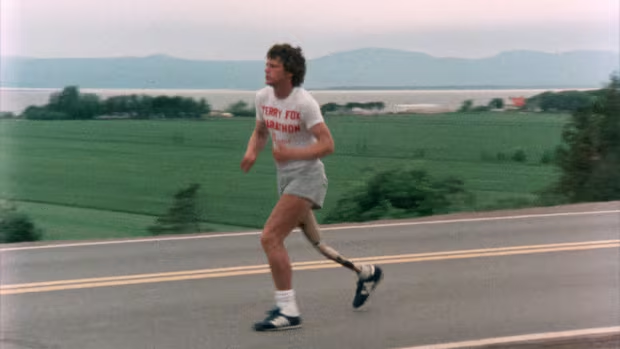
特里·福克斯堪称加拿大最家喻户晓的英雄之一,几代加拿大人都看过他在1980年徒步横穿全国的珍贵影像资料,当时他此举旨在唤起公众对癌症研究的关注并筹集资金。
Terry Fox is one of Canada's most recognizable heroes, with generations of Canadians having seen archival footage of his iconic 1980 run, as he crossed the country to raise awareness and money for cancer research.
不过,上个月在多伦多国际电影节首映的一部新纪录片却表明:关于这位“希望马拉松”背后的年轻人,我们仍有许多需要了解的地方。
But , a new documentary that premiered at the Toronto International Film Festival last month, makes the case that there is still much to learn about the young man behind the Marathon of Hope.
这部纪录片由肖恩·梅纳德执导,运用了96卷此前从未公开过的影像资料,将福克斯的声音、幽默感、挫败感以及坚毅品格生动地呈现在观众面前。
Directed by Sean Menard, the film draws on 96 reels of previously unseen footage, bringing Fox's voice, humour, frustrations and determination to the screen.
即将上映的特里·福克斯纪录片《奔跑吧,特里》发布了全新预告片。此前曾独立出资制作过一部关于MuchMusic频道的纪录片的梅纳德,因市面上高质量的福克斯相关影像资料十分有限,便萌生了寻找第一手资料的念头。在特里·福克斯基金会的协助下,他在距离自家仅几个街区远的多伦多一处储物间里发现了这些影像资料。随后他将这些胶片修复至4K画质,并据此制作成了这部纪录片。以下是我们从这部纪录片中了解到的一些信息:
Run Terry Run, the upcoming Terry Fox documentary, has a new trailer PhotosIN PHOTOS | TIFF movies and moments Menard, who previously made the self-funded MuchMusic documentary , was inspired to search for first-hand documentation of Fox's marathon due to the limited amount of high-quality footage available. Aided by the Terry Fox Foundation, he discovered the footage in a Toronto storage unit a few blocks from his own home. He subsequently restored the reels of film to 4K quality and used it to make his film. Here are some of the things we learned from the documentary.
- 特里·福克斯虽未能抵达终点,却为自己的理想跑了数千公里福克斯原本计划从圣约翰斯一路跑到维多利亚,全程约8000公里,每天计划跑完42公里——也就是一场马拉松的距离。
- Terry Fox didn't reach his destination — but he ran thousands of kilometres for his cause Fox's goal was to run from St. John's to Victoria, a total distance of about 8,000 kilometres. He planned to cover about 42 kilometres — the distance of a marathon — each day.
然而在安大略省境内,他多次绕道去参加集会、会见支持者并宣传癌症研究。这些中途停留导致他未能沿最直接的路线向西行进,或许本可抵达曼尼托巴省或萨斯喀彻温省,但这些活动也促使“希望马拉松”逐渐演变为一场全国性的运动。
In Ontario, however, he made several detours to speak at rallies, meet supporters and promote cancer research. Those stops meant he did not travel as far west as he might have on a more direct route — perhaps reaching Manitoba or Saskatchewan — but they did help turn the Marathon of Hope into a national movement.
1980年9月1日,得知癌细胞已扩散至肺部后,他被迫在安大略省桑德贝附近停下脚步。此时,他在143天里已累计跑了5373公里。
He was forced to stop near Thunder Bay, Ont., on Sept. 1, 1980, after learning that the cancer had spread to his lungs. By then, he had run 5,373 kilometres in 143 days.
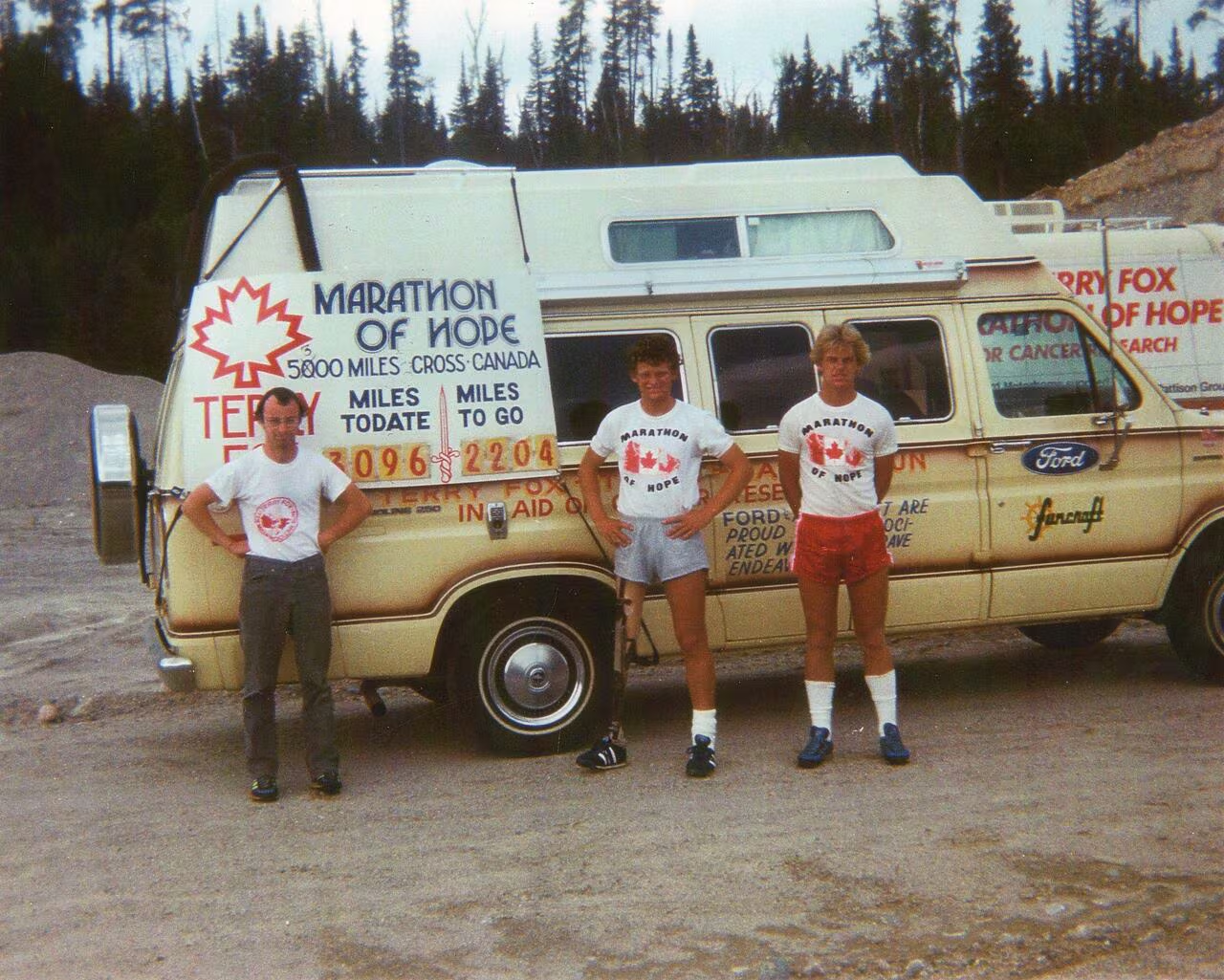
- 特里·福克斯与挚友发生争执,于是他的弟弟也加入了旅程1980年4月12日,特里·福克斯与挚友道格·阿尔沃德在圣约翰市发起了“希望马拉松”。然而,高强度的跑步训练以及两人同住一辆面包车带来的生活压力,使得他们之间出现了紧张关系。
- Terry Fox and his best friend fought, so Fox's younger brother joined the journey Terry Fox and his best friend, Doug Alward, began the Marathon of Hope in St. John's on April 12, 1980, but the physical demands of the run and the strain of living together in a van had created tension.
同年5月,当时17岁的特里弟弟达雷尔·福克斯在新不伦瑞克省加入了他们。他充当调解人,帮助缓解了两位好友间的矛盾。
Terry's younger brother, Darrell Fox, then 17, joined them in New Brunswick in May. He helped ease the friction between the two friends by acting as a mediator.
- 他对部分媒体报道感到失望特里非常在意媒体如何描述他以及“希望马拉松”的意义。当报道未能准确传达他跑步的初衷,反而着重描写他与阿尔沃德或达雷尔之间的分歧时,他感到十分沮丧。
- He was frustrated by some media coverage Fox cared deeply about how journalists portrayed him and the Marathon of Hope. He became frustrated when stories failed to capture the purpose of his run, particularly when they focused on disagreements with Alward or Darrell.
在特里成为全国知名人物之前,《多伦多星报》记者莱斯利·斯克里文纳便在每周专栏中记录下他的征程。这些报道有效激发了公众对这项活动的支持,使其从最初遭到许多人质疑的倡议逐渐演变为一场全国性运动。
Before Terry became a national figure, Toronto Star journalist Leslie Scrivener documented his journey in a weekly column called . Her reports helped build public support for the run, which grew from a cause many people initially doubted into a national movement.
- 他不愿将赞助款据为己用特里坚决主张通过“希望马拉松”筹集的资金应全部用于癌症研究,因此他拒绝接受任何赞助款或个人资助。
- He did not want sponsorship money for himself Terry was determined that money raised throughout his run would go to cancer research. He did not want to accept sponsorship money or personal financial support.
不过,各机构仍以其他方式予以协助:加拿大癌症协会聘请了公关专员比尔·维加斯,福特公司捐赠了一辆面包车,阿迪达斯则提供了跑鞋。
But organizations began helping in other ways. The Canadian Cancer Society hired a publicist named Bill Vigars, Ford donated a van and Adidas provided running shoes.
这场公益行动也激发了音乐创作。乡村歌手南希·瑞安录制了由弗恩·肯尼迪创作的歌曲《希望马拉松》,并将所得收益捐给加拿大癌症协会。
The public campaign also inspired music. Country singer Nancy Ryan recorded , written by Vern Kennedy, with proceeds donated to the Canadian Cancer Society.
- 他认为车祸诱发了癌症18岁时,特里遭遇了一场车祸,他坚信这场事故导致了右膝患癌。
- He thought a car accident contributed to his cancer When Terry was 18, he was involved in a car accident that he believed caused or contributed to the cancer in his right knee.
然而医生们指出,这场车祸与他所患的骨肉瘤——一种罕见且恶性程度极高的骨癌——并无关联。
Doctors, however, told him there was no connection between the accident and his osteosarcoma — a rare and aggressive form of bone cancer.
车祸后出现的疼痛其实是疾病的早期征兆,最终他在1977年被确诊,并不得不接受右腿截肢手术。
The pain he experienced after the crash was an early symptom of the disease, which was diagnosed in 1977 and ultimately led to the amputation of his right leg.
- 他从其他患癌儿童身上获得力量特里在医院康复期间的经历——包括目睹其他年轻癌症患者相继离世——促使他下定决心要跑遍整个加拿大。
- He drew inspiration from other children with cancer Terry's experience recovering in hospital, including watching other young patients die from cancer, helped shape his decision to run across Canada.
影片展现了特里的初衷:他希望“希望马拉松”能为那些受癌症困扰的人们带来希望,让他们相信事情是有可能改变的。他的目标是为癌症研究筹集资金,从而让未来的患者能获得更好的治疗手段。
The film shows how Terry wanted the Marathon of Hope to give people affected by cancer a sense that something could be done. His goal was to raise money for research so future patients would have better treatment options.
- 他讨厌看医生,总是能躲就躲特里·福克斯意志坚定且自律,但他并不喜欢就医。纪录片中的他是个抗拒看医生、不愿被疾病定义自己的年轻人。
- He disliked going to the doctor and avoided it Terry Fox was determined and disciplined, but he did not enjoy medical appointments. The documentary reveals a young man who resisted seeing doctors and did not want to be defined by his illness.
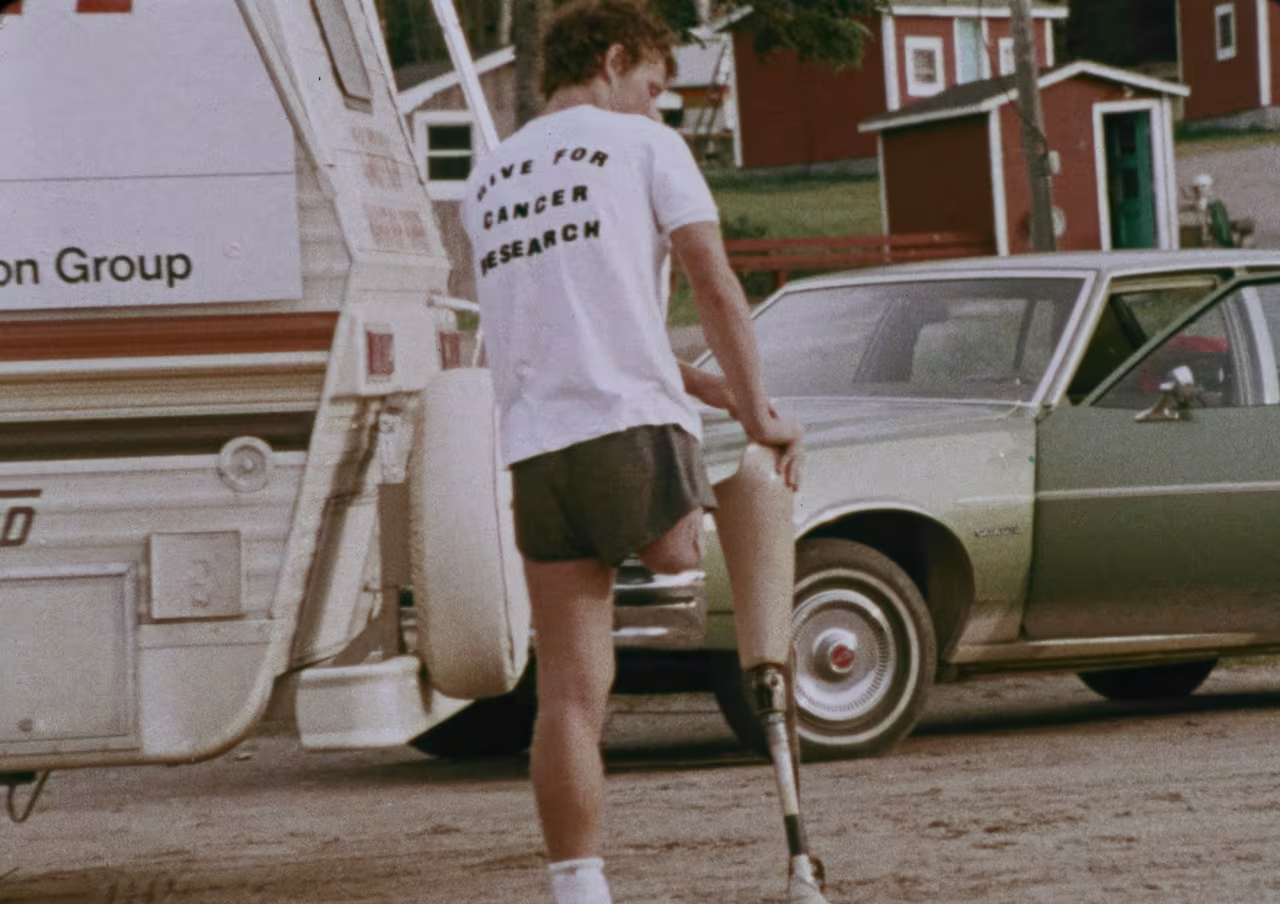
- 他与假肢的关系颇为复杂在跑步过程中,随着体重不断下降,他的假肢变得越来越难以穿戴,也愈发疼痛。由于不再合身,假肢与残肢之间产生摩擦,他不得不更换新的假肢。有一次,有人发现有血从他的腿上流下,愤怒的情绪瞬间涌上心头。
- He had a complicated relationship with his prosthetic leg As Terry lost weight during the run, his prosthetic leg became increasingly difficult and painful to wear. Because it no longer fit properly, it caused friction against his stump, and he needed to have it replaced. In one particularly difficult moment, Terry becomes angry after someone notices blood running down his leg.
纪录片镜头真实记录了特里的身体状况日益恶化,而他仍决心坚持跑下去的艰难过程。
The documentary footage captures the growing strain between Terry's changing physical condition and his determination to keep running.
- 魁北克段的旅程格外艰难在魁北克的经历让特里倍感挫败:语言障碍使得沟通变得异常困难。许多司机根本不知道“希望马拉松”一事,还屡屡将他逼离道路。出于安全考虑,阿尔沃德和达雷尔劝他穿上安全背心,但他拒绝了,因为他希望人们能看到自己身上印有“希望马拉松”字样的T恤。
- Quebec was a difficult part of the journey Terry was frustrated by his experience in Quebec, where the language barrier made communication more difficult. Many drivers were unaware of the Marathon of Hope and repeatedly forced him off the road. Concerned for his safety, Alward and Darrell urged Terry to wear a safety vest, but he refused because he wanted people to see his Marathon of Hope shirt.
进入安大略省后,新的挑战又接踵而至:此时公众的关注度已高得难以招架。特里不再只是那个在公路上奔跑的普通青年,他已然成为了全国知名的名人。
Ontario brought a different challenge. By then, public attention had become overwhelming. Terry was no longer simply a young man running along the highway — he had become a national celebrity.
- 尽管肩负重任,他依然能尽情放松纪录片还展现了特里的顽皮一面:他会和达雷尔、阿尔沃德开玩笑、搞恶作剧,尽情享受轻松愉快的时光。
- He could still let loose despite the seriousness of his mission The footage also shows Terry's playful side. He jokes with Darrell and Alward, pulls pranks and enjoys moments of levity.
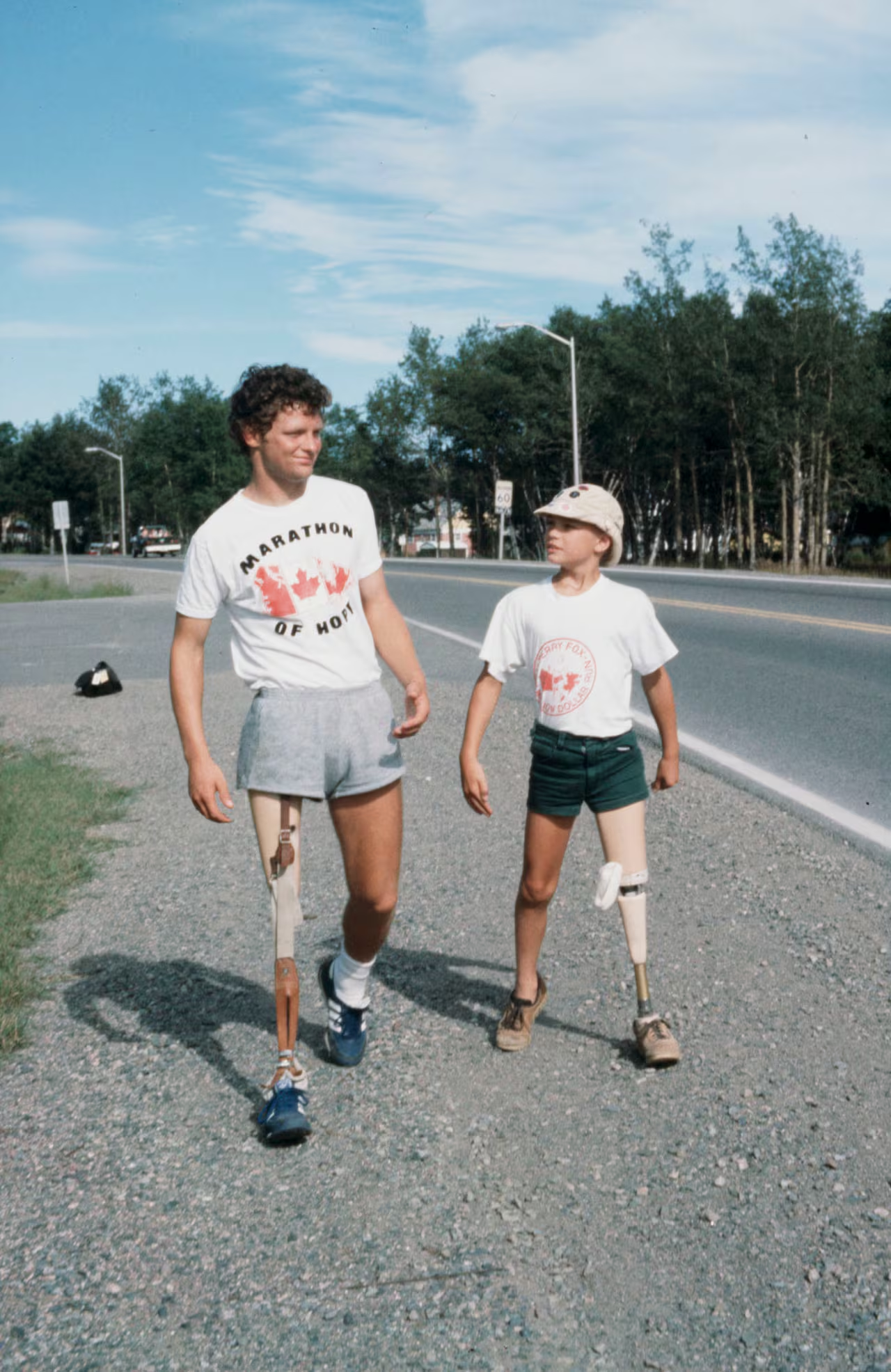
影片中有一个格外感人的片段:特里终于放松下来,与一名同样做了截肢手术的男孩建立了联系。这一幕提醒我们,那时的特里·福克斯也只是一名21岁的青年,也会欢笑、玩耍,还会耍些小调皮。
The film includes a particularly touching moment in which Terry is able to relax and connect with a young boy who also had a leg amputation. It is a reminder that Terry Fox was still a 21-year-old who could laugh, play and be silly.
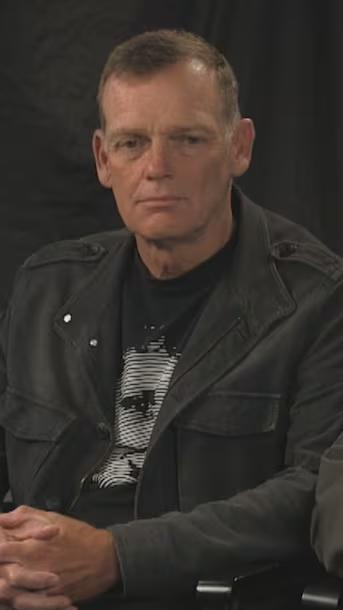
- 达雷尔·福克斯当时并不知道哥哥已入院1980年9月1日,在安大略省的桑德贝市,特里出现呼吸困难的情况,便让阿尔沃德开车送他去最近的医院。当时跟在车后的支援车辆上坐着达雷尔,起初他以为这只是一次常规停靠。他怎么也没想到,这竟是“希望马拉松”的终点。
- Darrell Fox did not know his brother had gone to the hospital On Sept. 1, 1980, in Thunder Bay, Ont., Terry was having trouble breathing and told Alward to drive him to the nearest hospital. Darrell, who was travelling in a support vehicle behind them, initially thought it was a regular stop. He didn't realize this would be the end of the Marathon of Hope.
在此前的93天里,达雷尔几乎随时都知道哥哥的动向。可突然间,哥哥却不见了踪影。当达雷尔赶到医院后,才得知癌症已经扩散到了特里的肺部。
For 93 days, Darrell had known where his brother was at almost every moment. Suddenly his brother was nowhere to be seen. When Darrell arrived at the hospital, he learned that the cancer had spread to Fox's lungs.
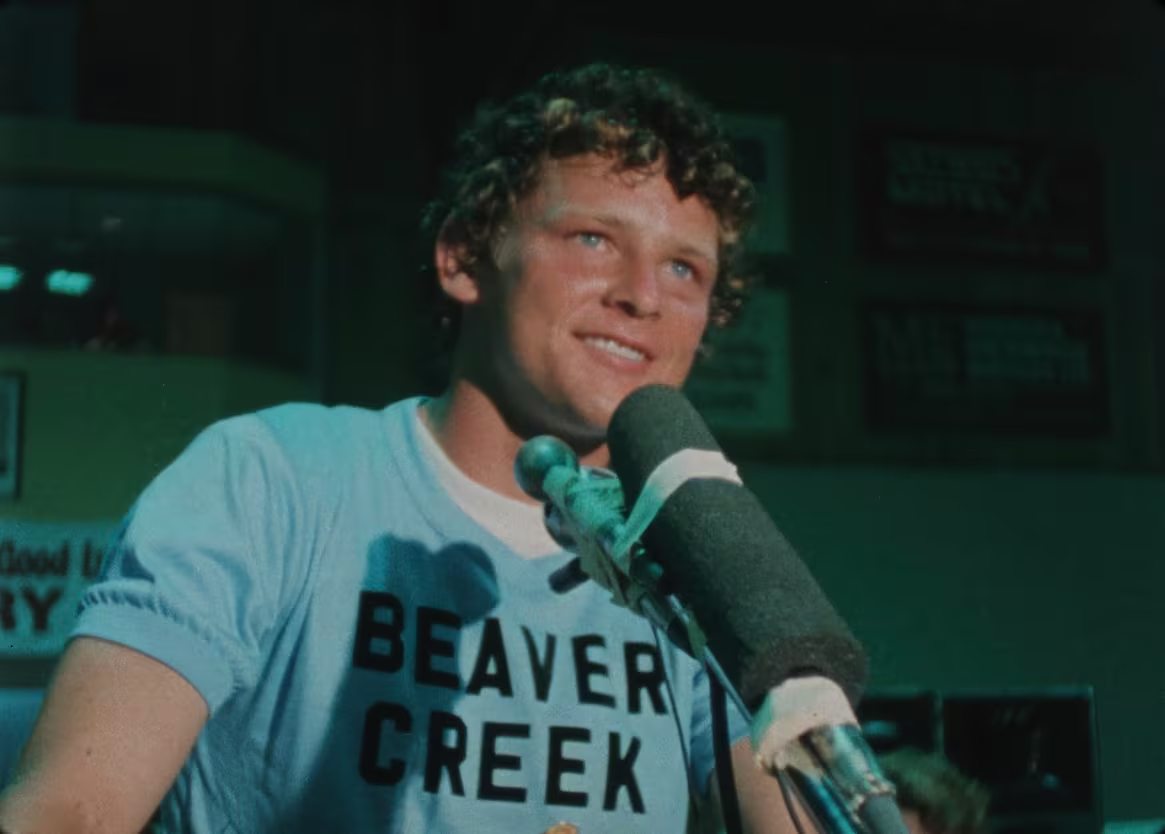
达雷尔回忆道,在医院里两人的角色瞬间互换。“反而是特里在试图安慰我,”他告诉加拿大广播公司记者,“他早已接受了现实,还努力往好的方面想——觉得这样反而能让他刚刚完成的壮举更有意义。”
At the hospital, Darrell says the roles were suddenly reversed. "It was Terry that was trying to comfort me," he told CBC News. "He had already accepted it and was thinking of the positive somehow — that this will only give more meaning to what [he's] just accomplished.
“我觉得这正是特里·福克斯的为人:总是为他人着想,从不考虑自己,”他补充道。
"I think that defines who Terry Fox is, always thinking of others and not himself," he added.
特里的精神遗产:九个月后,也就是1981年6月,22岁的特里不幸离世。但他发起的募捐活动至今仍在全球范围内开展。每年秋季,加拿大各地的社区和学校都会举办“特里·福克斯跑步活动”,至今已为癌症研究筹集了超过10亿加元的资金。
Terry Fox's legacy Terry died nine months later, in June 1981 at age 22, but the fundraising campaign he started continues worldwide. Annual Terry Fox runs, which take place in Canadian communities and at schools each fall, have raised more than $1 billion for cancer research.
22岁时便被授予加拿大勋章的特里·福克斯至今仍是无数人的榜样。他的弟弟达雷尔希望观众看完这部新纪录片后能明白:哥哥的榜样并非遥不可及,普通人也能效仿。
Honoured with the Order of Canada at 22, Terry Fox remains an inspiration. His brother Darrell hopes audiences leave the new documentary with the sense that his brother's example is not impossible to follow.
“特里只是个普通人,”他说道,“但看看他做了什么,看看他取得了怎样的成就。”这部纪录片将于10月9日上映。
"Terry was just an average guy," he said. "But look what he did. Look what he accomplished." opens in theatres on Oct. 9.