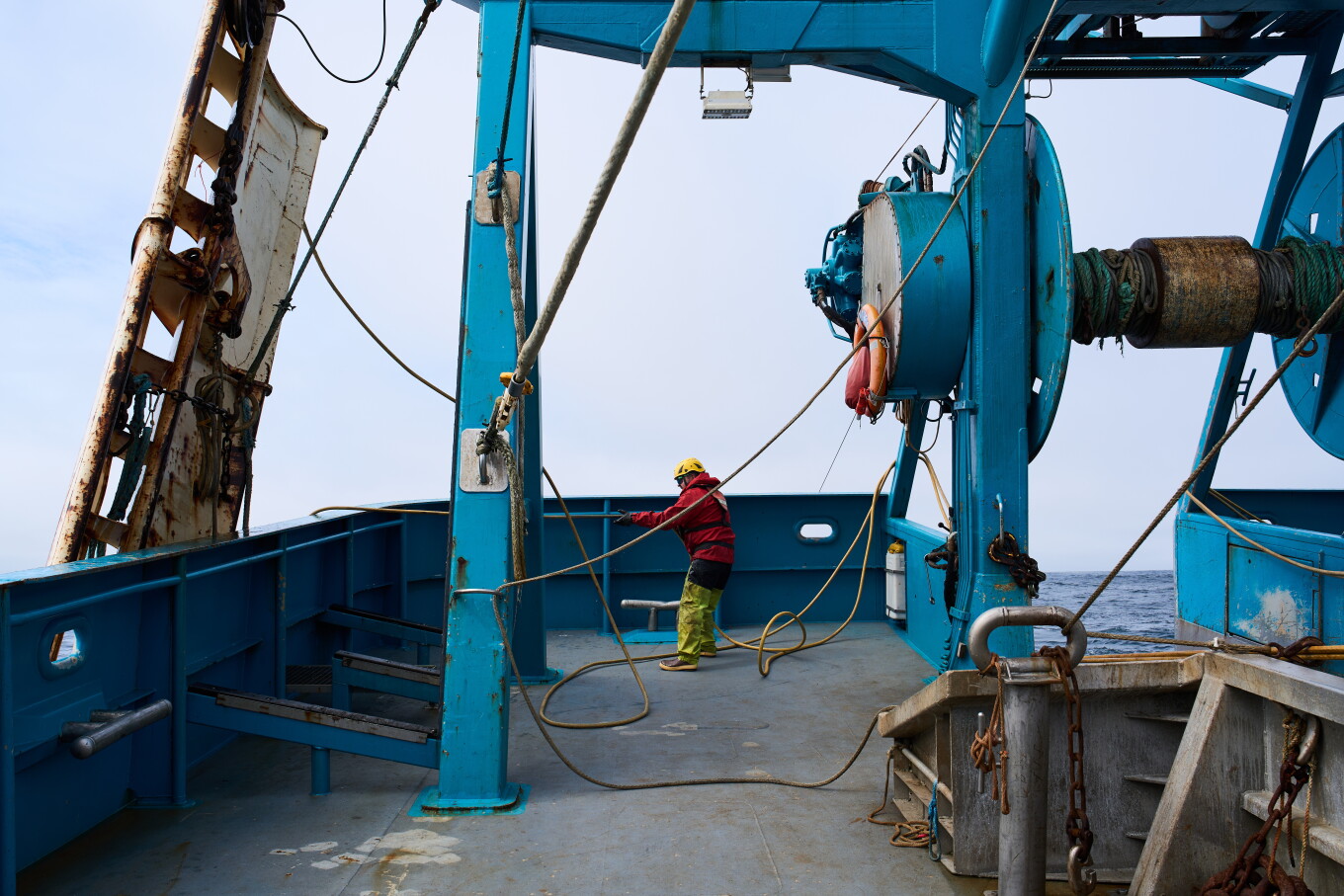
安妮卡·哈默施拉格(ANNIKA HAMMERSCHLAG)报道:一艘拖网渔船的后面,一张巨大的渔网可能花费数小时刮擦海底,将鱼群驱赶至船尾的狭窄网袋中。单次拖网作业就能将数万磅的海鲜运上船。
ANNIKA HAMMERSCHLAG Behind a trawl fishing boat , a vast net can spend hours scraping the seafloor , funneling schools of fish toward a narrow bag at the back. A single tow can bring tens of thousands of pounds of seafood aboard.
正是这种高效性,使拖网捕捞成为世界一些最大商业渔业的核心。然而,这种能让渔民一次性捕获大量鱼类的渔具,也会误捕不想要的海洋生物,并破坏海底生态系统。底拖网捕捞是全球对海底栖息地最直接、最广泛的人为物理干扰。
That efficiency is why trawling has become central to some of the world’s largest commercial fisheries . But the gear that allows fishers to harvest large quantities at once can also catch unwanted marine life and harm seafloor ecosystems . Bottom trawling is the most extensive direct human physical disturbance to seabed habitats worldwide.
拖网通过在海中拖拽一张大型漏斗形渔网,以批量捕获鱼类和贝类。底拖网使用沉重的“门”状结构和“脚绳”——一条沿渔网开口底部延伸的带链重物绳索——来刮擦海底,捕捉鳕鱼、鳕形目鱼类、比目鱼、虾类及其他物种。这种渔具的设计旨在搅动沉积物,同时将鱼群驱赶入网。
Trawls tow a large, funnel-shaped net through the ocean to catch fish and shellfish in bulk. Bottom trawls use heavy doors and a footrope — a chain-weighted line running along the bottom of the net’s opening — to scrape the seafloor for cod, sole, flounder, shrimp and other species. The gear is designed to stir up sediment as it herds fish into the net.
仅底拖网渔船每年就捕获约420亿磅(1900万吨)的鱼类和无脊椎动物,约占全球野生海洋捕捞总量的四分之一。
Bottom trawlers alone bring in about 42 billion pounds (19 million metric tons) of fish and invertebrates each year — roughly a quarter of the world’s wild marine catch.
浮游性拖网,即中水层拖网,则用于在更深的水层捕捞鳕鱼和鲱鱼等物种。但当这些鱼类聚集在靠近海底的区域时,浮游性拖网的部分结构也可能拖拽着海底移动。工业级拖网可能长达数个足球场,宽度可达数百英尺。
Pelagic, or midwater, trawls are designed to fish higher in the water column for species such as pollock and herring. But when those fish gather close to the bottom, parts of pelagic gear can also drag along the seafloor. Industrial trawl nets can be several football fields long and span hundreds of feet wide.
被称为“副渔获”的非目标渔获物通常被丢弃在海上,而且往往已经死亡。
Unintended catch, known as bycatch, is often discarded at sea, frequently dead.
根据一项基于联合国粮食及农业组织数据的2020年研究,2010年至2014年间,海洋渔业每年丢弃的渔获物超过200亿磅(900万吨),约占总捕捞量的11%。其中,拖网渔业占到了这些丢弃渔获物的近60%。
Marine fisheries discarded more than 20 billion pounds (9 million metric tons) of catch annually from 2010 to 2014 — roughly 11% of total catch — according to a 2020 study based on United Nations Food and Agriculture Organization data. Trawl fisheries accounted for nearly 60% of those discards.
奥克兰大学海洋科学教授、研究海底生态系统的西蒙·特鲁什表示:“人们需要意识到,海洋并非‘眼不见为净’的地方。”“拖网捕捞留下的影响范围其实非常广泛。”一些渔业已采用逃生装置,让大型动物在被拖上船前与目标渔获分离。但这些装置的效果和使用情况因渔业类型、物种和渔具而异。渔民也会尽量避免那些非目标物种集中的区域。
“There is a need for people to not treat the ocean as out of sight and out of mind,” said Simon Thrush, a marine science professor at the University of Auckland who studies seafloor ecosystems. “The footprint of trawling is really extensive.”Some fisheries have adopted escape panels that let larger animals separate from the target catch before it’s hauled aboard. But the effectiveness and use of these devices vary by fishery, species and gear. Fishers also try to avoid areas where unwanted species are concentrated.
将渔具拖拽在海底会破坏珊瑚和海绵,而这些生物为其他海洋生物提供了食物和栖息地。螃蟹等其他底栖动物也可能受到伤害。深海珊瑚和海绵生长缓慢,可能需要数十年甚至数百年才能恢复。
Dragging fishing gear across the seafloor can remove and damage corals and sponges , which provide food and habitat for other marine life . Other bottom-dwelling animals such as crabs can also be harmed. Deep-sea corals and sponges grow slowly and can take decades or even centuries to recover.
特鲁什说:“深水珊瑚可以存活数千年,生长到像30米高的树木一样。”“这些栖息地会被拖网捕捞破坏。一次拖网就足以造成破坏。”根据2018年的一项全球元分析,单次使用接触式底拖渔具,会使海底无脊椎动物的数量平均减少26%。科学家指出,这一数据可能低估了实际影响,因为部分被分析的地点在研究人员测量之前就已经被拖网捕捞过。
“Deep-water corals can live for thousands of years and grow to be like trees that are 30 meters tall,” Thrush said. “Those habitats are destroyed by trawling. One trawl is enough.”A single pass of bottom contact fishing gear reduced the abundance of seafloor-dwelling invertebrates by an average of 26%, according to a 2018 global meta-analysis . Scientists note that figure is likely an underestimate because some analyzed sites had been trawled before researchers measured the effects.
海底沉积物储存着地球上最大的碳库。底拖捕捞会搅动沉积物,使埋藏其中的有机物暴露于氧气和微生物中,从而被转化为二氧化碳。
Seafloor sediment holds the largest reservoir of carbon on Earth. Bottom trawling stirs up the sediment, exposing buried organic matter to oxygen and microbes that can convert it into carbon dioxide.
2024年的一项建模研究发现,一旦二氧化碳产生,大约55%至60%会在十年内进入大气层。由于二氧化碳会吸收大气中的热量,这些排放可能会加剧全球变暖。
A 2024 modeling study found that once that CO2 is produced, about 55% to 60% reaches the atmosphere within a decade. Because carbon dioxide traps heat in the atmosphere, those emissions can add to global warming.
科学家们仍在努力确定究竟有多少碳被转化,不过该研究估计,由此产生的排放量可能高达全球渔船队燃烧燃料所产生排放量的两倍左右。
Scientists are still working to determine how much carbon is converted, though the study estimated the resulting emissions could be up to roughly twice those produced by fuel burned by the world’s fishing fleets.
在Instagram上关注Annika Hammerschlag:@ahammergram。
Follow Annika Hammerschlag on Instagram: @ahammergram .
美联社在报道水资源与环境政策方面得到了沃尔顿家族基金会的支持。
The Associated Press receives support from the Walton Family Foundation for coverage of water and environmental policy. The