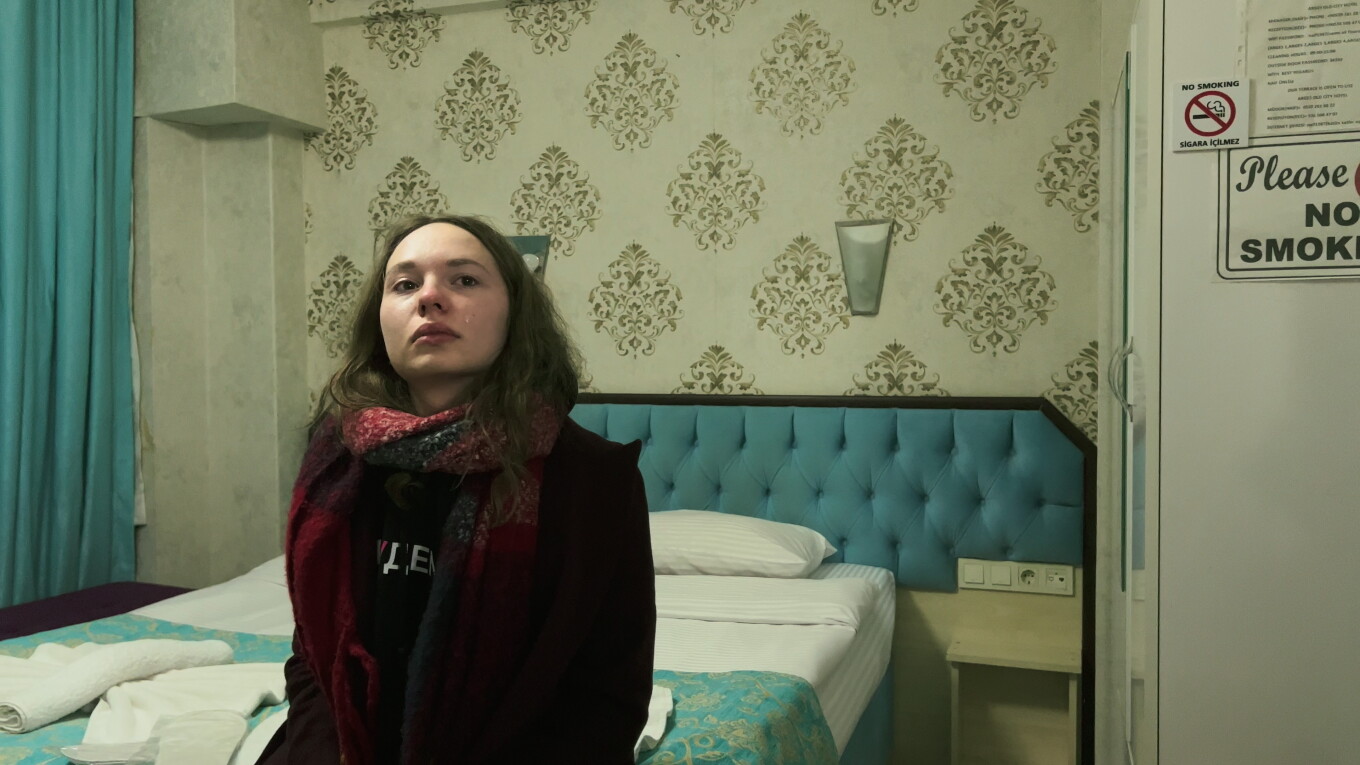
林赛·巴赫 朱莉娅·洛克特夫的新纪录片开篇几乎像一部紧张刺激的好莱坞间谍惊悚片。她用iPhone拍摄的那些记者正拼命试图逃离俄罗斯,许多人既没有计划也没有住处,只带了一个塞满匆忙打包物品的随身行李箱,希望他们不会在边境被拦下。
LINDSEY BAHR Julia Loktev’s new documentary begins almost like a tense Hollywood spy thriller. The journalists she’s filming on her iPhone scramble to get out of Russia, many without a plan or lodging and with only a carry-on suitcase full of hastily packed things, hoping they’re not held up at the border.
这部时长近六小时的影片名为《我那些“不受欢迎”的朋友:第二部分——流亡》,本周末将在部分影院上映,是洛克特夫对俄罗斯记者群像的续篇,也是她五年项目的最终成果。该项目始于2021年秋季,当时洛克特夫在莫斯科拍摄一群独立记者,而弗拉基米尔·普京正开始将部分记者宣布为“外国代理人”。四个月后,局势发生剧变:俄罗斯对乌克兰发动全面入侵,许多记者仅提前几小时接到通知便仓促逃离该国。洛克特夫继续拍摄,跟随她的采访对象在流亡中报道战争。
At nearly six hours, “My Undesirable Friends: Part II — Exile,” which opens in select theaters this weekend, is the second half of Loktev’s portrait of Russian journalists and the culmination of a five-year project. It began with Loktev filming a group of independent journalists in Moscow in the fall of 2021 as Vladimir Putin was starting to declare some reporters “foreign agents.”Four months later, the situation changed dramatically: Russia launched a full-scale invasion of Ukraine and many journalists fled the country on only a few hours’ notice. Loktev kept filming, following her subjects as they reported on the war in exile.
“人们一听到‘一部关于记者的六小时电影’,就会说:‘天哪,这听起来真可怕。’但实际上并非如此,”洛克特夫在最近接受美联社采访时说。“这其实更像一部轻松陪伴式的电影,一部充满温情的影片。”在注意力经济时代,一部时长近六小时的纪录片无论主题为何,听起来都可能难以吸引观众。洛克特夫深知这一点。
“People hear, they’re like, ‘Oh my god a six-hour film about journalists? That’s really scary.’ But it’s actually not,” Loktev told The Associated Press in a recent interview. “It’s kind of a hangout film. It’s a friendly film.”In the attention economy, a nearly six-hour documentary about anything might sound like a hard sell. Loktev knows this.
她的第一部影片《我那些“不受欢迎”的朋友:第一部分——莫斯科最后的空气》也曾面临同样的挑战。该片入围奥斯卡提名,目前正在MUBI平台上线。这部纪录片描绘了记者们在社会即将全面压制新闻自由背景下的工作生活,时长接近五小时半。
She went through it with the first film, “My Undesirable Friends: Part I — Last Air in Moscow,” which was shortlisted for an Oscar nomination and is currently streaming on MUBI. That documentary — a portrait of journalists working in a society on the verge of shutting down all press freedoms — is nearly 5 1/2 hours long.
如今,她再次选择同样的方式,而且两次都没有传统院线发行商的帮助。最近,一位公关人员甚至告诉她,有传言称观众已经“对新闻自由和威权主义的话题感到厌倦”,因此不想观看这部影片。“我当时想,这真的很有趣,因为威权主义可并没有厌倦他们,”洛克特夫说。
Now she is doing it again, and neither time with the help of a traditional theatrical distributor. A publicist even recently told her that she’s hearing that people don’t want to watch it because they’re “kind of tired about hearing about press freedoms and authoritarianism.”“I’m like, that’s really interesting, because authoritarianism isn’t tired of them,” Loktev said.
但《我那些不受欢迎的朋友》系列电影有个特别之处:尽管题材沉重、片长冗长、人物众多,却并不会让人感到像在完成作业。而且,你也不必先看过“第一部”,才能理解“第二部”。主要原因在于,她所关注的对象——大多数都是二三十岁的年轻人——即便身处非凡的境况,依然极具吸引力且令人感同身受。这也是她从未厌倦拍摄他们的原因。
But the thing about the “My Undesirable Friends” movies is that somehow, despite the heavy subject matter, the sprawling runtime and the many characters, they don’t feel like homework. You also don’t need to see “Part I” to dip into “Part II.”The main reason is that her subjects, most of whom are in their 20s and 30s, are so engaging and relatable despite being in extraordinary circumstances. It’s also why she didn’t tire of filming them.
“这是一部关于极其普通人的电影,他们只是在糟糕的时代里努力做些好事,”洛克特夫说。“这部电影的核心在于坚韧不拔:当公众注意力转移时,你该如何继续讲述这个故事?……你如何保持乐观,或者至少保持足够的乐观,让自己第二天早上还能起床继续工作?”自2021年以来,俄罗斯当局已将数十家媒体机构和记者列为“外国代理人”——这一标签旨在抹黑他们,同时禁止他们刊登广告。
“This is a film about very ordinary people who are just trying to do something good in an awful time,” Loktev said. “The film is so much about perseverance and how do you keep telling the story when attention moves away? … How you maintain optimism, or at least enough optimism, to get up the next morning and do your job?”Since 2021, Russian authorities have labeled dozens of outlets and journalists as “foreign agents” — a designation aimed at discrediting them that also prevents them from selling advertising.
当局还禁止并监禁了部分记者。自乌克兰战争爆发初期以来,许多媒体已将编辑部迁至国外,但通过虚拟专用网络(VPN)仍可在俄罗斯访问。
They have also outlawed and imprisoned journalists. Many outlets have moved their newsrooms abroad since the first weeks of the war in Ukraine and are accessible in Russia via virtual private networks, or VPNs.
洛克特夫于1969年出生于前苏联,9岁时随家人移民美国。她一直与母亲用俄语交流,这让她更容易融入这个全新的世界。她的切入点来自安娜·涅姆泽尔,后者在独立电视新闻频道“雨电视台”工作。
Loktev was born in the former Soviet Union in 1969 and immigrated to the U.S. with her family when she was 9 years old. She continued speaking Russian with her mother, which made it easier to parachute into this world. Her entry point was Anna Nemzer, who worked for the independent television news network TV Rain.
洛克特夫用iPhone拍摄了所有人,这让她几乎能完全融入背景之中。在拍摄“第二部”时,由于所有人都分散各地,她不得不频繁往返于欧洲各国。
Loktev filmed everyone with her iPhone, which helped her almost disappear into the background. Part II had her traversing European countries constantly as everyone had dispersed.
入侵之后,洛克捷夫比她的采访对象稍晚一些离开俄罗斯:她想确保在持旅游签证离境之前,已将拍摄素材上传到云端。她曾被人提醒过,当官员查看护照的时间比平时稍长,并说“电脑卡住了”,那就意味着“他们正在核查你”。
After the invasion, Loktev left Russia a little later than her subjects: She wanted to make sure she had uploaded her footage to the cloud before attempting to exit the country with her tourist visa. She’d been warned that when an official is looking at a passport a little longer than usual and says that the “computer is hanging” that it means “they’re checking you out.”
“我当时就站在……莫斯科的机场,心想:‘是不是有什么问题?’他们则回答:‘没有没有,只是我们的电脑卡住了,’”她说。“电脑足足卡了20分钟。我努力让自己没在裤子里尿出来。”包括涅姆泽尔在内的几位采访对象,都随洛克捷夫一同前往威尼斯电影节,出席该片的全球首映。许多人至今仍以记者身份远程工作。但在第二部影片的中段,其中一位改变了方向:彼得·鲁扎文,一位曾为俄罗斯记者、并与乌克兰记者结婚的男子,决定加入乌克兰军队。他说,他意识到自己的新闻报道虽然揭示了现实,却并未改变现实。
“I was standing there … at the airport in Moscow and I’m like, ‘Is there an issue?’ and they’re like, ‘No, no our computer’s just hanging,’” she said. “It was hanging for a good 20 minutes. I tried not to pee my pants.”Several of the subjects, including Nemzer, joined Loktev at the Venice Film Festival for the film’s world premiere. Many still work as journalists from afar. But one switches focus midway through the second film: Peter Ruzavin, a former Russian journalist who is married to a Ukrainian journalist, decided to enlist in the Ukrainian army. He said he realized that although his journalism was showing reality, it wasn’t changing it.
“我们不需要逃离普京,我们需要对抗他,”在乌克兰军队服役超过两年的鲁扎文在威尼斯表示。“这就是我做出决定的原因。我放弃了那份最好的工作,我每天都想念它。”在过去几天里,洛克捷夫看到了一些关于她影片的有趣标题,例如《每日野兽》上的一则标题:“弗拉基米尔·普京的‘战争罪行’在震撼人心的新片中曝光。”她指出,虽然她的影片并非揭露战争罪行的作品,但它提醒人们,当所有人的注意力都已转移时,片中那些记者仍在努力做些什么。
“We need not to run away from Putin. We need to fight him,” Ruzavin, who has served in the Ukrainian army for over two years, said in Venice. “That’s why I made my decision. I left the best work. I miss it every day.”In the past few days, Loktev has seen some interesting headlines about her film, like one in The Daily Beast that reads “Vladimir Putin’s ‘War Crimes’ Exposed in Shocking New Film.”While hers is not an exposé on war crimes, it is a reminder, she said, of what the journalists in the film are trying to do when everyone else’s attention has shifted.
“坦白说,我认为这正是我们现在在拍摄这部电影时面临的一个难题:每个人都会转向下一个项目,”洛克特夫说道,“但最后那个项目却没有任何改变。”
“I think that’s something that we’re struggling with now in a way with the film, I’ll be honest, is that everybody moves on to the next thing,” Loktev said. “But the last thing hasn’t changed.”
她说,最理想的情况是能够制作一部“第三部”——“如果俄罗斯的政治状况有所改变的话。”
The fantasy, she said, would be to make a “Part III” — “if ever the political situation in Russia changes.”
“不过,到那时我们可能已经年事已高了。”美联社驻爱沙尼亚塔林市的记者达莎·利特维诺娃为这篇报道做出了贡献。
“But I think we might be very old by then.”Associated Press reporter Dasha Litvinova in Tallinn, Estonia, contributed to this story.