人工智能是今年法兰克福书展的热门话题。一场国际性的文学丑闻引发了人们对机器生成文本的质疑。
AI is a hot topic at this year's Frankfurt Book Fair. An international literary scandal raises questions about machine-generated texts.
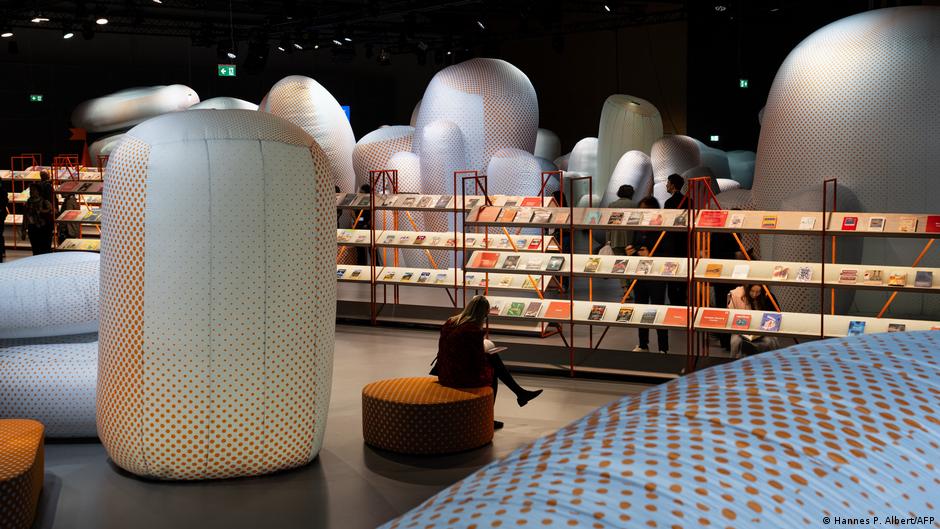
2026年法兰克福书展上,捷克共和国作为荣誉客国的展馆。人工智能将如何深刻地改变图书行业?我们又该如何规范这种变革?这些问题正是法兰克福书展的焦点议题。
The pavilion of the Guest of Honor, the Czech Republic, at the 2026 Frankfurt Book Fair It's the hot-button topic at the Frankfurt Book Fair How profoundly will artificial intelligence transform the book industry, and how can this transformation be regulated? Given the warnings about the technology's long-term risks to humanity as a whole, such debates might seem rather narrow in scope.
鉴于人们已对这项技术可能给全人类带来的长期风险发出警告,这类讨论或许看似范围有限。但实际上,它们涉及非常具体的问题——版权保护、大型科技公司的权力,以及创造性工作的未来。许多相关人士都认同,目前采取的政治措施仍远远不够。
In reality, however, they concern very concrete issues — copyright protection, the power of major tech corporations and the future of creative work. Many of those involved agree that the political measures taken don't go far enough.
然而今年,讨论中又出现了另一个层面:我们真的能够识别出一篇文本是否借助人工智能撰写吗?又该如何证明这一点?
This year, however, another aspect has entered the debate: Can we actually recognize when a text has been written with the help of artificial intelligence, and how can it be proven?
这些问题正是围绕海地裔加拿大作家Thélyson Orélien所引发的当前文学丑闻的核心。他的首部长篇小说《C'était ça ou mourir》(要么如此,要么死亡)于春季在加拿大出版,随后在夏末登陆法国。
These are the questions being asked in the current literary scandal surrounding Haitian-Canadian author Thélyson Orélien. His debut novel, "C'était ça ou mourir," (It Was Either That or Die) was published in Canada in the spring and then in France in late summer.
围绕Thélyson Orélien书籍的争议引发了关于人工智能与作者身份的更广泛讨论。这部讲述移民经历的著作广受好评,翻译权已销往20多种语言。该书甚至入围了享有盛誉的龚古尔奖长名单。
The controversy around Thélyson Orélien's book has sparked a larger debate on AI and authorship The migration story was universally acclaimed, with translation rights sold in more than 20 languages. The book even made the longlist for the prestigious Prix Goncourt.
然而,突然之间,有人指控这本书几乎完全由人工智能撰写。此前备受瞩目的文学新星Orélien,尽管否认所有指控,却瞬间被贴上“骗子”的标签。他获得龚古尔奖提名的资格也被撤销。
Then, suddenly, allegations emerged that the book had been written almost entirely using AI. Orélien, until then a rising literary star, suddenly found himself branded a fraud, despite denying all the allegations. His nomination for the Prix Goncourt was withdrawn.
那么,如今我们该相信谁——作者本人,还是声称能够识别出人工智能生成文本的人工智能?
So, who should we believe now — the author or the AI that claims to have identified AI-generated writing?
当文本的起源变得不确定时,“我们将不得不学会与怀疑共存,”加州大学伯克利分校德国文学教授汉内斯·巴约尔(Hannes Bajohr)说道。
When the origins of texts become uncertain "We will have to learn to live with doubt," says Hannes Bajohr, a professor of German literature at the University of California, Berkeley.
汉内斯·巴约尔是加州大学伯克利分校的德国研究教授。多年来,他一直研究人工智能如何改变写作和阅读。他的预测是:如果文本的起源无法再被可靠地确认,我们将不得不以不同的方式评估这些文本。届时重要的将只剩下文本本身的质量,而非写作过程中是否使用了人工智能。
Hannes Bajohr, professor for German Studies at the University of California, Berkeley He has spent years examining how AI is changing both writing and reading. His prediction: If the origins of texts can no longer be reliably established, we will have to evaluate them differently. What matters will be their quality alone, rather than whether AI was used in the writing process.
畅销书作家、欧洲作家理事会名誉主席尼娜·乔治(Nina George)却不愿接受这一观点。
Nina George, a best-selling author and honorary president of the European Writers' Council, is unwilling to accept this.
在法兰克福书展上,她因对人工智能和版权等问题的坚定立场而荣获弗里德里希·佩尔茨奖(Friedrich Perthes Prize)。
At the Frankfurt Book Fair, she was awarded the Friedrich Perthes Prize in recognition of her commitment to issues including AI and copyright.
作为欧洲作家权利和版权改革的领先倡导者,作家尼娜·乔治曾向欧洲议会和德国联邦议院发表演讲,并不断发声和撰文,警示人工智能模型带来的风险。她说,让作家突然需要证明自己的作品出自人类之手,这是荒谬的。她倡导的核心始终聚焦于大型企业的自私自利心态以及版权保护问题。借助人工智能,任何人都能成为作家吗?
A leading advocate for European authors' rights and copyright reform: Author Nina George George has addressed the European Parliament and the German Bundestag, and speaks and writes tirelessly about the dangers of AI models. It is perverse, she says, that an author should suddenly have to prove that their writing is human. The focus of her campaigning remains the large corporations' self-serving mentality and the protection of copyright. Can anyone become an author with AI?
但如果一位作家不把人工智能视为敌人,而是将其当作让写作更轻松的工具呢?
But what if an author sees AI not as an enemy, but as a tool that makes writing easier?
美国作家兼艺术家卢克·斯托费尔(Luke Stoffel)在回忆录《如何赢得一百万美元》(How To Win One Million Dollars)和《闪闪发光的垃圾》(Shit Glitter)中刻意使用了人工智能,并对此公开坦诚。
American author and artist Luke Stoffel deliberately used AI in his memoir, "How To Win One Million Dollars" and "Shit Glitter," and was open about doing so.
“我有阅读障碍,”他在一段视频采访中说,“我一直都在写作和编故事,但从未敢将它们进一步发展。”卢克·斯托费尔公开谈论自己在写作中如何使用人工智能。他说,正是在人工智能的帮助下,他才能实现自己的梦想。这项技术不仅让他注意到了自己写作中的不足,还提出了一套真正行之有效的营销策略。
"I'm dyslexic," he says in a video interview. "I've always written and made up stories, but I never dared to take them any further." Luke Stoffel openly talks about his use of AI in writing books It was only with the help of AI, he says, that he was able to fulfill his dream. The technology drew his attention to weaknesses in his writing and suggested a marketing strategy that actually worked.
然后,在2026年5月,他因这本书获得了独立图书出版商协会(IBPA)颁发的奖项。
Then, in May 2026, he received an award from the Independent Book Publishers Association (IBPA) for the book.
对南非作家科拉·哈特而言,人工智能实际上是她商业模式的基础。她使用多个笔名进行出版,每年推出超过200部不同类型的小说,涵盖爱情、惊悚和悬疑题材,且全部为独立出版。
For South African author Coral Hart, AI is actually the foundation of her business model. Publishing under various pseudonyms, she releases more than 200 different novels every year, spanning romance, thrillers and mystery, all independently published.
她将自己视为一个创意者,同时也是一位编辑和出版人。尽管她的书中还没有一部成为畅销书,但这项业务依然盈利。据哈特称,她的每本书都能触达超过5000人。
She sees herself as an ideas person, as well as an editor and publisher. Although none of her books has yet become a bestseller, the business is profitable. According to Hart, each of her books reaches more than 5,000 people.
许多已经使用人工智能的出版商认为,这场争论充满虚伪。总部位于纽约的作家卢克·斯托费尔指出,许多出版商早已开始使用人工智能工具。他确信:“目前,一部借助人工智能创作的百万销量畅销书正在印刷中。作者不会承认这一点,之后就会引发丑闻。”围绕泰利松·奥雷利恩的丑闻很可能正是这样一件事。但我们或许永远无法确定。
Many publishers already working with AI New York-based author Luke Stoffel considers the entire debate hypocritical. Many publishers have been working with AI tools for some time. He's certain that "right now, a million-copy bestseller is being printed that was created with the help of AI. The author won't admit it, and then there'll be a scandal." It is entirely possible that the scandal surrounding Thélyson Orélien is precisely that story. But we may never know for sure.
目前,与科技巨头的对抗仍在继续。就连这些公司自身也越来越担心失去控制。
For now, the battle against the tech giants continues. Even the companies themselves are increasingly concerned about losing control.
书展一开始,德国出版商和书商协会就向柏林和布鲁塞尔的政策制定者发出呼吁,要求比以往任何时候都更加紧迫地加强对人工智能的监管。已有超过150家出版商签署了这份呼吁。
At the very start of the fair, the German Publishers and Booksellers Association issued an appeal to policymakers in Berlin and Brussels, calling for stricter regulation of artificial intelligence, more urgently than ever before. More than 150 publishers have already signed it.
但眼下,这仍然只是一份呼吁。至于作者自身究竟被允许如何使用人工智能,这个问题无疑将在未来继续引发争议。阅读2.0:人工智能如何改变我们的书籍 要观看此视频,以及
But for now, it remains just an appeal. And the question of what authors themselves should be permitted to do with AI will undoubtedly continue to fuel debate in the future. Reading 2.0: How AI is changing our books