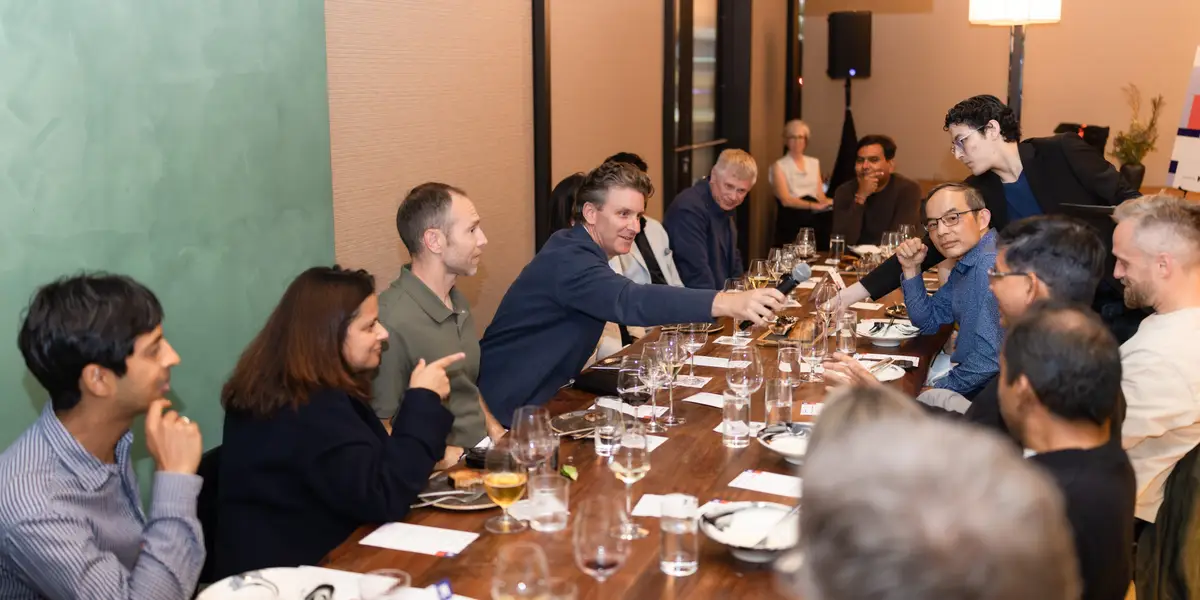
本周,AI Insider在旧金山举办了一场由Dash0赞助的科技高管晚宴。我先提了一个简单的问题:“今天有谁在工作中使用了AI代理帮忙?”所有人都举起了手。随后我又追问:“今天有谁在工作中使用了五个以上的AI代理?”结果,所有手依然举着。围坐在桌旁的嘉宾包括Zoom首席技术官XD Huang;Figma工程副总裁Josh Clemm;Coursera首席技术官Mustafa Furniturewala;ServiceNow高管Ashraf Karim;Glean首席技术官T.R.“Vish”Vishwanath;Netlify首席执行官Matt Biilmann;PagerDuty工程负责人Manu Gurudatha;Yahoo Mail总经理Kyle Miller;Lime首席技术官Jon Jenkins;Proofpoint AI安全负责人Ravi Ithal;Temporal联合创始人兼首席技术官Maxim Fateev;Inworld首席执行官Kylan Gibbs;Xero工程负责人Diya Jolly;MinIO首席技术官Ugur Tigli;Tribe AI合伙人Pooja Brown;Basis联合创始人Creston Brooks;以及Empirik首席执行官Kartik Chandrayana。
This week, AI Insider hosted a dinner, sponsored by Dash0, in San Francisco for tech executives. I started with a simple question. "Who had an AI agent help them at work today?" Every hand went up. Then I asked a follow-up. "Who had more than five AI agents helping them at work today?" Again, every hand stayed in the air. Around the table were Zoom CTO XD Huang; Figma VP of Engineering Josh Clemm; Coursera CTO Mustafa Furniturewala; ServiceNow executive Ashraf Karim; Glean CTO T.R. "Vish" Vishwanath; Netlify CEO Matt Biilmann; PagerDuty engineering leader Manu Gurudatha; Yahoo Mail GM Kyle Miller; Lime CTO Jon Jenkins; Proofpoint AI security chief Ravi Ithal; Temporal cofounder and CTO Maxim Fateev; Inworld CEO Kylan Gibbs; Xero engineering leader Diya Jolly; MinIO CTO Ugur Tigli; Tribe AI partner Pooja Brown; Basis cofounder Creston Brooks; and Empirik CEO Kartik Chandrayana.
没有人争论AI是否会毁灭人类。这些都是在实战一线摸爬滚打的经验丰富的科技领袖,他们正在思考一些切实的问题,比如:如何让AI代理在公司内部真正发挥作用?整个晚上有一个词反复出现:上下文。Zoom的Huang表示,AI代理只有对公司、同事、会议和工作有了更深入的了解,才能真正变得有用。“上下文就是一切,”XD风趣地说道,巧妙化用了那篇著名的AI研究论文《注意力就是一切》。
No one debated whether AI will kill us. These are experienced tech leaders from the trenches wrestling with real questions, such as: How do you make AI agents actually useful inside a company? One phrase kept coming up all evening: context. Zoom's Huang said AI agents won't become genuinely useful until they understand far more about your company, your colleagues, your meetings, and your work. "Context is all you need," XD quipped, riffing on the famous AI research paper "Attention is All You Need."
Glean的Vishwanath对此表示赞同。他说,AI代理之所以经常失败,是因为它们连接的信息太少——或者更糟,连接了错误的信息。它们会自信地给出看似合理但实际上并不正确的答案。在工作场景中给AI系统提供正确的上下文,如今可能比构建更聪明的模型更为重要。这一主题反复出现。负责ServiceNow在客户使用前内部部署自家AI产品的Ashraf Karim表示,公司先是用AI辅助人工客服团队,随后才逐渐让AI代理自行处理更简单的客户请求。
Glean's Vishwanath agreed. He said AI agents often fail because they're connected to too little information — or worse, the wrong information. They confidently produce plausible answers that aren't actually correct. Giving the right context to AI systems at work could now be more important to building smarter models. That theme cropped up repeatedly. Ashraf Karim, who leads ServiceNow's internal rollout of its own AI products before customers get them, said the company first used AI to help human support staff before gradually allowing AI agents to handle simpler customer requests themselves.
如今,借助人工智能的人类能够更迅速地解决问题并给出更具个性化的答复,因此他们所带来的客户满意度甚至高于仅由人类单独完成工作的情形。Netlify的首席执行官比尔曼指出,编写代码正迅速变成一项普通技能;真正稀缺的能力则是特定领域的专业知识以及软件开发方面的判断力。他表示,未来企业或许会围绕这些核心能力而非单纯会写代码的人员来重新组建工程团队。
Humans using AI are now delivering even higher customer satisfaction scores than humans working alone because they resolve problems faster and generate more personalized answers. Biilmann, the CEO of Netlify, argued that writing code is rapidly becoming a commodity. The scarce skills are increasingly domain expertise and software judgment. Companies, he said, may eventually reorganize engineering teams around those strengths rather than around people simply writing code.
招聘话题引发了当晚最热烈的讨论。多位企业高管提到了一位与会者所称的“哑铃式”招聘策略:一方面聘请经验丰富、能够审核人工智能生成成果的工程师;另一方面招募天生熟悉各类AI工具的年轻毕业生。Figma的工程副总裁克莱姆则警告称,随着企业组织架构趋于扁平化,管理者愈发青睐资深人才,处于职业生涯中期的工程师可能面临最大压力。
Hiring sparked one of the liveliest debates of the evening. Several executives described what one attendee called a "barbell" strategy: hiring very experienced engineers who can question AI-generated work alongside younger graduates who are naturally fluent with AI tools. Clemm, Figma's engineering VP, warned that engineers in the middle of their careers could face the most pressure as organizations flatten and managers increasingly favor senior hires.
Inworld公司的吉布斯指出,初创企业可没有这样的条件;他的公司正大力招募那些能解决目前人工智能尚无法处理的复杂技术难题的资深工程师。他认为,如果某项工作人工智能一天就能完成,那它很可能并非企业的竞争优势所在。有一次,MinIO的首席技术官蒂格利向我展示了一个例子,体现了当晚讨论的另一个主题:人工智能如何改变软件行业,甚至让某些软件变得不再必要。
Inworld's Gibbs said startups don't have that luxury. His company is leaning even harder into experienced engineers who can solve the difficult technical problems AI still can't. If AI can already do something in a day, he argued, it probably isn't where your competitive advantage lies. At one point, Tigli, the CTO of MinIO, showed me something that captured another theme of the evening: How AI is changing the software business and making some software unnecessary.
当天早些时候,他让Claude Code制作一份演示文稿。结果Claude生成的并非PowerPoint或Google Slides格式的文件,而是一个单独的HTML文件。他在笔记本电脑上打开该文件后,又通过AirDrop将其发送至自己的iPhone,结果在两台设备上都能完美运行。整个过程无需任何演示软件或云服务,仅一个文件即可。软件行业的颠覆往往就是这样发生的:并非通过声势浩大的产品发布,而是人们悄然发现了完成同一任务的更简单方式。
Earlier that day, he'd asked Claude Code to create a presentation. Not in PowerPoint. Not in Google Slides. Claude generated a single HTML file instead. He opened it on his laptop, then AirDropped the same file to his iPhone. It worked perfectly on both devices. No presentation software. No cloud service. Just a file. This is often how software gets disrupted. Not with a dramatic product launch, but with people quietly discovering a simpler way to get the same job done.
如果人工智能能根据指令生成演示文稿并将其打包成可移植的HTML文件,那我们究竟还需要微软PowerPoint或谷歌幻灯片做什么呢?晚餐尾声,我抛出了最后一个问题:“两年后,我们还会觉得哪些需要手动完成的工作很有趣呢?”不少人预测,状态汇报会议将会大幅减少,因为AI系统早已能掌握每个人的工作进展。这与OpenAI内部的实际情况不谋而合:部分研究团队已不再定期举办技术答疑会,因为研究人员越来越依赖AI来解决问题。
If AI can build a presentation from a prompt and package it into a portable HTML file, how much do you really need Microsoft PowerPoint or Google Slides? I ended the dinner with one final question: "What will we laugh about doing manually two years from now?" Several people predicted status meetings would largely disappear because AI agents would already know what everyone had accomplished. That echoes what OpenAI is already seeing internally: some research teams have stopped holding troubleshooting office hours because researchers increasingly rely on AI instead. Then Lime CTO Jon Jenkins produced one of the night's biggest eyebrow-raisers.
随后,Lime公司的首席技术官乔恩·詹金斯说出了当晚最令人震惊的观点:将来不只是软件工程师会怀疑AI能否取代自己的工作,或许两三年后,在座的这些企业高层也会开始思考同样令人不安的问题。如有任何疑问,请发送邮件至abarr@businessinsider.com与我联系。
He suggested software engineers won't be the only people wondering whether AI can do their jobs. Within two years, perhaps C-suite executives (like those around the table) will be asking themselves the same uncomfortable question. here. Reach out to me via email at abarr@businessinsider.com