“俄罗斯,”史蒂文·西格尔不久前说道,“并无征服世界的意图。我们也不想征服任何人。我们只是希望保护自己的边境与人民。”这位出生于美国的演员是俄罗斯总统弗拉基米尔·普京的忠实支持者,经常出席俄罗斯的各项政治活动——比如去年为庆祝普京连任而举行的、有极端民族主义摩托车帮派参与的游行。不过这次,他并非在面向俄罗斯民众发言;他是在国际青年节上登台演讲。
“Russia,” Steven Seagal declared, not long ago, “is not interested in conquering the world. We’re not interested in conquering anybody. We’re just interested in protecting our borders and our people.”Seagal, the American-born actor and ardent supporter of Russian president Vladimir Putin, often appears at Russian political events, like a parade with an ultranationalist biker gang last year celebrating Putin’s reelection. In this case, though, he wasn’t exactly speaking to the home team; instead, he’d taken the stage at the International Festival of Youth, a lavish event that organizers claimed brought 10,000 young people aged 14-35 from 190 countries to Yekaterinburg, the country’s fourth largest city.
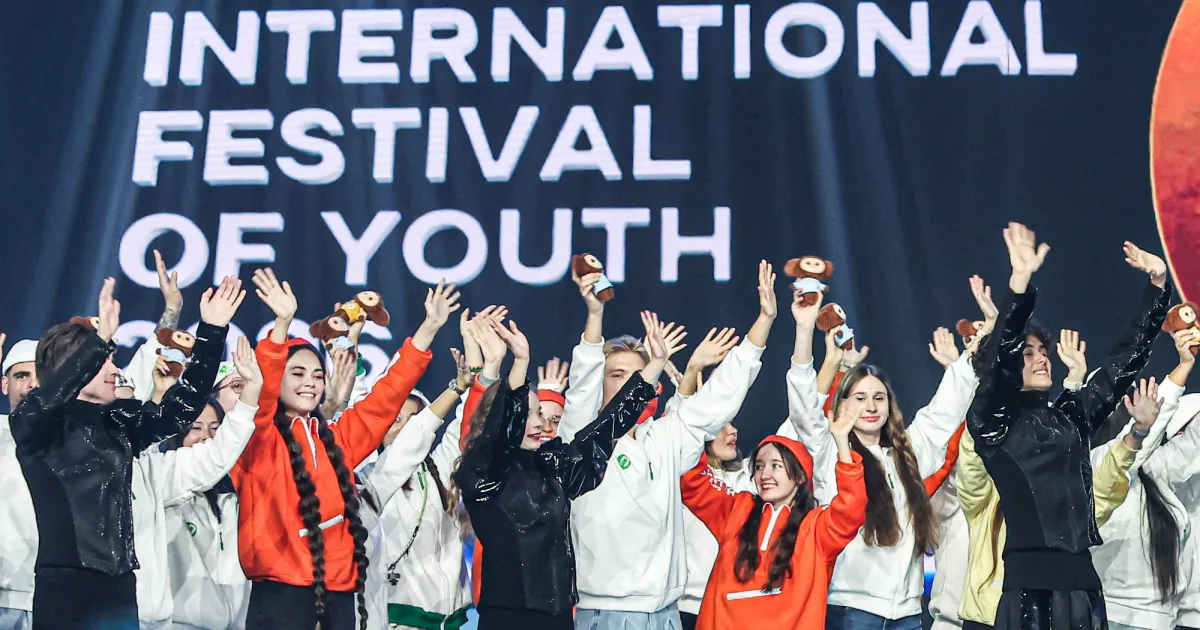
据主办方称,这场盛大的活动吸引了来自190个国家的1万名14至35岁的年轻人齐聚俄罗斯第四大城市叶卡捷琳堡。今年9月参加活动的参与者中,许多人获得了主办方提供的免费往返机票。他们一入场便看到了精心布置的博物馆式展览、会指挥音乐的机器人、各类舞蹈表演、工作坊,还有身着传统服饰的表演者带来的音乐演出,此外还有专题讨论会、讲座、竞赛以及免费的纪念品。
Attendees at this September’s event, many of whom were given free round-trip tickets by organizers, were greeted with elaborate museum-style displays, a music-conducting robot, dance performances, workshops, musical numbers by people in traditional cultural dress, panels, lectures, competitions, and free conference swag.
“在这里,国界变得模糊不清,”活动官网宣称,“不同文化和专业社群齐聚一堂,共同致力于一个目标——让世界变得更美好。”其政治色彩并不隐晦:该活动由俄罗斯一些最大的国有企业赞助,包括核能巨头俄罗斯原子能公司(Rosatom)和金融机构俄罗斯联邦储蓄银行(Sberbank);而该节日的“信息合作伙伴”则包括国家通讯社塔斯社(TASS)和国家电视台RT。
“Here, borders are blurred,” the event’s website declares, “and cultures and professional communities come together to work towards a common goal—to make the world a better place.”The political element isn’t subtle: the event was sponsored by some of Russia’s biggest state-owned companies, including nuclear energy giant Rosatom and the financial institution Sberbank; the festival’s “information partners” include state news agency TASS and state TV channel RT.
至于最引人注目的演讲者的政治立场,也毫不含糊:西格尔在演讲中称普京是“我最伟大的英雄”,并赢得了阵阵掌声。今年的会谈还邀请到了普京的外交部长谢尔盖·拉夫罗夫,他随后前往联合国,为俄罗斯正在进行的乌克兰战争辩护,并将其描述为“我们为真理与正义而进行的斗争”。俄罗斯和前苏联地区的青年节拥有悠久的地缘政治历史,其目的也十分明确:说服外界,尤其是当地的年轻人,这个国家是现代化、具有前瞻性且热爱和平的——是全球合作与创新的中心。
Nor is there any question where the most prominent speakers stand politically: In his speech, Seagal declared that Putin is his “biggest hero,” drawing applause. This year’s talks included an appearance by Sergey Lavrov, Putin’s foreign affairs minister, who then headed to the United Nations to defend Russia’s ongoing war on Ukraine, which he characterized as “our struggle for truth and justice.”Youth festivals in Russia and the former Soviet Union have a long geopolitical history and a clear purview: to persuade the outside world, especially young people therein, that the country is modern, forward-thinking, and peace-loving—a center for global cooperation, and innovation.
例如,1957年的世界青年与学生节就发生在赫鲁晓夫时代的冷战缓和期,当时苏联希望向世界展示一个更友好的形象。正如作家兼历史学家鲁斯塔姆·亚历山大最近所写,其中也包含着强烈的形象管理意图,以及希望通过该节日挽回苏联国际声誉的期望——那是在苏联动用军事力量镇压布达佩斯起义企图的一年之后。
The 1957 World Youth Festival of Youth and Students, for instance, took place during a Khrushchev-era thaw in the Cold War, as the Soviet Union hoped to present a more welcoming face to the world. There was also, as author and historian Rustam Alexander wrote recently, a heavy element of image management at work, and a hope that the festival would salvage the USSR’s international reputation the year after it had deployed military force to crush an attempted uprising in Budapest.
亚历山大写道:“为确保外国宾客不会接触到本不该看到的苏联生活面貌,政府试图将他们限制在各自的国家代表团内,用大巴车接送他们参加各类活动,并安排大量官方日程来填满他们的每一天。”不过他补充道,这一做法并未奏效:“外国游客开始更自由地在莫斯科四处走动,光顾商店与餐馆,走进庭院和私人住宅,还会与路上遇到的人攀谈起来。”亚历山大还提到,苏联及外国的访客们显然也抽空谈起了恋爱;而随后在1985年举办的节日活动则严格了许多。
“To make sure that foreign guests did not encounter aspects of Soviet life they were not supposed to,” Alexander wrote, “the government tried to keep them within their national delegations, bused them from one event to another and filled their days with official activities.”This, he adds, did not work: “Foreign visitors began moving around Moscow more freely, visiting stores and restaurants, wandering into courtyards and private homes, and striking up conversations with people they met along the way.”Soviet and international visitors also evidently found time to canoodle romantically, Alexander writes; a subsequent festival in 1985 was much more restrictive.
然而,由于俄罗斯持续入侵乌克兰、在国内及海外公然杀害持不同政见者及其他反对派人士、绑架美国公民以作为交换囚犯的筹码、被证实曾干预美国及亚美尼亚等国的选举,再加上对国内民众实施高压管控,如今该国在国际上日益孤立,想要将俄罗斯塑造成世界交流的枢纽也变得越来越困难。
But presenting Russia as the world’s meeting ground has become increasingly difficult as the country has become more isolated globally given its ongoing invasion of Ukraine, its state-sanctioned murder of dissidents and other regime opponents at home and abroad, the kidnapping of American citizens to use as bargaining chips in prisoner swaps, documented electoral interference in the U.S. and other countries like Armenia, and the repressive domestic control of its citizens.
在今年的IFY上,当然,这些话题都没有被提及——尽管活动确实举办了一场关于在“病毒式内容”时代如何“在网上寻找真相”的专题讨论会。虽然这场讨论会的视频尚未上传到网上,但主讲人的身份已经足够引人注目:他就是阿尔特姆·佐加(Artem Zhoga),一名曾参与入侵乌克兰的军官,并且正日益成为该国权力结构的一部分,包括在普京的连任竞选活动中担任联合主席。
At this year’s IFY, of course, none of that was discussed—although the event did feature a panel about finding “truth online” in an age of “viral content.”While a video of the panel hasn’t yet been put online, the keynote presenter is revealing enough: it was Artem Zhoga, a military officer who participated in the invasion of Ukraine and is increasingly part of the country’s power structure, including working as a co-chair during Putin’s reelection campaign.
根据该节庆活动网站上的一篇帖子,佐加重点介绍了两种“典型的操控手法——深度伪造和断章取义”,并建议“始终寻找演讲的完整录音”。
Zhoga focused on two “typical manipulation techniques—deepfakes and quoting words out of context,” according to a post on the festival’s website, “and recommended always seeking the full recording of a speech.”
帖子中还引用了佐加的话,他说该节庆活动本身“是打击虚假信息的工具”,并声称“来自俄罗斯各地以及世界不同地区的约1万名参与者之间的互动,形成了一种自然的事实核查机制”。帖子中引用佐加的话说:“当你看到关于某个地区的信息时,你会问朋友:这件事真的发生过吗?你拥有的朋友越多,信息来源也就越多。”
Zhoga is also quoted in the post as saying that the festival itself “is a tool against fakes,” claiming that “interaction among around 10,000 participants from different parts of Russia and the world creates a natural fact-checking mechanism.”“When you see information about some region—you’ll ask your friend: did this really happen? You have more friends, more sources,” Zhoga is quoted.
该活动的国际参与者——看起来年龄在十几岁、20多岁和30多岁,来自尼日利亚、印度、英国、南非、埃及、巴西、塞内加尔和中国等国——在社交媒体上发布了大量内容,宣称俄罗斯多么开放和热情好客。一位名叫约翰·奥格巴(John Ogba)的尼日利亚参与者在个人网站上发表的一篇充满激情的文章中写道:“我接触到的俄罗斯,与媒体所描述的大不相同。对我来说,俄罗斯是一种会永远留在记忆中的体验。我怀疑这或许正是其有意为之的设计。”
The event’s international attendees—people who do appear to be in their teens, 20s, and 30s, and who came from countries including Nigeria, India, the United Kingdom, South Africa, Egypt, Brazil, Senegal, and China—have made endless social media content proclaiming how open and welcoming Russia is. “I met a different Russia than the media talks about,” declared a Nigerian attendee named John Ogba in a rhapsodic essay on his personal website about the event. “To me, Russia is an experience that stays with you and never leaves. I suspect that it is that way by design.”
其他参与者则拍摄了视频,展示他们在节庆活动上获得的周边商品——T恤、挂绳、钥匙扣、贴纸,以及深受喜爱的苏联时代熊类形象切布拉什卡(Cheburashka)的毛绒玩具。此外,还有大量舞蹈视频,例如哥伦比亚学生协会的成员在展会现场跳着舞步。
Other attendees made videos showing off the merch they’d gotten from the festival—T-shirts, lanyards, key chains, stickers, and stuffed animals of Cheburashka, a beloved Soviet-era bear-like creature. There were also a remarkable number of dance videos, with people like a Colombian students’ association showing themselves shuffling across the expo floor.
这座内容“大山”已被一个Instagram粉丝页面重新分享,尽管根据一项将Meta(Instagram的母公司)宣布为极端主义组织的法律,Instagram在俄罗斯已被正式禁止。据俄罗斯独立新闻网站报道,国际与会者之所以能够上网,是因为他们获得了无限制的网络访问权限,而国内与会者则没有。Meduza援引了普京政府高级官员谢尔盖·基里延科的一份声明,声明解释说:“外国嘉宾获得了无限制的网络访问权限,以便他们能向其他国家观众宣传该节日。”
This mountain of content has been reshared on an Instagram fan page, even though Instagram is officially banned in Russia under a law declaring Meta, its parent company, an extremist organization. According to the Russian independent news site , international attendees were able to get online because they were granted unrestricted internet access, while domestic attendees were not. Meduza quoted a statement from Sergey Kiriyenko, a senior Putin administration official, explaining that “foreign guests received unrestricted internet access so they could promote the festival to audiences in other countries.”
“当俄罗斯人谈论俄罗斯时,这是一件好事,”基里延科补充道,“但当那些国家的人们从他们自己的同龄人那里听到关于俄罗斯的消息时,信任感会强得多。这会改变他们与朋友以及这些朋友追随者们的态度。”
“It’s good when Russians talk about Russia,” Kiriyenko added. “But there’s much more trust when people in those countries hear about Russia from their own peers. That changes the attitudes of the friends they share it with and their followers.”
福特汉大学政治学教授奥列娜·尼古拉延科曾研究过东欧青年的政治参与情况。她表示,普京正在延续“苏联时期将这一青年节日用作国家宣传工具的传统”。她指出,人群被拍摄到在演唱和舞蹈歌曲《大地母亲》(Matushka Zemlya),这首歌被称作该节日的“非官方国歌”。这首歌于八年前首次发布,在过去几年中已成为俄罗斯支持入侵乌克兰人群中的爱国颂歌。
According to Olena Nikolayenko, a Fordham professor of political science who has studied youth political participation in Eastern Europe, Putin is keeping up “the Soviet-era tradition of using this youth festival as a tool for state propaganda.”She pointed out that crowds were filmed singing and dancing to the song “Matushka Zemlya,” which was dubbed the “unofficial anthem” of the festival. The song, first released eight years ago, has became immensely popular in Russia over the last few years as a patriotic anthem among supporters of the Ukrainian invasion. (“For me it’s Holy Russia,” the refrain goes, “for others just a thorn.”)“Foreigners who voluntarily visit contemporary Russia and participate in state-sponsored events de facto condone Russian foreign policy,” Nikolayenko added.
(其副歌唱道:“对我来说,她是神圣的俄罗斯;对其他人来说,她只是一根刺。”)尼古拉延科补充说:“那些自愿访问当代俄罗斯并参加国家赞助活动的外国人,实际上是在默许俄罗斯的外交政策。显然,有很多年轻人并不关心俄罗斯对乌克兰的侵略以及俄罗斯人犯下的战争罪行。”
“Apparently, there are plenty of young people who do not care about Russia’s aggression against Ukraine and the war crimes committed by Russians.”