
曾被指责加剧2008年金融危机的资产支持商业票据(ABCP)正在重现生机,因为银行正转向短期融资市场,以便在减轻资产负债表压力的同时开展更多业务。
Asset-backed commercial paper, blamed for amplifying the 2008 financial crisis, is making a comeback as banks turn to the short-term funding market to do more business with less strain on their balance sheet.
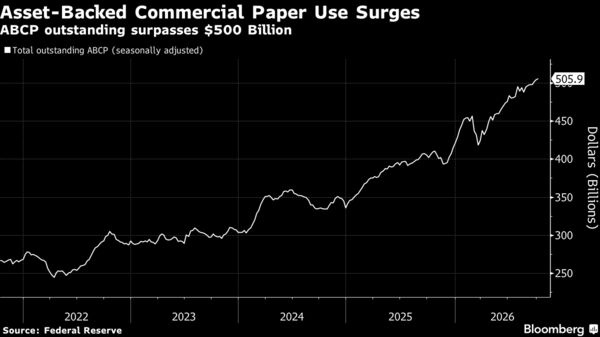
业内人士表示,资产支持商业票据最初是华尔街为从抵押贷款到复杂结构化信贷产品等各类资产提供融资的工具,但如今已基本演变为银行管理资产负债表约束的工具,有助于它们满足流动性缓冲要求,并为客户头寸提供资金,而无需占用过多自有资本。根据美联储的最新数据,未偿资产支持商业票据规模已飙升至超过五万亿美元。虽然这一数字仍不到危机前峰值的一半,但却是五年前的两倍。
Once a way for Wall Street to finance everything from mortgage lending to complex structured credit products, it has largely evolved into a tool for banks to manage balance-sheet constraints, industry watchers say, helping them meet liquidity buffer requirements and fund client positions without tying up as much of their own capital. ABCP outstanding has surged to more than half a trillion dollars, according to the latest data from the Federal Reserve. While that’s still less than half its pre-crisis peak, it’s twice the size it was just five years ago.
该市场的基本运作方式如下:希望在不占用过多资产负债表容量的情况下为资产或客户活动融资的银行,可以求助于第三方机构——即所谓的“ABCP通道”。该通道从货币市场基金和其他投资者处筹集短期资金,然后用这些资金与银行进行回购、全收益互换及其他融资交易。这样,银行无需直接融资或完全拥有相关资产,即可获得资金或获得这些资产的经济敞口。
The market essentially works like this: banks looking to finance assets or client activity without consuming as much balance-sheet capacity can turn to a third party that operates a so-called ABCP conduit. The conduit raises short-term cash from money-market funds and other investors, then uses the proceeds to enter into repo, total-return swap and other financing transactions with banks. That allows banks to obtain funding or get economic exposure to the assets without having to finance or own them outright.
专注于结构化金融领域的律师事务所Mayer Brown合伙人Jerry Marlatt表示:“这对大多数金融机构而言,是一种提升资产负债表效率的方式。简而言之,它通过将商业票据不作为负债计入资产负债表,从而降低了资本要求。”最初,ABCP通道被用于为汽车贷款和贸易应收账款等资产融资,至今仍在使用。但在金融危机前夕,其应用范围也扩展到了次级抵押贷款债券和其他证券化债务,推动市场规模一度膨胀至约1.2万亿美元。
“It’s balance-sheet efficiency for mostly financial institutions,” said Jerry Marlatt, a partner at law firm Mayer Brown who focuses on structured finance. “It’s a way for them to get relief that, if you will, reduces capital requirements by not consolidating commercial paper on their balance sheet as a liability.”ABCP conduits were originally used to finance assets such as auto loans and trade receivables, and still are. But in the lead-up to the crisis, they also expanded into subprime mortgage bonds and other securitized debt, helping swell the market to about $1.2 trillion.
随着2007年人们对房地产市场下行的担忧蔓延,货币市场基金和其他投资者停止为这些通道产品续作,无论其底层资产是什么,最终引发了市场挤兑。
As fears of a housing downturn spread in 2007, money funds and other investors stopped rolling the paper regardless of the assets in the conduits, eventually causing a run on the market.
“Allspring Global Investments”货币市场研究主管、拥有35年行业经验的马修·格里姆斯(Matthew Grimes)表示:“全球金融危机爆发前,债务规模庞大,尤其是在结构化金融领域,大量相关产品被投放到市场。这制造了一个泡沫,而泡沫最终破裂了。”危机过后,市场急剧萎缩,到2015年时已降至约2100亿美元,因为风险较高的通道产品被逐步清算,而新的会计和资本规则也削弱了银行将资产移出资产负债表的吸引力。
“The run-up to global financial crisis had a lot of debt, especially in structured finance activity that was put into the market,” said Matthew Grimes, head of money-market research at Allspring Global Investments and a 35 year industry veteran. “That created a bubble and the bubble popped.”After the crisis, the market shrank dramatically, falling to about $210 billion by 2015 as riskier conduits were unwound and new accounting and capital rules eroded the appeal for banks to keep assets off their balance sheets.
但如今,市场正在再次增长,这在一定程度上要归功于上述规则。更严格的杠杆和流动性要求使得银行直接为资产融资的成本更高,从而推动了对第三方通道产品的需求。这些通道产品可以帮助投资者获取高质量资产,并以较小的压力为客户的头寸提供融资。
But now the market is growing once again, thanks in part to those same rules. Tougher leverage and liquidity requirements have made it more expensive for banks to fund assets directly, driving demand for third-party conduits that can help access high quality assets and finance client positions with less strain on lenders’ books.
这种需求催生了所谓的“独立发起人”——即非银行机构,它们设立并运营专门满足银行融资和资产负债表需求的通道产品。根据标准普尔全球评级(S&P Global Ratings)今年早些时候发布的一份报告,近水资本(Nearwater)、古根海姆(Guggenheim)和北十字(Northcross)是最大的独立发起人之一。
That demand has fueled the rise of so-called independent sponsors — non-bank firms that set up and operate conduits tailored to banks’ funding and balance-sheet needs. Among the biggest independent sponsors are Nearwater, Guggenheim and Northcross, according to a report earlier this year from S&P Global Ratings.
事实上,根据摩根大通(JPMorgan Chase & Co.)策略师的数据,由独立发起人设立的通道产品目前占流通中资产支持商业票据(ABCP)总量的约42%。
In fact, independently sponsored conduits now account for roughly 42% of ABCP outstanding, according to strategists at JPMorgan Chase & Co.
巴克莱银行(Barclays Plc)的发起业务主管斯图尔特·卡特勒(Stewart Cutler)在6月举行的“克兰货币基金研讨会”(Crane’s Money Fund Symposium)的一场小组讨论中表示:“他们会找到银行,问:‘我们能做些什么来解决资产负债表的难题?’”与此同时,货币市场基金、地方政府投资池和保险公司也被ABCP相较于其他短期资产所能提供的额外收益所吸引,同时也看到了分散其投资组合的机会。
“They approach banks and say, ‘what can we do to solve balance-sheet questions?’”Stewart Cutler, head of origination at Barclays Plc, said during a panel at the Crane’s Money Fund Symposium in June. At the same time, money-market funds, local government investment pools and insurance firms are drawn to the extra yield ABCP can offer over other short-term assets, as well as the opportunity to diversify their holdings.
市场参与者表示,总体而言,ABCP 比二十年前要坚韧得多。在许多较新的结构中,如果无法滚动发行,银行的支持可以覆盖所有未偿票据,这使得投资者的关注点从底层资产转移到了支撑这些资产的公司实力上。
Market participants say ABCP is, by and large, much more resilient than it was two decades ago. In many newer structures bank support can cover all outstanding paper if it can’t be roller over, shifting investors’ focus from the underlying assets to the firms standing behind them.
但风险依然存在。如果市场突然冻结,银行可能被迫自行提供现金,这会在最糟糕的时机给其资产负债表带来压力。信心也可能迅速消失。就在几周前,由于一些客户在创始人马克·沃尔特商业帝国受到调查期间暂停交易该公司产品,古根海姆不得不向投资者保证他们的资金没有风险。尽管存在这些风险,这类结构产品的需求依然强劲。
But risks remain. If the market seizes up, banks can suddenly be called on to provide the cash themselves, adding pressure to their balance sheets at the worst possible time. Confidence can also evaporate quickly. Just a few weeks ago Guggenheim had to reassure investors that their cash wasn’t at risk after some clients paused trading in the firm’s products amid probes of founder Mark Walter’s business empire. Despite those risks, demand for the structures remains robust.
穆迪评级的高级副总裁丽莎·辛格曼表示:“银行之所以对这些计划感兴趣,是因为它们不仅提供了另一种有担保的融资渠道,还让银行能够以更灵活、更个性化的方式管理特定资产、融资需求以及资产负债表约束。”
“Banks are attracted to these programs because they provide another secured funding channel while also giving them flexibility to manage particular assets, funding needs and balance-sheet constraints in a more tailored way,” said Lisa Singman, a senior vice president at Moody’s Ratings.