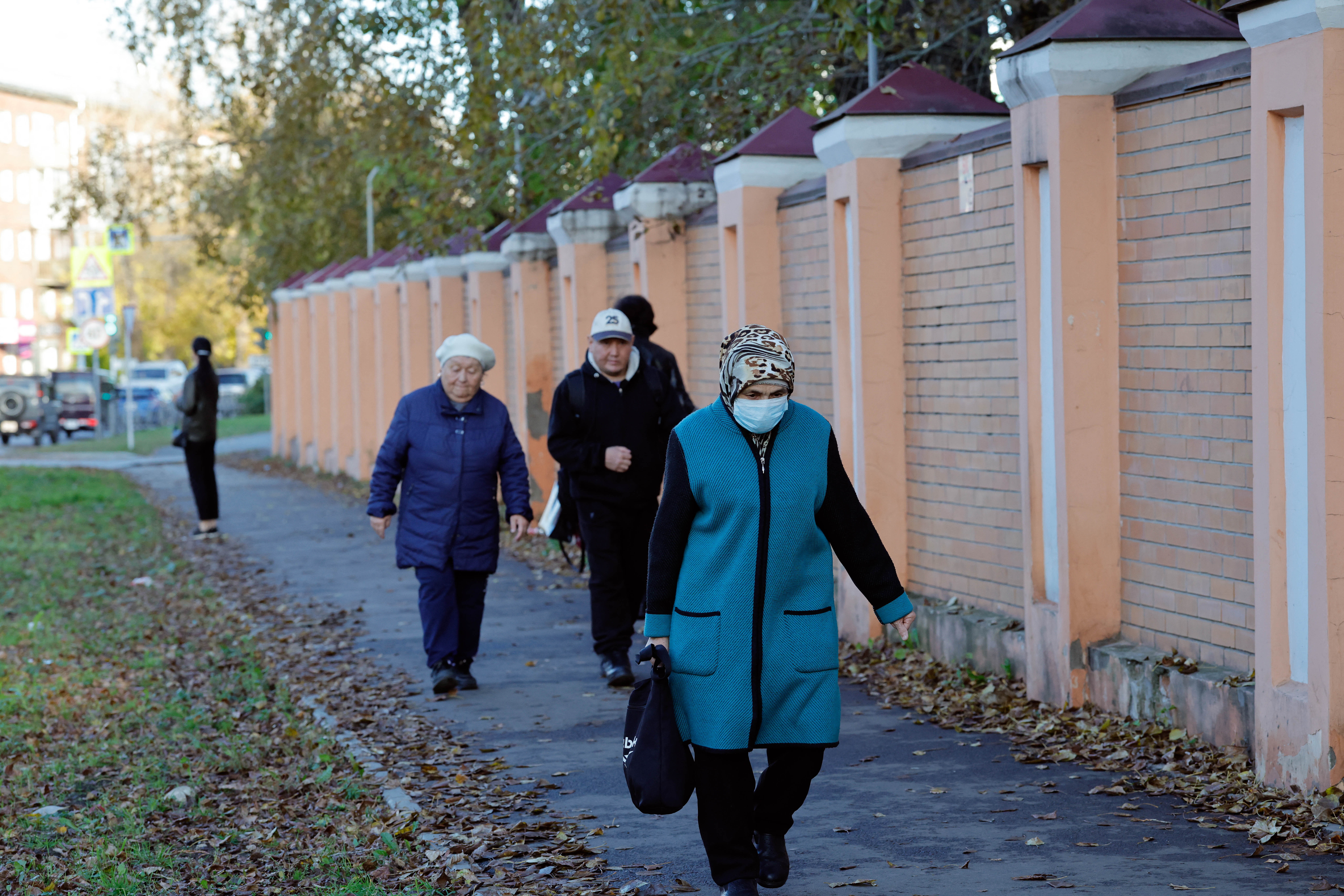
一名戴着口罩的女子走过西伯利亚和远东地区伊尔库茨克抗鼠疫研究所。该研究所成立于20世纪30年代,旨在监测危险病原体的变异株。
A woman wearing a face mask walks past the Irkutsk Anti-Plague Research Institute of Siberia and the Far East, founded in the 1930s to monitor strains of dangerous pathogens.
塔季扬娜·马凯耶娃/法新社/盖蒂图片社 上周,一名28岁的俄罗斯女性死亡,此后围绕该病例的猜测在全球范围内迅速蔓延。
Tatyana Makeyeva/AFP/via Getty Images A 28-year-old woman died in Russia last week and, since then, speculations about the case have ricocheted around the globe.
这名女子是俄罗斯一家研究鼠疫的研究所的实验室技术人员。由于未经证实的传言称她可能因实验室泄漏而感染该疾病,特朗普总统、世界卫生组织及其他国家领导人均要求提供更多相关信息。
The woman was a lab technician at a Russian research institute that studies the plague. As unverified rumors have circulated that she may have contracted the disease from a lab leak, President Trump, the World Health Organization and other leaders are asking for more information.
一名戴着口罩的安保人员从谢列霍夫镇一家传染病医院的门口向外张望。此前,伊尔库茨克抗鼠疫研究所的一名员工在该地去世。
A security person wearing a face mask looks out from the door of an infectious diseases hospital in the town of Shelekhov, where an employee of the Irkutsk Antiplague Research Institute had died.
俄罗斯方面坚称这并非公共卫生紧急事件,并表示其卫生部门在死者所有接触者中均未发现危险病原体。然而,目前的问题仍远多于答案。
Russia has insisted this is not a health emergency and stated that its health authorities have not found dangerous pathogens in any of the deceased woman's contacts. But there are still far more questions than answers.
这种不确定性促使全球领导人和卫生专家转向一项法律,该法律要求包括俄罗斯在内的国家必须共享此类信息。这项法律被称为《国际卫生条例》(IHR)。
That uncertainty has global leaders and health experts turning to a law that obligates countries, including Russia, to share exactly this type of information. It's called the International Health Regulations or IHR.
周三,在世界卫生组织的新闻发布会上,总干事谭德塞援引《国际卫生条例》,称其为了解俄罗斯当前局势并确定适当应对方式的最佳途径。
On Wednesday, at a WHO press conference, Director General Tedros Adhanom Ghebreyesus invoked IHR as the best way to determine current situation in Russia and determine the appropriate response.
他表示:“我们尚未完全掌握此次事件的全貌。根据国际法规及时、全面且透明地共享信息,对于澄清相互矛盾的报告,并准确评估潜在的公共卫生风险至关重要。”以下是关于《国际卫生条例》及其在当今世界应用的关键信息。
"We don't yet have the full picture of this event," he said. "Timely, complete and transparent information sharing under the international regulations is essential to clarify conflicting reports and enable an accurate assessment of potential public health risks." Here are the key things to know about the IHR and how it applies in today's world.
这项法律可追溯至19世纪,要求各国共享可能具有国际影响的健康信息。其历史可以远溯至19世纪50年代欧洲爆发的霍乱疫情,当时人们因此制定了疾病信息共享指南。
Rooted in the 19th century This law requires countries to share health information that could have international implications. It goes way back to the 1850s with cholera outbreaks in Europe, which led to the creation of guidelines for sharing disease information.
“对于国际法而言,这已经非常非常古老了,”约翰斯·霍普金斯大学彭博公共卫生学院的副教授兼约翰斯·霍普金斯健康安全中心的高级学者亚历山德拉·费兰表示。“看看当时的谈判文件,他们争论的竟然是:霍乱是由细菌引起的,还是由‘瘴气’(一种难闻的气味)引起的?我们当时真的还处在病原学理论的探索阶段。”
"That's very, very long for international law," says Alexandra Phelan an associate professor at the Johns Hopkins Bloomberg School of Public Health and senior scholar at the Johns Hopkins Center for Health Security. "Look at the negotiation documents and they're debating: Is cholera caused by a bacteria or miasma [a bad smell]? Like we're really right in the middle of germ theory."
随后,1948年世界卫生组织(WHO)成立时,这些法规——当时被称为《国际卫生条例》——被正式采纳,这也是该组织采取的最早期行动之一。此后,这项法律经历了多次修订和更新,其中最显著的两次分别是在2003年非典(SARS,即严重急性呼吸综合征)疫情之后,以及最近的新冠疫情(COVID-19)大流行期间。
Then, when WHO was founded in 1948, these regulations — then called the International Sanitary Regulations — were adopted. That was one of the organization's first moves. The law has since been amended and updated, most notably after the SARS or Severe Acute Respiratory Syndrome outbreak in 2003 and most recently due to COVID-19 pandemic.
如果某起健康事件有可能引发国际公共卫生紧急事件,相关国家有义务通知世卫组织。
A country is supposed to notify WHO if the health event has the potential to cause an international health emergency.
如今,《国际卫生条例》(IHR)已成为获得最广泛批准的国际条约之一,共有197个缔约方,包括美国与俄罗斯。(尽管特朗普政府声称已退出世卫组织,但美国仍受《国际卫生条例》的约束,仅部分近期修订条款除外。)费兰解释说,该法律的核心义务之一是:“各缔约方或国家在发现[严重健康]事件后,必须在24小时内通知世卫组织。”
Today, IHR is among the most widely ratified international treaties, with 197 signatories including the U.S. and Russia. (Even though the Trump administration says it has withdrawn from WHO, the U.S. is still bound by the IHR with the exception of some recent amendments.) One of the core obligations in the law "is that parties or states must notify WHO within 24 hours of detecting a [serious health] event," explains Phelan.
某些事件——例如天花病例或新型流感——应立即触发通报程序。而对于其他情况,一份清单可以帮助国家评估是否需要通报。
Some events – like a case of smallpox or a new type of influenza — should immediately trigger a notification. For other situations, a checklist helps a country assess whether notification is needed.
她表示,世卫组织每年都会收到来自世界各地的数千条通报,但其中大多数最终都被证实并无大碍。
Each year, she says, WHO receives thousands of notifications from all over the world and most turn out to be nothing.
俄罗斯的情况:一些人担心这名于10月2日去世的俄罗斯女性可能患有肺鼠疫。费伦表示,这是《国际卫生条例》(IHR)中“明确列出”需要评估并通报世界卫生组织(WHO)的疾病之一。
The situation in Russia Some people fear the Russian woman — who died Oct. 2 — had pneumonic plague. That's one of the diseases "explicitly listed" under IHR, says Phelan, as something to assess and notify the WHO.
然而,俄罗斯并未就这名女性的死亡向世卫组织通报。相反,世卫组织是通过媒体报道才得知此事的,并于10月3日向俄罗斯寻求核实和更多信息。
However, Russia did not notify WHO about this woman's death. Instead, WHO learned about it through media reports and then, on Oct. 3, went to Russia seeking verification and additional information.
“俄罗斯的反应首先是迟缓的,”费伦说,“而且也不全面。”俄罗斯花了几天时间才做出回应。10月6日,卫生官员告诉世卫组织,该地区没有鼠疫病例,这名女性在去世前因不明原因的严重肺炎住院。他们还解释说,卫生部门已对约200名接触者进行了隔离。
"Russia's response, firstly, was delayed," says Phelan. "But also it wasn't comprehensive." It took Russia several days to respond. On Oct. 6, health officials told WHO there were no cases of plague in the region and that the woman was hospitalized with severe pneumonia of unknown origin before she died. They also explained that health authorities had placed about 200 contacts in quarantine.
世卫组织要求俄罗斯提供更多信息,包括所进行的实验室检测、公共卫生措施以及接触者的健康状况。然而,正如许多国际法一样,并没有机制能强制各国遵守法律并分享信息。
WHO asked Russia for more information, including about lab tests conducted, public health measures and the health status of the woman's contacts. However, as with many international laws, there's no mechanism to make countries comply with the law and share information.
费伦表示,接下来的几天和几周对于了解俄罗斯愿意分享多少信息至关重要。如果他们不能完全透明,她希望来自其他国家的压力要么能促使俄罗斯遵守《国际卫生条例》,要么至少能有助于维持其他国家尊重该条例并在未来发生卫生事件时通报世卫组织的准则。
Phelan says the next few days and weeks will be key in understanding how much information Russia is going to share. If they aren't fully transparent, she hopes pressure from other countries either convinces Russia to comply with IHR or, at least, helps keep up the norm of other countries respecting IHR and notifying WHO about future health events.
乔治城大学教授、世卫组织全球卫生法合作中心主任劳伦斯·戈斯汀表示,这种通报对于世界做好准备以应对和遏制未来的疫情至关重要。
That kind of notification is critical if the world is to be ready to respond and contain future outbreaks, says Lawrence Gostin who directs the WHO Center on Global Health Law and is a professor at Georgetown University.
“这个案例展示了《国际卫生条例》好的一面、坏的一面以及丑陋的一面,”他说。
"This case shows the good, the bad and the ugly of the IHR," he says.
“从法律层面来看,这是唯一能让俄罗斯承担责任的依据,”戈斯廷解释道。然而,“有些国家却在回避责任。”他认为,俄罗斯当前局势对普通民众构成的风险可能非常低。但对他而言,各国可以无视《国际卫生条例》的通报要求,这一事实正“尖锐地警示着我们,在快速控制健康威胁方面,我们准备得有多不充分”。
"Legally, this is the only thing that's holding Russia to account," Gostin explains. And yet, "you have countries that are hiding the ball." He believes that the risk to the general population from the current situation in Russia is likely very low. But, for him, the fact that countries can disregard the IHR notification requirements is a "blaring siren about how unprepared we are" to quickly control health threats.
如需了解我们不断变化的世界中的生活故事,
For stories about life in our changing world, to NPR's Global Health newsletter. Russia Plague