
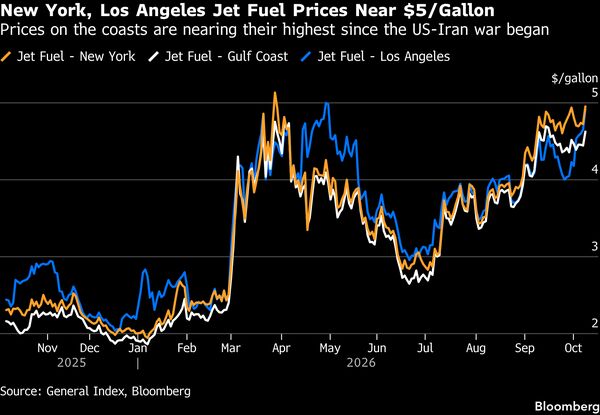
据威尔·库布赞斯基报道,由于乌克兰对俄罗斯炼油厂的袭击以及中东地区成品油运输受阻,纽约和洛杉矶的航空燃油价格再度攀升至接近每加仑5美元的水平。尽管作为美国价格基准的墨西哥湾沿岸地区油价较上月略有下降,但这两大城市的航空燃油成本却持续上涨。周四,纽约的航空燃油价格达到每加仑4.95美元,为3月下旬以来的最高值;洛杉矶的价格也升至4.91美元,创下4月下旬以来的新高。
Jet fuel prices in New York and Los Angeles are climbing back toward $5 a gallon as Ukrainian attacks on Russian refineries and curtailed Middle East shipments of refined products weigh on supplies. Airline fuel costs in the two biggest American cities have ticked up, even though Gulf Coast prices — the benchmark region for the US — have eased slightly from last month. Jet fuel was $4.95 a gallon in New York on Thursday, its highest since late March, while prices in Los Angeles rose to $4.91, the highest since late April.
如此高昂的燃油价格可能推高机票费用,使航空公司的燃油支出进一步增加,进而加剧通货膨胀并影响整个旅游业。达美航空在周五发布的财报预期中指出,预计今年公司需额外承担约60亿美元的燃油成本,较2025年大幅增加。该公司在下个季度预计燃油价格将维持在每加仑4.25美元左右。
The soaring prices threaten to raise the cost of flying and push airline fuel bills even higher, weighing on inflation and the travel industry. Delta Air Lines Inc. said Friday it expects to absorb approximately $6 billion in additional fuel costs this year compared to 2025, according to its earnings outlook. In the upcoming quarter, the carrier projects a fuel price of $4.25 a gallon.
得益于旗下拥有的炼油厂以及对高端客户的侧重,达美航空受战争引发的油价波动影响相对较小。不过,预计机票价格将在较长时期内保持高位。
Delta is better insulated from war-related price spikes thanks to its ownership of an oil refinery and a focus on premium customers. Still, higher ticket prices are expected to persist for an extended period.
目前,全球及美国市场的柴油供应面临极大压力,其库存量已降至历史同期最低水平。由于航空燃油与柴油同属“中间馏分油”,其生产工艺相似,因此柴油产量的增加会相应减少航空燃油的产出,反之亦然。今年4月至9月期间,航空燃油产量曾大幅上升,但近期又回落至3月份的水平。虽然当前库存量仍较为充足,但已无法达到7月和8月时的历史高位。
While supplies of diesel have come under the most pressure both internationally and in the US — stockpiles sit at their lowest seasonal levels on record — the price of jet fuel and diesel are closely tied. Both fuels are “middle distillates” produced in similar refining processes, so additional diesel production can pull away from jet fuel output, and vice-versa. Jet fuel production, which soared between April and September, has fallen back near March levels. Stockpiles, while still robust, are no longer at seasonal records seen in July and August.