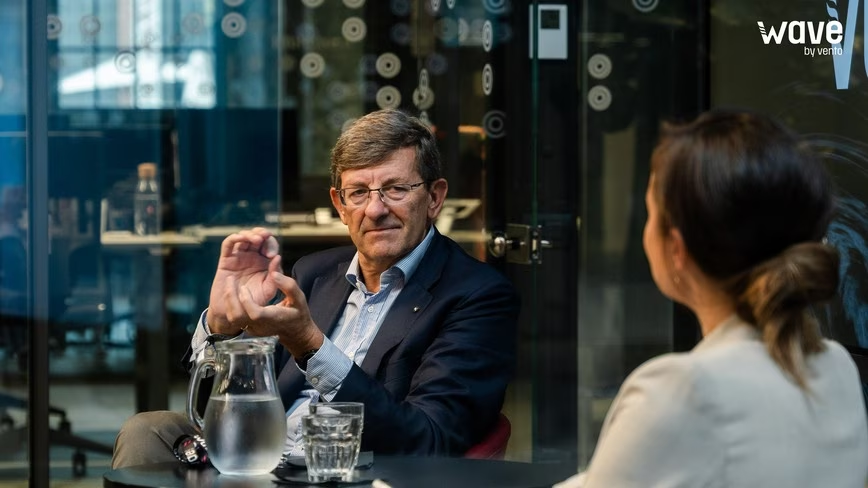
前沃达丰首席执行官维托里奥·科拉奥表示,目前欧洲的人工智能计算能力还不到2吉瓦,未来还需要大幅提升。他是在周五于都灵举行的“Wave by Vento”大会最后一天的闭门媒体问答环节中作出上述表述的。
Europe has less than 2 gigawatts of AI computing capacity and needs more, former Vodafone chief executive Vittorio Colao said. He spoke at a closed-door press Q&A at Wave by Vento in Turin on Friday, the event’s last day.
“欧洲错过了第一波数字化浪潮。没关系,毕竟已经过去20年了,”科拉奥说道。他强调,欧洲绝不能再错过下一波数字化浪潮。
“Europe missed the big digital wave. Fine, 20 years,” Colao said. Europe should not miss the next one, he said.
科拉奥于2008年至2018年间执掌沃达丰,后来还担任过马里奥·德拉吉政府麾下的意大利技术创新与数字化转型部长。他表示,目前欧洲已经开始投入资金发展计算能力,虽然推进速度尚不理想,但相关人才储备是充足的。
Colao ran Vodafone from 2008 to 2018 and was Italy’s minister for technological innovation and digital transition in Mario Draghi’s government. Europe is starting to put money into computing, he said. The speed is not the right one, but the skills are there.
简化初创企业的运营规则 科拉奥用意大利语指出,政府能做的最重要的事,就是大幅简化企业创立后最初三到五年的运营流程。他提到,意大利、德国和法国至今仍存在诸多行政与劳动法方面的复杂规定。
Simpler rules for young companies The most important thing governments can do is make the first three to five years of a company’s life far simpler, Colao said, speaking in Italian. Italy, Germany and France are still places of administrative and labour-law complications, he said.
他以自己任职的一家数字医疗企业为例:“这家公司在法国取得了巨大成功,在德国也发展不错,但运营模式已有所不同;我们进入英国时又采用了另一种模式,来到意大利后还是得调整成新的模式。”
He gave the example of a digital health company he works for. “Amazingly successful in France, good success in Germany, but already a different model. We’re going into the UK, another model. We came to Italy, another model,” he said.
他称欧洲目前针对企业设立的“28国统一规则体系”不过是“一只小老鼠”——微不足道、起不到什么作用。他表示,包括意大利在内的所有成员国都未提议增加劳动、税务及行政方面的相关规定,因此该体系最终仅停留在企业注册这一简单环节。
He called what has come out of Europe’s “28th regime” for companies “un topolino”, a little mouse. No member state, Italy included, proposed adding labour, tax and administrative rules, he said, so it stopped at the simple part, registration.
他还主张向小型企业开放公共采购市场,为它们预留一定比例的合同份额。不过他对政府充当风险投资机构的角色持保留态度。他表示,设立国家级基金来引导投资无可厚非,用公共资金支持芯片、能源等战略性项目也符合产业政策导向,但这些都不属于风险投资范畴。
He also wants public procurement opened to small companies, with a small share of contracts set aside for them. He is sceptical of governments acting as venture capitalists, he said. A state fund of funds is fine, and so is public money for strategic projects such as chips and energy. Those are industrial policy, not venture capital, he said.
打造统一的资本市场 当被问及欧洲该如何留住本土企业、避免它们赴美上市时,科拉奥指出欧洲需要建立真正统一且具备足够深度的资本市场,也就是储蓄与投资联盟。他指出,泛欧交易所、德国及瑞士的证券交易所加在一起,规模仍远不及美国市场。“我们可以再写一份报告,但现在是付诸行动的时候了,”他说。
A single capital market Asked how Europe can keep companies from listing in the US, Colao said it needs a real single capital market, or savings and investment union, with depth. Euronext and the German and Swiss exchanges together have nothing compared with the American market, he said. “We can write yet another report. But it’s time to start doing,” he said.
他指出,各成员国原则上都表示赞同,但随后又会提出一些会拖慢整个体系运转的要求。相较于五年前,他对欧洲投资者的风险承受意愿更为乐观。目前有两件事必须改变:一是让成功的创业家能像瑞典那样将赚到的资金重新投入创业;二是让养老基金也向风险投资领域注资。
Each member state agrees in principle and then asks for something that slows the system down, he said. He is more optimistic about European investors’ appetite for risk than five years ago. Two things have to change: successful founders reinvesting their money, as in Sweden, and pension funds putting money into venture.
他说,第一点目前已经在逐步实现,而第二点则需要对相关规则作出调整。周三,Bending Spoons公司的卢卡·费拉里在同一场活动上表示,资金已不再是欧洲创业发展的主要障碍。
The first is already happening, he said, and the second needs some rule changes. On Wednesday, Bending Spoons’ Luca Ferrari told the same event that capital is no longer Europe’s big barrier.
关于成长型投资者的考量标准 科拉奥称,他在考察创业家时最看重的一点就是其对客户与产品的专注程度。他说,一个在公司营收刚达到数百万时就始终把客户质量放在首位的创业家,其带领的公司最有可能实现5亿美元的营收规模。此外,他也很看重清晰且详实的营收数据。
What growth investors look for The single thing he looks for in a founder is an obsession with customers and product, Colao said. A founder focused on customer quality from the first few million in sales is the best sign a company can scale to 500 million, he said. He also wants clean, detailed revenue figures.
人工智能风险与网络防御 谈及人工智能,科拉奥指出其中存在一定的风险,部分原因在于相关研发过程犹如一场竞赛,缺乏传统企业通常会设置的各类防护措施。由于人工智能的应用范围遍及全球,因此必须制定所有人都能遵守的规则来保障安全。
AI risk and cyber defence On AI, Colao said there is some risk, partly because development ran as a race without the safeguards a more traditional company would have added. Because AI works at global scale, the safeguards need rules everyone respects, he said.
他还表示,网络防御领域需要更紧密的跨国合作,因为响应速度至关重要。他评价称,英国的国家网络安全中心处于世界领先水平。他认为,欧洲设立网络安全监管机构这一举措是正确的,但这些机构还需要更多资源支持。
Cyber defence needs much closer cooperation, because reaction time matters, he said. He described the UK’s National Cyber Security Centre as ahead of others. Europe did the right thing in creating its cyber security authorities, but they need more resources, he said.
最后他提到,欧洲人往往过于自我批评。今年7月,欧盟启动了人工智能“超级工厂”的招标工作,旨在提升算力水平。周四,Dealroom公司的首席执行官向Wave媒体透露,欧洲或许已经出现了首家有望成长为市值达万亿美元的初创企业。
Europe is also too self-critical, he said. In July, the EU opened bidding for AI ‘gigafactories’ to add computing capacity. On Thursday, Dealroom’s chief executive told Wave that Europe’s first trillion-dollar startup may already exist.