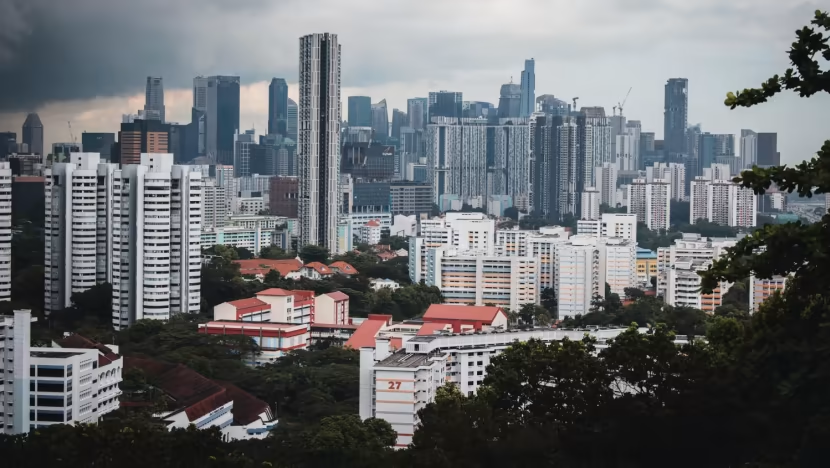
警方正在调查:是否有八名公职人员利用内部信息购买地铁站附近的房产以谋取私利。
police are looking into whether eight public servants might have used insider information to buy properties near MRT stations for personal benefit.
需要明确的是,目前尚未证实任何违规行为。警方将独立调查事实真相,并严格遵循正当程序。
To be clear, no wrongdoing has been established so far. The police will look into the facts independently and due process will be followed.
不过,公共服务统筹部长陈振声周二(10月6日)在议会透露,在已查明的191起相关案例中,这八人被单独列为需要进一步调查的对象。这一消息使得公众担忧情绪急剧升温。
But Coordinating Minister for Public Services Chan Chun Sing’s revelation in parliament on Tuesday (Oct 6) that out of 191 cases identified, these eight have been singled out for further action has upped the concern level by several notches.
此事也引发了诸多疑问:问题的严重程度究竟如何?可能还存在多少类似案例?目前有哪些防范措施?这一事件又反映出公共服务体系的诚信状况究竟如何?
It also raised more questions about the extent of the problem, how many cases there might potentially be, what safeguards are in place and what this saga says about the integrity of the public service. Members of Parliament voiced some of these issues but Mr Chan could not answer many of them at this stage beyond providing broad assurances on the handling of sensitive information by public servants and the requirement that they declare properties they own and obtain approval whenever they possess non-public information relevant to a transaction they propose to undertake.
议员们提出了上述问题,但陈振声部长现阶段仅能作出一些笼统的保证,比如公职人员必须妥善处理敏感信息、申报个人房产情况,以及在掌握与交易相关的非公开信息时须获得批准方可行动。对于其他问题,他暂时无法给出确切答复。有待解答的疑问:在调查结果出炉前,我们该如何看待这一事件?
首先,令人不安的是,这一惊人发现竟是由远在数千公里外、位于马萨诸塞州剑桥市的美国经济研究机构——国家经济研究局(NBER)所揭露的:在新加坡地铁站选址尚未对外公布前,购买这些站点附近房产的人群中,公职人员的比例明显偏高。
QUESTIONS TO BE ANSWERED What can one make of this saga, pending the outcome of the investigations? First, it was very disconcerting to learn that that it took a US-based economic research organisation, the National Bureau of Economic Research (NBER) operating thousands of kilometres away in Cambridge, Massachusetts to make the stunning revelation that Singapore civil servants were disproportionately represented as buyers of properties near MRT stations before the locations of these stations were publicly announced.
这些违规交易是否有可能在当局眼皮底下悄然发生?持续时间又有多久?至今却毫无察觉?
Was it possible that these illegal transactions might have taken place right under the noses of the authorities - and for how long - without a hint of it being noticed?
必须再次强调:目前尚未证实任何违法行为。但想到这些行为或许在无人察觉的情况下发生,实在令人愤慨。
It should be stressed - again - that no illegality has yet been uncovered. But the idea that it might have taken place unbeknown to anyone here is galling.
之所以会出现这种情况,是因为利用敏感信息谋取私利的问题由来已久。世界各地的公共服务部门都面临这一难题:各国政府都掌握着大量极具价值的信息,而许多人都渴望获取这些信息。
This is because the issue of sensitive information used for private monetary gain is not a new one. Every public service anywhere in the world faces this issue as every government is in possession of valuable information which many people would dearly like to have their hands on.
新加坡尤其需要保持警惕,因为本国政府部门涉足社会生活的诸多领域,且市场定价机制也是经济体系的重要特征。在这样的环境下,内幕信息显得尤为珍贵。
Singapore should be especially vigilant because the authorities here are involved in many areas of life and market-determined prices are a feature of the economy. Insider information is particularly valuable in such an operating environment.
倘若你能在公开消息发布前就知晓特定日期的拥车证供应量将会减少,或者房产交易印花税即将上调,又或者政府将限制某些产品的购买从而可能导致其价格上涨,这些信息无疑具有极高的价值。那么,该如何保障这些机密信息的安全,防止公职人员滥用呢?
If you knew Certificate of Entitlement (COE) supply would shrink at a certain date before it was known publicly, that’s priceless information, or that stamp duty on property transactions would go up, or that the authorities would restrict the purchase of certain products, potentially raising their prices. How do you protect the confidentiality of the secret information, and from their misuse by public officers?
陈先生提到了几项防范措施,包括仅向有必要知晓信息的人提供相关内容,并对其进行保密等级划分。
Mr Chan mentioned several safeguards, including limiting the information to only those who needed to know and subjecting it to security classification.
此外,自1990年起,公职人员便被要求申报自己的房产购置情况;对于非自住房产,还需每年进行申报。如果公职人员掌握了与自身拟进行的交易相关的非公开信息,还必须获得上级主管的批准方可进行交易。
In addition, since 1990, officers have been required to declare their property purchases, and, for non-owner-occupied properties, to do so annually. They also need to obtain approval from their heads if they possess non-public information relevant to a transaction they propose to undertake.
这些措施均属合理有效的防范手段。但关键问题在于:它们究竟是如何落实执行的呢?
These are sensible safeguards. But the key question is, how are they enforced?
谁来审核这些申报材料,以判断是否存在需要进一步处理的情形或可疑之处?还是说这些申报仅仅被例行公事般归档保存而已?
Who looks at the declarations to find out if any warrant further action, or are suspicious? Or are they merely filed away as a matter of routine?
诸多模糊地带 对这些申报材料的后续核查并非易事,因为其中存在诸多难以界定的模糊地带。
MANY GREY AREAS Following up on these declarations is not a straightforward matter because there are many grey areas to contend with.
同时,相关规则也不应过于严苛,以免妨碍公职人员进行正当的采购与投资活动。
The rules should also not be so onerous as to hamper the legitimate actions of public officers to make purchases and investments.
举个例子:假设某官员知晓政府内部正在讨论在某区域修建地铁线路的可能性,但并不清楚具体车站的选址,且目前也未有任何相关讨论结果公开。那么该官员能否凭借自己的直觉做出合理推测,进而购买该区域的房产呢?这样做是否会触犯法律?
For example if an officer is aware of discussions taking place within government of the possibility of an MRT line being built in a specific area but does not know the specific location of any station, and none have so far surfaced in any discussion, can the officer make an educated guess and buy a property based on his hunch, without infringing any laws? Supposing he is knowledgeable about government thinking on transport infrastructure as part of his work and he uses this knowledge to make the purchase.
再假设该官员因工作关系对政府在交通基础设施方面的规划十分了解,并据此做出购房决定。这种行为算合法吗?
Legitimate, or not?
另一个例子:某官员原本就有购房意向,并在两个选项间犹豫不决。他倾向于选择A房产,但在下定决心前偶然得知该区域即将修建一座地铁站。由于他原本就打算购买A房产,得知这一消息后便立刻支付了定金。
Second example: An officer is already thinking of buying a property and has narrowed it down to two options. He is veering towards option A but before he commits he comes across information of a station being planned in the vicinity of that property. He was already going to commit but with the new information, he immediately paid the deposit.
这种情况算违规吗?还是说他的时机恰好凑巧,或者其实存在潜在问题呢?
Guilty? Or was his timing just fortuitous, or potentially problematic?
我们该如何在防止滥用机密信息与保留必要的灵活处置空间之间取得平衡,同时又不损害组织的价值观与诚信度呢?
How to strike the right balance between deterring misuse of confidential information and allowing some legitimate flexibility and discretion that do not compromise an organisation's ethos and integrity?
界限定得越严格越好。在划定这一界限时,务必谨慎行事,切勿过于宽松——否则不仅无益,反而可能害了相关工作人员。
THE STRICTER THE BETTER When deciding where to draw this line, it is prudent to guard against being too lenient because you may not be doing the service or its officers a favour. On the contrary you may be doing them in.
多年前我在担任编辑时就有过惨痛教训。当时我供职的报社经常举办各类活动来宣传报纸,并备有大量购物券作为奖品赠送给读者。这些购物券交由负责活动策划的部门主管保管。可惜的是,经审计发现该主管私自挪用了部分购物券供个人使用,最终遭到解雇。
I found this from a painful experience years ago in my previous job as editor. The newspaper I worked for had a ready supply of shopping vouchers to be given to readers whenever we held contests or events promoting the paper. They were entrusted for safekeeping to the head of the department that ran the promotions. Alas, he was found out through an audit to have used some of the vouchers for his personal needs, and subsequently sacked.
那次经历让我意识到:防范此类欺诈行为的机制原本就不够严密,该主管也被赋予了过多的自主权来管理部门。
I realised then that the safeguards in place to prevent this sort of fraud were too lax and the person was given too free a hand to run his unit.
实际上,我并未帮到他——由于管理规定较为宽松,对他而言偷窃的诱惑实在难以抵挡。
In effect, I was not doing him a favour because the temptation to pilfer was too great for him, given the loose arrangements.
倘若我当时执行规定更为严格,他或许就不会受到如此大的诱惑,他的职业生涯也不至于如此仓促地中断。他也必须承担违法所带来的后果。
If I had been stricter, he might not be so tempted and his career would not have been cut short so abruptly. He also had to face the consequences of breaking the law.
我从中得到的教训是:对相关人员执行更严格的规则或许更为有利。
The lesson I learnt is that being stricter on the rules may be better for the officers concerned.
这并不是说他们不可信任,而是即便我信任你,我也希望你知道:始终有人在监督你是否会逾越底线。
It is not that they are not to be trusted but that while I trust you, I also want you to know that someone is watching whether you cross the red line.
就本案而言,如果工作人员认为自己的申报材料不会受到严格审核,仅仅流于形式而已,那么对某些人来说违法的诱惑就会变得难以抗拒。“信任但需验证”应当始终作为行事准则。
In the present case, if officers know that the declarations they make are not scrutinised closely by someone and are only a formality, the temptation to offend might become too great for some. "Trust but verify" should always be the operating principle.
对于公共服务部门而言,这一教训值得铭记,有助于其决定应增设哪些保障措施。
It is a lesson worth learning for the public service as it decides what further safeguards to put in place.
韩福光是一位资深报业编辑,现任南洋理工大学拉惹勒南国际研究院高级研究员。
Han Fook Kwang was a veteran newspaper editor and is Senior Fellow at the S Rajaratnam School of International Studies, Nanyang Technological University.