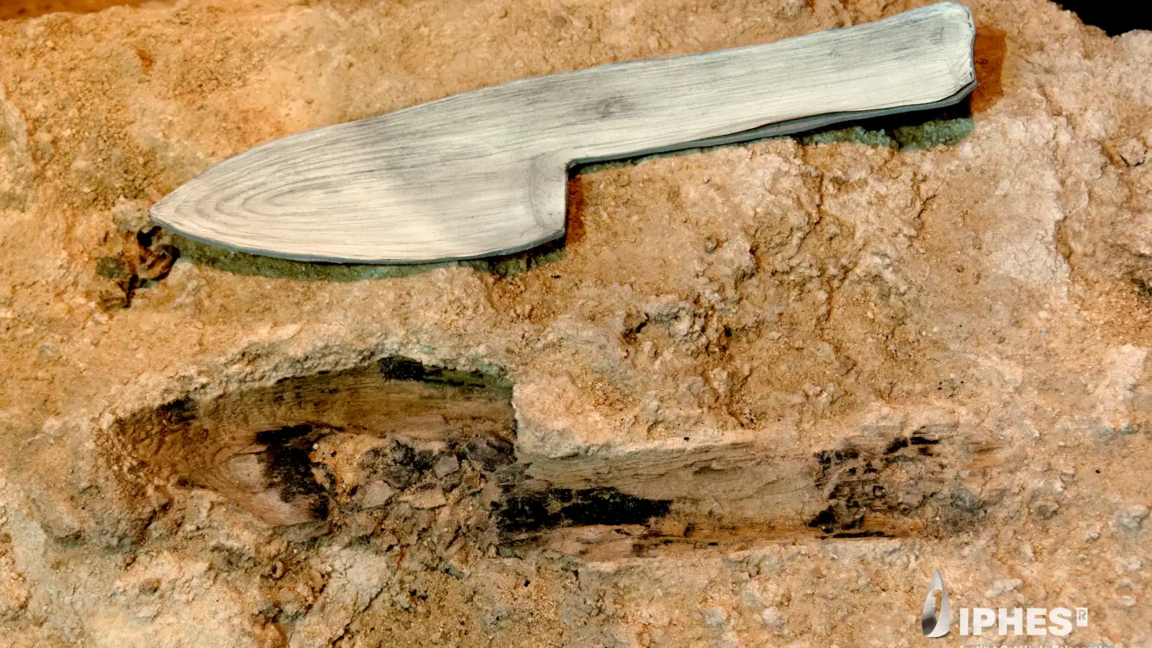
石器时代之所以得名,是因为石制工具流传至今。不过,早期人类加工最多的材料可能是木材,因为它更容易加工。遗憾的是,我们对旧石器时代木工知之甚少,因为木材腐烂得相对较快。但在卡佩利亚德斯(巴塞罗那以西)的阿布里克·罗马尼岩棚,富含矿物质的水将尼安德特人的木制工具包裹在类似石灰石的外壳中。木材腐烂后,留下了忠实反映其形状的空心模具。
The Stone Age owes its name to tools that survived to our time. The material early humans worked with most, though, was probably wood because it is so much easier to process. Unfortunately, we know very little about Paleolithic woodwork because wood rots relatively quickly. But at Abric Romaní, a rock shelter in Capellades, west of Barcelona, mineral-rich water coated wooden Neanderthal tools in a limestone-like crust. When wood rotted away, it left behind hollow molds that faithfully reflect its shape.
在最近发表于《科学进展》的一项研究中,一支西班牙考古学家团队编目了距今6.2万至4万年前尼安德特人生活区的597件木制遗存。他们发现了长矛、挖掘棒、树皮托盘、住所构件,以及一种前所未见的棍棒,表明尼安德特人很可能不仅仅是智人的“愚蠢表亲”。
In a recent Science Advances study, a team of Spanish archaeologists has cataloged 597 wooden remains from Neanderthal living areas dating from 62,000 to 40,000 years ago. They found spears, digging sticks, bark trays, parts of shelters, and a club unlike anything seen before, suggesting Neanderthals were likely much more than just Homo sapiens’ dumber cousins.
我们拥有的最古老木制文物大多是武器。它们包括德国舍宁根的长矛、英国克拉克顿海角的矛尖,以及德国莱林根与大象骨骼一起发现的长矛。大多数来自水浸沉积物,缺氧环境减缓了腐烂。
The oldest wooden artifacts we have are mostly weapons. They include spears from a German town called Schöningen, a spear tip from Clacton-on-Sea in England, and the spear found alongside an elephant skeleton in Lehringen, Germany. Most came from waterlogged sediments, where a lack of oxygen slowed decay.