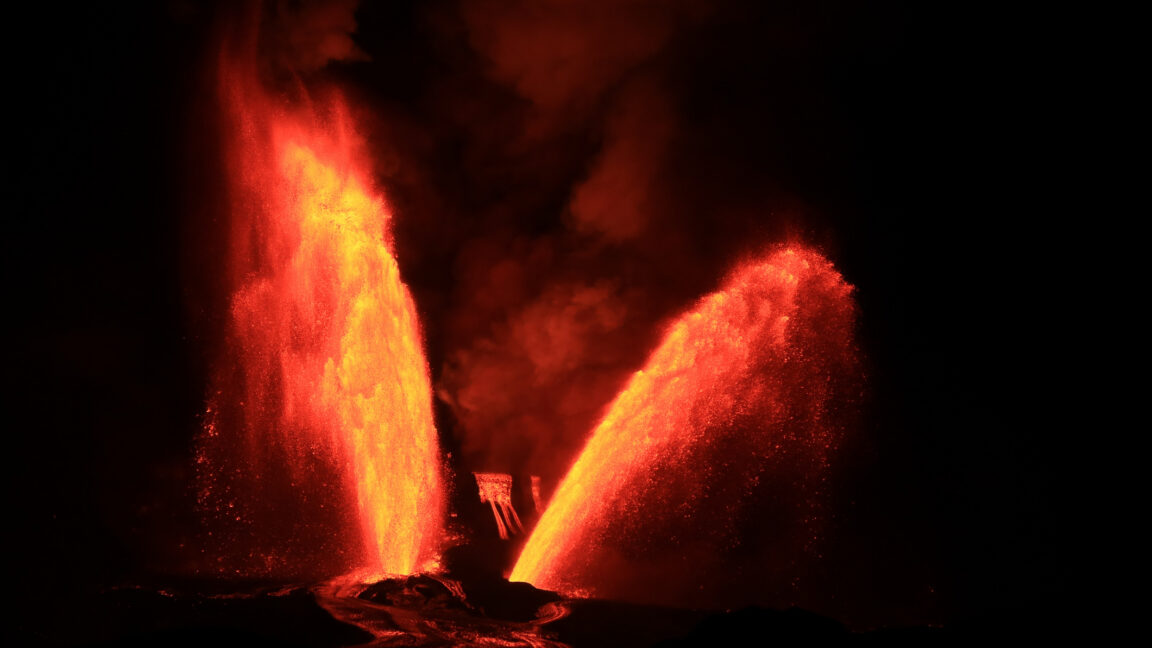
在大多数情况下,热点驱动的火山活动相对平缓,熔岩沿山坡缓慢流动,人们可以步行避开。但在一些地点——如埃特纳火山、夏威夷、冰岛——熔岩会以壮观的喷泉形式喷发,高度可达数百米。
In most cases, hotspot-driven volcanism is relatively sedate, with lava flowing down mountainsides slowly enough that people can walk out of its way. But in a number of locations—Mount Etna, Hawaii, Iceland—lava gets expelled in dramatic fountains that can reach several hundred meters in height.
目前我们还不确定是什么驱动了这些喷泉。然而,得益于基拉韦厄火山最近的一系列喷发,我们获得了迄今为止关于喷发熔岩喷泉的最佳记录。在《科学》杂志最近的一期中,美国地质调查局的研究人员描述了我们所观测到的现象,并将其与基于我们对这些熔岩喷泉动力来源的最佳理解所预期的情况进行了比较。
Right now, we're not sure what powers them. However, thanks to a recent set of eruptions at the Kilauea volcano, we have some of the best documentation yet of erupting lava fountains. In a recent edition of Science, researchers from the US Geological Survey describe what we've seen and compare it with what we might expect based on our best ideas about what powers these fountains of molten rock.
有三个活跃的火山区域会产生喷泉活动,因此不断有红热熔岩从地下喷涌而出的壮观视频流出。但自1823年以来,基拉韦厄火山仅发生过三次喷泉式喷发,尽管它是夏威夷最年轻、最活跃的火山。这种活动引发了深入研究,我们对火山结构有了很好的了解。早期工作已在距地表几公里范围内识别出几处熔岩残留,且基拉韦厄火山上设有35个独立的数据收集站,包括“地震、次声、大地测量、气体、可见光和热成像相机”。
With three active volcanic regions that engage in fountaining, there has been a steady flow of dramatic videos of red-hot molten rock spouting from the Earth. But Kilauea has had only three fountaining episodes since 1823, even though it's the youngest and most active volcano in Hawaii. That activity has led to intensive study, and we have a good idea of the volcano's structure. Previous work has identified a couple of lava residues within a few kilometers of the surface, and the volcano had 35 separate data-gathering stations set up on Kilauea, including "seismic, infrasound, geodetic, gas, and visual and thermal cameras."