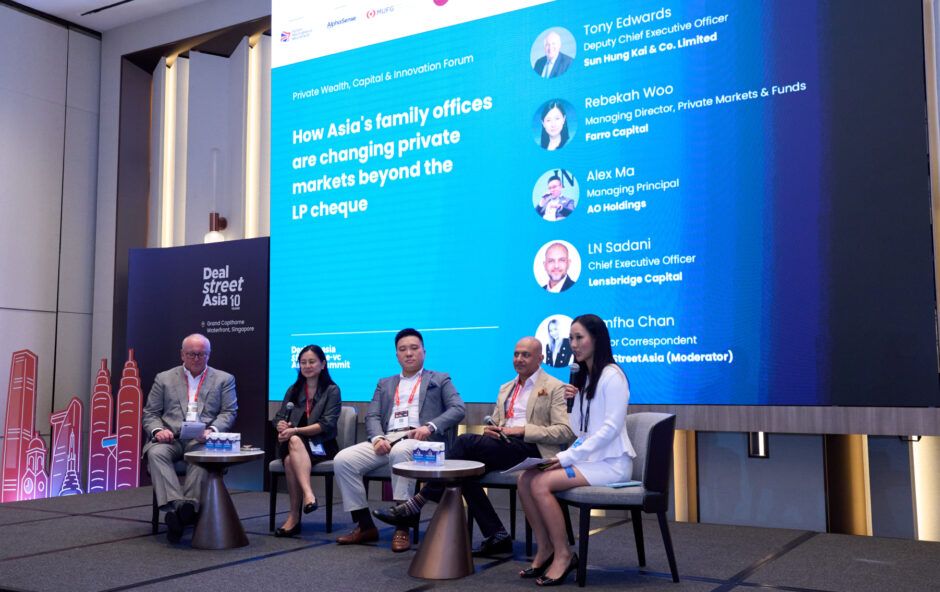
亚洲家族办公室正在增加对私人市场的敞口,但同时在资本部署地点和方式上变得更加审慎。对于寻求下行风险保护和更高灵活性的投资者而言,私人信贷和二级市场正逐渐成为首选策略。
Asian family offices are increasing their exposure to private markets but becoming more selective about where and how they deploy capital, with private credit and secondaries emerging as preferred strategies for investors seeking downside protection and greater flexibility.
香港上市的家族办公室及另类投资平台新鸿基集团(Sun Hung Kai & Co.)的副首席执行官托尼·爱德华兹(Tony Edwards)表示,为了追求更高的稳定性,其公司正将更多资本从私募股权投资转向信贷机会。
Tony Edwards, deputy CEO of Hong Kong-listed family office and alternatives platform Sun Hung Kai & Co., said his firm is moving more capital from private equity into credit opportunities as it seeks greater stability.
“我们现在正将更多资金从私募股权投资转向信贷机会,”爱德华兹在9月24日举行的2026年亚洲PE-VC峰会上的一场小组讨论中表示,“我们希望通过这种方式获得更高的稳定性以及更好的下行风险保护。”新鸿基资本合伙人(SHK Capital Partners)管理的另类资产规模达2900万港元(37亿美元),该公司已与Clipway、新加坡的Aquilius、Hunter Point Capital等二级市场基金,以及Mubadala Capital和Janus Henderson等资产管理公司建立合作。
“We’re now moving more out of private equity into more credit opportunities,” Edwards said during a panel discussion on September 24 at the Asia PE-VC Summit 2026“We’re seeking more stability and downside protection from that.”SHK Capital Partners, which manages HK$29 million ($3.7 billion) in alternatives assets, has partnered with secondaries funds such as Clipway, Singapore’s Aquilius, Hunter Point Capital as well as asset managers such as Mubadala Capital and Janus Henderson.
总部位于新加坡的多家族办公室Farro Capital负责私人市场与基金业务的丽贝卡·吴(Rebeckah Woo)表示,她所服务的许多家族目前都将资本保全置于优先位置。
Rebeckah Woo, who heads private markets and funds at Singapore-headquartered multi-family office Farro Capital, said many of the families she works with are prioritising capital preservation.
“我们服务的许多家族在其核心业务中已经获得了可观的回报,因此并不认为有必要在家族办公室的投资组合中承担更多风险。”她指出,正因如此,私人信贷因其能够产生收入、损失率低以及具备额外上行潜力而成为更高优先的选择。
“Many of our families that make a lot of returns already in their core business do not feel like they need to take a lot more risk in their family office portfolio.”Private credit has, therefore, become a higher priority because of its income generation, low loss rates and potential for additional upside, she said.
这一转变也反映在区域配置数据中。根据瑞银(UBS)发布的《2026年全球家族办公室报告》,2025年东南亚家族办公室将其投资组合的4%配置于私人债务,14%配置于直接私募股权投资,6%配置于私募股权基金。总体而言,该地区81%的家族办公室表示计划在2026年调整其战略资产配置。
The shift is also reflected in regional allocation data. Southeast Asian family offices allocated 4% of their portfolios to private debt in 2025, alongside 14% to direct private equity and 6% to private equity funds, according to UBS’s 2026 Global Family Office Report. Overall, 81% of family offices in the region said they planned to make changes to their strategic asset allocation in 2026.
人工智能基础设施是另一个吸引家族办公室资本投资的领域,尤其通过信贷基金向数据中心、云公司以及人工智能基础设施生态系统的其他部分提供贷款。
AI infrastructure is another area attracting family-office capital, particularly through credit funds lending to data centres, cloud companies and other parts of the AI infrastructure ecosystem.
“我们已将投资组合略微向人工智能基础设施倾斜。我们首先布局于投向人工智能、人工智能数据中心(AIDC)、新兴云技术及相关人工智能基础设施领域的私募信贷基金,”总部位于新加坡的单一家族办公室AO Holdings的负责人Alex Ma表示。
“We have slightly tuned our portfolio towards AI infrastructure. We’re first deploying into private credit funds that lend into AI, AIDC, new cloud and things around AI infra,” said Alex Ma, who runs Singapore-based single-family office AO Holdings.
“我认为没有人能够预测人工智能的未来,无论是泡沫还是泡沫何时破裂;但通过‘铲子和铁锹’策略,我们更关注资本保全。”Ma表示,他的公司还参与了风险投资交易,在这些交易中,基金经理在基金生命周期后期需要额外资本以维持对投资组合公司的持股。在其他情况下,公司则提供资金帮助基金经理通过出售投资组合中的资产来实现收益分配。
“I don’t believe anybody can predict AI, whether it’s a bubble or when the bubble is going to burst; but with ‘picks and shovels’, we are more focusing on capital preservation.”Ma said his firm has also participated in venture transactions where managers need additional capital late in a fund’s life to maintain stakes in portfolio companies. In other cases, it has provided capital to help managers generate distributions by offloading portfolio holdings.
二级市场同样已成为家族办公室投资工具中日益重要的组成部分,尤其是随着投资者寻求对流动性和所购资产拥有更大的控制权。
Secondaries have likewise become a growing part of family offices’ investment toolkit, particularly as investors seek greater control over liquidity and the assets they are buying.
管理资产超过35亿美元的Farro也注意到,市场对风险投资二级市场的兴趣日益浓厚,特别是单一资产特殊目的载体(SPV),尽管Woo承认这一策略的风险明显更高。
Farro, which has over $3.5 billion in assets under management, is also seeing growing interest in venture-capital secondaries, particularly single-asset special purpose vehicles, although Woo acknowledged the strategy carries significantly more risk.
总部位于新加坡的Lensbridge Capital创始人LN Sadani表示,他的公司主要关注由普通合伙人(GP)主导的二级市场交易,并偏好单一资产延续型载体,因为这类载体能让投资者更紧密地参与对个别公司的承销。
LN Sadani, founder of Singapore-based Lensbridge Capital, said his firm focuses largely on GP-led secondaries and prefers single-asset continuation vehicles because they allow investors to underwrite individual companies more closely.
作为Ardian亚洲办公室的创始成员,Sadani拥有近三十年的私募资本经验,在亚洲及全球范围内已执行并提供了超过50亿美元的交易建议。
Sadani, a founding member of Ardian’s Asia office, has nearly three decades of private-capital experience and has deployed and advised on more than $5 billion of transactions across Asia and globally.
“我们更倾向于由普通合伙人主导的单资产二级交易,而非资产组合,因为这样能让我们更好地评估这些资产,”萨达尼说道。他的公司也愿意关注基金末期的投资组合,只要能够识别出可转入延续型投资工具的“明星资产”。
“We like single-asset GP-led secondary transactions rather than a portfolio of assets in there because we can then evaluate those assets a lot better,” Sadani said. His firm is also willing to look at tail-end fund portfolios when it can identify “trophy assets” that could be transferred into continuation vehicles.
家族办公室也在寻求更灵活的方式获取私人资产,因为它们越来越不愿意将资本投入期限极长的基金。
Family offices are also seeking more flexible ways to access private assets as they become increasingly reluctant to commit capital to very long-dated funds.
“向所谓永续型和开放式私人市场机会的转向是一个非常有趣的趋势,我们正在密切关注,”吴说道。
“The movement towards the so-called evergreen and open-ended private markets opportunities is a very interesting one that we’re watching very closely,” Woo said.
随着私人市场在家族办公室投资组合中占比越来越大但复杂程度也日益提高,这种向灵活结构的转变应运而生。瑞银发现,全球60%的家族办公室计划在未来12个月内调整其战略资产配置,其中65%已经投资了人工智能领域,涵盖数据中心基础设施、软件和半导体等多个方向。东南亚的家族办公室表现得更为活跃,81%计划调整资产配置,88%已经投资了人工智能。
The shift towards flexible structures comes as private markets become a larger but more complex part of family-office portfolios. UBS found that 60% of family offices globally planned to change their strategic asset allocation over the next 12 months, with 65% already invested in artificial intelligence across areas including data-centre infrastructure, software and semiconductors. Southeast Asian family offices were even more active, with 81% planning allocation changes and 88% already invested in AI.