
自艾娃·杜威内(Ava DuVernay)的纪录片《第十三修正案》(13th)在唐纳德·特朗普当选总统首任期前一个月登陆Netflix以来,仿佛只是一瞬之间,又仿佛已过去永恒。此后的十年间,影片关于美国社会中白人至上主义持续存在的核心论点,或多或少得到了印证:第十三修正案中废除奴隶制的那一条款——即非自愿劳役可被用作犯罪惩罚——自颁布之初便被持续利用,成为将黑人刑事化的工具,而大规模监禁也因此成为美国“原罪”在当代的体现。
It feels at once like the blink of an eye and an eternity since Ava DuVernay’s documentary 13th arrived on Netflix, a month before the election of Donald Trump to his first term as president. The intervening decade has more or less borne out the film’s thesis on the enduring specter of white supremacy in American life: that a clause within the 13th amendment abolishing chattel slavery – that involuntary servitude could be used as punishment for a crime – was immediately and continually exploited to criminalize black people, mass incarceration thus being the modern incarnation of America’s original sin.
这部获得奥斯卡提名的影片在2020年的抗议活动中迎来了观影量的激增,它既成为奥巴马时代晚期道德清晰度的时代缩影,也可以说,是这位备受赞誉的导演最出色的作品。至少,直到如今——杜威内的某种意义上的续作《第十四修正案》(14th)即将登陆Netflix,其清晰性与激励人心的力量丝毫不逊于前作,并以一种更新、更紧迫的张力,回应着一个陷入困境的民主社会。
The Oscar-nominated film, which saw a surge in viewership during the protests of 2020, has remained both a time capsule of late Obama-era moral clarity and, arguably, the acclaimed director’s best picture. At least, until now – 14th, DuVernay’s sequel, of sorts, soon also to arrive on Netflix, is just as lucid and galvanizing as its predecessor, with an updated, more pressing urgency befitting a democracy in distress.
这部新片在紧凑的110分钟里,聚焦于内战结束后、政治动荡深重时期通过的第十四修正案。这项包含五要点的法案或许鲜为人知,也未被广泛理解,但影片简明扼要地论证了它为何堪称“基石修正案”——正如片中多位知名人士所言,它更是“美国民主的巅峰之作”。杜弗内伊再次集结了宪法专家和政界名流,阵容堪称豪华:从斯泰西·艾布拉姆斯到哈桑·皮克,从“平等正义倡议”组织创始人布莱恩·史蒂文森到亚历山德里亚·奥卡西奥-科尔特斯(此外,为了体现共和党的立场,影片还邀请了前“反特朗普派”参议员杰夫·弗莱克,以及现任反对出生公民权的佛罗里达州众议员安娜·保琳娜·卢纳,而后者的一些观点则被片头字幕无情地事实核查)。
The new film focuses its brisk 110 minutes on the 14th amendment, adopted in the aftermath of the civil war, in a moment of profound political destabilization. The five-point statute may be lesser-known and not widely understood, but the film summarily makes the case for its status as the “workhorse amendment”, the “magnum opus of American democracy”, to quote several of the film’s illustrious figures. Once again, DuVernay marshals a murderers’ row of constitutional experts and political figures, from Stacey Abrams to Hasan Piker, Equal Justice Initiative founder Bryan Stevenson to Alexandria Ocasio-Cortez (and also, for some token Republican context, the former “Never Trumper” senator Jeff Flake and current anti-birthright citizenship Florida congresswoman Anna Paulina Luna, who gets ruthlessly factchecked by some title cards).
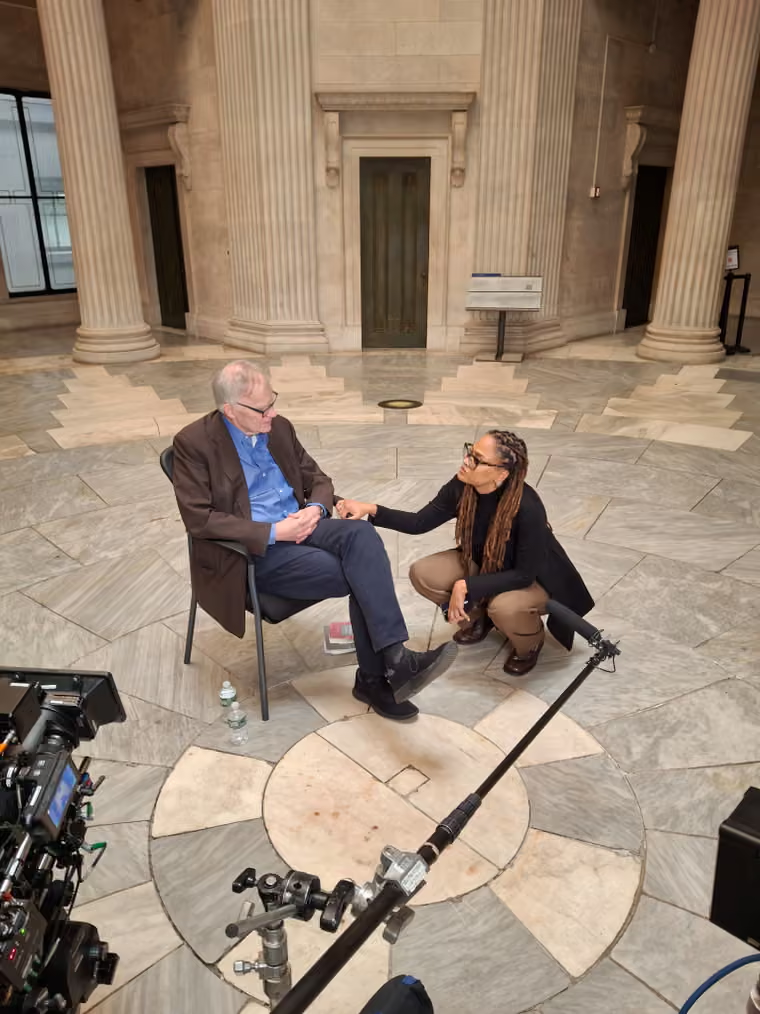
杜弗内伊将主要由律师、政治家、民权活动家等组成的说服性阵容,安排在一座座大理石建筑与纪念碑前,以庄重而富有张力的画面呈现,进一步强调第十四修正案作为人文主义高度典范的地位:由人民治理,为全体人民服务。
DuVernay stages her largely persuasive cast – lawyers, politicians, civil rights organizers and more – in striking, stately tableaux, before marble and monuments, underscoring the argument for the amendment’s status as the epitome of humanist sophistication: government by the people, for all the people.
在这一论证中,最具分量的论述来自谢里林·伊菲尔——美国全国有色人种协进会法律辩护基金前主席,也是霍华德大学的法学教授,她在那里创立了第十四修正案法律与民主中心。伊菲尔是一位既亲切又严谨的讲述者,她精妙地阐释了这样一个观点:这项措辞繁复、涵盖多领域的修正案,实际上正是我们构建真正多族裔、多信仰民主社会的框架。
The heavy lifting in this argument is cogently provided by Sherrilyn Ifill, the former president of the NAACP Legal Defense Fund and a law professor at Howard University, where she founded the 14th Amendment Center for Law and Democracy; Ifill is a warm yet precise narrator, masterfully laying out the case that the verbose, multi-pronged amendment is actually the scaffolding upon which hang our hopes for a true multi-racial, multi-faith democracy.
正是第十四修正案保障了出生公民权和投票权,禁止叛乱者再次担任公职(尽管接下来会呈现令人愤怒又难以忽视的画面,但这些内容却是必要的),并通过多项法律辩护,使跨种族婚姻成为可能,并让女性能够申请信用卡。
It is the 14th amendment that guarantees birthright citizenship as well as voting rights, that bars insurrectionists from again holding public office (you know what awful, infuriating footage is coming, though it is necessary) and, through numerous legal defenses, allowed interracial couples to marry and women to obtain credit cards.
为了迅速凸显其重要性及其激进的历史背景,杜弗内伊采用了与《第十三修正案》中许多相同的技巧,但效果或许更为显著:尖锐的视觉呈现,将特朗普时代描绘成对第十四修正案五芒星的字面亵渎;从肯德里克·拉马尔到舰队街乐队、再到詹姆斯·布朗的音乐片段如针尖般精准地嵌入其中。而最具力量的手法,则是为档案照片增添了维度与动感——这些照片既展现了内战结束后黑人迅速复兴的景象——被解放的奴隶出现在国会大厦、教堂、大学及其他机构中——也揭示了重建时期随之而来的迅速反扑:恐怖主义的私刑暴力、劳改营以及吉姆·克劳种族隔离制度。
To summarily stamp down its importance and radical historical context, DuVernay employs many of the same techniques as 13th to arguably greater effect: trenchant illustrations, blistering through the Trump years as a literal desecration of the 14th amendment’s five-pointed star; needle-drops from Kendrick Lamar to Fleetwood Mac to James Brown. And, most potently, adding dimension and movement to archival photographs of both the Black flourishing in the immediate aftermath of the civil war – formerly enslaved people in the halls of Congress, churches, universities and other institutions – as well as the swift backlash to Reconstruction in the form of terroristic vigilante violence, penal colonies and Jim Crow segregation.
这是一股令人振奋又引人入胜的信息洪流,内容密集地充斥着事实与数据——从内战到第二次世界大战期间,已知有4400名黑人美国人被私刑处死;同期竖起了2629座纪念南方邦联奴隶共和国的纪念碑;还有所有这一切令人愤怒的视觉证据。影片也穿插了一些略显紧张的时空跳跃。某些支线内容,例如与德文·亨利共处的片段——这位黑人承包商受命拆除弗吉尼亚州的数座邦联纪念碑——虽令人钦佩,却稍显偏离主题,有削弱影片对这一修正案屡遭挑战的坚韧性的紧凑有力聚焦之虞。
It’s a bracing, riveting torrent dense with facts and figures – the 4,400 known lynchings of Black Americans between the civil war and the second world war, the 2,629 monuments to the Confederate slave republic erected in the same period, the galling visual evidence of it all – as well as some jittery timeline hopping. Some tangents, such as time with Devon Henry, the Black contractor tasked with dismantling several Confederate monuments in Virginia, are admirable but a bit afield, threatening to dilute the film’s tight, punchy focus on the amendment’s oft-challenged fortitude.
尽管如此,影片仍对特朗普政府及更广泛的“让美国再次伟大”(MAGA)运动描绘了一幅 damning 的图景:他们明确呼唤一个不同且更美好的过去,实则是南方邦联“失落事业”神话的延续——正如南方历史学家卡伦·考克斯所言,这是一种虚假的历史记忆叙事,构成了“美国历史上最成功的宣传运动”。
Still, it paints a damning portrait of the Trump administration and the larger Maga movement, with its explicit invocation of a different, better past, as a continuation of the “Lost Cause” mythology of the Confederacy – a false narrative of historical memory that constitutes, to quote the southern historian Karen Cox, the “most successful propaganda campaign in the history of the United States”.
影片的最后一部分讲述特朗普政府对修正案每一条款的全面攻击,这对任何关注美国新闻的人来说都不陌生,但依然燃烧着义愤与警惕。叛乱条款若非旨在阻止并惩罚1月6日的骚乱者——特朗普还想让美国纳税人为他们买单——那它是什么?蒙面的ICE(移民与海关执法局)逮捕与杀戮,在一段极具冲击力却又令人难以直视的蒙太奇中呈现,若非对正当法律程序的直接践踏,那又是什么?
The film’s final section, on the Trump administration’s all-out assault on every article of the amendment, is nothing any follower of US news doesn’t already know, but still burns with righteous anger and alarm. What was the insurrection clause if not an attempt to prevent, and then punish, the January 6 rioters who Trump wanted US taxpayers to compensate? What are masked ICE arrests and killings, played in one extremely effective if difficult montage, if not a direct violation of due process?
瑕不掩瑜,《第十四修正案》是一部罕见的佳作,兼具启发性、激愤力与不可辩驳的说服力。杜沃奈可能过于频繁地重复同一片段或措辞,但这瑕疵很大程度上被影片声明的分量所掩盖,例如一段由弗雷德里克·道格拉斯撰写、伊菲尔朗诵的文字:白人至上主义的幽灵不会在一年内消亡;也不会在一个时代里消亡。正如《第十四修正案》所展示的,这种遗产是我们所有人继承的,无视或低估它将自食其果。
Quibbles aside, 14th is a rare feat, at once informative, infuriating and undeniable. That DuVernay may too often repeat the same clip or phrase is largely outweighed by the import of the statement, such as one written by Frederick Douglass and delivered by Ifill: the spirit of white supremacy will not die out in a year; it will not die out in an age. As 14th illustrates, that legacy is the one we’ve all inherited, and it is ignored or underestimated at our peril.
《第十四修正案》将在纽约电影节首映,并于11月27日在影院上映,12月4日在Netflix上线。
14th is premiering at the New York film festival and will be released in cinemas on 27 November and available on Netflix on 4 December