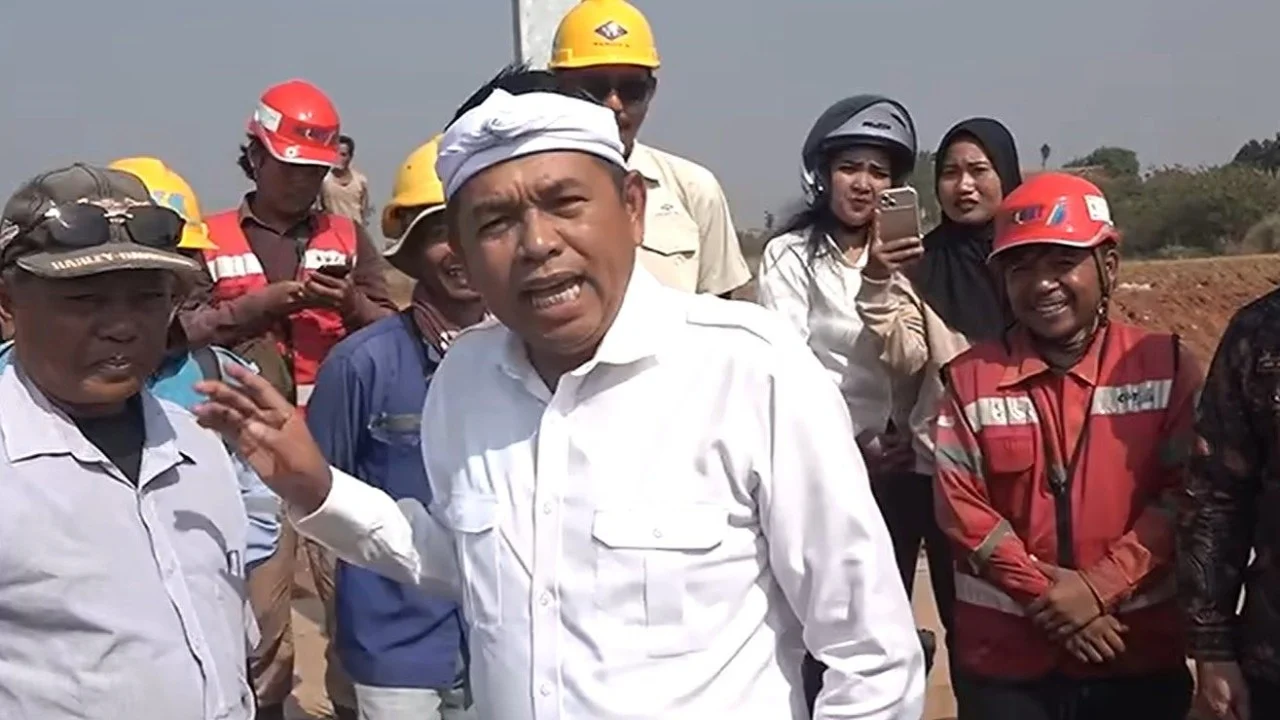
身着标志性的白衬衫和传统的巽他族头巾,西爪哇省省长迪迪·穆利亚迪站在瓦扬山的荒坡旁。
Dressed in his trademark white shirt and traditional Sundanese headcloth, West Java Governor Dedi Mulyadi stood near the barren slopes of Mount Wayang.
他宣布了一项新举措:向数百名当地农民支付费用,以重新种植森林,保护该地区免受洪水侵袭。同时,他发表了一段恰到好处、专为镜头而设计的讲话,而摄像机正记录着他的一举一动。
Announcing a new initiative to pay hundreds of local farmers to replant its forests and shield the region from flooding, he delivered a line perfectly pitched for the cameras tracking his every step.
“我是一位不希望民众因贫困而服从的领导者,”他于9月26日宣称,“我希望民众因繁荣而服从。”正是这种民粹主义言论、基层问题解决方案以及社交媒体上持续不断的宣传相结合,将这位55岁的前摩托车出租车司机变成了印尼最受关注的政治家之一。
“I am a leader who does not want obedience caused by poverty,” he declared on September 26. “I want obedience caused by prosperity.”It is this blend of populist rhetoric, grass roots problem-solving and relentless social media promotion that has transformed the 55-year-old former motorcycle taxi driver into one of Indonesia’s most talked-about politicians.
作为总统普拉博沃·苏比安托所属的“大印尼运动党”(Gerindra)成员,迪迪在2024年底以压倒性优势赢得省长选举,成为印尼人口最多省份的领导人。他庞大的网络粉丝群和近期强劲的支持率,引发了外界对他可能在2029年认真参选总统的猜测。
Having won a landslide gubernatorial election in late 2024 as a member of President Prabowo Subianto’s Gerindra party to lead Indonesia’s most populous province, Dedi’s massive online following and recent strong poll numbers have ignited speculation that he could mount a serious bid for the presidency in 2029.
民意调查机构“赛富尔·穆贾尼研究与咨询公司”(SMRC)在7月进行的一项模拟投票中显示,在多位候选人的总统偏好测试中,迪迪的支持率为35%,而普拉博沃则远远落后,仅为14.5%。随后8月份由“Tempo数据科学”进行的另一项调查也得出类似结果:迪迪的支持率超过40%,普拉博沃则在15%左右。
A July simulation by pollster Saiful Mujani Research and Consulting (SMRC) placed Dedi at 35 per cent in a multi-candidate presidential preference test, leaving Prabowo trailing far behind at 14.5 per cent. A subsequent August survey by Tempo Data Science produced similar results, placing Dedi above 40 per cent and Prabowo around 15 per cent.
2029年的总统选举尚有一段时日,但分析人士指出,迪迪的支持率已经给“大印尼运动党”提出了一个令人尴尬的问题:这位在该党旗下崛起并成名的省长,最终是否会成为其党主席在总统选举中的竞争对手?
The 2029 presidential election is some time away, but analysts say Dedi’s poll numbers have raised an awkward question for Gerindra: could the governor who rose to prominence under its banner eventually become its chairman’s rival for the presidency?
迪迪的崛起得益于他对社交媒体的娴熟运用。他的主要YouTube频道拥有920万订阅者,每月观看量高达数千万次,这也为他赢得了“内容省长”的绰号。
Dedi’s ascent has been propelled by his mastery of social media. His primary YouTube channel has 9.2 millionrs and generates tens of millions of views every month, earning him the nickname “”, or “content governor”.
与其播放枯燥的政策演讲,他的社交媒体账号更像是一档民粹主义真人秀:他会介入邻里纠纷,向老年人发放现金,最近更因悬赏5000万印尼盾(约合3200美元)奖励任何能抓获扒手或抢劫犯的人而登上头条新闻。
Rather than broadcasting dry policy speeches, his feed operates more like a populist reality show: he intervenes in neighbourhood disputes, hands out cash to the elderly and recently made headlines by offering a 50-million-rupiah (US$3,200) personal bounty to anyone who could catch pickpockets or muggers.
根据印尼民意调查机构(LSI)7月进行的一项调查,西爪哇地区民众对Dedi工作表现的满意度高达惊人的95.4%。
In a July survey conducted by Lembaga Survei Indonesia (LSI), public satisfaction with Dedi’s performance across West Java reached a staggering 95.4 per cent.
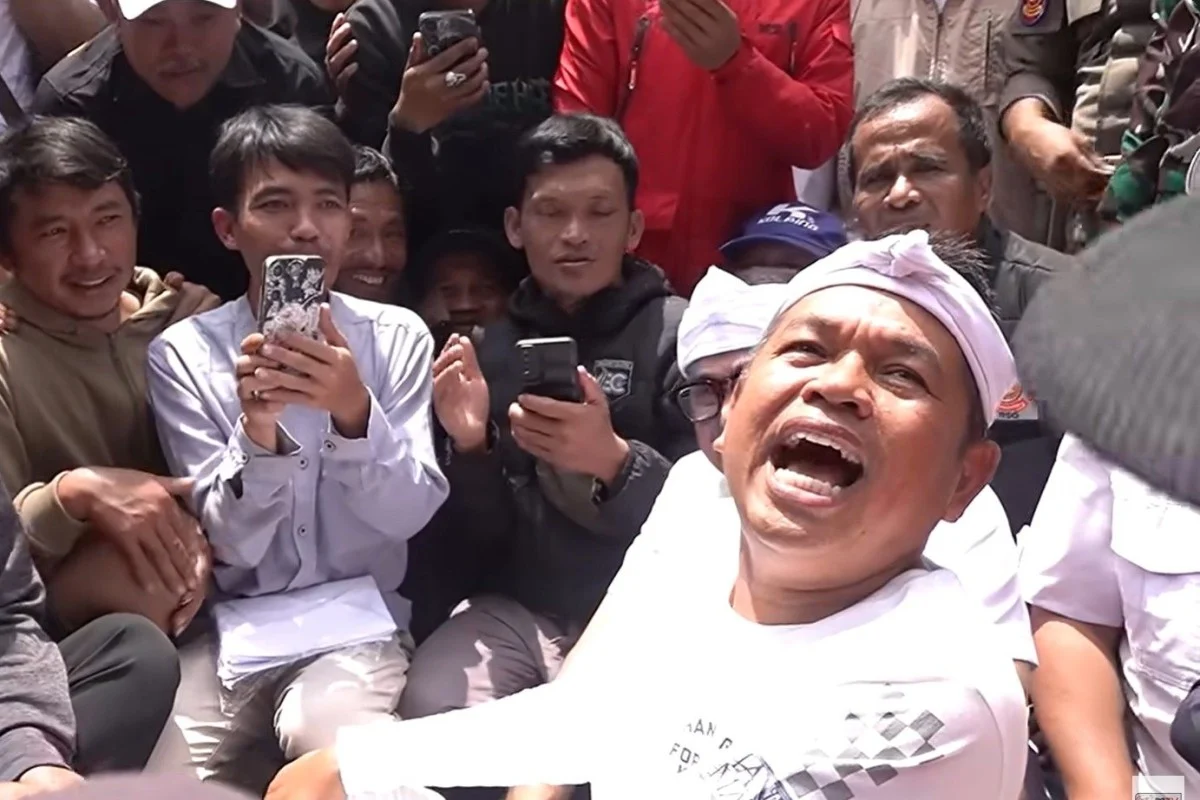
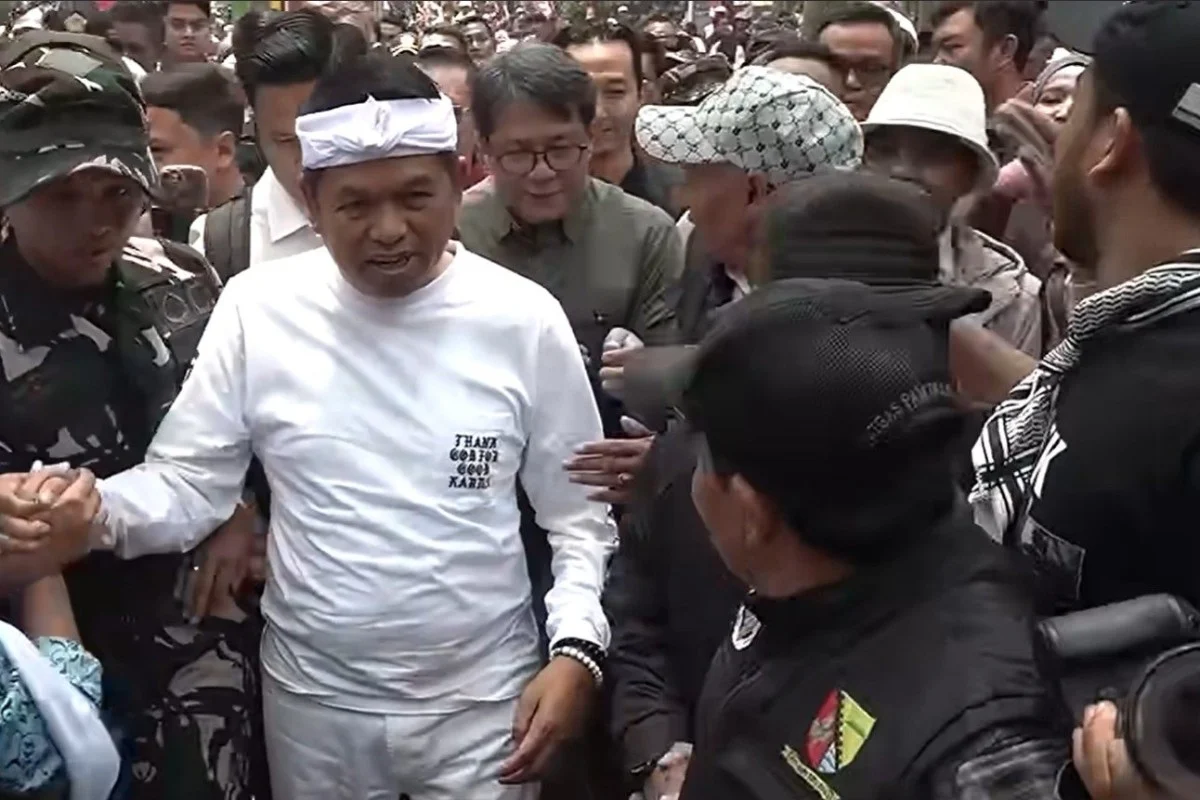
LSI执行主任Djayadi Hanan指出,Dedi在基层民众中的吸引力,与他长达25年的政治经营密不可分:他从地方议员、普哇卡尔塔县两届县长,一路晋升为国家级议员,并且天生擅长运用社交媒体,这与政坛中比他年长的同僚们过时的宣传方式形成鲜明对比。
Djayadi Hanan, executive director of LSI, observed that Dedi’s grass roots appeal combined political cultivation spanning a quarter-century, as he climbed from local councillor and two-term regent of Purwakarta to national lawmaker, with an instinctive command of social media that starkly contrasted with the archaic outreach methods of his older peers in the political circle.
Djayadi表示:“Dedi的主要优势在于真实可信。”这一特质他与普拉博沃的前任——前总统佐科·维多多如出一辙,后者同样出身平凡,却通过将自己塑造成“人民中的一员”而声名鹊起。
Dedi’s “main strength is authenticity”, Djayadi said, a trait he shared with Prabowo’s predecessor, former president Joko Widodo, who also rose from humble origins to national fame by branding himself a man of the people.
Djayadi补充道:“相比之下,你根本无法想象总统普拉博沃·苏比安托会制作拥抱出租车司机或在街头小贩处用餐的社交媒体内容,而不会被民众视为作秀。”
“By contrast, you cannot imagine President Prabowo Subianto making social media content hugging a taxi driver or eating at a street vendor without people viewing it as staged,” Djayadi added.
ISEAS–尤索夫·伊沙克研究所访问高级研究员Burhanuddin Muhtadi认为,Dedi在家乡省份之外影响力的迅速提升,并非仅仅源于他的社交媒体活动。他还表示,Dedi的民调数据也反映出公众对中央政府日益增长的厌倦情绪。他补充说,Dedi的极高人气不应仅仅归因于他的政治能力。
According to Burhanuddin Muhtadi, a visiting senior fellow at the ISEAS–Yusof Ishak Institute, Dedi’s surging profile outside his home province is not merely a product of his social media activities. His poll numbers also reflected a growing public weariness with the central government, Burhanuddin said. He added that Dedi’s huge popularity should not be attributed to just his political strengths.
“他的崛起部分也反映了民众对普拉博沃政府的不满情绪。Dedi塑造的形象更加亲民、易于接近,而普拉博沃则是一位更具公众影响力的总统形象。”随着Dedi在网络上的存在感日益增强,他的内容创作也开始让雅加达的政界精英感到不安。
“Part of his rise also reflects negative sentiment towards the Prabowo government. Dedi projects a more down-to-earth, accessible image, whereas Prabowo has a much more high-profile presidential persona.”With the surge in Dedi’s online presence, his content creation has begun to raise eyebrows within Jakarta’s establishment.
8月,在7.7级地震发生后,Dedi前往东努沙登加拉省,亲自运送救援物资。尽管此举被包装成一种人道主义团结行动,但他走出西爪哇省的行为却引发了激烈讨论,批评者质疑他为何要利用一场遥远地区的危机来提升自身在全国的影响力。
In August, in the wake of a magnitude-7.7 earthquake, Dedi travelled to East Nusa Tenggara to personally deliver relief assistance. While framed as an act of humanitarian solidarity, his excursion beyond West Java’s borders drew intense chatter, with critics questioning why he was leveraging a distant crisis to elevate his national profile.
一些分析人士认为,Dedi的这些举动可能正在跨越一条不成文的红线——在一个将机构忠诚置于个人声望之上的政治体系中,这种做法存在风险。
For some analysts, Dedi’s manoeuvres risk crossing an unwritten line in a political system where institutional loyalty is prized above personal popularity.
印度尼西亚大学的政治学讲师Aditya Perdana表示,虽然Dedi已赢得“现场解决问题者”的声誉,但跨越省级边界行动的风险在于可能超出了他的职权范围。
While Dedi has earned a reputation as an on-the-spot problem solver, venturing beyond his provincial boundaries risks overstepping his mandate, said Aditya Perdana, a political science lecturer at Universitas Indonesia.
Aditya认为,通过试图干预西爪哇省以外的危机,这位省长在党内的精英眼中正逐渐“越位”,因为他试图在没有管辖权的地方施加影响。
By attempting to intervene in crises outside West Java, Aditya argued, the governor was increasingly playing “offside” in the eyes of party elites by projecting influence where he had no jurisdiction.
分析人士指出,Dedi直到2023年才从Golkar党转投Prabowo所在的政党,而他日益广泛的实地活动,很可能并未逃过该党内部的注意。
His widening ground engagement has likely not gone unnoticed inside Prabowo’s party, which Dedi joined only in 2023 after decamping from Golkar, according to analysts.
国家研究与创新署(BRIN)的政治研究员Wasisto Raharjo Jati表示:“潜在的矛盾焦点可能在于Gerindra党内Prabowo的核心圈子,他们或许会将Dedi在西爪哇省以外的活动,视为他为2029年选举进行的政治预热。”
“The potential main friction lies in Prabowo’s inner circle in Gerindra, who may perceive Dedi’s activities outside of West Java as his political warm-up agenda for the 2029 election,” said Wasisto Raharjo Jati, a political researcher at the National Research and Innovation Agency (BRIN).
公开场合,Gerindra党已对两人之间的民调差距予以否认。在SMRC报告发布后,该党日常执行主席Sufmi Dasco Ahmad轻描淡写地回应了民调数据,称调查结果在不同周期之间“可能会波动”。
Publicly, Gerindra has dismissed the polling disparity between the two men. After the release of the SMRC report, the party’s daily executive chairman, Sufmi Dasco Ahmad, brushed off pollster’s figures, saying surveys could “fluctuate” from one cycle to the next.
Djayadi则注意到Dedi的“战略模糊性”——他经常回避有关其全国性政治抱负的问题,并坚称自己仍专注于当前的职位。
Djayadi has noted Dedi’s “strategic ambiguity” by routinely deflecting questions about his national ambitions and insisting he remains focused on his present position.
“目前我只是在思考如何当一名成功的省长,”迪迪上月在被记者追问2029年大选前景时表示,“现在不是考虑那个的时候。”至于普拉博沃,虽然格林德拉党精英已公开敦促他竞选连任,但这位75岁的现任总统迄今拒绝表态,并曾在今年早些时候多次表示,如果觉得政府表现不佳,他不会参加2029年大选。
“I am currently just thinking about how to be a successful governor,” Dedi told reporters last month when pressed on his 2029 prospects. “Now is not the time for that.”As for Prabowo, while Gerindra elites have already publicly pushed him to run for a second term, the 75-year-old incumbent has so far refused to commit, stating repeatedly earlier this year that he would not run in 2029 if he felt his administration had underperformed.
若普拉博沃决定参选,一些观察人士看好迪迪成为总统的竞选搭档。但布尔哈努丁表示,选民数据显示,这种联盟可能会失败。
Should Prabowo decide to run, Dedi has been touted by some observers as the president’s running mate. But Burhannudin said voter data suggested that such an alliance could fail.
“一个复杂因素是‘任何人都行,就是不要普拉博沃’的情绪正在浮现,”布尔哈努丁解释道。
“One complication is the emerging ‘anyone but Prabowo’ sentiment,” Burhanuddin explained.
他补充道:“如果迪迪成为一位支持率大幅下滑的现任总统的竞选搭档……一些目前支持迪迪的选民可能会转而支持阿尼斯或吉布兰。”他指的是前雅加达省长阿尼斯·巴斯韦丹和副总统吉布兰·拉卡布明·拉卡,两人也被视为2029年大选的潜在竞争者。
“If Dedi becomes the running mate of an incumbent whose popularity has been declining significantly ... some voters who currently support Dedi could instead move towards Anies or Gibran,” he added, referring to former Jakarta governor Anies Baswedan and Vice-President Gibran Rakabuming Raka, both of whom are also seen as potential 2029 contenders.
“我们不应假设所有迪迪的支持者都会自动跟随他加入普拉博沃-迪迪竞选组合。一些人之所以支持迪迪,正是因为他们视他为现任总统的替代者。”布尔哈努丁表示,格林德拉党也不能毫无后果地将迪迪边缘化,命令他乖乖充当普拉博沃的竞选助手。
“We should not assume that all Dedi supporters would automatically follow him into a Prabowo-Dedi ticket. Some may prefer Dedi precisely because they see him as an alternative to the incumbent.”Nor can Gerindra sideline Dedi and order him to remain an obedient campaigner on Prabowo’s behalf without consequence, Burhanuddin said.
他补充道:“公开的民调数据表明,如果在总统候选人模拟测试中移除迪迪,受益最大的将是阿尼斯和吉布兰,而非普拉博沃。”另一种可能性是,迪迪可能离开格林德拉党,另寻竞选搭档。
“The publicly available survey data suggest that, if Dedi is removed from the presidential-choice simulation, Anies and Gibran benefit more than Prabowo,” he added. Another possibility is that Dedi could leave Gerindra to seek a ticket elsewhere.
去年宪法法院的一项里程碑式裁决废除了政党提名总统候选人前必须获得20%选票的最低门槛,为受欢迎的独立人士参选最高职位打开了一扇后门,这使得上述前景变得切实可行。
This prospect has become plausible following a landmark Constitutional Court ruling last year that abolished the minimum requirement of 20 per cent of the vote for a political party before it could nominate a presidential candidate, which has opened a back door for popular independents to contest in an election for the top job.
“这极大地改变了战略环境,”布尔哈努丁说。“其他缺乏足够受欢迎的总统候选人的政党可能会有意提名德迪竞选总统。”然而,德迪面临着在持续的公众审视下维持其民粹光环的艰巨任务。虽然他的个人支持率依然居高不下,但他的执政记录并非毫无瑕疵。
“This significantly changes the strategic environment,” Burhanuddin said. “Other parties that lack a sufficiently popular presidential figure of their own may be interested in nominating Dedi for president.”Dedi, however, faces the daunting task of sustaining his populist aura given the relentless public scrutiny. While his personal approval rating remains sky-high, his governance record is not without blemishes.
6月,西爪哇省公立学校招生系统推出过程动荡,导致数千名家长因孩子未能进入公立学校而感到沮丧,这促使德迪公开道歉。
In June, the turbulent rollout of West Java’s public school admissions system left thousands of parents frustrated after their children failed to secure places at state schools, prompting Dedi to issue a public apology.
面对预计3.4万亿盾的财政赤字,德迪上个月宣布暂停所有新的省级项目,以避免背负巨额债务。
With West Java facing a projected 3.4-trillion-rupiah deficit, Dedi announced last month that he was halting all new provincial projects to avoid taking on massive debt.
然而,民调格局远非一致。民调机构Median在8月下旬进行的一项全国性调查提供了与早期发现相反的结果,显示普拉博沃以32.4%的支持率领跑,德迪以20.6%紧随其后,阿尼斯以20.5%位居第三。
The polling landscape, however, remains far from uniform. A nationwide survey conducted in late August by pollster Median offered a counterweight to earlier findings, placing Prabowo in the lead with 32.4 per cent support, followed by Dedi at 20.6 per cent and Anies at 20.5 per cent.
布尔哈努丁警告说,在印尼政治中三年是很长的时间,早期的地区声势随着赌注升高很容易消退。
Three years is a long time in Indonesian politics, Burhanuddin warned, and early regional momentum can easily evaporate as the stakes rise.
“他目前的受欢迎程度是真实的,但能否维持到2029年,将取决于他的个人魅力能否经受住更严峻的执政表现考验、更大范围的全国审视以及不断变化的政治环境。”文/阿南德·马泰
“His current popularity is real, but sustaining it until 2029 will depend on whether his personal appeal can survive the much harder tests of governing performance, greater national scrutiny and the changing political environment.”