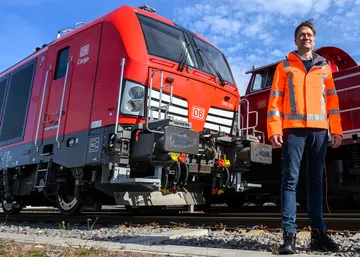
由马里伦·马丁撰写 直到最近,如果你从慕尼黑乘火车前往与奥地利的东部边境,避免与另一列火车相撞的机会部分取决于一座建于1899年的信号站——当时威廉二世皇帝仍在统治德国。
Until recently, if you took a train from Munich toward the eastern border with Austria, the chances of avoiding a collision with another locomotive relied in part on a signal station installed in 1899 when Kaiser Wilhelm II still ruled Germany.
这座建筑内部大约只有小房子般大小,操作员们通过拉动笨重的杠杆和转动与开关及信号相连的曲柄来操作,以防止任何可能导致两列火车驶入同一轨道的组合。
Tucked inside the building, roughly the size of a small house, operators manipulated cumbersome levers and turned cranks connected by wires to switches and signals to prevent any combination that could direct two trains onto the same path.
德国铁路股份公司(Deutsche Bahn AG)终于在去年年底用电子系统取代了位于穆赫尔多夫-因恩的这套已有126年历史的装置。然而,这也凸显了德国铁路基础设施老化与日益智能化的列车之间的鸿沟——国有铁路近五分之一的道岔仍然是机械的。
Deutsche Bahn AG finally replaced the 126-year-old installation at Mühldorf am Inn with an electronic system at the end of last year. Yet in a sign of the gulf between Germany’s aging rail infrastructure and the increasingly intelligent trains running on it, nearly a fifth of the state-owned railway’s interlockings are still mechanical.
据西门子移动公司(Siemens Mobility GmbH)首席执行官迈克尔·彼得(Michael Peter)表示,弥合这一差距将无需新增轨道即可释放出更大的运输能力。他告诉彭博社在一次采访中称,数字信号系统和自动驾驶技术可以让大约30%更多的列车在现有网络上运行——通过让列车更紧密地跟随以及在出现延误时调整其运行方式来实现。
Closing that gap would free up much more capacity without the need for additional track, according to Siemens Mobility GmbH Chief Executive Officer Michael Peter. Digital signaling and automated driving could enable roughly 30% more trains to use the existing network by running them closer together and adjusting their movements in the event of delays, Peter told Bloomberg in an interview.
他说:“这是德国今天的一个重大议题:我们如何在现有线路上提高通行能力,以便重新获得缓冲时间并更好地遵守时刻表。”“这全部关乎准点率,而为了实现这一点,你需要端到端的技术。”列车本身也日益 resemble 移动计算机。彼得表示,旗舰ICE特快列车大约配备有1000个传感器,每天可产生约10亿个数据点。西门子移动公司管理的车队每日行驶里程约达100万公里(相当于621,370英里)——几乎相当于三次往返月球——这使得软件能够监控车辆状况并在设备故障发生前发现异常行为。
“That’s the big debate in Germany today: how do we increase throughput on the existing lines so that we have buffers again and can keep to the timetable better,” he said. “It’s all about punctuality and for that you need end-to-end technology.”The trains themselves increasingly resemble mobile computers. The flagship ICE express has about 1,000 sensors generating roughly 1 billion data points a day, Peter said. Siemens Mobility-managed fleets cover about 1 million kilometers (621,370 miles) daily — equivalent to nearly three trips to the moon — allowing software to monitor rolling stock and spot anomalous behavior before equipment fails.
该公司的其他进展包括机车远程启动,或列车能够自动离开调度场并前往首站,若检测到障碍物则自行制动。
Other advances from the firm include remote startups for locomotives, or trains that can automatically leave a depot and travel to their first station, braking on their own if they detect an obstacle.
此类技术有助于缓解因拥堵导致的交通流问题,而拥堵和延迟长期以来一直是德国备受诟病的铁路服务的特征。根据该公司数据,去年每天平均有6831起基础设施相关延误,仅有略超过一半的德国铁路长途列车在九月份准时到达(误差在六分钟以内)。
Such technology could help smooth traffic flows around a network struggling with congestion and the delays that have long been a feature of Germany’s much-maligned rail services. Only just over half of Deutsche Bahn’s long-distance trains arrived within six minutes of schedule in September, with an average 6,831 infrastructure-related delays a day last year, according to the company.
相比之下,法国、西班牙和意大利等欧洲国家,更不用说奥地利和瑞士,拥有高速铁路网络,以效率和可靠性著称,名副其实。
By contrast, European nations like France, Spain and Italy, not to mention Austria and Switzerland, have high-speed rail networks with well-deserved reputations for efficiency and reliability.
德国的挑战在于,更智能的列车仍需在一个累积超过一个世纪的基础设施网络上运行。该网络包含约100种不同类型的联锁系统,使维护变得复杂,并增加了推行统一数字标准的难度。
Germany’s challenge is that smarter trains still have to operate across infrastructure accumulated over more than a century. The network contains around 100 different types of interlocking systems, complicating maintenance and making it harder to introduce one digital standard.
“在铁路数字化方面,我们存在太多‘五花八门’的情况,”行业协会“铁路联盟”(Allianz pro Schiene)董事总经理迪尔克·弗莱格说道。“标准化程度远远不足,标准化接口也太少。”升级基础设施的技术已经可用。更新的信号技术可以将目前分散在各地的安全逻辑转移至数据中心的标准化处理器上。轨道旁的设备将保留,但软件可以集中决定路线是否安全,并向道岔和信号发送指令。
“We have far too many mixed-bag situations on the railroad when it comes to digitization,” said Dirk Flege, managing director of industry association Allianz pro Schiene. “There’s far too little standardization, far too few standardized interfaces.”Technology to upgrade the infrastructure is already available. Newer signaling tech could shift much of the safety logic now spread across local installations onto standardized processors in data centers. The equipment beside the tracks would remain, but software could centrally decide whether routes are safe and send commands to switches and signals.
数字化铁路的另一部分是欧洲列车控制系统(ETCS),它告诉机车可以行驶多远、多快,用一个共同的区域标准取代各国系统。
A separate part of that digital railway is the European Train Control System, or ETCS, which tells a locomotive how far and how fast it may travel, replacing national systems with a common regional standard.
自动列车运行是欧洲铁路交通管理系统的一个补充组件,随后可以控制列车何时加速、惯性行驶或制动。
Automated Train Operation, a complimentary component of the umbrella European Rail Traffic Management System, can then control when a train accelerates, coasts or brakes.
人工智能最终可以同时协调多列列车——因为前方轨道被占用而减慢一列列车的速度,在延迟后优先考虑另一列列车,并重新计算交通流量,使网络恢复到其时刻表。
AI could eventually coordinate many trains at once — slowing one because the track ahead is occupied, prioritizing another after a delay and recalculating traffic to bring the network back toward its timetable.
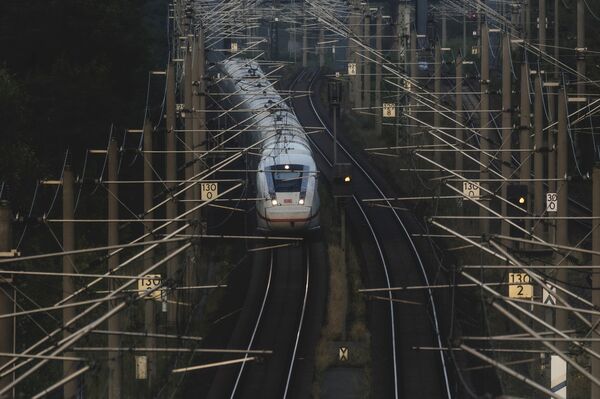
德国在这方面的转型才刚刚开始。截至2025年底,该网络超过33,000公里中仅有683公里配备了ETCS。
Germany has barely begun that transition. At the end of 2025, only 683 kilometers of the network’s more than 33,000 kilometers were equipped with ETCS.
相比之下,瑞士自2018年起就在其全国铁路网上部署了该系统。奥地利上个月授予了价值26亿欧元(29亿美元)的框架合同,用于全国范围内的信号系统现代化,其中包括约13亿欧元用于西门子移动公司——这是总部位于慕尼黑的工业巨头西门子AG的一个部门。
By comparison, Switzerland has had the system across its network since 2018. Austria last month awarded framework contracts worth €2.6 billion ($2.9 billion) to modernize signaling nationwide, including about €1.3 billion for Siemens Mobility, a unit of Munich-based industrial giant Siemens AG.
德国铁路公司于2025年夏季撤回了其之前的ETCS迁移策略,称行业无法在计划时间内完成列车改装,且联邦基础设施资金仍存在不确定性。此后,来自5000亿欧元政府基础设施基金的超过100亿欧元已被专门用于进一步的铁路数字化。
Deutsche Bahn withdrew its previous ETCS migration strategy in summer 2025, saying the industry could not equip trains within the planned timeframe and that federal infrastructure funding remained uncertain. More than €10 billion from a €500 billion government infrastructure fund has since been earmarked for further rail digitization.
这一转型之所以复杂,是因为需要同时升级列车和轨道。一些老化的机械和继电系统仍在被传统电子联锁系统取代,而不是围绕标准化、联网系统设计的新一代系统。
The transition is complicated by the need to upgrade trains and tracks at the same time. Some aging mechanical and relay systems are still being replaced by conventional electronic interlockings instead of the newer generation designed around standardized, networked systems.
根据财政部长拉斯·克林贝尔的说法,未能改善德国铁路系统的后果不仅限于准点率问题。
The repercussions of failing to improve Germany’s rail system go beyond the issue of punctuality, according to Finance Minister Lars Klingbeil.
“如今的列车延误不仅仅是一个投资问题,”克林贝尔去年表示,他同时也是社会民主党的联合领导人之一。
“Train delays today aren’t just an investment problem,” Klingbeil, who is also a co-leader of the Social Democrats, said last year.
“它们已经成为我们国家民主的一个真正问题,因为人们正在失去对德国事务实际上能够正常运作的信心。”
“They have become a genuine problem for democracy in our country because people are losing faith that things in Germany actually work.”