不等CPSC赶上进度,自行车行业就已经开始行动。多向冲击防护系统(MIPS)于2007年进入市场,如今已成为高端头盔的常见功能。与此同时,弗吉尼亚理工大学将头盔安全转变为制造商之间的竞赛。2018年,它推出了头盔STAR评级(风险分析测试总和),超越法律最低标准进行测试,并同时测量线性和旋转冲击。
Not waiting for the CPSC to catch up, the cycling industry got to work. Multidirectional Impact Protection System, or MIPS, hit the market in 2007 and is now a common feature on premium helmets. At the same time, Virginia Tech turned helmet safety into something of a competition for manufacturers. In 2018, it launched helmet STAR ratings (Summation of Tests for the Analysis of Risk), testing beyond the legal minimum and measuring both linear and rotational impacts.
最初的30款头盔中仅有四款获得五星评级,但到2025年,272款头盔中有167款达到五星,弗吉尼亚理工大学不得不收紧其评级标准。这进一步推动了竞争并提升了头盔技术。突然间,夺得第一名不仅对业务有利,也对大脑有益。
Only four of the first 30 helmets earned five stars, but by 2025, 167 of 272 achieved five stars, and Virginia Tech had to tighten its grading. That only drove competition and improved helmet technology. Suddenly, hitting the number one spot was good for business and brains.
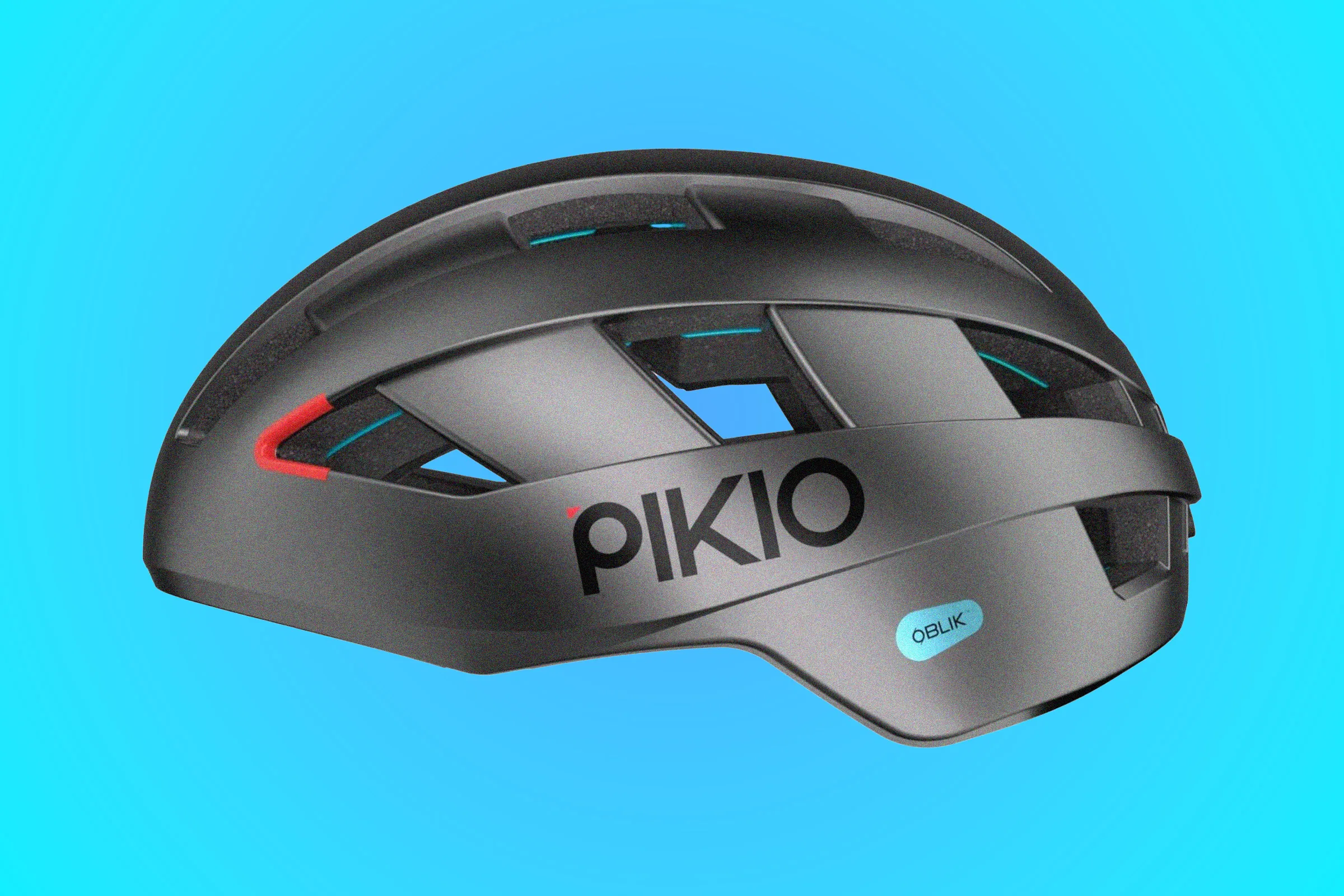
在众多竞争者中脱颖而出的是Pikio Si Oblik公路骑行头盔,其得分为4.61(10.1或以下可获得五星评级;分数越低越好),该头盔采用了一种名为Oblik的全新安全系统。该设计灵感来源于防脑震啄木鸟的头部撞击机制,在竞争中表现卓越。为提供背景信息,Pikio的4.61分比之前最佳的Canyon Deflectr的6.82分低了2.21分——大约低了32%,这是一个巨大的进步,考虑到许多顶级头盔的得分通常仅在7到10分之间。
Sitting comfortably ahead of the competition, with a 4.61 score (10.1 or lower earns a five-star rating; lower is better), is the Pikio Si Oblik road cycling helmet, featuring a new safety system called Oblik. Inspired by the headbanging, concussion-proof woodpecker, this new design has wiped the floor with the competition. For context, Pikio's 4.61 score is 2.21 points lower than the previous best Canyon Deflectr’s 6.82. That’s about 32 percent lower, a massive shift when many of the highest-rated helmets score only between 7 and 10 points.
这家相对默默无闻的温哥华初创公司为何能一举成功?正如创始人Daniel Abram所解释的,这“源自于对冲击防护和头盔设计长达18年的研究”。他在学习机械工程后,进入西蒙弗雷泽大学进行头盔研究,期间参与开发了BrainShield系统——一种旨在减少冲击时旋转力的技术。随后他创立了头盔技术公司BiaGuard,而MIPS在2022年以约100万美元收购了其专利和知识产权。
How has this relatively obscure Vancouver startup gotten it right the first time? As founder Daniel Abram explains, it “comes from 18 years researching impact protection and helmet design.”After studying mechanical engineering, he moved into helmet research at Simon Fraser University, where he helped develop BrainShield, a system designed to reduce rotational forces during impacts. He later founded helmet technology company BiaGuard, before MIPS paid around $1 million for the patents and intellectual property in 2022.
大多数自行车头盔使用薄塑料外壳覆盖在聚苯乙烯(EPS)泡沫上,这种泡沫在冲击时会被压碎以吸收能量,防止能量传递到头骨。Oblik 采用这种熟悉的泡沫结构,但将其分割为独立安装的部分,而不是一个连续的整体。
Most bike helmets use a thin plastic shell over expanded polystyrene (EPS) foam, which crushes on impact to absorb energy before it reaches your skull. Oblik takes that familiar foam structure and breaks it into independently mounted sections rather than one continuous block.
每个部分通过柔性连接点附着在基础EPS层上,使它们能够独立移动,或在头盔受到严重冲击时脱离。结合双密度泡沫以吸收直接冲击,这种运动有助于减少传递到头部的扭转力。Abram 解释道:“与其在一个方向上压缩材料,该系统能够根据冲击的强度、位置和方向进行变形、偏转和脱离,从而帮助管理线性和旋转冲击能量。”
Each section attaches to the base EPS layer with flexible connection points, allowing them to move separately or detach if the helmet takes a serious impact. Combined with dual-density foam that absorbs direct impact, the movement helps to minimize the twisting force transmitted to the head. Abram explained how, “Rather than compressing material in one direction, the system is able to deform, deflect, and detach depending on the impact's intensity, location, and direction, helping manage both linear and rotational impact energy.”
其他头盔技术解决这一问题的方式截然不同。如今无处不在的MIPS仍然是主导的商业系统,它利用低摩擦层,在冲击的前5到10毫秒内可移动10到15毫米。MIPS Spherical 使用两个可相对旋转的嵌套内衬,而6D的全向悬挂系统(ODS)则将一个内衬悬置于另一个内衬内。WaveCel 采用经过工程设计的蜂窝结构,在斜向冲击下能够弯曲、压塌和滑动。
Other helmet technologies approach the problem very differently. The now-ubiquitous MIPS remains the dominant commercial system, using a low-friction layer that can move 10 to 15 millimeters during the first 5 to 10 milliseconds of an impact. MIPS Spherical uses two nested liners that rotate relative to each other, while 6D’s Omni-Directional Suspension (ODS) suspends one liner inside another. WaveCel uses an engineered cellular structure that flexes, crumples, and glides under angled impacts.
Pikio 的最强竞争对手是释放层系统(RLS),该系统应用于Canyon的Deflectr以及排名第三的3D打印Hexr Miden RLS头盔。它通过外部解决旋转问题,使用漂浮在微型聚碳酸酯轴承上的外壳面板,这些轴承可以滚动和脱离,在能量到达头部之前重新引导旋转能量。
Pikio's closest rival, the Release Layer System (RLS), featured on Canyon’s Deflectr and the third-placed, 3D-printed Hexr Miden RLS, tackles rotation from the outside, using external shell panels floating on tiny polycarbonate ball bearings that can roll and detach, redirecting rotational energy before it reaches the head.
实验室测试是一回事,但真实世界的数据又是另一回事。如果你的Pikio头盔在实际使用中遭遇严重冲击,你需要更换它——就像大多数EPS泡沫设计一样——但公司表示,如果他们能拿到你的损坏头盔,将提供30%的更换折扣。
Lab testing is one thing, but real-world data is something else. If your Pikio helmet is called into serious action, you will need to replace it—as with most EPS foam designs—but the company is offering a 30 percent discount on a replacement if it can get its hands on your damaged helmet.
到目前为止,我们已经收到并更换了四个头盔,”阿布拉姆说。“每个都证明了其价值,不仅因为它们完成了任务并保障了骑行者的安全。”Pikio头盔售价379美元,是一款高端选择——比第二名的STAR测试Canyon Deflectr RLS贵219美元。其高昂成本主要源于远比普通头盔复杂得多的制造工艺。阿布拉姆表示,普通自行车头盔通常由8到10个部件组成,而Pikio Si则使用了约80个独立部件。分离的泡沫部分、精密设计的柔性连接点以及双密度结构都增加了成本。
“So far we’ve had four helmets returned and replaced,” Abram says. “Each has proven invaluable, not least because they’ve done their job and kept riders safe.”At $379, the Pikio is a premium choice—a cool $219 more expensive than the second-best STAR-tested Canyon Deflectr RLS. Much of the cost stems from a vastly more complicated manufacturing process. Abram says a standard cycling helmet has around eight to 10 parts, but the Pikio Si uses around 80 individual components. The separate foam sections, intricately engineered flexible connection points, and dual-density construction all add to the cost.
如果能挽救生命,这点花费算不了什么,但它日常使用表现如何?我过去一个月一直在使用Si Oblik头盔,对其在追求防护过程中几乎没有妥协的表现印象深刻。
It’s a small price to pay if it saves your life, but how does it fare day to day? I’ve been riding with the Si Oblik for the past month and have been impressed by how few compromises there have been in the pursuit of protection.
中号尺寸重量为279克,算得上较轻,尽管不是同类最轻,且旋转调节式头托能紧贴头部且无压迫感。对于公路头盔来说略显笨重,但佩戴极其舒适;17个通风孔让头部保持清凉,而且到目前为止,还没有人嘲笑我戴它的样子。我本来希望Pikio采用磁吸式Fidlock下巴扣——那种设计确实很出色——但这只是个小小的抱怨,而阿布拉姆很快就否定了这一点:“Fidlock重约13克,而普通扣环仅重4克。”
At 279 grams (in medium size), it's respectably light, though not class-leading, and the dial-to-fit cradle hugs my head neatly without pinch points. It’s a little bulky for a road lid, but is extremely comfortable; the 17 air vents keep my head refreshingly cool, and nobody has laughed at me for wearing it (yet). I would have preferred Pikio to use a magnetic Fidlock fastening under the chin as they’re brilliant, but it is a minor complaint—which Abram quickly quashed: “Fidlock weighs around 13 grams; a buckle is just four grams.”
这是一款配备独特、以安全为首要理念技术的出色头盔。阿布拉姆特别强调,他不感兴趣于他所说的“王冠式自行车头盔”美学,并认为“形式永远服从功能”。Pikio虽然没有POC或Giro头盔那样的酷炫感,但它肯定也不难看。
It’s a great helmet loaded with unique, deliberately safety-first tech. Abram was keen to point out he is not interested in what he called “crown-like cycle helmet” aesthetics, and that “form always follows function.”The Pikio lacks a little of the cool factor you’ll find with a POC or Giro helmet, but it’s certainly not ugly.
对于大多数骑行者来说从未听说过的公司而言,能够在弗吉尼亚理工大学排名第一是一个非凡的成就。更具挑战性的部分可能是说服人们相信一个陌生的品牌来承担如此重要的头部防护责任。MIPS曾面临类似的问题,但在将独立的安全技术转变为头盔行业广泛授权的技术之前,它也曾如此。Oblik完全有可能走同样的路。
For a company most cyclists have never heard of, taking the top spot at Virginia Tech is an extraordinary result. The harder part may be persuading people to trust an unknown name with something as consequential as head protection. MIPS faced a similar problem before turning an independent safety technology into something licensed across much of the helmet industry, and Oblik could conceivably follow the same path.
Pikio是否会成为一个主要的头盔品牌——新款设计将在新年早些时候推出——还是成为一家技术供应商,或两者兼具,目前尚不确定。但目前而言,它已经为骑行行业提供了一个新的追赶目标。
Whether Pikio becomes a major helmet brand—a second design is due early in the new year—a technology supplier, or both remains to be seen. But for now, it has given the cycling industry a new number to chase.