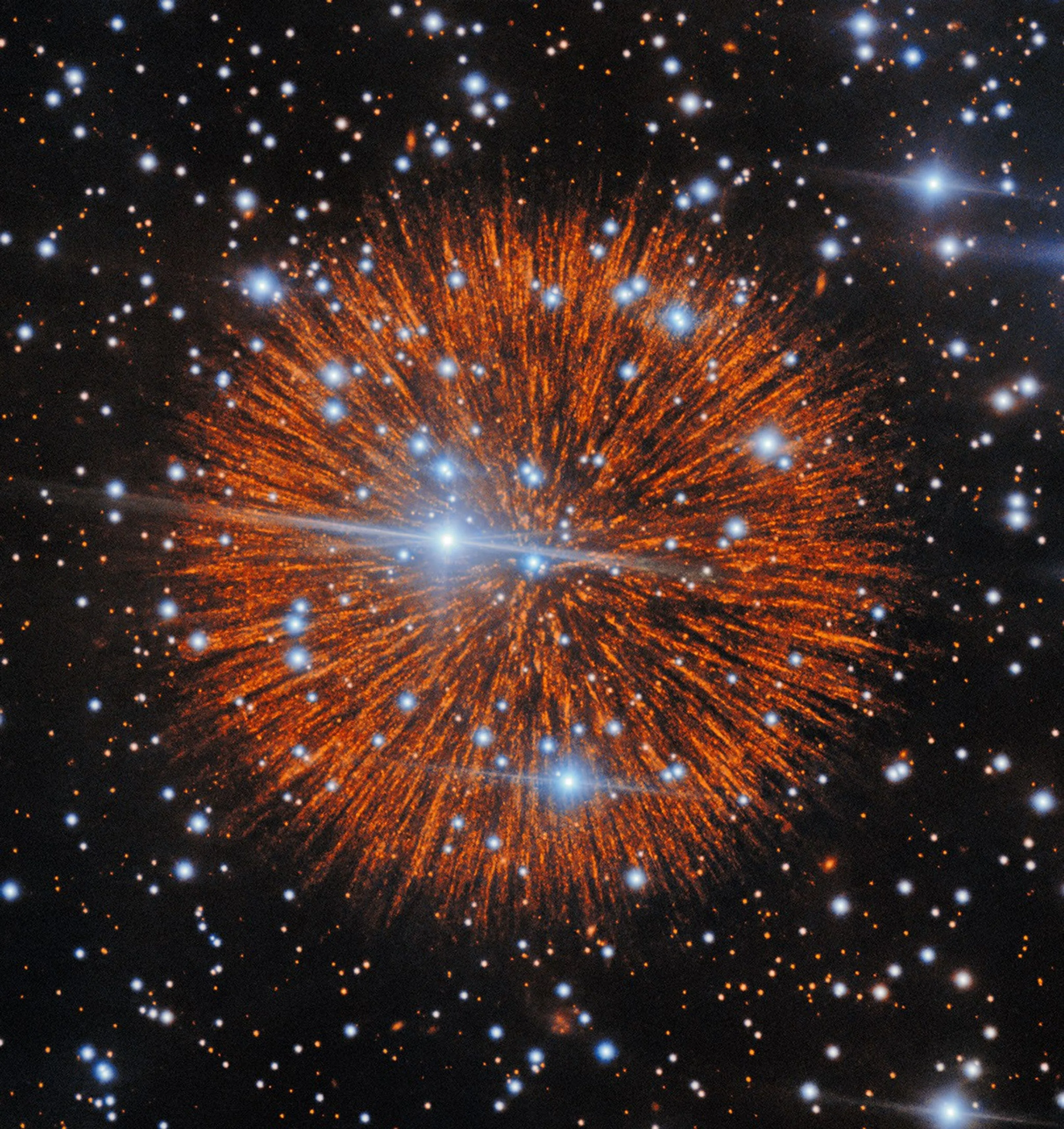
这张新图像不仅令人惊叹——它还可能提供关于这颗恒星如何在自身爆炸中幸存的线索。Pa 30 是人类首次在公元1181年目睹的超新星残骸。
The new image isn’t just stunning—it may also provide clues about how this star survived its own explosion. Pa 30 is the remnant of a supernova that humans first witnessed in 1181.
国际双子座天文台/NOIRLab/NSF/AURA 天文学家们获得了迄今为止对 Pa 30 星云——这颗超新星的残骸——最详细的图像,这颗超新星因可能在中世纪被地球上的观察者目睹并记录而闻名。如今,这张新照片揭示了长期未被注意到的结构。
International Gemini Observatory/NOIRLab/NSF/AURA Astronomers have obtained the most detailed image to date of the Pa 30 nebula, the remnants of a supernova famous for having likely been observed and documented from Earth during the Middle Ages. Now, the new photograph reveals structures that had long gone unnoticed.
通过双子座多目标光谱仪获得的这张图像显示,残骸的喷射物——具有无可辨认的烟火般形状——形成了一种类似结节的瀑布状结构。
This image, obtained with the Gemini Multi-Object Spectrograph, shows that the ejecta from the remnant—with its unmistakable fireworks-like shape—form a cascading structure resembling a knot.