当“停火”于去年10月10日宣布时,我们就知道需要修复的事情有多少。长久以来,我们第一次觉得可能有喘息的空间去做这些事。
When the “ceasefire” was announced on October 10 last year, we knew how much needed repairing. For the first time in a long while, we thought we might have the breathing space to do it.
我们以为药品和设备能够更规律地到达。医院和诊所可以开始恢复。患者可以离开加沙接受治疗。海外的紧急医疗队可以来支援加沙精疲力竭的医护人员。我们终于可以超越下一场危机,规划如何在未来几个月和几年里照顾人们。然而,这一切都没有发生。
We thought medicines and equipment could arrive more regularly. Hospitals and clinics could begin to be restored. Patients could leave Gaza for treatment. Emergency medical teams could come from overseas to support Gaza’s exhausted health workers. We could finally look beyond the next crisis and plan how to care for people over the coming months and years. None of that happened.
在种族灭绝的第三年,我们几乎没有时间喘息。我们被要求做远超加沙被毁健康系统所能承受的事情,而医疗用品和设备的正常运输仍然受限,医疗撤离也停滞不前。
Three years into the genocide, there is barely a moment to catch our breath. We’re being asked to do far more than Gaza’s devastated health system can sustain, while regular deliveries of medical supplies and equipment are still restricted and medical evacuations stalled.
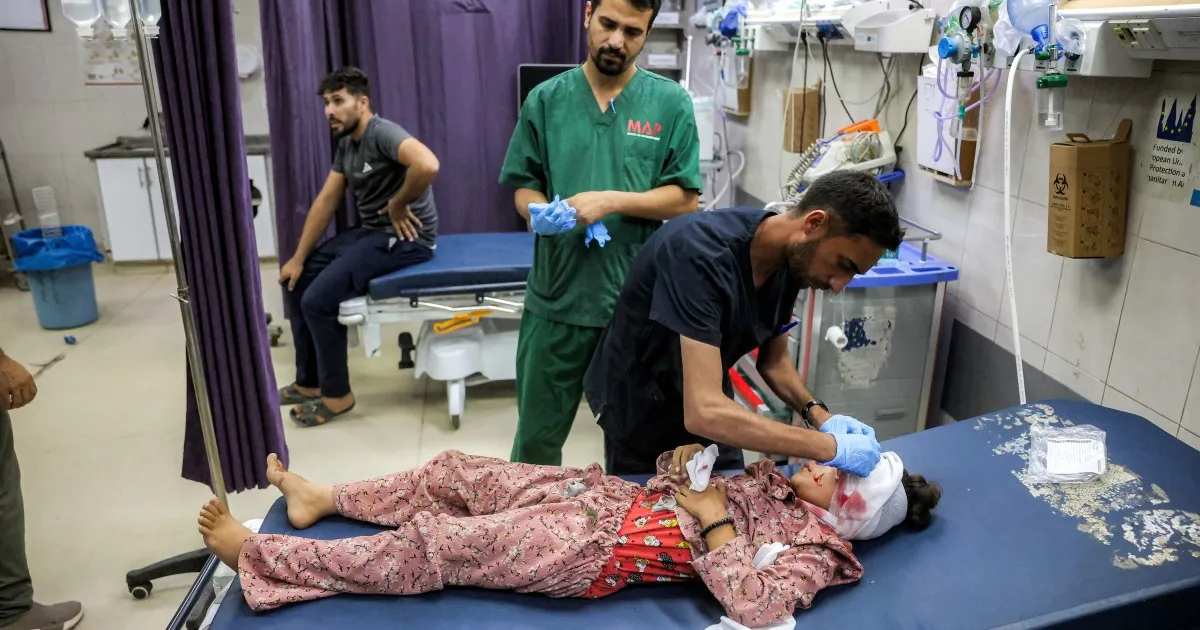
人们仍因以色列的轰炸继续而带着创伤性伤害来到我们的诊所。自“停火”开始以来,已有超过1470人被杀害。甚至到达一个医疗中心现在都可能让患者处于危险之中。随着安全局势恶化,巴勒斯坦医疗援助(MAP)支持的服务在加沙部分地区被迫暂停。上个月,一名65岁的患者在贾巴利雅一个MAP支持的医疗中心寻求治疗时,被以色列军方的四旋翼无人机击中身亡。
People are still arriving at our clinics with traumatic injuries because Israel’s bombardment continues. More than 1,470 people have been killed since the “ceasefire” started. Even reaching a health centre can now put patients at risk. As the security situation has deteriorated, services supported by Medical Aid for Palestinians (MAP) have had to be suspended in parts of Gaza. Last month, a 65-year-old patient was killed by Israeli military quadcopter fire while seeking treatment at a MAP-supported health centre in Jabalia.
在治疗新到的带有新伤的患者时,我们也在努力照顾那些可能需要数月或数年治疗的患者。
While treating new arrivals with new injuries, we are trying to look after patients whose treatment may take months or years.
失去肢体的人需要康复、假肢和更多手术,但以色列当局严重限制所需物资的供应。曾经历急性营养不良的儿童如今患有贫血和发育迟缓,需要治疗;而糖尿病和高血压患者则难以获得药物。癌症患者得不到所需的放射治疗,肾衰竭患者也无法依赖定期透析。
Those who have lost limbs need rehabilitation, prosthetics and more surgery, but Israeli authorities heavily restrict the needed supplies. Children who survived acute malnutrition now live with anaemia and stunting, which need treatment, while people with diabetes and high blood pressure struggle to get their medicines. Cancer patients can’t get the radiotherapy they need, and people with kidney failure can’t count on regular dialysis.
上个月,我在加沙的MAP的一位同事失去了她的姑姑伊克蒂玛尔。二月份,伊克蒂玛尔感觉身体不适,于是做了活检,但和加沙许多实验室一样,她所在的实验室没有足够的物资及时检测样本。她过了一个多月才得知自己患有宫颈癌——这种癌症若能早期发现通常是可以治愈的。
Last month, a colleague of mine at MAP in Gaza lost her aunt, Iktimal. In February, Iktimal sensed something was wrong and had a biopsy, but the lab, like so many across Gaza, didn’t have the supplies to test the sample on time. It was more than a month before she learned she had cervical cancer, a disease that is usually curable when found early.
她在四月接受了手术,但恢复过程缓慢且痛苦,随后她出现了肾脏并发症,需要在加沙无法获得的专科治疗。她的家人申请了医疗撤离,但流程缓慢、不明确且官僚主义严重。等到以色列当局批准时,她的病情已经危急。她前往埃及,希望终于能得到所需的治疗,但两周后她不幸去世。
She had surgery in April, but her recovery was slow and painful, and she went on to develop kidney complications that needed specialist treatment unavailable in Gaza. Her family applied for a medical evacuation, but the process was slow, unclear, and bureaucratic. By the time Israeli authorities approved it, her condition was critical. She travelled to Egypt hoping she would finally get the care she needed, but two weeks later, she died.
伊克蒂玛尔的案例并非个例。根据世界卫生组织的数据,目前仍有超过15,000名加沙人在等待医疗撤离;如果延误时间过长,许多患者可能会死于可预防的疾病。
Iktimal’s case is not unique. According to the World Health Organization, more than 15,000 people in Gaza are still waiting for medical evacuation; if delayed too long, many of these patients could be lost to a preventable death.
一个月前,我们又遇到了另一起悲剧:一名患有严重心脏疾病的新生儿在MAP支持的阿萨哈巴医疗中心去世。该婴儿需要紧急手术,但加沙没有这项医疗能力。医生知道该怎么做,但无法实施。
We had another tragic case a month ago: A newborn with a serious heart condition died at Assahaba Medical Complex, a hospital MAP supports. The baby needed emergency surgery that isn’t available in Gaza. The doctors knew what was needed but had no way to provide it.
有时我们难以提供治疗,因为即使基本医疗用品也在短缺。医院同样缺乏静脉输液、麻醉药品和手术用品。甚至氧气也供应不足。
Sometimes we struggle to provide treatment because even basic medical supplies are running short. Hospitals are also short on IV fluids, anaesthetics and surgical supplies. Even oxygen is in short supply.
许多医院的工作人员不得不搬运氧气瓶到中心站进行重新充装。全加沙地区,超过500名患者依赖氧气供应,其中一些人需要全天候使用:包括癌症患者、肺纤维化患者、心脏病患者,以及重症监护室中的婴儿和儿童。
Staff in many hospitals have to carry cylinders to a central station for refilling. Across Gaza, more than 500 patients rely on oxygen, some of them around the clock: People with cancer, pulmonary fibrosis and heart conditions, and babies and children in intensive care.
八月,巴勒斯坦卫生部警告称,加沙34个氧气站中有22个已停止运作,而用于给氧气瓶充装的30台机器中,只有4台仍在运行。
In August, the Palestinian Ministry of Health warned that 22 of Gaza’s 34 oxygen stations had stopped working, and only four of 30 machines used to fill oxygen cylinders were still running.
仍在运作的车站也可能很快失效。以色列当局继续阻挡修复它们所需的备件,将其归类为“双用途”物品。出于类似原因,加沙没有一台正常运作的MRI机器,只有一到两台CT扫描仪为约两百万人提供服务。
The stations that still function could fail soon. Israeli authorities continue to block the spare parts needed to repair them, classifying them as “dual-use” items. For similar reasons, Gaza has no working MRI machine, and only one or two CT scanners serve about two million people.
医生有时只能在没有他们通常依赖的扫描、检测或药物的情况下做出决定。
Doctors are sometimes left to make decisions without the scans, tests or medicines they would normally rely on.
本来可以早期发现的癌症变得更难治疗。本来可以通过康复治愈的伤害可能成为永久性残疾。本来需要适当食物和治疗的孩子可能被留下慢性营养不良、发育迟缓以及可能伴随一生的发展困难。
A cancer that could have been caught early becomes harder to treat. An injury that could have healed with rehabilitation becomes a permanent disability. A child who needed proper food and treatment can be left with chronic malnutrition, stunting and developmental difficulties that may last a lifetime.
他们被告知“停火”将为加沙人民提供时间来愈合和重建。事实并非如此。阻碍伊克蒂玛尔获得诊断、治疗和疏散的限制仍然存在,而她的故事只是过去一年里加沙成千上万人经历的一个缩影。
re told the “ceasefire” would give people in Gaza time to heal and rebuild. It hasn’t. The restrictions that stood between Iktimal and her diagnosis, her treatment and her evacuation are still in place, and her story is one of thousands across Gaza in the past year.
每一次延迟都有代价。每周药物被扣留,一次扫描无法进行,一名患者被拒绝离境,某人的病情可能已过了可以治疗的临界点。
Every delay has a cost. Every week a medicine is held back, a scan can’t be done, a patient is refused exit, someone’s condition passes the point where it can be treated.
伊克蒂玛尔已经耗尽了时间。如今,加沙还有成千上万的人也在耗尽时间。
Iktimal ran out of time. Right now, thousands of people in Gaza are running out of time, too.