
由Jorgelina do Rosario撰写 通常情况下,当贫困国家陷入债务泥潭时,国际货币基金组织(IMF)才会被召集行动。但本周,IMF将面临来自世界上最富裕国家的日益严峻的问题迹象。
By Jorgelina do Rosario Typically called into action when poor countries get mired in debt, the International Monetary Fund will be confronted this week with mounting signs of trouble in the wealthiest ones.
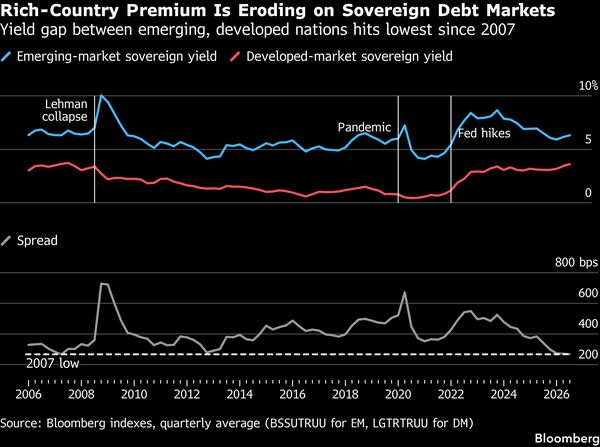
美国、欧洲和日本的政府借贷成本因美国对伊朗的战争推动通胀上升而飙升至数十年来的最高水平。这意味着他们必须付出更多来偿还历史规模最大的债务——而这又迫使他们借更多的钱。这有可能演变成一个恶性循环。
Governments in America, Europe and Japan have seen their borrowing costs soar to multi-decade highs as the US war on Iran drives inflation up. That means they have to shell out more to service historically large debts – which in turn pushes them to borrow even more. It threatens to become a vicious circle.
所有这些为即将在曼谷举行的国际货币基金组织和世界银行年会营造了一个颠倒的背景。财政部长和央行行长将从周一开始在此聚会。
All of this makes for an upside-down backdrop to the annual meetings of the IMF and World Bank in Bangkok, where finance ministers and central bank chiefs will gather starting Monday.
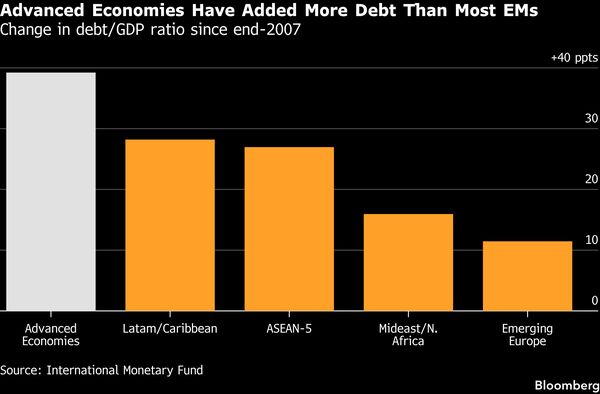
东道国泰国曾是一次重大新兴市场危机的震中。直到最近,东道机构一直专注于较弱经济体在后疫情时代的挣扎。而现在,焦点转向了源于发达世界的问题——根据IMF总裁克里斯塔利娜·格奥尔基耶娃的说法,这些国家是“债务问题上的最大罪魁祸首”——但这些问题可能不会止步于此。
The host nation was once ground zero for a major emerging-market crisis. The host institutions were preoccupied until lately with the post-Covid struggles of weaker economies. Now the focus is on problems that stem from the developed world — the “worst offenders” on the debt front, according to IMF chief Kristalina Georgieva — but might not stay confined there.
当全球金融核心(如美国国债市场)的借贷成本上升时,通常会对全球其他地区的消费者、企业和政府产生连锁影响。当美联储或日本银行因每桶100美元的油价而加息时,正如他们一直在做的那样,这会对新兴市场同行施加压力,迫使它们也跟进加息,否则可能面临资本外流。
When borrowing costs rise at the core of global finance, like the US Treasuries market, there’s usually a knock-on impact for consumers, businesses and governments everywhere else. When the Federal Reserve or the Bank of Japan hike interest rates, as they’ve been doing in the face of $100-a-barrel oil, there’s pressure on their emerging-market peers to follow suit or risk capital flight.
格奥尔吉耶娃表示,债务和能源 — — 以及正在推动某些经济体快速增长但使大多数国家被甩在后面的人工智能热潮 — — 是本周议程的重点。在伊朗战争初期,她一直在强调世界的韧性,但最近能源价格上涨、通胀和利率上升的组合让她显得有些焦虑。她上个月曾表示:“在正常时期,这不会是一个巨大的问题。”但她补充道:“但这些并非正常时期,因为我们看到发达经济体的债务水平已达到历史最高水平。”
Georgieva says debt and energy — along with an AI boom that’s turbocharging some economies but bypassing most — are top of this week’s agenda. Earlier in the Iran war she was emphasizing the world’s resilience, but lately the combo of rising energy prices, inflation and interest rates has gotten her sounding rattled. “In normal times, that would not be a giant problem,” she said last month. “But these are not normal times, because we have debt levels in advanced economies at historic highs.”
更糟的是,IMF总裁警告称,那些必须支付更高利息账单的政府将难以负担其他事务,比如帮助公民应对高昂的生活成本。“我们应该做好准备,让人们更加不满意,”她总结道。“也许会走上街头。”即使在最新一轮债券抛售之前,富裕国家的政府每年就已在支付超过3.3万亿美元的利息 — — 超过了全球在国防或人工智能上的支出 — — 这是国际金融协会(Institute of International Finance)报告的数据。该机构还指出,这与过去“陷入债务困境”的新兴市场存在类似之处。
What’s more, the IMF chief warned, governments that have to pay bigger interest bills will struggle to afford other things, like helping their citizens with the high cost of living. “We should prepare for people being more unhappy,” she concluded. “Maybe on the street.”Even before the latest leg of the bond selloff, rich-world governments were paying over $3.3 trillion in annual interest — more than global spending on defense or AI — the Institute of International Finance reported. It noted a parallel with “debt-distressed” emerging markets of the past.
这些账单是全球金融危机之后廉价货币时代所借入的数万亿债务的遗产,以及如今更高的再融资成本所导致的结果。上个月,七国集团国家10年期公共债务的平均收益率首次自2008年以来达到4.3%。
Those bills are a legacy of trillions borrowed in the cheap-money era that followed the Global Financial Crisis, and the now-higher cost of refinancing. Last month the average yield for 10-year public debt in Group of Seven countries hit 4.3% for the first time since 2008.
汇丰控股有限公司首席亚洲经济学家弗雷德里克·诺伊曼表示,正在发挥作用的是一种“脆弱的循环” — — 债务服务成本的上升促使投资者进一步推高利率。IMF多年来一直在警告债务风险上升以及削减预算赤字的必要性。对于接受其融资计划并挂钩改革的新兴国家而言,IMF的表态就像法律一样具有约束力。但正如前美国IMF代表道格·雷迪克所指出的,在不是借款国的国家,“这种杠杆作用是有限的”。
There’s a “precarious loop” at work, says Frederic Neumann, chief Asia economist at HSBC Holdings Plc, with “the rise in debt-service costs leading investors to push up interest rates further still.”The IMF has been warning for years about mounting debt risks and the need to trim budget deficits. Its word is like law for emerging nations on the hook for its financing programs tied to reforms. But in countries that aren’t borrowers, “that leverage is limited,” says Doug Rediker, a former US representative at the IMF.
IMF的监督机构的一份报告指出,仅约15%的针对美国、德国、法国和英国等发达经济体的财政建议被完全或基本实施。
A report from IMF’s watchdog noted that only some 15% of fiscal recommendations to advanced economies such as the US, Germany, France and the UK were fully or largely implemented.
一些经济学家并不认同这些国家正濒临债务危机的说法,也不认为它们的预算和债券是全球最紧迫的问题。
Some economists don’t buy the notion that such countries are on the brink of a debt crisis, or that their budgets and bonds are the world’s most pressing problem.
“债务偿付成本上升,意味着赤字会略有增加 — — 但那又怎样?”TS Lombard的董事总经理达里奥·珀金斯说道。他表示,宽松的预算并不是导致收益率上升的真正原因 — — “在我看来,这不过是一个简单的石油/货币政策故事” — — 并且当能源价格稳定时,通胀应该会回落。
“Debt servicing costs rise, which means deficits are a bit bigger — but so what?” says Dario Perkins, managing director at TS Lombard. Loose budgets aren’t really what’s driving yields up, he says — “to me, it’s a simple oil/monetary policy story” — and inflation should come back down when energy prices stabilize.
至于新兴市场,其韧性的提升部分源于过去危机中吸取的痛苦教训 — — 比如始于曼谷近30年前的那场危机。
As for emerging markets, their improved resilience is partly down to bitter lessons learned during past crises – like the one that began in Bangkok almost 30 years ago.
泰国在为捍卫货币挂钩而耗尽外汇储备后,被迫在1997年让铢浮动。问题迅速蔓延至马来西亚、印尼和韩国。IMF匆忙提供了巨额贷款,当时这些贷款附带的紧缩条件比现在通常要严格得多。此后,各国政府收紧了预算和银行规则,并积累了金融缓冲。
After burning through reserves to defend a currency peg, Thailand was forced to float the baht in 1997. The trouble rapidly spread to Malaysia, Indonesia and South Korea. The IMF scrambled to offer jumbo loans, which back then came with tougher austerity strings attached than they generally do today. Since then governments have tightened budgets and banking rules, and built up financial buffers.
彭博经济学表示:“过去几年,一些新兴市场国家已经做好了准备,在此次市场动荡中,其经济状况优于以往。经常账户赤字减小、外汇储备覆盖率提高,降低了它们求助IMF融资的必要性。” — — 阿德里亚娜·杜皮塔,新兴市场副首席经济学家。点击此处查看完整报告。一些亚洲领导人毫不掩饰地将责任指向那些未表现出类似审慎态度的发达国家。
What Bloomberg Economics Says“Several emerging markets have done their homework in the past years, and arrive at this episode of market turbulence in better economic shape than in the previous ones. Smaller current-account deficits and wider reserve coverage reduce the need to run to the IMF for money.” — Adriana Dupita, deputy chief emerging markets economist. Click here for full report Some Asian leaders aren’t shy of pointing the finger at developed countries that haven’t shown similar prudence.
现在,世界上面临最大财政挑战的“系统重要性经济体”,新加坡总统萨曼达·尚穆加拉特南在上周的峰会前活动中对格奥尔基耶娃表示:“IMF无法拯救它们。”但他补充说,IMF“相当尖锐的建议必须被认真对待。”当然,其他地区收益率的上升确实对新兴市场产生了一些影响——这导致投资者减少了一些风险较高的新兴市场债券投资,泰国等国也在考虑更短期的债务发行——但影响有限。
It’s now the “systemically important economies of the world facing the largest fiscal challenges,” Singapore’s President Tharman Shanmugaratnam told Georgieva at a pre-summit event last week. “The IMF won’t be able to rescue them,” he said, but its “fairly hard-hitting advice has to be taken seriously.”To be sure, there’s been some emerging-market impact from the jump in yields elsewhere — it’s led investors to dial back some riskier emerging-market bond bets, and countries like Thailand to eye shorter-term debt sales — but it’s been limited.
世界银行行长阿杰·班加告诉彭博社,目前因财政紧张而向多边银行借款的国家更倾向于调整现有的与项目挂钩的贷款条款,而不是寻求新贷款。
Cash-strapped countries that borrow from the multilateral banks have so far been more inclined to adjust existing project-linked loan deals than seek new ones, World Bank President Ajay Banga told Bloomberg.
如果财政和金融风险已经向富裕国家转移,那么格奥尔基耶娃所警告的政治风险也可能出现同样的趋势。
If fiscal and financial risks have shifted toward richer countries, the same may be true of the political ones that Georgieva was warning about.
经济压力常常伴随民众不安,就像在1990年代末亚洲危机期间那样。智库Verisk Maplecroft的吉梅纳·布兰科表示,如今这类风险在发达国家增长最快。
Civil unrest has often accompanied economic pressure, as it did in Asia during the late-1990s crisis. Jimena Blanco at intelligence company Verisk Maplecroft says it’s in developed nations that those kind of risks are now rising fastest.
在她所在公司的民众不安指数中,欧洲在过去几年里恶化程度最大,而美国和加拿大紧随其后。法国本月学生抗议活动已升级为全国性规模,超过26.5万人走上街头,要求拨款解决教师短缺和设施恶化问题。
In her firm’s index for civil unrest, Europe recorded the biggest deterioration over the past couple of years, with the US and Canada not far behind. France has seen student protests escalate nationwide this month, with more than 265,000 demonstrators calling for funds to address teacher shortages and deteriorating facilities.
与此同时,“通胀和债务偿还正在对国家提出更高要求,”布兰科说。“人民正在两方面承受压力。”
Meanwhile, “inflation and debt repayment demand more from the state,” Blanco says. “Populations are being squeezed on both fronts.”