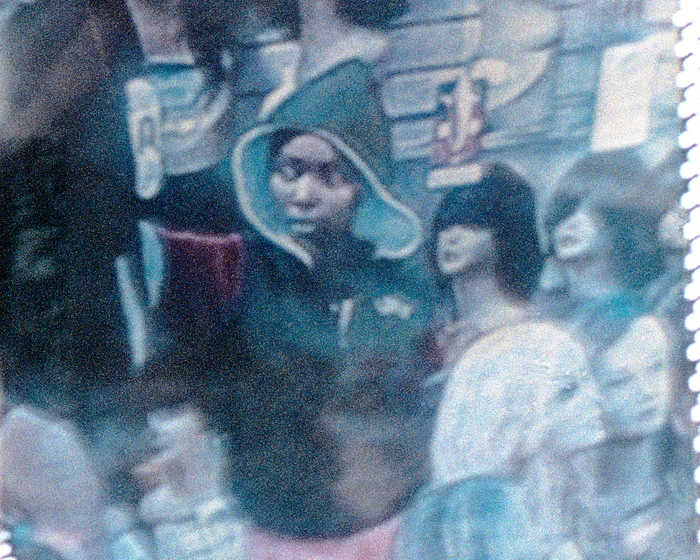
艺术家迪娜·劳森(Deana Lawson)在纽约高古轩画廊的展览中,利用美容用品店的监控图像来分析权力和人格。作家兼哲学家贝尔·胡克斯(bell hooks)在她的文章《对立的凝视:黑人女性观众》中解释说,自奴隶制时代以来,黑人与“观看”行为之间的关系一直充满创伤。许多黑人至今仍受到源于奴隶制时期的持续监视,历史上他们因回望压迫者而受到严厉惩罚,甚至被私刑处死。
Artist Deana Lawson uses beauty supply store surveillance images to analyze power and personhood in her exhibition at the Gagosian in New York City In her essay The Oppositional Gaze: Black Female Spectators, writer and philosopher bell hooks explains that the relationship between Black people and the act of “looking” has been traumatic since slavery. Black people, many of whom are still subject to the constant surveillance that originated during enslavement, have historically been punished with severe consequences, such as lynching, for looking back at those who subjugate them.
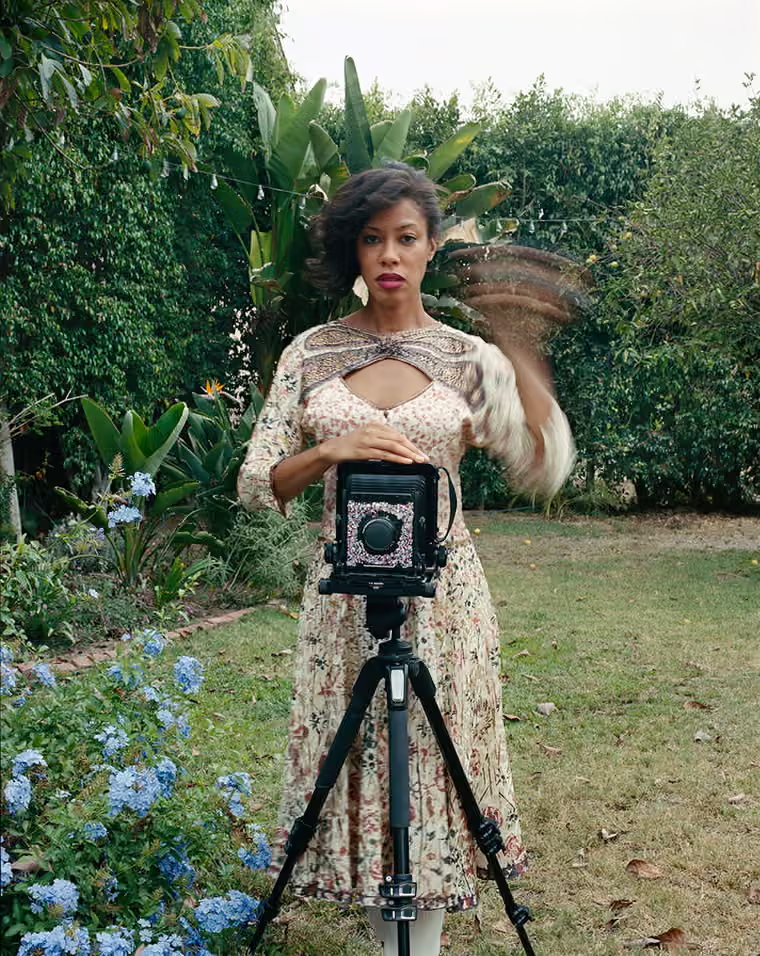
尽管存在这些风险,胡克斯写道,他们通过秘密观察白人及其周围环境进行反抗,拒绝将白人的凝视作为现实的唯一框架。正如贝尔·胡克斯所写,我们可以“审视他者的凝视,也可以回望,并审视彼此,为我们所见的事物命名”。
Despite these risks, hooks writes, they rebelled by secretly looking at white people, as well as their surroundings, rejecting the white gaze as the singular framework of reality. We can, as bell hooks writes, “interrogate the gaze of the Other but also look back, and at one another, naming what we see”.
当我参观艺术家迪娜·劳森在纽约高古轩画廊举办的最新摄影展《边缘控制》(Edge Control)时,我想到了这一分析。“边缘控制”指的是用于平滑黑人女性发际线边缘的凝胶和润发油,但在劳森的展览中,这个词有了额外的含义。它既是黑人护发爱好者的造型产品,也是审视美容行业、消费主义以及监视与种族如何交织的工具。《边缘控制》将在纽约高古轩画廊展出至10月24日。
I thought of this analysis when I visited Edge Control, artist Deana Lawson’s latest photography exhibition at the Gagosian gallery in New York City. Edge control refers to the gels and pomades that slick the hairs along the edges of a Black woman’s hairline, but in Lawson’s exhibit, the phrase takes on an additional meaning. It’s at once a styling product for Black haircare devotees as well as a tool to examine the beauty industry, consumerism and how surveillance and race intersect. Edge Control is on view at the Gagosian in New York City until 24 October