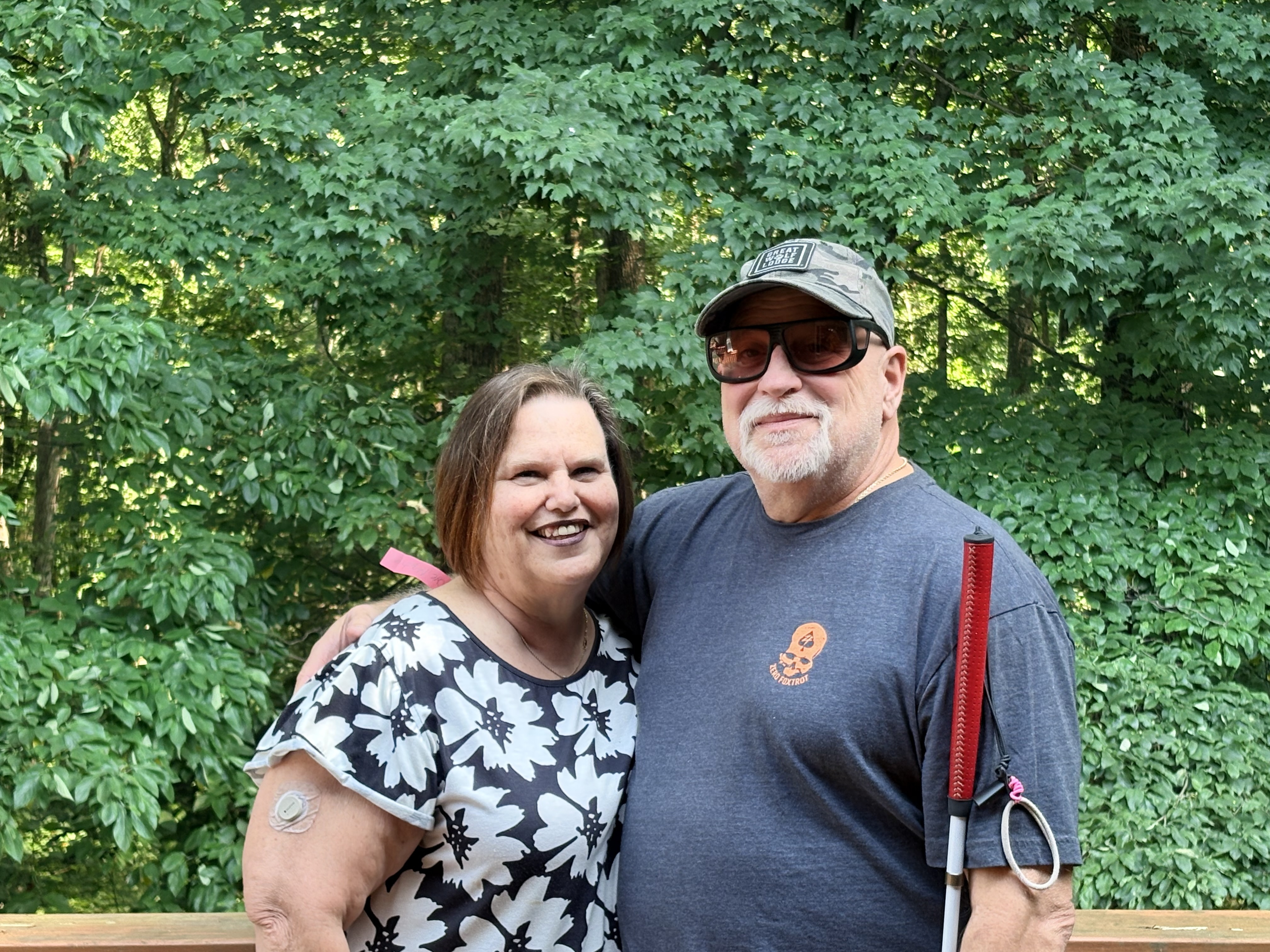
托德·恩格尔在马里兰州郊区的仓库和高速公路上操作叉车、橡胶轮胎装载机等重型机械已有四十年。
Todd Engel had operated heavy machinery, like forklifts and rubber-tire loaders, around warehouses and highways in suburban Maryland for four decades.
2023年初,恩格尔的医生为其糖尿病开出了奥西美克(Ozempic),这是一种GLP-1药物。那年冬天,在除夕夜,恩格尔醒来时感觉右眼好像被一块布遮住了:“我看不见任何东西。一切都是黑的。”医生告诉恩格尔和他的妻子雪莉,这是一种称为视神经病变的疾病——简称NAION——由微小的中风导致眼部血流中断引起的不可逆转的病症。当医生列出所有已知病因时,雪莉·恩格尔特别询问了奥西美克的关系。“‘我们对此一无所知,’”她回忆医生当时这样告诉她。
In early 2023, Engel's doctor put him on Ozempic, a GLP-1, for diabetes. That winter, on New Year's Eve, Engel woke up feeling as if a patch covered his right eye: "I couldn't see anything. It was all dark. It was black." The doctor told Engel and his wife Shelley it was a form of optic neuropathy — NAION, for short – an inoperable condition caused by tiny strokes that cut off blood flow to his eye. When the doctor listed all known causes, Shelley Engel specifically asked about Ozempic. "'We have heard nothing about that,'" she recalls the doctor telling her.
七个月后,《JAMA眼科学》期刊发表了研究,显示服用奥西美克(其活性成分名为司美格鲁肽)的糖尿病患者NAION发病率更高。但恩格尔和他的医生当时都不知情,因此恩格尔继续每周注射,直到他的左眼也变黑了,就像前一年他的右眼那样。
Seven months later, the journal JAMA Ophthalmology did publish research showing higher rates of NAION among diabetic patients taking Ozempic, or semaglutide, as the active ingredient name is known. But neither Engel nor his doctor were aware, so Engel kept taking weekly shots until his left eye went black, just as the other had done the year prior.
根据最近的盖洛普分析,超过十分之一的美国人正在服用GLP-1药物进行减肥,而七分之一的人曾在某个时间点服用过这些药物。这些药物被用于越来越多的病症,并伴随着各种副作用。
More than one in 10 Americans are taking a GLP-1 drug for weight loss, according to a recent Gallup analysis, and one in seven has taken them at some point. The drugs are prescribed for a growing number of conditions and come with a range of side effects.
恩格尔已对奥西美克的制造商诺和诺德提起诉讼,指控其未能警告患者和医生NAION的风险。
Engel has filed a lawsuit alleging the maker of Ozempic, Novo Nordisk, failed to warn patients and doctors about the risk of NAION.
他的诉讼是两项主要正在进行的合并诉讼之一,这些诉讼指控GLP-1类药物造成危及生命或改变生命的伤害。
His suit is part of two main ongoing consolidated lawsuits alleging life-threatening or life-altering harm from GLP-1 drugs.
在接受NPR采访时,诺和诺德的发言人指出,后续研究对其GLP-1药物是否导致NAION提出了质疑,例如,并表示这些案件缺乏依据。
In a statement to NPR, spokespeople for Novo Nordisk pointed to subsequent research casting doubt on whether their GLP-1 drug causes NAION, for example, and said the cases are without merit.
法律问题在于法院审理的案件部分取决于GLP-1药物是否导致了伤害。观察性数据可以显示相关性——即服用GLP-1药物的人可能更容易出现这种眼部并发症——但不能证明因果关系。要确认因果关系,需要更详细的调查。
The legal question before the courts hinges in part on whether the GLP-1 drugs caused the harm. Observational data can show correlation — that people taking GLP-1s were perhaps more likely to have this eye complication occur — but not causation. For that, more detailed investigation is needed.
当《JAMA眼科》研究发表,显示NAION与使用奥西美普或司美格鲁肽的糖尿病患者之间存在相关性时,两个医学团体对其提出了批评。美国眼科学会和北美神经眼科学会发布了他们自己的消费者澄清声明,其中部分内容表示:“这种类型的研究无法证明治疗导致了NAION。”这些团体确实承认存在潜在关联,但认为需要进一步研究来确定这一点。目前,他们不建议患者停止使用GLP-1药物。
When the JAMA Ophthalmology study came out showing the correlation between NAION and diabetic patients on Ozempic or semaglutide, two medical groups critiqued it. The American Academy of Ophthalmology and the North American Neuro-Ophthalmology Society issued their own consumer clarification saying, in part: "This is not the type of study that can show the treatment caused NAION." The groups did acknowledge there is a potential link, but further research would be necessary to determine that. For now, they don't recommend that patients stop taking their GLP-1s.
部分数据库 食品药品监督管理局维护一个追踪不良事件的数据库。这是医生、患者和药企报告可能与药物相关的并发症的少数机制之一。报告主要是自愿提交的,且该机构不对报告进行核实,但它是促使监管机构开展进一步研究并最终决定(例如是否需要更新药品说明书)的关键第一步。
A partial database The Food and Drug Administration keeps a database tracking adverse events. It's one of the only mechanisms for doctors, patients and drug companies to submit reports of complications possibly linked to pharmaceuticals. Reporting is mostly voluntary and the agency does not verify the reports, but it is a crucial first step to prompt regulators to do further research and eventually decide, for example, if labels need updating.
在此数据库中,NPR发现自2024年以来,与GLP-1药物相关的视神经病变报告超过1000例。这发生在近19万例关于该药物的报告中,其中大多数报告涉及轻微的胃肠道问题、剂量错误或注射部位发红。
In this database, NPR found more than 1,000 reports of optic neuropathy linked to GLP-1s since 2024. That's out of nearly 190,000 reports made about the drug over that period, most of which included minor gastrointestinal issues, dosing errors or injection site redness.
诺和诺德(Ozempic和Wegovy的制造商)的发言人表示,NAION和其他严重疾病在临床试验中极为罕见。该公司继续收集并向FDA提供自药物上市以来报告的副作用数据,但该机构尚未要求更改警告标签。FDA在给NPR的电子邮件中表示,已开展自身研究以评估NAION风险,正在评估相关主张,并将在评估完成后“确定是否需要采取监管行动”。
Spokespeople for Novo Nordisk — maker of Ozempic and Wegovy — say NAION and other serious conditions are exceedingly rare in clinical trials. The company continues to collect and share data with the FDA about the side effects reported with the drug since going to market, but the agency has not requested warning-label changes. The FDA said in an email to NPR it has undertaken its own study to assess NAION risks, and is assessing claims and will "determine the need for regulatory action" once its assessment is complete.
法律挑战:这对今天的患者来说还不够,律师Jonathan Orent如是说。他是两起主要多地区诉讼案件的首席法院指定律师,这些诉讼指控GLP-1类药物造成伤害。他表示,即使这些疾病罕见,药企也应像在欧洲那样更新对医生和患者的警告。
The legal challenge That is not sufficient for patients today, says attorney Jonathan Orent, a lead court-appointed attorney on the two major multi-district litigation lawsuits alleging harms from GLP-1 drugs. He says drug makers ought to update warnings to doctors and patients — as they have in Europe — even if the conditions are rare.
奥伦特(Orent)认为这是必要的,因为“在临床试验中,你永远无法拥有足够大的样本量来检测那些罕见事件;同时,你也无法模拟现实世界中人群的多样性。”
It's necessary, Orent says, because "you're never going to have the population size to detect rarer events in a clinical trial; you're also never going to have the diversity of your real world population."
他提到的病例包括247名患有NAION(一种眼部疾病)的患者,以及4000多名患有其他严重消化系统疾病(如胰腺炎或胆结石)的患者。他强调:“这些警告本可以改变这些患者的命运。”
Orent's cases include 247 plaintiffs with NAION, and more than 4,000 with other serious digestive conditions like pancreatitis or gall stones. "These warnings would have made a difference in the lives of real people," he argues. In an emailed statement, Eli Lilly, whose GLP-1 drug brands Mounjaro and Zepbound contain the active ingredient tirzepatide said it will "vigorously defend against these claims."
礼来公司(Eli Lilly)在一份电子邮件声明中表示,其GLP-1类药物Mounjaro和Zepbound含有活性成分tirzepatide,公司将“坚决反驳这些指控”。
NPR's analysis of the FDA's adverse events data show 1,928 reports of pancreatitis since 2024. (Other forms of pancreatitis are also listed, including 135 cases of necrotizing pancreatitis.) Engel says he would've stopped taking Ozempic had he known that it might have put him at risk for blindness. Now, he mourns all he's lost, including the ability to work or walk the beach unaided. "Being able to play ball … with my grandchildren, I can't do these things anymore," he says. "I will never, never be able to see my wife's beautiful face every day." Uncertainty in reporting Obesity and diabetes are complex metabolic diseases that affect many organs, and increase risks for other ailments. That's part of what makes it hard to pinpoint whether problems that patients encounter on GLP-1 drugs are caused by the drugs themselves.
美国国家公共电台(NPR)对FDA不良事件数据的分析显示,自2024年以来共收到了1,928例胰腺炎的报告(其中还包括135例坏死性胰腺炎)。恩格尔(Engel)表示,如果早知道服用Ozempic可能会让自己面临失明的风险,他就会立即停止服用该药物;如今,他为自己失去的一切感到悲痛——包括工作能力以及独自在海滩上散步的能力。“我再也不能和孙子们一起玩耍了……我也再也无法每天看到妻子美丽的面容了。”
That's part of why Emory University diabetes specialist Mohammed Ali, for example, did not report any of the three patients he's treated who developed serious problems, like pancreatitis or gallstones, while taking GLP-1s, to the FDA's adverse events database.
肥胖和糖尿病属于复杂的代谢性疾病,会影响多个器官,并增加患其他疾病的风险;这也使得很难确定患者在使用GLP-1类药物后出现的问题是否确实由这些药物本身引起。
He says he wasn't certain those problems were caused by the drugs themselves, even if the timing was suspicious.
例如,埃默里大学(Emory University)的糖尿病专家穆罕默德·阿里(Mohammed Ali)就没有将他治疗的那些在使用GLP-1类药物后出现严重问题(如胰腺炎或胆结石)的患者报告给FDA的不良反应数据库。他表示,即使这些问题的发生时间非常可疑,他也不确定这些问题是否真的由这些药物引起。
"They may have had subclinical disease," Ali says. "In other words, we didn't know they had preexisting pancreatitis or preexisting gallstones." Calls to poison control The boom in online sales, where GLP-1s are heavily marketed, also adds to the challenge, says pharmacist Robert Miller at the West Texas Poison Control Center.
他们可能患有亚临床疾病,"阿里说。换句话说,我们不知道他们是否患有既往胰腺炎或既往胆结石。"致电毒物控制中心,网上销售的激增,其中GLP-1药物被大力推广,也增加了挑战,西得克萨斯毒物控制中心的药剂师罗伯特·米勒说。
Buying drugs on Instagram? "That's definitely a new thing," Miller says, and many sites offer little to no medical supervision of patients. That's why, he says, more calls are coming into poison-control centers like his, with patients reporting vomiting or other GLP-1 side effects.
在Instagram上购买药物?"这绝对是一件新鲜事,"米勒说,而且许多网站对患者几乎没有或根本没有医疗监督。这就是为什么,他说,越来越多的电话正打进像他这样的毒物控制中心,患者报告呕吐或其他GLP-1药物的副作用。"那么,是否真的有医生有动力报告副作用,或者患者觉得可以向其报告副作用的人?"他说。
"So is there even a physician who's motivated to report side effects or someone the patient feels they can report those side effects to?" he says.
这些问题目前正在法庭上展开,像恩格尔这样的原告正在寻求对药厂的赔偿。
These questions are playing out now in court, where plaintiffs like the Engels are seeking damages from drugmakers.
但谢莉·恩格尔也希望能有更多的副作用警告,她说这本来可以帮助她的丈夫避免失明。她说,她丈夫原本外向、活泼的性格已经改变了"如果我们早知道的话,这一切本来可以避免,"她说。
But Shelley Engel also wants more side-effect warnings, which she says might've helped her husband avoid blindness. She says her husband's outgoing, vivacious personality has changed "This could have been prevented, if we only knew," she says.