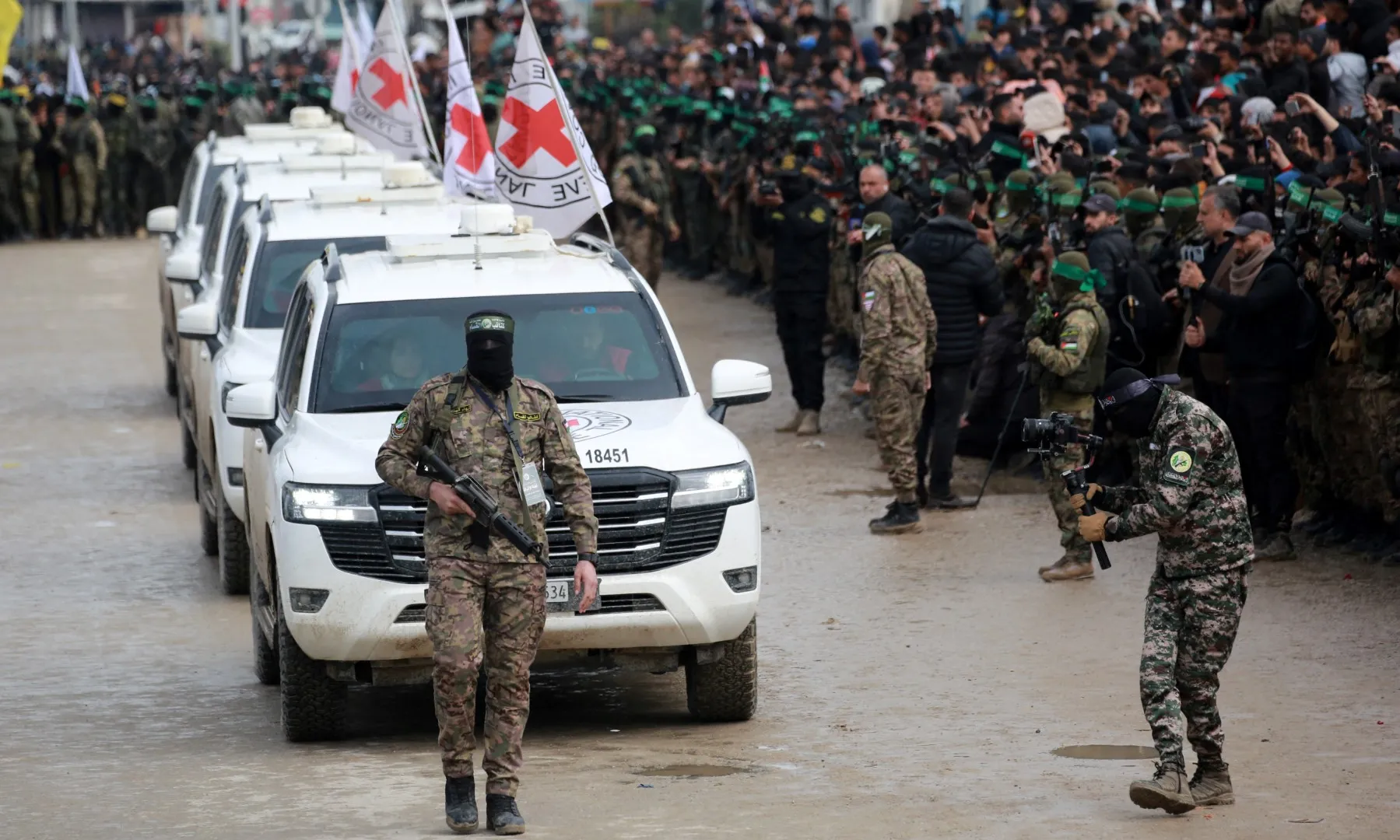
随着加沙战争进入第四年,这场战争几乎摧毁了整个加沙地带,要求哈马斯放弃行政权力并撤离该地区的呼声日益高涨。有人认为,要让加沙拥有任何可行的未来,哈马斯的政治和军事机构必须被拆除。
As we begin the fourth year of a war that has brought the near-total destruction of Gaza, calls for Hamas to surrender administrative authority and evacuate the Strip are intensifying. For Gaza to have any viable future, it is argued, the group’s political and military wings must be dismantled.
虽然哈马斯的命运是一个关键问题,但如果不首先解决导致其产生的根本原因,就无法规划出一条有意义的复苏之路。
While Hamas’s fate is a critical question, charting a meaningful path towards recovery is impossible without addressing the realities that gave rise to it in the first place.
今天在加沙发生的事情直接与巴以问题的起源相关,而这与任何特定武装团体关系不大。
What is happening today in Gaza is directly related to the origins of the Palestinian-Israeli question, which has little to do with any particular armed group.
1948年,哈马斯尚未存在,当时数百个巴勒斯坦村庄——包括纳杰和胡杰——在纳克巴期间被清空和毁灭,纳克巴是伴随以色列国建立而发生的巴勒斯坦灾难,为建立斯德罗特、奥尔哈内尔以及建在这些村庄废墟上的众多其他以色列城市和村庄铺平了道路。
Hamas did not exist in 1948, when hundreds of Palestinian villages, including Naj and Huj, were depopulated and destroyed during the Nakba – the Palestinian catastrophe that accompanied the creation of the State of Israel – to make way for the establishment of Sderot, Or HaNer and numerous other Israeli cities and villages built upon their ruins.
1967年,哈马斯仍未成立,当时爆发了阿以战争,以色列发动了对加沙地带和约旦河西岸的军事占领,同时夺取并单方面吞并了东耶路撒冷——这些行动积极为更广泛的以色列定居项目奠定了基础。
The group had not yet been established in 1967, when the Arab-Israeli War took place and Israel initiated its military occupation of the Gaza Strip and the West Bank, while simultaneously seizing and unilaterally annexing East Jerusalem—actions that actively set the stage for the broader Israeli settlement project.
在随后的几十年里,占领深刻影响了巴勒斯坦社会。与此同时,宗教影响力日益增长——当地清真寺的数量从1967年的200座增加到1987年的600座——以及世俗民族主义领导力量的衰退留下的真空,共同为信仰型民族主义派别的崛起铺平了道路。1987年第一次 intifada(起义)的爆发是一个政治转折点,直接导致了哈马斯的成立。
In the following decades, the occupation profoundly affected Palestinian society. That, combined with growing religious influence—as the number of local mosques tripled from 200 to 600 between 1967 and 1987 — and a vacuum left behind by a fading secular nationalist leadership, prepared the ground for the rise of faith-based nationalist factions. The outbreak of the First Intifada in 1987 was a political turning point that directly triggered the creation of Hamas.
该组织由一群巴勒斯坦男子建立,其中包括三位重要人物。易卜拉欣·亚兹里,出生于今天阿什杜德附近的拜特达拉斯,当时他只有八岁,哈加纳士兵杀害了他的家人,并将幸存者驱逐至加沙城南部的汗尤尼斯。
The group was established by a group of Palestinian men, including three prominent figures. Ibrahim al-Yazouri, was born in Bait Daras, near today’s Ashdod, and was just eight years old when soldiers of the Haganah killed members of his family and expelled the survivors to Khan Younis, south of Gaza City.
另一位创始人阿卜杜勒阿齐兹·兰蒂西出生于亚夫纳——一个靠近雅法的村庄,如今其废墟位于以色列城市亚夫内之下。他当时只有1岁,以色列军队将他的家人驱逐至汗尤尼斯。
Another founder, Abdulaziz al-Rantisi, was born in Yibna—a village near Jaffa whose ruins now sit beneath the Israeli city of Yavne. He was only a year old when Israeli forces expelled his family to Khan Younis.
最后,艾哈迈德·亚辛出生于朱拉村,该村靠近阿什凯隆,被以色列军队夷为平地。当时他12岁,他和家人被迫逃离家园,定居在加沙海岸的阿尔-沙蒂难民营。
Lastly, Ahmed Yassin, was born in al-Jura, a village near Ashkelon that was razed to the ground by the Israeli military. He was 12 years old, when he and his family had to flee their home and settle in al-Shati refugee camp on the Gaza coast.
强调这段历史不应被误解为试图淡化哈马斯的责任。然而,该组织的行为无法脱离历史背景以及以色列国在此过程中所扮演的角色。
Highlighting this history should not be misunderstood as an attempt to downplay Hamas’s responsibilities. However, the group’s actions cannot be separated from the historical context and the role the State of Israel has played throughout this process.
与近年来出现的自称ISIL(ISIS)及其他缺乏深厚地方根基、依赖过时意识形态的团体不同,巴勒斯坦派系与当地社会和民族认同紧密交织。
Unlike the self-proclaimed ISIL (ISIS) and other groups that have emerged in recent years—which lack deep roots in local societies and rely on obsolete ideologies—Palestinian factions are deeply intertwined with local society and national identity.
尽管哈马斯的发展轨迹伴随着若干灾难性决策——最 notably 的是其在2023年10月7日发动对以色列袭击的致命决定——但该组织首先是一个世纪苦难、压迫以及为自决权不懈斗争的症状。
While Hamas’s trajectory is marked by several disastrous decisions—most notably its fatal decision to launch the assault on Israel on October 7, 2023—the group remains, above all, a symptom of a century of suffering, oppression and a relentless struggle for self-determination.
任何针对加沙战争的提出方案——无论是否包含哈马斯——若未触及这些根本性现实,注定会失败。必须强调的是,西方普遍倾向于将巴勒斯坦人民的自决权视为“对哈马斯的奖励”,这种观点存在严重缺陷。它源于一种必须不被正常化的系统性偏见。
Any proposed solution – with or without Hamas – to the war in Gaza that fails to address these underlying realities is bound to fail. It must be emphasised here that the widespread tendency in the West to frame the Palestinian people’s right to self-determination as a “reward for Hamas” is deeply flawed. It stems from a systemic prejudice that must not be normalised.
该权利早在哈马斯发动袭击之前就已被写入国际法,并得到绝大多数国家的支持。
The right was enshrined in international law and supported by an overwhelming majority of nations long before Hamas’s attack.
将哈马斯的行为等同于巴勒斯坦人民的意志也是一种错误。如今,加沙地带近50%的人口年龄在18岁以下;当哈马斯在2006年赢得选举时,加沙目前超过一半的居民甚至还未出生。
It is also a mistake to equate Hamas’s actions with the will of the Palestinian people. Today, nearly 50 percent of the population of the Gaza Strip is under the age of 18; when Hamas won the elections in 2006, more than half of Gaza’s current residents had not even been born.
此外,在2023年9月下旬至10月初进行的阿拉伯民意调查(Arab Barometer)中,约旦河西岸和加沙地带的受访者中,只有29%的加沙受访者表示他们信任由哈马斯领导的政府。多数人将贫困归因于内部因素;31%的人直接指出哈马斯当局应对当前局面负责。
Furthermore, in an Arab Barometer survey conducted in the West Bank and Gaza between late September and early October 2023, only 29 percent of Gaza respondents said they trusted the Hamas-led government. The majority blamed poverty on internal factors; 31 percent directly pointed to the Hamas authorities as being responsible for the situation.
关键的是,多数受访者(54%)支持以两国方案解决冲突;73%的人倾向于和平解决。只有20%的人支持军事行动。
Crucially, a majority (54 percent) supported a two-state solution to the conflict; 73 percent favoured a peaceful resolution. Just 20 percent favoured military action.
哈马斯在加沙的存在不能成为对加沙地带进行全面毁灭以及对平民犯下罪行的借口,这些行为导致以色列官员面临战争罪和反人类罪的指控。2023年11月,当以色列军队在迫使照护人员撤离并阻止其返回后,将新生儿留在孵化器中任其死亡时,哈马斯并未出现在纳斯尔医院(al-Nasr Hospital)。2024年1月,当以色列军队向载有巴勒斯坦少女欣德·拉贾布(Hind Rajab)的汽车开火335枪时,哈马斯也不在车内。
The presence of Hamas in Gaza cannot justify the Strip’s wholesale destruction and the crimes committed against civilians that have resulted in Israeli officials facing accusations of war crimes and crimes against humanity. Hamas was not present at al-Nasr Hospital in November 2023, when the Israeli army left newborns to die in incubators after forcing their caregivers to evacuate and prevented their return. Hamas was not in the car with Hind Rajab, the young Palestinian girl, when Israeli forces fired 335 bullets into it in January 2024.
具有讽刺意味的是,而且也不足为奇,以色列总理本雅明·内塔尼亚胡长期将哈马斯视为有用之棋,以维持“不存在温和的巴勒斯坦谈判伙伴”这一论点。
Ironically and unsurprisingly, Hamas has long been viewed as useful by Israeli Prime Minister Benjamin Netanyahu to maintain the argument that there are no moderate Palestinian partners with whom to negotiate.
这一策略与2017年的“征服计划”(Subjugation Plan)高度一致——该计划官方名称是“以色列的决定性计划”(Israel’s Decisive Plan),由以色列极右翼政治人物贝扎莱尔·斯莫特里奇(Bezalel Smotrich)于2017年提出,该框架明确主张无视巴勒斯坦人的民族愿望。
This strategy aligns closely with the 2017 Subjugation Plan—officially titled “Israel’s Decisive Plan”—a political and ideological framework presented by Israeli far-right politician Bezalel Smotrich in 2017, which explicitly advocated for disregarding Palestinian national aspirations.
拒绝解决结构性根源的做法使当代外交格局陷入僵局。以色列拒绝与巴勒斯坦对话者进行对话的态度,与以色列将军莫舍·达扬历来所阐述的务实现实主义形成鲜明对比,他曾著名地指出,和平的实现需要与敌人而非朋友进行谈判。
This refusal to address the structural roots has frozen the contemporary diplomatic landscape. The Israeli unwillingness to engage in dialogue with Palestinian interlocutors contrasts sharply with the pragmatic realism historically articulated by Israeli General Moshe Dayan, who famously observed that peacemaking requires negotiating with enemies rather than friends.
当今的外交格局被一种期望上的深度失衡所定义。多年来,巴勒斯坦派系面临着严格且不可协商的前提条件,以获得国际政治合法性——例如明确承认以色列、放弃暴力并遵守过去的协议。
Today’s diplomatic landscape is defined by a deep imbalance in expectations. For many years, Palestinian factions have faced strict, non-negotiable prerequisites to attain international political legitimacy—such as the explicit recognition of Israel, the renunciation of violence and adherence to past accords.
相反,以色列当局从未面临任何等价的要求,他们无需承认一个主权的巴勒斯坦国、遵守过去的条约或放弃暴力。
Conversely, no reciprocal demands have been placed on Israeli authorities, who face no requirement to recognise a sovereign Palestinian state, honour previous treaties, or renounce violence.
事实上,以色列自身的政治演变与曾使用政治暴力的派系紧密交织。例如由梅纳赫姆·贝京领导的伊尔贡(Irgun)和由伊扎克·沙米尔领导的莱希(Lehi)等准军事组织,曾实施针对平民的行动,但两位领导人最终都转入主流政治并成为总理。
In fact, Israel’s own political evolution is intertwined with factions that utilised political violence. Paramilitary organisations such as the Irgun, led by Menachem Begin, and the Lehi, led by Yitzhak Shamir, conducted operations that targeted civilians, yet both leaders eventually transitioned into mainstream politics and became prime ministers.
这种权力失衡直接体现在最近的停火谈判中,这些谈判因以色列要求哈马斯完全解除武装而陷入僵局。通过将该组织军事能力的彻底消除作为永久停火的前提条件,以色列领导层设定了一个政治门槛,实际上堵死了谈判解决的可能。
This power imbalance directly manifests as a diplomatic asymmetry also in recent ceasefire negotiations, which remain deadlocked by Israel’s demand for the complete disarmament of Hamas. By establishing the eradication of the group’s military capabilities as a precondition for a permanent truce, Israel’s leadership sets a political threshold that effectively forecloses a negotiated settlement.
这使得以色列政府能够延续一种现状,从中获得显著的战略、领土和政治红利。
This allows the Israeli government to perpetuate a status quo that yields significant strategic, territorial and political dividends.
最终,消除哈马斯不会消除巴勒斯坦人对自由的需求,也不会满足以色列和巴勒斯坦正当的安全权利。冲突并非始于武装派别的崛起,也永远不会结束,直到所有相关方最终认识到,正如秘鲁土著法学家狄奥尼西奥·印卡·尤潘基两个世纪前所警告的:“压迫他国的民族最终将锻造自己的枷锁”。
Ultimately, doing away with Hamas will not do away with the Palestinian demand for freedom, nor will it satisfy Israel’s and Palestine’s legitimate right to security. The conflict did not begin with the rise of a militant faction and it will never end until all involved parties finally realise that, as Peruvian Indigenous jurist Dionisio Inca Yupanqui warned two centuries ago, “a nation that oppresses another ultimately forges its own chains”.