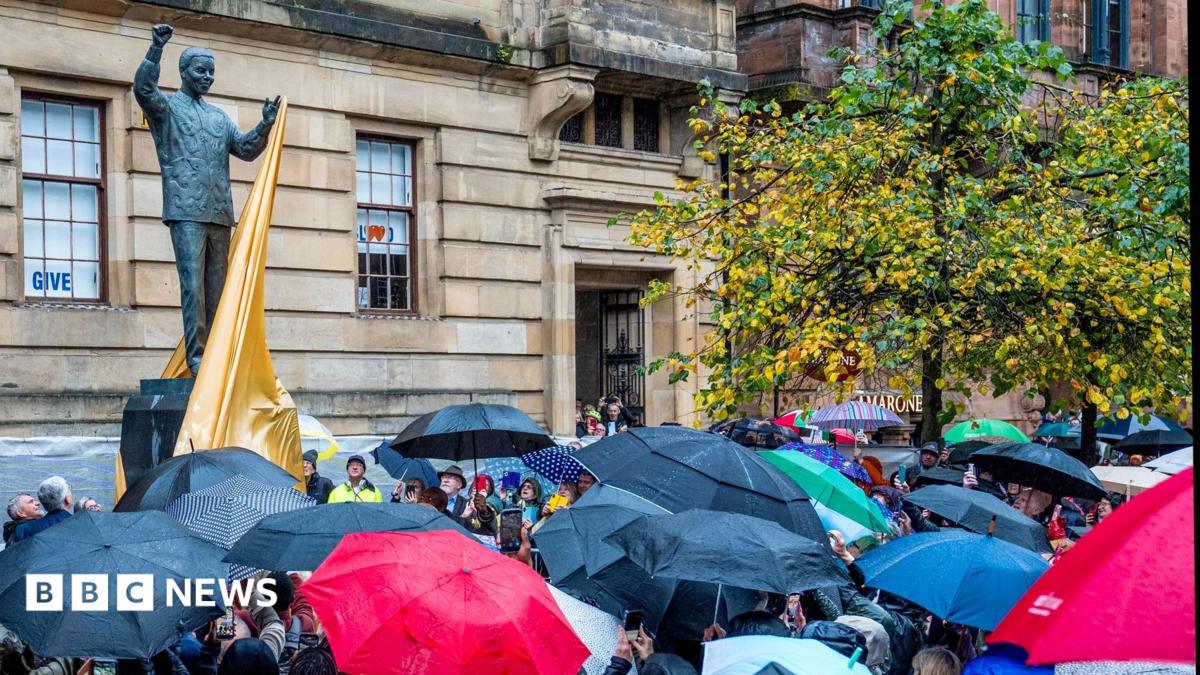
一座新的纳尔逊·曼德拉雕像在格拉斯哥揭幕,以庆祝这位前南非总统与这座城市的联系。
A new statue of Nelson Mandela has been unveiled in Glasgow, celebrating the former South African President's links to the city.
这座由雕塑家艾伦·B·赫里奥特创作的雕像将矗立在格拉斯哥的纳尔逊·曼德拉广场,去年从入围名单中被选出。
The statue from sculptor Alan B Herriot will stand in the city's Nelson Mandela Place, having been chosen from a shortlist last year.
格拉斯哥是世界上第一个在1981年授予曼德拉自由荣誉的城市,当时他仍被关押在南非的监狱中。
Glasgow was the first city in the world to award its freedom to Mandela in 1981, at a time when he was still in prison in South Africa.
这位反种族隔离斗争的领袖后来于1993年访问了格拉斯哥——在他获释三年后。
The leader of the country's anti-apartheid struggle later visited Glasgow in 1993 - three years after he was released from jail.
纳尔逊·曼德拉苏格兰纪念基金会主席布莱恩·菲林表示,揭幕仪式是“格拉斯哥为与数千英里外的斗争结缘所引以为豪的历史上的又一天”。菲林自20世纪60年代起就一直反对种族隔离——这一制度允许南非的白人少数派压迫黑人多数派。
Brian Filling, the chair of the Nelson Mandela Scottish Memorial Foundation, said the unveiling was "another great day in Glasgow's proud history of association with a struggle thousands of miles away." Filling campaigned from the 1960s onward against apartheid - the system in South Africa which allowed the white minority to oppress the majority black inhabitants.
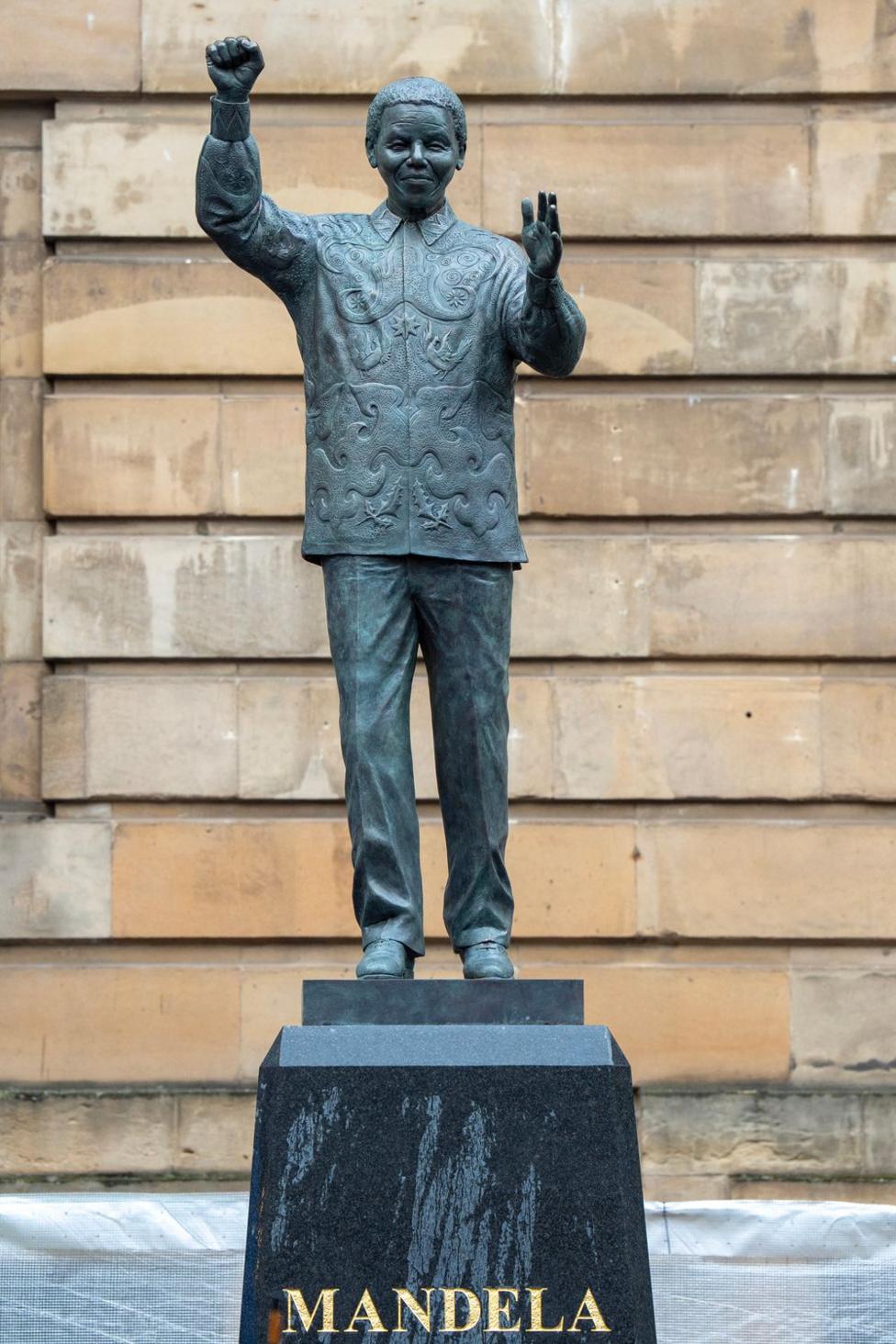
他补充道:“这座雕像将作为格拉斯哥、苏格兰和英国人民对南非人民在其长期而正义的斗争中的团结的见证和认可,并将成为持续教育人们关于反对种族主义、争取正义与平等斗争的焦点。”迈克尔·凯利博士是格拉斯哥从1980年至1984年的市长(Lord Provost),并在1981年决定授予曼德拉城市自由荣誉的过程中发挥了重要作用。
He added: "The statue will stand as a testament and recognition of the people of Glasgow, Scotland and Britain's solidarity with the South African people in their long and just struggle and it will provide a focus for ongoing education around the continuing struggle against racism and for justice and equality." Dr Michael Kelly was Glasgow's Lord Provost from 1980 to 1984 and was heavily involved in the decision to give Mandela the freedom of the city in 1981.
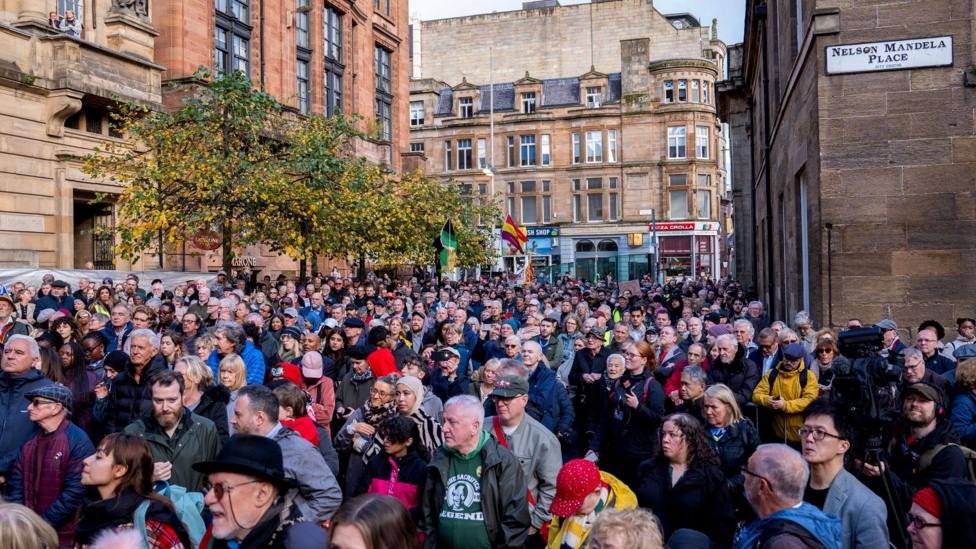
他对BBC苏格兰广播早间节目表示:“这是对曼德拉及其艰巨斗争的持久提醒——仅仅因为想要一票投票,他就遭受了23年的苦役劳动——也提醒了格拉斯哥人民在全球自由曼德拉运动中的贡献。”揭幕仪式上还出席了南非歌手玛拉·卢,她曾在1993年曼德拉访问格拉斯哥期间在乔治广场演唱。
He told the BBC's Radio Scotland Breakfast programme "This is a lasting reminder of Mandela, and of his tremendous struggle - 23 years of hard labour simply for wanting a vote - and also of the contribution of the people of Glasgow to the worldwide campaign [to free Mandela]." In attendance for the statue being revealed was Marah Louw, the South African singer who sang in George Square when Mandela visited the city in 1993.
此次访问中,曼德拉在乔治广场向约1万人发表了演讲,并正式接受了城市自由荣誉的授予。
The visit saw him speak to a crowd of about 10,000 people in George Square and formally receive the honour of the freedom of the city.
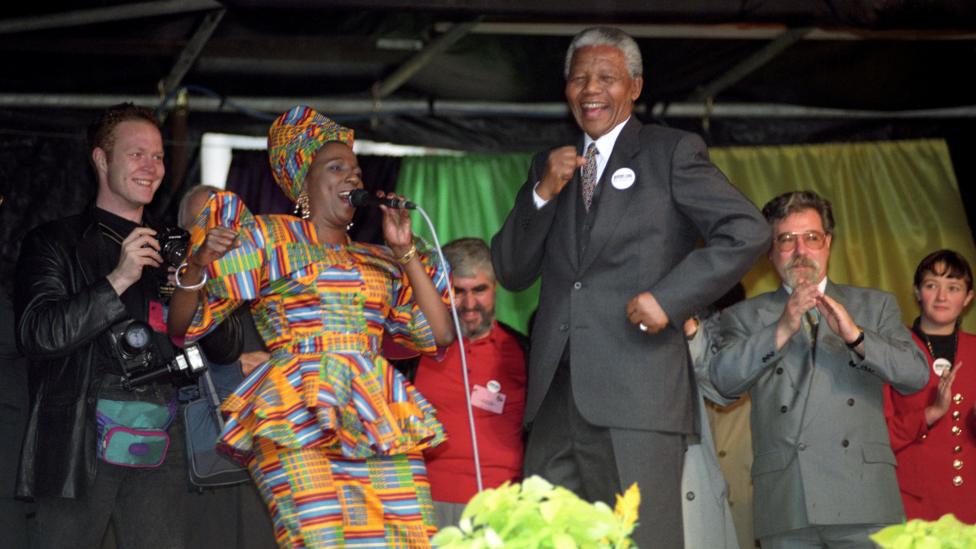
此次访问发生在他于1990年出狱三年后,此前他因被控策划实施破坏和游击战以实现暴力革命等罪名而被监禁超过27年。审判受到联合国安理会及全球各国的谴责。晚年他成为南非总统,并于2013年12月去世,享年95岁。
The visit came three years after he was released from jail in 1990, following over 27 years imprisoned having been convicted of charges that included conspiring to commit acts of sabotage and guerrilla warfare for the purpose of violent revolution. The trial was condemned by the United Nations Security Council and nations around the world. In later life he became the president of South Africa and died, aged 95, in December 2013.
在1960年代和1970年代,英国许多人对南非的种族隔离政权持欢迎态度。
Throughout the 1960s and 1970s, many in Britain were happy to deal with the apartheid regime in South Africa.
1979年,时任格拉斯哥市长(Lord Provost)的大卫·霍奇在该市与南非大使共进午餐——这一决定在市政厅引发了愤怒的抗议。
In 1979 the then Lord Provost of Glasgow, David Hodge, hosted lunch with the South African ambassador in the city - a decision that sparked furious protests at the City Chambers.
凯利博士是工党中希望为此弥补过错的人之一,这促成了授予曼德拉格拉斯哥自由城勋章的决定。该决定当时既获得赞誉也招致批评。
Dr Kelly was among those in the Labour party who wanted to make amends for this, resulting in the decision to give Mandela the freedom of the city. It resulted in both praise and criticism for the council at the time.
凯利博士回忆道:“反应非常复杂,媒体对此非常敌对,格拉斯哥人也奇怪我们为何干涉外交事务。”
Dr Kelly recalled: "There was a very mixed reaction, the press was very hostile to it and the Glaswegians wondered why we were interfering in foreign affairs.
“从1981年开始,我们开展了一场教育运动,向格拉斯哥人宣传曼德拉、他的斗争以及 apartheid 制度的可怕。”随后其他城市也效仿了格拉斯哥的做法。
"There was a campaign of education from 1981 to inform Glaswegians about Mandela, about his struggle and about the ghastly system of apartheid." Soon other cities had followed Glasgow's lead.
一年内,凯利发起了一项关于释放曼德拉的宣言,获得了来自56个国家的2500位市长的支持。
Within a year Kelly launched a declaration for the release of Mandela that gained support from 2,500 mayors from 56 countries around the world.
该宣言得到了联合国纽约总部的支持,凯利博士代表格拉斯哥市受邀首次就该请愿书发表支持性演讲。格拉斯哥对曼德拉的支持并未止步于此,也不局限于请愿和抗议。
The declaration got the backing of the United Nations in New York and Dr Kelly, on behalf of the city of Glasgow, was invited to speak first in support of the petition. Glasgow's support for Mandela did not end there, nor was it limited to petitions and protests.
1986年,市中心圣乔治广场(St George's Place)更名为纳尔逊·曼德拉广场(Nelson Mandela Place)。
In 1986, the name of St George's Place in the city centre was changed to Nelson Mandela Place.
名称变更是因为南非总领事馆设在该地股票交易所大楼的五楼——这意味着它必须设在一个以该国最著名政治犯命名的地址上。
The name change was because the South African consulate-general was based on the fifth floor of the Stock Exchange building there - meaning it had to be based at an address which bore the name of the country's most famous political prisoner.
凯利博士说:“这确实激怒了南非政府,而这正是目的之一。它还引发了全球关注。”以制裁南非政权形式出现的国际压力最终导致曼德拉在1990年2月11日,71岁高龄时获释。三年后,他得以亲自访问格拉斯哥,并在市政厅发表演讲。
Dr Kelly said: "It really irritated the South African government, and that was part of the point. It also created worldwide publicity." International pressure, in the form of sanctions against the South African regime, eventually led to Mandela's release from prison at the age of 71, on 11 February 1990. Three years later he was able to visit Glasgow in person, where he spoke at the City Chambers.
当时他说:“虽然我们在出生的国家被剥夺了身体自由,但相距6000英里之外、同样享有盛誉的格拉斯哥拒绝承认种族隔离制度的合法性,并宣告我们自由。”曼德拉访问格拉斯哥期间,凯利博士问他是否知道外界为争取他自由而开展的运动。
At the time he said: "While we were physically denied our freedom in the country of our birth, a city 6,000 miles away, and as renowned as Glasgow, refused to accept the legitimacy of the apartheid system, and declared us to be free." While Mandela was in Glasgow, Dr Kelly asked him if he had been aware of the campaigns in the outside world demanding his freedom.
“他告诉我,南非当局试图封锁所有消息,让他们相信世界已经抛弃了他们。
"He said to me that the South African authorities tried to to keep all news from him, to make them think the world had abandoned them.
但他们有非正式的消息渠道,这些信息确实传了过来。他说‘我们确实知道,这让我们在斗争中更加坚定。’‘我觉得这非常令人欣慰,格拉斯哥人民也应该知道这一点。’”
"But they had a grapevine, and these kinds of information did come through. He said 'we did know, and it heartened us to carry on with our struggle.' "I found that deeply satisfying, and the people of Glasgow should know that."