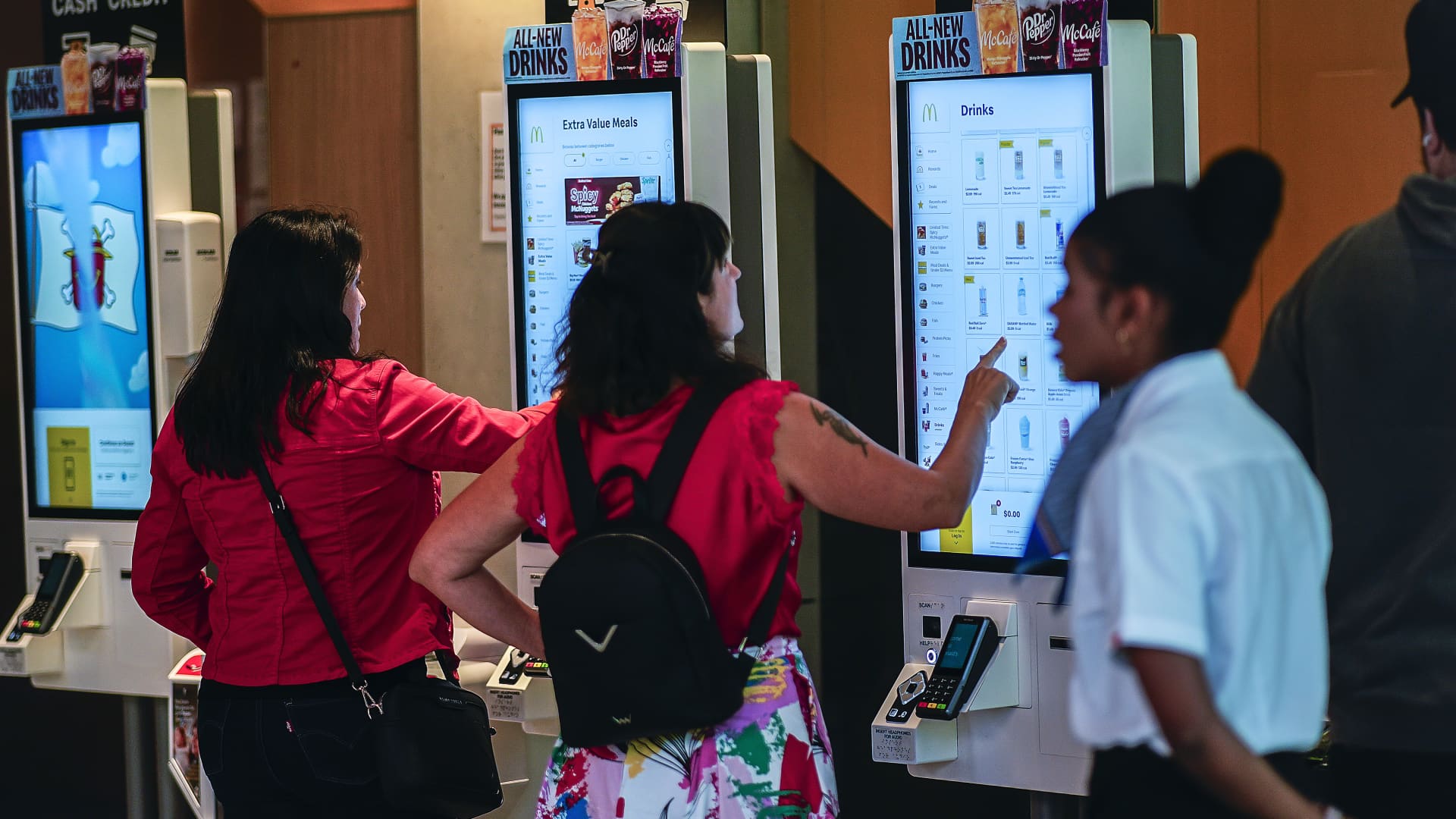
快餐巨头和超市正在推出一系列可能影响购物者支付价格的AI工具,但专家警告称,数据驱动工具的普及可能使个性化定价更易于部署。
Fast-food giants and supermarkets are rolling out a range of AI tools that could affect the prices shoppers pay, but experts warn the spread of data-driven tools could make personalized pricing easier to deploy.
就在本周,针对麦当劳的联邦反垄断诉讼指控,这家快餐巨头使用AI驱动的“定价引擎”来设定美国各地门店的菜单价格,并对顾客的巨无霸和薯条进行过度收费。
Just this week, a federal antitrust lawsuit filed against McDonald's alleged the fast food giant uses an AI-powered "pricing engine" to set menu prices across U.S. locations and overcharge customers for Big Macs and fries.
麦当劳否认其使用AI来确定个别顾客愿意支付的金额,并表示其向加盟商提供“工具、资源、研究和建议,以帮助他们做出明智决策。”尽管如此,全球食品企业正日益通过AI数字化运营。今年早些时候,美国连锁超市克罗格表示,其正在使用名为FlashFood的AI平台,对临近保质期的易腐商品进行降价,并通过应用程序向购物者进行营销。
McDonald's has denied that it's using AI to determine what individual customers are willing to pay and said it provides its franchisees with "tools, resources, research and recommendations to help them make informed decisions." Even so, food businesses globally are increasingly digitizing operations with AI. Earlier this year, American grocery chain Kroger said it's using an AI platform called FlashFood to mark down perishables nearing the end of their shelf life and marketing them to shoppers via an app.
与此同时,电子货架标签(ESLs)——在商店的数字屏幕上显示商品价格的设备——正在克罗格、亚马逊Fresh、沃尔玛和全食超市等超市中日益普及。
Meanwhile, electronic shelf labels (ESLs), which display the price of items in store on digital screens, are becoming increasingly popular at supermarkets like Kroger, Amazon Fresh, Walmart, and Whole Foods.
该技术也在英国超市如特易购、莫里森斯和阿斯达中获得关注。最近,全球金融平台瑞银(Revolut)在部分咖啡店试点了面部识别结账功能,允许顾客仅凭一瞥即可完成支付。
The technology is also gaining traction among U.K. supermarkets such as Tesco, Morrisons, and Asda. More recently, global financial platform Revolut trialed facial recognition checkout in select coffee shops, allowing customers to pay with just a glance.
CNBC已联系亚马逊Fresh、全食超市、特易购、莫里森斯、阿斯达和瑞银(Revolut)就AI使用情况征求评论,但目前尚未收到回复。
CNBC reached out to Amazon Fresh, Whole Foods, Tesco, Morrisons, Asda and Revolut for comment on the use of AI but didn't immediately hear back.
随着AI在零售商中的使用日益常态化,专家警告称,这可能导致更动态的定价——即价格频繁、快速、实时变化,可能对购物者的体验产生重大影响。
As AI use becomes normalized among retailers, experts warn that this could lead to more dynamic pricing, which refers to frequent, rapid real-time changes in prices that could dramatically affect shoppers' experiences.
动态定价是指根据市场条件的变化(如需求、时间、容量或竞争对手的价格)调整价格。东伦敦大学商法高级讲师米罗斯拉娃·马里诺娃对CNBC表示:“这并不是什么新鲜事。航空公司、酒店和叫车服务多年来一直在使用它。”
"Dynamic pricing means changing prices in response to changing market conditions, such as demand, timing, capacity or competitors' prices," Miroslava Marinova, a senior lecturer of commercial law at the University of East London, told CNBC. "It is not new.
英国央行经济学家克莱尔·隆巴德利和鲁帕尔·帕特尔在四月表示,更先进的技术正导致价格变化更加频繁,也变得更加个性化,这可能导致更多企业收取“尽可能接近消费者愿意为商品或服务支付的最高价格”,他们将其定义为“完全价格歧视”。这些条件可能使统计学家更难以“测量和解释”月度通胀数据,因为消费者价格指数是基于购物者的代表性价格样本。
Airlines, hotels, and ride-hailing services have used it for years." Bank of England economists Clare Lombardelli and Rupal Patel said in April that more sophisticated technology is leading to prices changing more frequently and also becoming more individualized, which could see more firms charging "as close to the maximum price a consumer is willing to pay for a good or service," which they defined as "perfect price discrimination." These conditions could make it harder for statisticians to "measure and interpret" month-to-month inflation data, as the consumer price index is based on a representative sample of prices for shoppers.
“当价格大多缓慢且均匀地变动时,这种方法效果很好。但当价格持续变化——且对每位购物者的影响各不相同时,‘代表性’价格的概念就会变得紧张,”英国央行经济学家补充道。
"That works well when prices mostly move slowly and uniformly. But when prices shift continually – and differently for each shopper – the idea of a 'representative' price becomes strained," the BOE economists added.
AI收集更多消费者数据。虽然动态定价已经存在很长时间,但英国央行经济学家和马里诺娃指出,诸如ESL和面部识别结账之类的AI工具正在改变企业可以收集的消费者信息量,从交易历史到浏览行为、位置和购买模式。
AI collects more consumer data While dynamic pricing has been in play for a long time, the BOE economists and Marinova noted that AI tools such as ESLs and facial recognition checkout are changing the amount of information that companies can collect on consumers, from transaction histories to browsing behavior, location, and purchasing patterns.
周三,英国超市连锁店塞恩斯伯里推出了“SmartLists”——一项AI功能,帮助客户通过上传他们所需物品的图片或输入餐点想法来创建购物清单并查找产品。
On Wednesday, U.K. supermarket chain Sainsbury's released "SmartLists," an AI feature that helps customers create shopping lists and find products just by uploading pictures of what they need or by typing out meal ideas.
这也是为什么在实践中,动态定价和个性化定价之间的传统区分变得越来越模糊的原因,马里诺娃解释道。“动态定价主要响应市场条件,而个性化定价则利用消费者信息来估算其支付意愿。”随着企业同时使用这两种定价系统,这引发了关于客户信息是否被用于决定消费者所见价格的问题。
"This is also why the traditional distinction between dynamic and personalised pricing is becoming less clear in practice," Marinova explained. "Dynamic pricing responds primarily to market conditions, whereas personalised pricing uses information about the consumer to estimate willingness to pay." As companies use both pricing systems, it raises questions around whether customer information is being used to determine the prices consumers see.
“随着零售商将市场层面的信息与日益详细的消费者数据相结合,动态定价和个性化定价之间的界限变得越来越薄,”马里诺娃补充道。
"As retailers combine market-level information with increasingly detailed consumer data, the boundary between dynamic and personalised pricing becomes thinner," Marinova added.
沃尔玛和克罗格在近年来一直公开坚称,他们并未使用动态定价或峰值定价来为客户设定个性化价格,而是使用工具来简化运营。
Walmart and Kroger have publicly insisted in recent years that they do not use dynamic or surge pricing to set individualized prices for customers, but have instead used tools to streamline operations.
美国多个州正在采取行动遏制数据驱动的定价。纽约州要求大多数使用客户个人数据来定价的企业必须明确披露此做法。马里兰州限制食品零售商和配送服务使用基于个人数据的个性化定价来对某些食品收取更高价格,而新泽西州和康涅狄格州则已通过针对“监控定价”的措施。消费者选择受损动态定价和个性化定价本身并不一定对购物者有害,马里诺娃表示,解释说它可以对某些消费者进行折扣,使某些产品和服务更易于获取。
Several U.S. states are moving to curb data-driven pricing. New York requires most businesses using customers’ personal data to set prices to disclose it clearly. Maryland has restricted food retailers and delivery services from using personalised, data-driven pricing to charge higher prices for certain food, while New Jersey and Connecticut have enacted measures targeting “surveillance pricing.”Consumer choice compromised Dynamic and personalized pricing are not automatically bad for shoppers, Marinova said, explaining that it can discount items for some consumers, making some products and services more accessible.
然而,个性化定价的风险在于,消费者可能无法再知道他们看到的价格是否反映了一般市场状况,或者是否受到其自身行为信息的影响。
However, the risk of individualized pricing is that consumers are no longer aware of whether the price they're getting reflects general market conditions or if it's been influenced by information about their own behavior.
这使得比较价格以及判断其他消费者是否为同一产品获得了不同价格变得更加困难。"她说。"如果消费者无法理解为何获得特定价格,无法将其与他人所获价格进行比较,也无法有效转向其他供应商,那么消费者选择的正常约束作用就会减弱。" 英国央行经济学家补充称,另一个挑战在于个性化定价"使消费者体验碎片化",这意味着家庭将面临日益不同的通胀率。"当同一事物的价格出现差异时,通胀就会变得更加个性化——而总体指标可能不再反映家庭的实际体验。" 他们表示。
"That makes it much harder to compare prices and to know whether another consumer is being offered a different price for the same product," she said. "If consumers cannot understand why they received a particular price, cannot compare it with prices offered to others, and cannot effectively switch to another supplier, the normal disciplining effect of consumer choice becomes weaker." The BOE economists added that an additional challenge is that personalized pricing "splinters the consumer experience," which means households will face increasingly different inflation rates. "And when prices differ for the same thing, inflation becomes even more personalised – and aggregate measures may no longer reflect households' experience," they said.