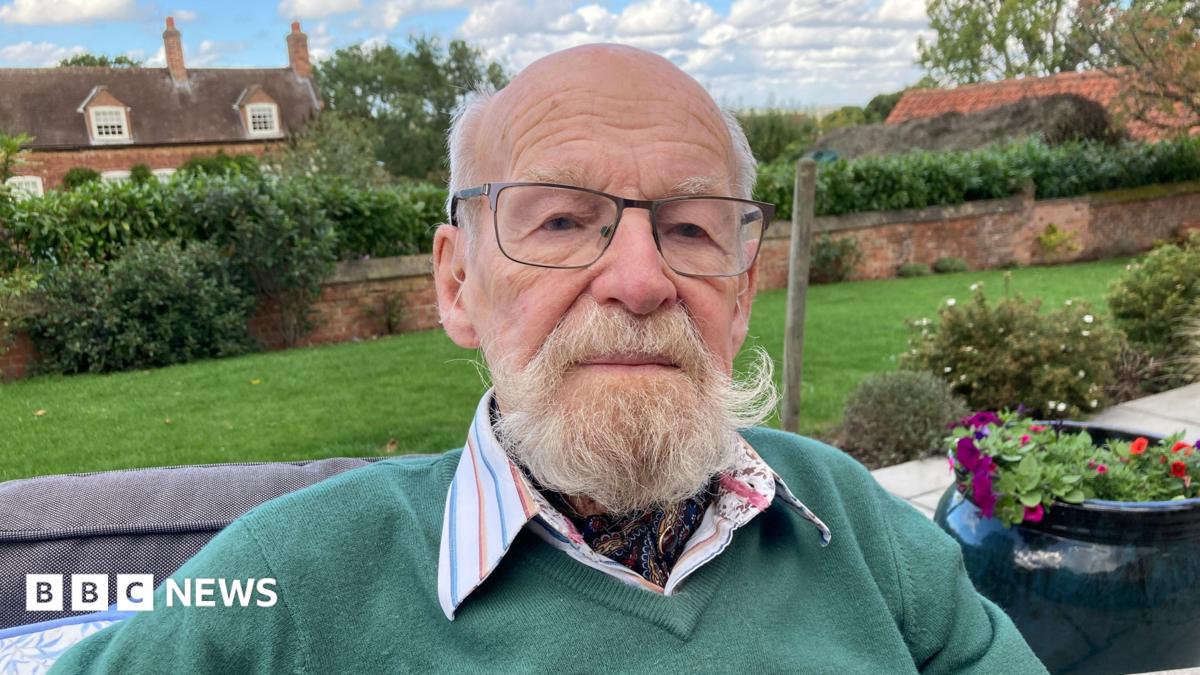
弗雷德·范克曾宣誓保密,但他的破译工作终于得到了认可。艾萨克·阿什·德比·西蒙·沃德,东米德兰兹,2026年10月10日“我的妻子去世了,却从未知道。我从未告诉过任何人。事实上,她一直抱怨——所有你的朋友,当他们来访时,他们都有故事要讲,而你却从不说任何事情。”
Fred Vanke was sworn to secrecy but his work as a codebreaker has finally been recognised Isaac Ashe Derby Simon Ward East Midlands 10 October 2026 "My wife died and didn't know. I never told anybody. In fact, she always complained - all your friends, when they come visit, they all have stories to tell and you never tell anything."
从逃离纳粹入侵他的祖国波兰,到接受特工训练以在敌后工作,再到帮助破译扭转战争局势的密码,弗雷德·范克经历了一段波澜壮阔的二战生涯。
From fleeing the Nazi invasion of his native Poland, to training as an operative to work behind enemy lines, to helping to crack the codes which turned the tide of the conflict, Fred Vanke had an eventful World War Two.
然而,由于保密誓言,他的家人和朋友几乎从未了解到这位103岁老人在盟军战争努力中所扮演的真实角色。
Sworn to secrecy however, his family and friends almost never learned of the true role the 103-year-old played in the Allied war effort.
但对范克生活故事的研究——他目前居住在德比郡的布雷斯顿——为布莱切利公园著名破译者的历史写下了新篇章。
But research into the life story of Vanke, now living in Breaston, Derbyshire, has written a new chapter on the history of Bletchley Park's famed codebreakers.
大约100名居住在英国的波兰人在1940年至1945年间代表布莱切利公园开展工作。
About 100 Poles based in the UK carried out work on behalf of Bletchley Park between 1940 and 1945.
在弗雷德分享了他的故事后,研究为布莱切利公园荣誉名单增添了27名波兰密码破译者和信号情报(SIGINT)人员的名字,而且可能还有更多。
After Fred shared his story, research has added the names of 27 Polish codebreakers and signals intelligence (sigint) to the Bletchley Park Roll of Honour, and more could follow.
这些新增名单代表了近年来对波兰对英国 wartime 密码破解工作的文献记载所作出的最重要扩展之一,帮助历史学家更好地理解英国与波兰流亡政府之间情报合作的规模。
The additions represent one of the most significant expansions of the documented Polish contribution to Britain's wartime codebreaking effort in recent years, helping historians better understand the scale of the intelligence partnership between Britain and the Polish government-in-exile.
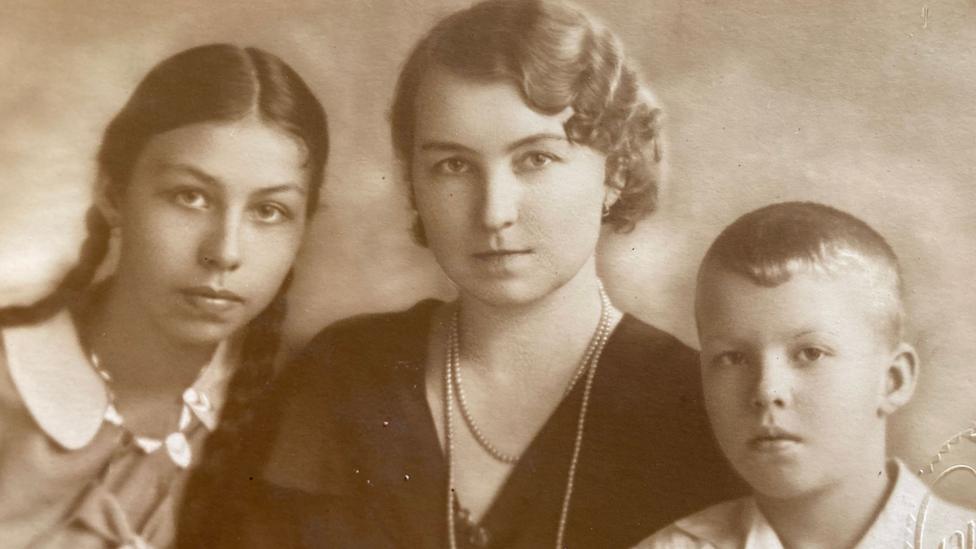
弗雷德在克拉科夫度过了幸福的童年,随后逃离波兰。被认为是这些波兰密码破译者中最后的幸存者,费迪南德·斯坦尼斯瓦夫·范克在克拉科夫长大,但于1939年战争爆发时,年仅16岁便被迫逃离。
Supplied Fred fled Poland after a happy childhood in Krakow Believed to be the last surviving member of these Polish codebreakers, Ferdynand Stanislaw Vanke grew up in Krakow, but fled at the age of 16 when war arrived on his doorstep in 1939.
他说:“我早上醒来时听到飞机声。我跑到窗户前,看到德国人飞过来,但我当时以为是波兰空军在训练。”
He said: "I did wake up in the morning hearing the planes. I ran to the window and I could see Germans coming over but I thought it was Polish Air Force training.
人们尖叫着倒在地上,我们能听到机枪射击声。我父亲冲进来说:“快进地窖,德国人来了。”这就是我的战争开始的方式。弗雷德、他的姐姐和一个朋友乘坐一辆波兰陆军医院的货车向东行驶,前往他们祖父母的家,一路上躲避道路上的纳粹枪击。
"People were screaming and falling to the ground and we could hear machine gun fire. My father burst in and said 'in to the cellar, the Germans are coming'. That's how my war started." Fred, his sister and a friend travelled east in a Polish Army Hospital van, to his grandparents' home, avoiding Nazi gunfire on the roads.
“我能看到来自各地的人们,人山人海,”他说。“当德国人来的时候,我姐姐对我说:‘在货车下面,在货车下面’。那是我第一次看到人们受到如此严重的伤害。”弗雷德和他的父亲一起在中东服役。在他最初的目的地叙利亚因法国的入侵而失陷后,他改道前往英国控制下的巴勒斯坦,在那里加入了新成立的波兰旅——喀尔巴阡步兵旅,与他的父亲并肩作战。“我终于要当兵了,”弗雷德回忆道。
"I could see people coming from all over the place, masses of people," he said. "When Germans would come, my sister said to me 'under the van, under the van'. That's the first time I've seen people being injured to that extent." Fred and his father served together in the Middle East After his initial destination Syria was lost with the invasion of France, he instead made his way to British-controlled Palestine where he joined the newly-formed Polish brigade, the Carpathian Rifle Brigade alongside his father. "I'm going to be a soldier at last," Fred remembers thinking.
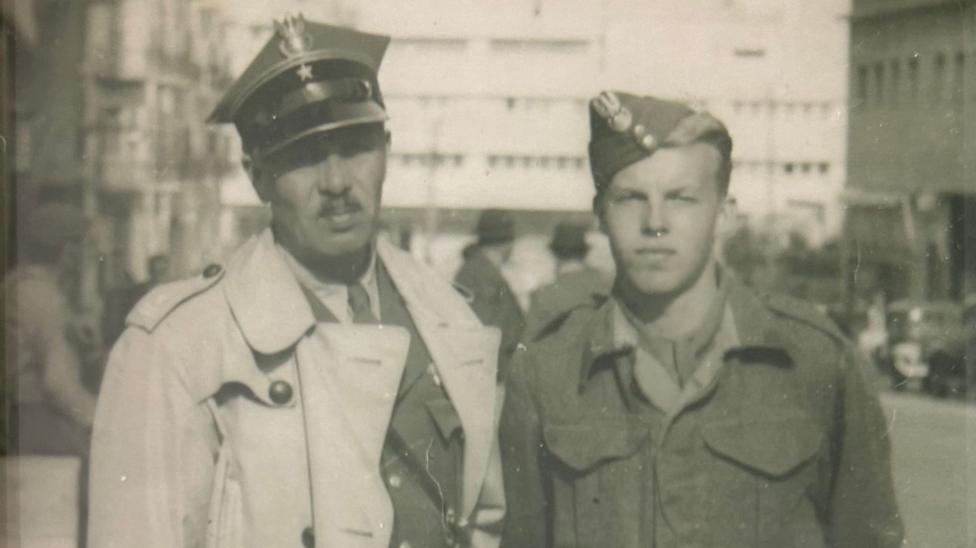
他证明了自己的价值,在特拉维夫完成军官培训后,被派往格拉斯哥加入“沉默无影”部队——一个为占领波兰而训练的波兰特种部队。
He proved his worth and after officer training in Tel Aviv he was sent to Glasgow to join the Cichociemni, a Polish special forces unit trained for occupied Poland.
“在波兰语中,‘沉默无影’意味着黑暗而安静,”他说。“我完成了所有课程,学习如何使用毒药,如何悄无声息地杀人,以及所有这些事情。”
"Cichociemni in Polish means dark and quiet," he said. "I've gone right through the courses, how to use the poison, how to kill people quietly, and all that sort of thing.
“有一天,我的指挥官梅耶上校叫我过去,解释说:‘你还年轻,我有个和你一样大的儿子,你如果自愿跳伞到波兰去,平均只能活四到五个月,然后就完了。我有更好的办法。’”“我当时很沮丧。”
"One day my commanding officer, Colonel Mayer, called me and explained 'you're young, I've got a son like you, you volunteer to be dropped in Poland you will last four or five months on average and that's the end of you. I've got something better'. "I was rather upset."
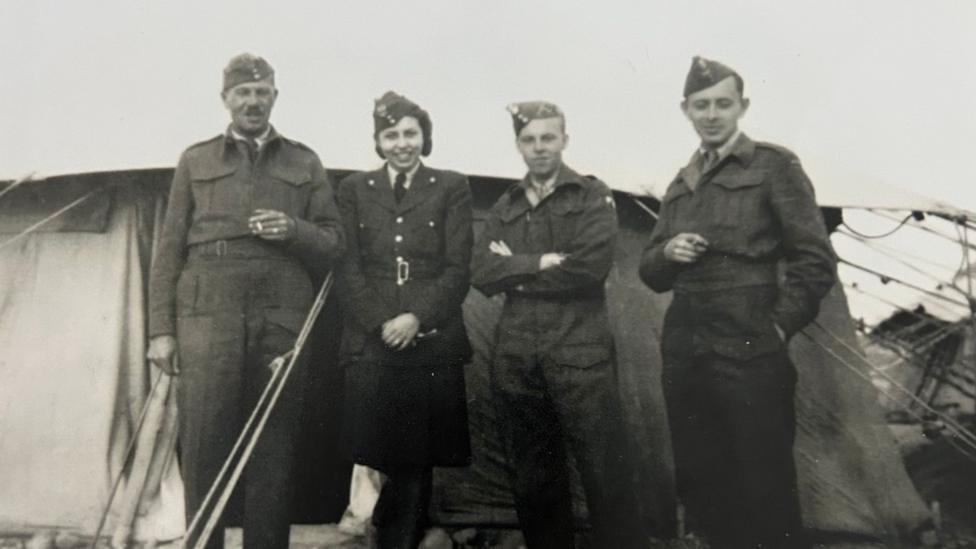
弗雷德在中东服役期间,他的任务出现了意外的转折。相反,一位来自布莱切利公园的上尉来访——当时政府密码与密码学校的总部,即GCHQ的前身,也是盟军破译密码的基地。“他给我们都上了一堂课,并出了一个小谜题,”弗雷德说。在破解第一个谜题后,他又得到了第二个,也成功解开了。“他对我说:‘你拥有很少人具备的天赋,’”弗雷德回忆道。
Fred served in the Middle East before his service took an unexpected turn Instead, a captain visited from Bletchley Park, the then-secret headquarters of the Government Code and Cypher School, the forerunner of GCHQ, and the base for Allied codebreaking. "He gave us all a lecture and a little puzzle," said Fred. After cracking the first, he was given a second which he also deciphered. "He said, 'you've got a gift which very few people have'," Fred recalled.
尽管只有20多岁,比单位里其他人年轻几岁,弗雷德还是被招募在赫梅尔亨普斯特德附近的博克斯莫尔的拱门处工作,这是一个支持布莱切利园的波兰情报信号站。
So despite being in his early 20s, several years younger than anyone else on the unit, Fred was recruited to work at The Arches in Boxmoor, a Polish sigint station near Hemel Hempstead which supported Bletchley Park.
从街上看,拱门处是一栋大而不起眼的房子,但内部却有十几个房间被改造成密码破译者的办公室,花园里则布满了容纳无线电操作员的小屋。
The Arches was from the street a large but unassuming house but inside the building featured more than a dozen rooms turned into offices for codebreakers, and its garden was filled with huts housing radio operators.
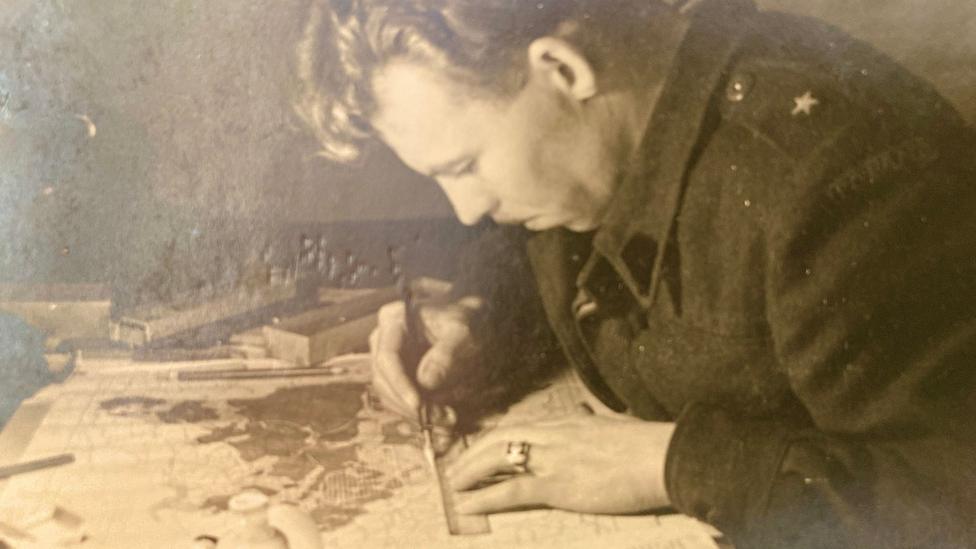
弗雷德是那里几十名波兰密码破译者之一,他将在一个团队中工作,负责监听德军信号并尝试破译。
One of dozens of Polish codebreakers based there, Fred would work in a team listening to German signals and attempting to decode them.
像弗雷德这样的波兰人在布莱切利园的指导下秘密工作。弗雷德说:“你先从简单的事情开始。你必须学习这门语言,了解它是如何构建的,以及它有什么特点,然后基于此进行猜测。”
Poles like Fred worked in secret under the guidance of Bletchley Park Fred said: "You start with the simple things. You've got to learn the language, how it is built, and what is the quirk in that language, and you base your guessing on that.
“我第一次到那里时,根本不认识任何人,感觉有点奇怪,但很快就觉得像度假一样。”然而,在拱门处之外,弗雷德的生活更艰难。
"When I arrived there first, I never knew anybody there, it was a little strange, but very very soon it was like a holiday." However outside of The Arches, life was tougher for Fred.
他说:“赫梅尔亨普斯特德的人们,因为我们穿着波兰的军装,他们会吐你脸上,问为什么你不去和德国人作战。”
He said: "The people in Hemel Hempstead, because we had uniforms with Poland, they spat on you and called 'why don't you eff off to fight Germans instead'.
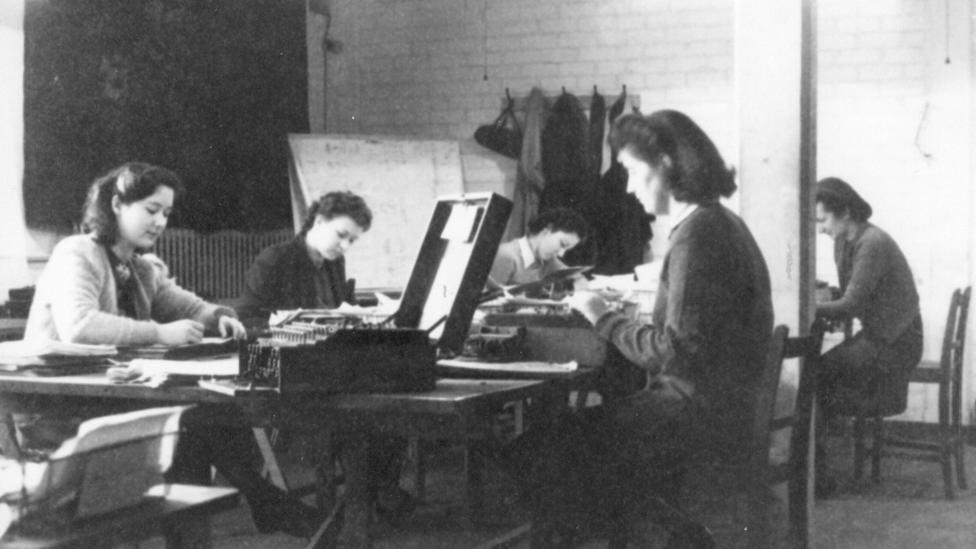
“你不能说出你在做什么,所以这有点让人沮丧。”但弗雷德和他的波兰同胞们在战前和战时所做的工作,对盟军的战争努力至关重要。
"You couldn't say what you're doing, so that was a little bit upsetting." But what Fred and his Polish compatriots were doing, both before the war and during it, was pivotal in the Allied war effort.
(c)皇家布莱切利园是政府密码与密码学校的秘密总部。在这项研究中被确认的人员包括马里安·热耶夫斯基和亨利·齐加尔斯基,他们是三位首先在战前破解德国军方恩尼格玛密码的波兰数学家之一(另一位是杰尔日·罗热茨基),并在逃离被占领的欧洲后继续在英国从事密码破解工作。
(c) Crown Bletchley Park was the secret headquarters of the Government Code and Cypher School Among those identified during the research were Marian Rejewski and Henryk Zygalski, two of the three Polish mathematicians who alongside Jerzy Różycki first broke the German military Enigma cipher before the war, and who continued codebreaking work in Britain after escaping occupied Europe.
1939年,在华沙附近的佩雷会议上,波兰密码学家邀请了法国和英国的同行,包括阿拉斯泰尔·丹尼斯顿和迪利·诺克斯,来分享他们在破解德国恩尼格玛机器密码方面的开创性成功。
At the Pyry Conference near Warsaw in 1939, Polish cryptologists invited French and British counterparts, including Alastair Denniston and Dilly Knox, to share their pioneering success in breaking the German Enigma machine cipher.
大卫·肯尼昂博士,布莱切利公园信托基金的研究历史学家,他调查了弗雷德的故事,他说:“这次会议很重要,因为它为英波合作奠定了基础,并极大地促进了英国随后对恩尼格玛密码的破解。”
Dr David Kenyon, the research historian at Bletchley Park Trust who investigated Fred's story, said: "This meeting was important because it laid the groundwork for partnership between the British and the Polish and significantly helped the subsequent British attack on Enigma."
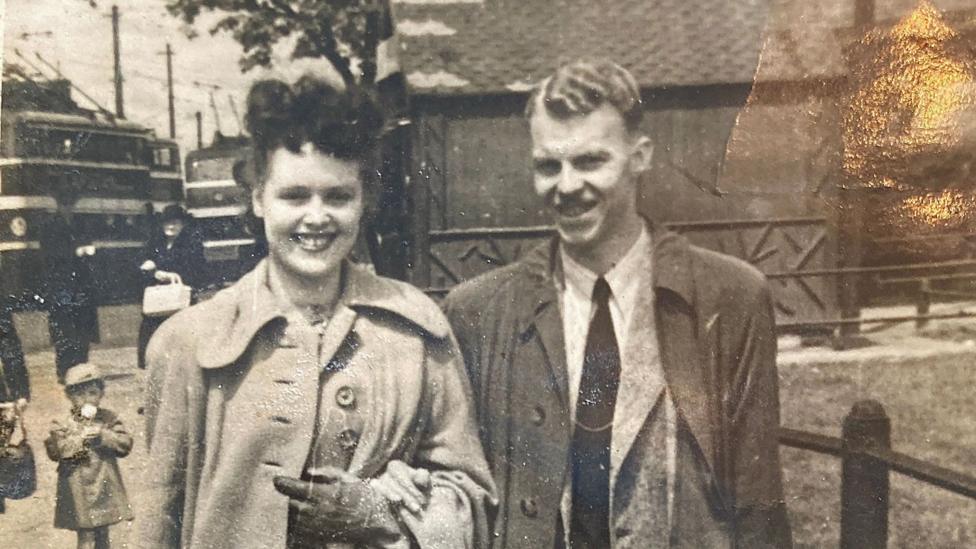
弗雷德说:“当我收到英国政府的来信,表彰我所做的事情时,我非常高兴。但我对齐加尔斯基、雷杰夫斯基和鲁热兹基感到非常自豪——那就是我们三位真正的密码破解者。”弗雷德和帕特里夏在战后于诺丁汉相遇。战后,弗雷德搬到诺丁汉,与一位同样是波兰籍的前伞兵合伙成立了一家摄影公司。正是在这里,他遇到了帕特里夏,他的妻子。
Fred said: "I was very pleased when I received a letter from the British government for what I've done. But I was very proud of Zygalski, Rejewski and Różycki - that's our three real codebreakers." Fred and Patricia met in Nottingham after the war After the war, Fred moved to Nottingham where he started a photography firm with a fellow Polish ex-paratrooper. It was here he met Patricia, his wife.
“我在杰索普斯的一家店里遇到了我的妻子,”他说。“她当时是那里的模特,一旦我看到她,我说:‘这就是我的妻子’。”这对夫妇抚养了三个孩子,一直在一起直到她于1996年去世——但弗雷德从未向她透露自己在战争中的角色。
"I met my wife in Jessops in one of the shops," he said. "She was a model there, once I saw her, I said 'this is my wife'." The couple raised three children, and were together until her death in 1996 - but Fred never told her about his wartime role.
“你被要求保密,所以我一直守口如瓶。”弗雷德如今已年满103岁,他把自己长寿归功于运气、威士忌以及1963年戒烟,并认为自己如今可能是最后一位在世的波兰密码破解者。
"You were sworn not to tell, so I kept that." Having reached the age of 103, Fred puts his long life down to luck, whiskey and stopping smoking in 1963, and believes he must now be the last surviving Polish codebreaker.
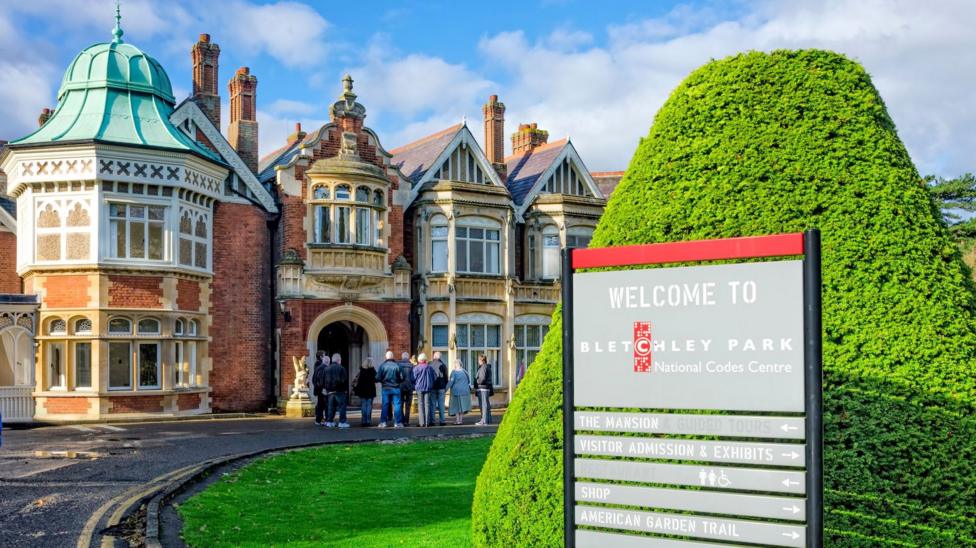
“我肯定是了,我今年103岁半,而且我比其他人年轻两岁,”他说。
"I'm bound to be, I am 103-and-a-half, and I was the youngest by two years," he said.
盖蒂图片社 弗雷德以及其他26名在布莱切利公园服役的波兰人被加入其荣誉名单。肯尼昂说:“由于布莱切利公园工作的保密性,这么多工作在数十年里一直被列为机密——波兰在英国二战密码破解行动中的全部规模仍在被逐步拼凑出来。”
Getty Images Fred and 26 other Poles who served under Bletchley Park have been added to its Roll of Honour Kenyon said: "Due to the secrecy of the work at Bletchley Park, so much of this work remained classified for decades - the full scale of Polish involvement in Britain's WW2 codebreaking effort is still being pieced together.
将这些波兰名字加入我们的荣誉名单,旨在向波兰公民在二战期间更广泛的盟军努力中所作出的贡献致敬,不仅是在前线作战,还包括在布莱切利公园以及其他秘密情报工作中的贡献,这些贡献在过去可能被忽视了。
"Adding these Polish names to our Roll of Honour pays tribute to the contribution made by Polish citizens in the wider Allied effort in WW2, not only on the fighting fronts, but also at Bletchley Park, and in other secret intelligence work, a contribution which may have been overlooked in the past."
波兰驻伦敦大使馆临时代办拉法尔·维斯涅夫斯基表示:“波兰密码学家在二战前及战争期间的工作,对于破解恩尼格玛密码起到了关键作用,并最终促成了盟军的胜利,这有助于拯救无数生命。”
Rafał Wiśniewski, Chargé d'Affaires a.i. at the Embassy of the Republic of Poland in London, said: "The work of Polish cryptologists, well before and during WW2, was instrumental in cracking the Enigma cypher and, ultimately, in the Allied victory, which helped save countless lives.
“证明与布莱切利公园及其他秘密情报工作直接关联的证据确实非常重要,这表明了我们合作的深度,这种合作需要得到认可。”
"The evidence proving direct links to Bletchley Park and other secret intelligence work is truly important and shows the depth of our co-operation, which needs to be recognised."
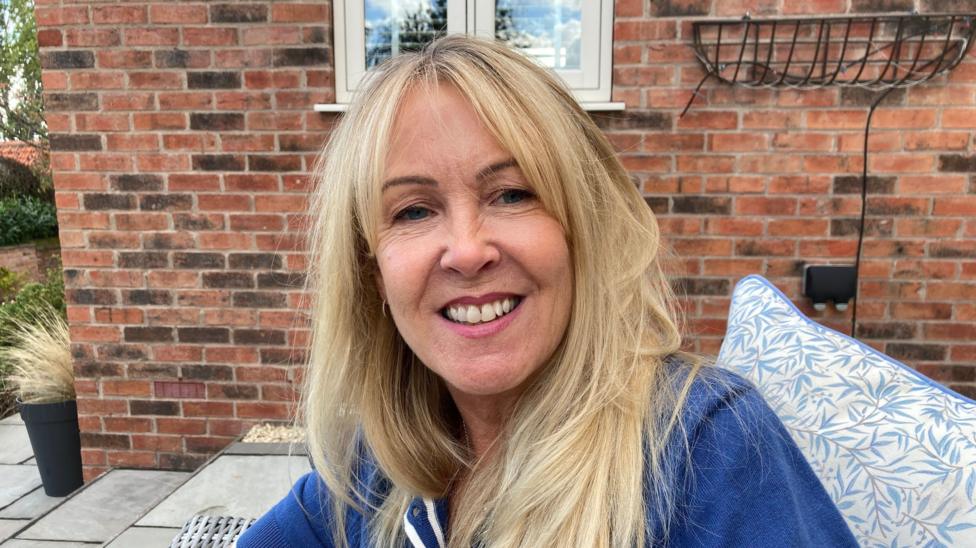
卡罗琳·惠兰表示,她父亲的故事凸显了情报工作的重要性以及它在促进和平中所能发挥的作用。弗雷德的女儿卡罗琳·惠兰,60岁,说:“考虑到父亲经历了非常创伤性的起点,我们过着非常幸福、正常的生活。”
Caroline Whelan said her father's story showed the importance of intelligence and the role it can play in bringing about peace Fred's daughter Caroline Whelan, 60, said: "We've had a very happy, normal life, considering dad had a really traumatic start to his.
“他能够见证如此多人未能见到的承认,这真是令人难以置信的美好,”她说。
"It is unbelievably fantastic that he is able to witness the acknowledgement that so many people haven't been able to," she said.
“他是说起来永远不会让人感到厌倦的人,而且他总有故事可讲。”
"He's one of the people that you never get bored of talking to, and he's always got a story to tell now."