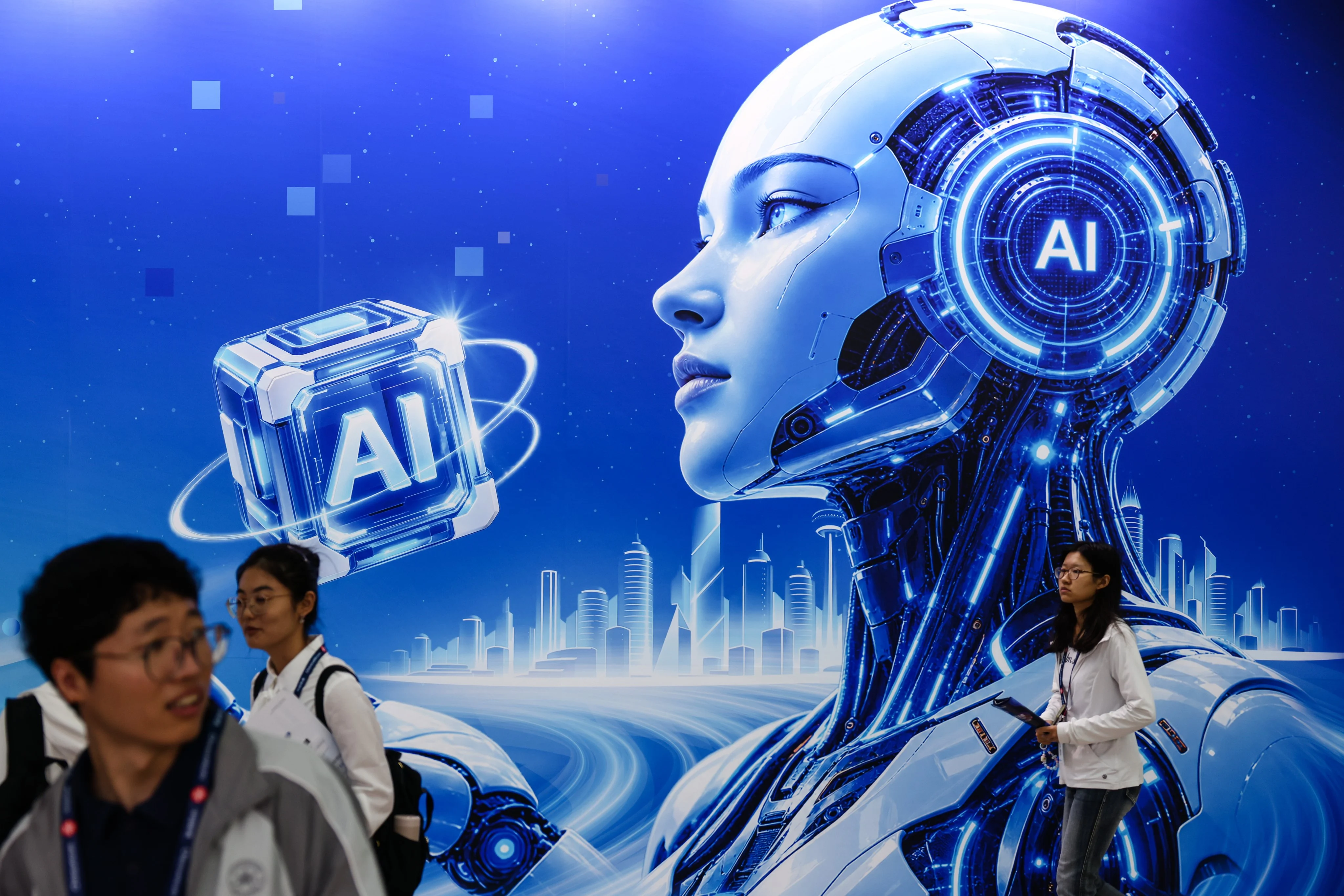
美国总统唐纳德·特朗普希望禁止使用“人工智能”这一术语中的“人工”一词,称这会让世界上最具影响力的技术之一听起来“像假的”。
US President Donald Trump wants to banish the word “artificial” from artificial intelligence, saying it makes one of the world’s most consequential technologies sound “fake”.
然而,横跨太平洋的中国,对这项技术的命名早已有着不同的内涵——它将人类而非人工置于核心位置。
Across the Pacific, however, China’s name for the technology has long carried a different connotation – one that places humans, rather than artificiality, at its centre.
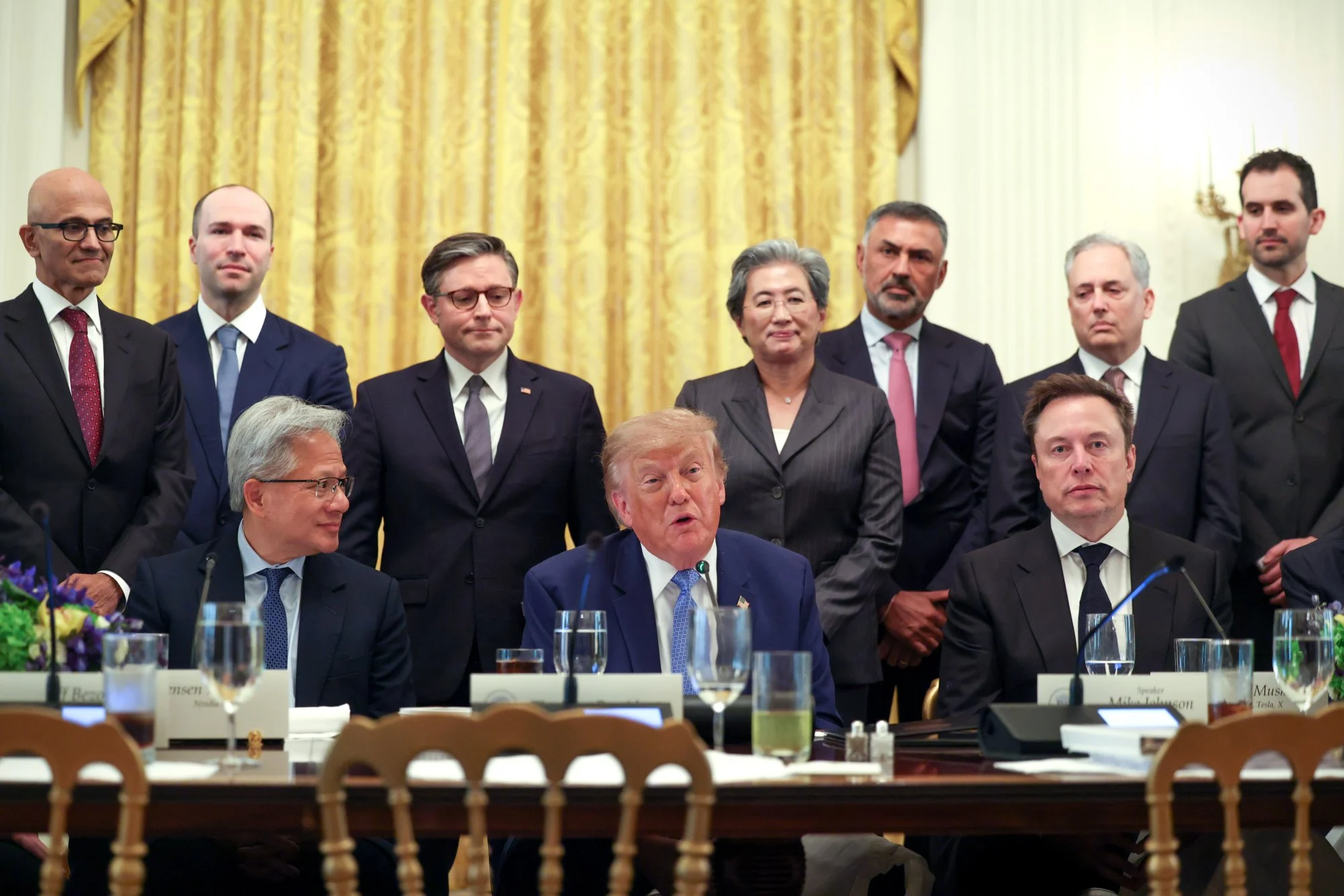
特朗普上周签署了一项行政命令,要求美国联邦机构在官方沟通、网站和政策文件中将“人工智能”(AI)替换为“超级智能”(SI)。
Trump last week signed an executive order directing US federal agencies to replace “artificial intelligence”, or AI, with “Super Intelligence”, or SI, in official communications, websites and policy documents.
白宫表示,这一新术语更能反映该技术快速发展的能力及其“无限机遇”。
The White House said the new terminology better reflected the rapidly advancing capabilities and “limitless opportunities” of the technology.
虽然“人工智能”一词可追溯至1956年——由美国计算机科学家约翰·麦卡锡在达特茅斯学院的一次里程碑式研讨会上首次提出——但其中文对应词的历史则提供了关于人类与智能机器关系的另一种视角。
While the term “artificial intelligence” dates back to 1956 – coined by American computer scientist John McCarthy at a landmark workshop at Dartmouth College – the history of its Chinese counterpart offers a different perspective on the relationship between humans and intelligent machines.
据研究中文AI翻译的奥胡斯大学助理教授 Shuang Frost 称,中国采用的该技术术语源自日语 ,使用了相同的汉字。
China adopted its term for the technology, from the Japanese , which uses the same characters, according to Shuang Frost, an assistant professor at Aarhus University who researches Chinese AI translation.
其中前两个字 ,结合了“人”(human)与“作”(work or labor),而“智”指智能。Frost 表示,因此可直译为“人造智能”。
The first two characters, , combine (human) with (work or labour), while refers to intelligence. Frost said can therefore be translated literally as “human-made intelligence”.
“‘人工’一词可能暗示某种合成或与自然、人类相对立的事物;而明确提醒我们,这种智能是人类劳动的产物,”Frost 对《南华早报》表示。
“‘Artificial’ can suggest something synthetic or opposed to the natural and human; explicitly reminds us that this intelligence is the product of human work,” Frost told the South China Morning Post.
这种区别在AI于20世纪80年代左右在中国成为一门学科时显得尤为重要。Frost 称,早期中国理论家通过马克思主义视角审视这项技术时,认为AI并非一种与人类竞争的“外来智能”,而是一种旨在延伸和转变人类潜能的工具。
That distinction took on particular significance as AI emerged as an academic field in China around 1980. Viewing the technology through a Marxist lens, early Chinese theorists saw AI not as a competing “alien intelligence”, but as a tool built to extend and transform human potential, Frost said.
并非每个中文使用者在使用该术语时都会有意识地想到那段历史,“但人类在语言上比从‘人工智能’中去除人类要困难得多”,她补充道。
While not every Chinese speaker consciously thinks of that history when using the term, “the human is linguistically much harder to remove from than it is from ‘artificial intelligence’”, she added.
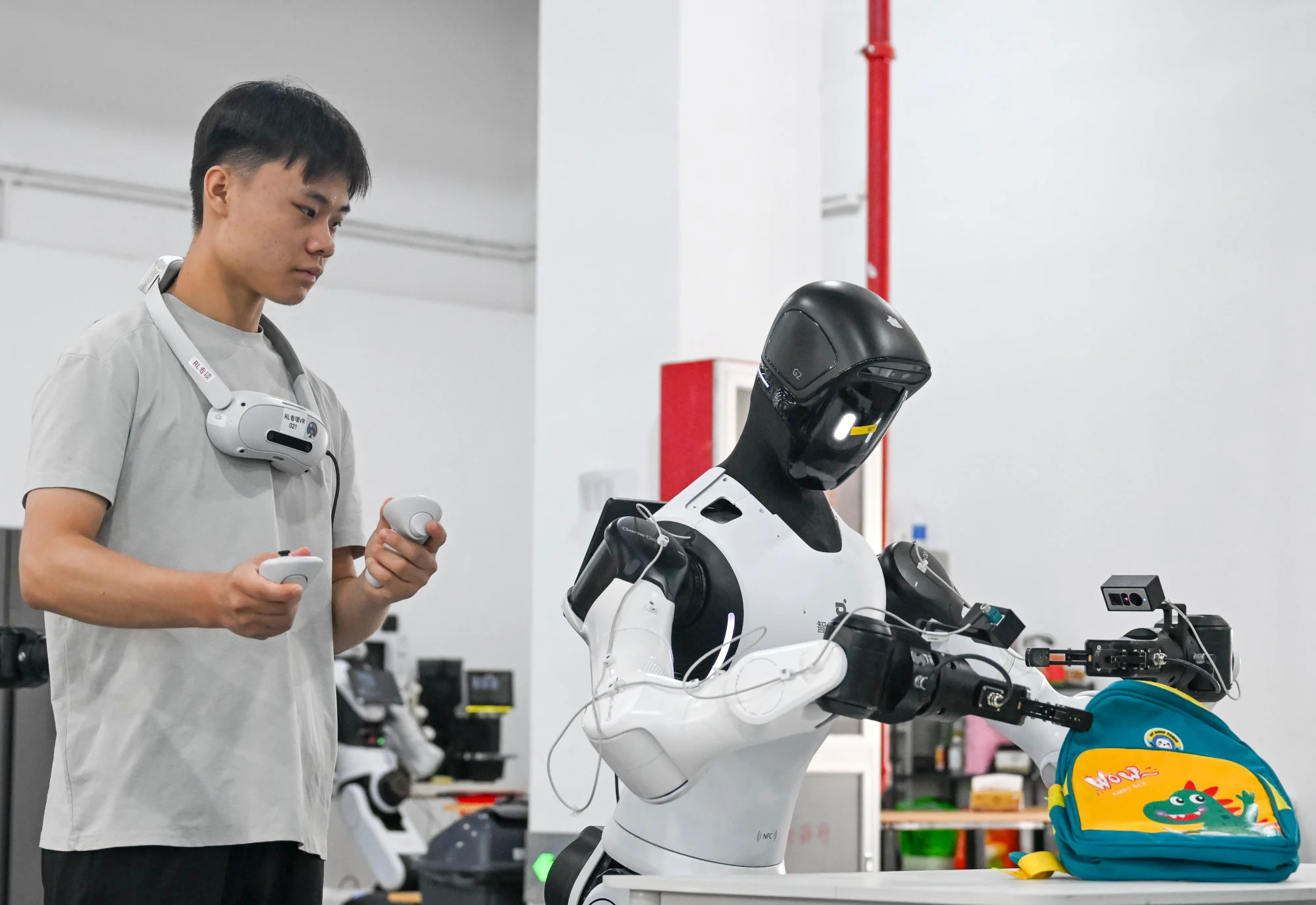
在中国,有一个流行的笑话,认为一些人工智能驱动的产品所包含的——是更多的人力劳动而非智能。这指的是那些历史上一直在标注数据、执行幕后任务以使自动化系统运行的工作者,Frost 在一本追溯中文AI术语历史与翻译的书章节中写道。
In China, there is a running joke that some AI-powered products contain more than – more human labour than intelligence. This refers to the workers who have historically labelled data and performed behind-the-scenes tasks needed to make automated systems work, Frost wrote in a book chapter tracing the history and translation of Chinese AI terminology in .
尽管特朗普采用“超级智能”一词旨在通过强调超越人类智能的能力来提升这项技术,但Frost表示,更强的能力并不自动使中文术语过时。她指出,智能可以变得异常强大,但仍然是“人造的”。中国也曾就该技术的名称展开过自身的辩论。
While Trump’s move to adopt “super intelligence” seeks to elevate the technology by emphasising capabilities beyond human intelligence, Frost said greater capability did not automatically make the Chinese term obsolete. An intelligence could become extraordinarily powerful and still be “human-made”, she noted. China also had its own debate over what to call the technology.
三月份,《人民日报》发表的一篇在线评论认为,无处不在的英文缩写“AI”是描述一种正深度融入日常中国生活的技术的不满意方式。
In March, an online commentary published by People’s Daily argued that the ubiquitous English abbreviation “AI” was an unsatisfying way to describe a technology becoming deeply embedded in everyday Chinese life.
它提出寻找一个更短、更易记的中文替代词来补充正式术语“人工智能”,并举例了诸如“电脑”(“电脑”)和“手机”(“手机”)这样的本土名称。
It proposed finding a shorter, catchier Chinese alternative to complement the formal term , pointing to home-grown names such as (“electric brain”) for computer, and (“hand machine”) for mobile phone.
新加坡国立大学华系副教授赵昊表示,中文方面的辩论围绕“可及性、语言身份和公共传播”展开。
Chao Hao, an associate professor in the department of Chinese Studies at the National University of Singapore, said the Chinese debate centred on “accessibility, linguistic identity and public communication”.
赵昊表示,一个更短的中文标签在保留既定术语“人工智能”的同时可能很有用,他的研究正好位于翻译研究与自然语言处理的交叉点。
A shorter Chinese label could prove useful while preserving the established term , said Chao, whose research lies at the intersection of translation studies and natural language processing.
Frost指出,中美在命名上的辩论在意图上根本不同。虽然特朗普认为AI已经超越了其英文名称,但中文方面的辩论则集中在为何一个英文缩写正在取代一个既有的本土术语。
Frost noted that the US and China naming debates differ fundamentally in intent. While Trump argues AI has outgrown its English name, the Chinese debate centres on why an English abbreviation is replacing an established native term.
然而,不同的术语也不应被视为美国和中国世界观划分清晰的证据,弗罗斯特警告道。中国的技术词汇一直以来都是“高度跨国的”,它通过日本传入,同时也深受西方学术的影响,她说。
Still, the different terms should also not be read as evidence of neatly divided American and Chinese world views, Frost cautioned. Chinese technological vocabulary has always been “profoundly transnational”, arriving via Japan while drawing heavily on Western scholarship, she said.
“概念在传播过程中会发生变化,”弗罗斯特说。“它们不会简单地从一种文化完整地移植到另一种文化中。”不过,它最终可能也会面临自身的概念挑战。
“Concepts change as they travel,” Frost said. “They are not simply imported intact from one culture into another.”Still, could eventually face a conceptual challenge of its own.
随着人工智能系统在训练和升级后续模型中发挥越来越大的作用——这一过程被称为递归自我改进(RSI)——人类可能会越来越远离机器智能的直接生产,弗罗斯特说。
As AI systems take on a greater role in training and upgrading subsequent models – a process known as recursive self-improvement (RSI) – humans could become increasingly distanced from the direct production of machine intelligence, Frost said.
这引发了一个根本性的问题:一个系统必须保持多少“人工制造”的特征,才能被正当地称为?
That raises a fundamental question: how “human-made” must a system remain to justify being called ?
“具有讽刺意味的是,其未来的困难可能并非源于人工智能变得过于智能以至于无法被称为,而是因为它变得越来越不明显——越来越不明显地是人类制造的产物,”弗罗斯特说。在这种情况下,语言可能会再次适应。
“Ironically, its future difficulty may arise not because AI becomes too intelligent to be called , but because it becomes less visibly – less visibly the product of human making,” Frost said. In that scenario, language may adapt once again.
“也许可以在特定能力类别和特定情境下补充它,”赵说,她指的是——即中文中“超”的术语。由崇明李撰写
“Perhaps could supplement it for a specific capability category and in specific contexts,” Chao said, referring to – the Chinese term for “super”.