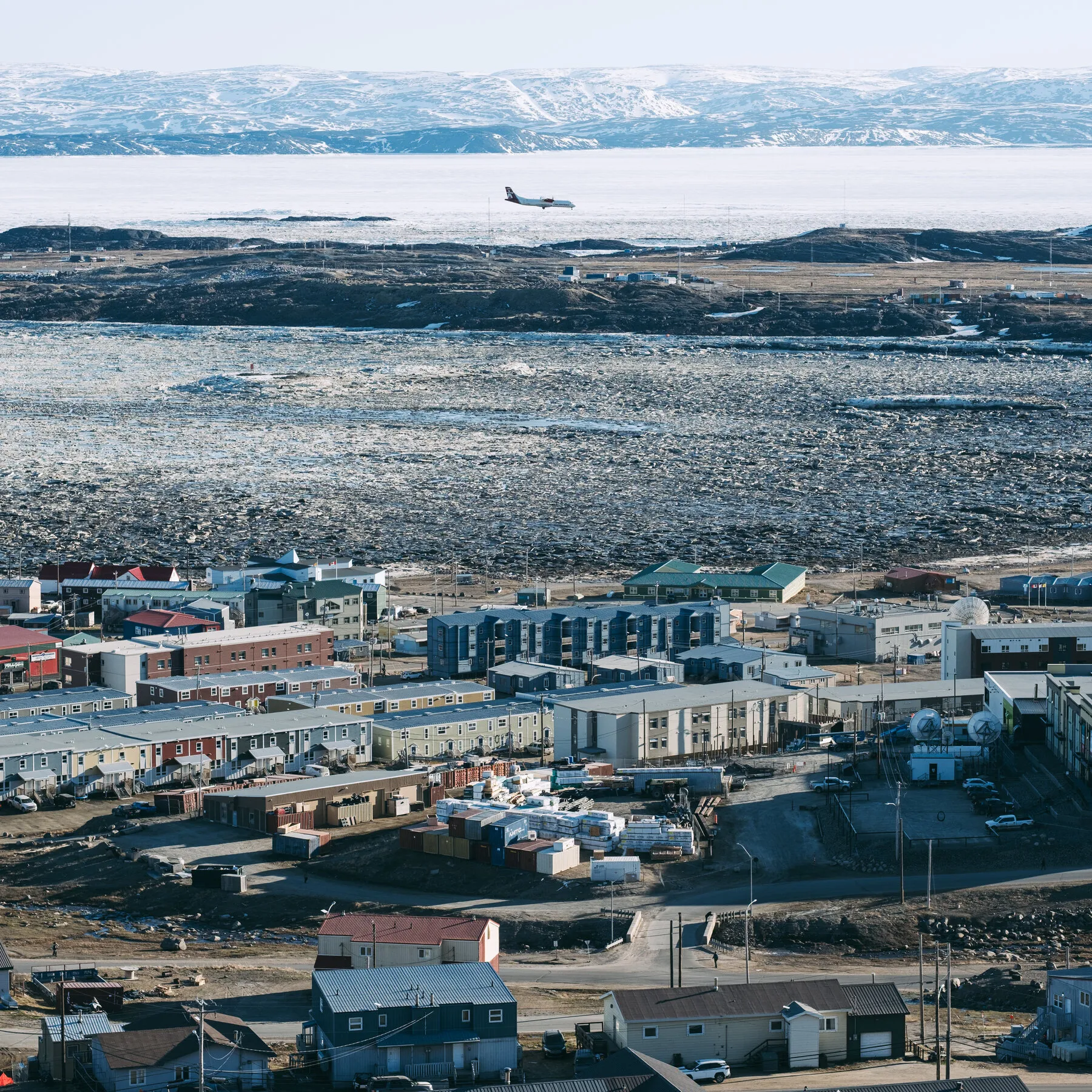
路易丝·弗拉赫蒂在加拿大最北部的一个无树北极小村庄长大,那里的季节不是由落叶或花蕾标志的,而是由冬季的极夜和夏季的午夜太阳决定的。然而,她小时候阅读政府提供的教材时,想象着自己的世界完全不同。
Louise Flaherty grew up in a treeless Arctic hamlet so far north in Canada that seasons were marked not by falling leaves or budding flowers, but by the polar night in winter and the midnight sun in summer. Yet reading government-supplied textbooks as a child, she imagined her world quite differently.
“我记得在家里画自己作为一个金发孩子,蓝眼睛,站在苹果树旁的图画,”现在57岁的因纽特女子弗拉赫蒂女士说。“我的文化在我们学校阅读的文学作品中是不可见的,我们的语言也是不可见的。”弗拉赫蒂女士改变了这一点。二十年前,她帮助在伊魁特建立了因纽特媒体出版社——这是加拿大北极地区唯一的城市。因纽特媒体的目录现在包括了一代人的故事,这些故事由因纽特作者用英语和因纽特语写成——这对一个拥有丰富口头传统但没有书面传统的民族来说是一场革命。
“I remember drawing pictures at home of myself as a blond kid, with blue eyes, next to an apple tree,” said Ms. Flaherty, an Inuit woman who is now 57. “My culture wasn’t visible, our language was not visible, in the literature that we were reading in school.’’ Ms. Flaherty changed that. Twenty years ago, she helped establish Inhabit Media a publishing house in Iqaluit, the only city in the Canadian Arctic. Inhabit’s catalog now includes a generation’s worth of stories written by Inuit authors in English and the Inuit language — a revolution for a people with a rich oral tradition but not a written one.
路易丝·弗拉赫蒂帮助建立了因纽特媒体出版社,该出版社位于伊魁特,这是加拿大北极地区唯一的城市。
Louise Flaherty helped establish Inhabit Media, a publishing house based in Iqaluit, the only city in the Canadian Arctic.
因纽特媒体的成立及其后来扩展到电影和电视领域,反映了因纽特人——加拿大北极地区的原住民——在三代人中经历的惊天动地的文化变迁。弗拉赫蒂女士的祖父母过着游牧生活;她父母那一代出生时是游牧民,却被加拿大政府迫定居并送入寄宿学校。弗拉赫蒂女士那一代开始在因纽特人的条件下与外部世界打交道。
Inhabit’s birth and eventual expansion into film and television reflects the head-spinning cultural change experienced over three generations by the Inuit, the Indigenous inhabitants of Canada’s Arctic. Ms. Flaherty’s grandparents led nomadic lives; members of her parents’ generation, born nomads, were forced into settlements and residential schools by the Canadian government. Ms. Flaherty’s generation began dealing with the outside world on the Inuit’s own terms.
“在转眼之间,我们从石器时代跨入了太空时代,”弗拉赫蒂女士在伊魁特的因纽特媒体办公室说。“我们必须如此快速地适应。”也许没有哪里比伊魁特更能体现这种适应的尝试既激烈又复杂了,伊魁特于1999年被选为新成立的因纽特领地努纳武特的首都。此后,来自加拿大北极各地小村庄的因纽特人纷纷涌入伊魁特,这既推动了他们传统的复兴,也催生了年轻作家和艺术家的崛起。自1999年成为努纳武特地区首府以来,该城市迅速扩张。
“In the blink of an eye, we went from stone age to space age,” Ms. Flaherty said at Inhabit’s office in Iqaluit. “We had to adapt so fast.’’ Perhaps nowhere is that attempt to adapt more intense and complicated than in Iqaluit, which was selected in 1999 as the capital of the newly created Inuit territory of Nunavut. Inuit from hamlets across Canada’s Arctic have since gravitated to Iqaluit, fueling the revival of their traditions and also the emergence of young writers and artists. Since becoming the capital of Nunavut in 1999 the city has expanded rapidly.
伊卡尔维特的百货公司和杂货店正在进行扩建,以适应城市的快速增长。
Iqaluit’s department and grocery store is undergoing an expansion to accommodate the growing city.
与此同时,伊卡尔维特的城市化生活方式——日常交通拥堵、超市扩张、来自加拿大南部的非因纽特人在其8300名居民中日益增多,甚至还有初具规模的公交系统——正在将因纽特人从他们与土地的传统联系中拉离。许多人来到伊卡尔维特时使用不同的方言,最终改用英语。
At the same time, Iqaluit’s urban-like lifestyle — daily traffic jams, an expanding supermarket, a growing presence of non-Inuit from southern Canada among its 8,300 residents, even an incipient bus system— has pulled Inuit away from their traditional connection to the land. Many arrive in Iqaluit with different dialects and end up speaking English instead.
因纽特语使用减少以及传统知识的流失引发了关于因纽特身份的深刻问题。
The diminishing use of the Inuit language and of traditional knowledge has raised profound questions about Inuit identity.
“我有多少是因纽特人?”22岁的塞玛·罗米托-卡卢克说,她在伊卡尔维特和多伦多长大,不会说因纽特语。“你会因为不知道它而感到羞愧。”作为画家和电影制作人,罗米托-卡卢克在一部题为《Isunngannguaq》的短片动画中探讨了这一问题,讲述了一位年轻女孩变身为北极海鸟,并在两种身份之间挣扎的故事。
“How Inuk am I?” said Saima Romito-Kalluk, 22, who grew up in Iqaluit and Toronto and does not speak the Inuit language. “You feel embarrassed not to know it.”A painter and filmmaker, Ms. Romito-Kalluk explored that question in a short animated film, “Isunngannguaq” about a young girl who transforms into an Arctic seabird and is torn between her two identities.
塞玛·罗米托-卡卢克,一位因纽特画家和插画师,在伊卡尔维特的家中。
Saima Romito-Kalluk, an Inuk painter and illustrator, at her home in Iqaluit.
“这部作品基于我曾曾祖父创作的一首歌曲,我在制作影片时学会了它,”她说,并指出这种联系之所以特别强烈,是因为她以他的名字命名,遵循了因纽特人以亲戚名字为孩子命名的传统。
“It’s based on a song my great-grandfather wrote, which I learned while making the film,” she said, noting that the connection felt especially strong because she was his namesake, following an Inuit tradition of naming children after relatives.
卡西迪-安·内茨尔通过版画和刺绣探索她的身份,主题围绕家庭生活。她从一个小型因纽特社区搬到伊卡尔维特,就在上小学时开始主要说英语。她于2018年离开前往新斯科舍省读大学,但三年后返回伊卡尔维特,专注于她的艺术创作——并反思自己在世界中的位置。
Cassidy-Ann Netser explores her identity through printmaking and embroidery about home life. She moved from a small Inuit community to Iqaluit in primary school and began speaking mostly English. She left for university in Nova Scotia in 2018 but returned to Iqaluit three years later to focus on her art — and to reflect on her place in the world.
不久之后,她创作了一幅版画:一名男子在独木舟中持桨,身离水面——这是她第一次划独木舟后的作品。
Shortly after, she made a print of a man in a kayak holding a paddle — out of the water — after her first kayak trip.
“我当时正试图弄清楚自己在西方世界中的位置,同时也在我的文化和家乡中的位置,”她谈到这件作品时说,她将其命名为《连结》。来自伊魁特的因纽特艺术家卡西迪-安·内特尔通过版画和刺绣探索身份,主题围绕家庭。
“That was me trying to figure out both my place in the Western world but also in my culture and my hometown,” she said of the piece, which she titled “Connected.”Cassidy-Ann Netser, an Inuk artist in Iqaluit, explores her identity through printmaking and embroidery on family themes.
这种对身份的探索在很大程度上源于加拿大政府政策的遗产。数十年来,因纽特儿童被从家庭中分离出来,送往遥远的寄宿学校,在那里他们被劝阻不要说自己的语言,并被迫在文化上同化。政府官员在许多社区屠杀因纽特雪橇犬,以此强化将因纽特人迁往永久定居点的努力。
This search for identity is, in large part, the legacy of Canadian government policy. For decades, Inuit children were separated from their families and sent to distant residential schools, where they were discouraged from speaking their language and pressured to assimilate culturally. Government officials slaughtered Inuit sled dogs in many communities, reinforcing efforts to force Inuit into permanent settlements.
到20世纪70年代,大多数因纽特人居住在设有学校的村落。但教材几乎没有反映他们的文化或语言。社区开始要求改变。
By the 1970s, most Inuit lived in hamlets with schools. But schoolbooks offered little reflecting their culture or language. Communities began demanding change.
“我记得小时候读过学校董事会的通讯,那些通讯是用英语和因纽特语手写的,”努纳武特政府教育副部长丽贝卡·海努(50岁)说。
“I remember growing up reading school board newsletters that were handwritten in English and Inuktitut,” said Rebecca Hainnu, 50, the deputy minister of education for the government of Nunavut.
雪地摩托和船只散落在伊魁特弗罗比舍湾的海冰上。因纽特人与土地有着悠久的传统联系。
Snowmobiles and boats scattered across the sea ice of Frobisher Bay in Iqaluit. The Inuit have a long, traditional connection to the land.
努纳武特政府办公楼以传统因纽特雪橇“qamutiq”命名,位于伊魁特。近年来,来自加拿大北极各地村落的因纽特人纷纷迁往该市。
The government of Nunavut offices, named for the qamutiq, the traditional Inuit sled, in Iqaluit. Inuit from hamlets across Canada’s Arctic have gravitated to the city in recent years.
在20世纪80年代,她家乡——一个名叫克莱德河的村落——的父母对因纽特语未在学校教授感到不满。
In the 1980s, parents in her hometown, a hamlet called Clyde River, were unhappy that the Inuit language was not taught in schools.
“整个社区的人都走进学校,把所有学生接出来,进行抗议,”海努女士说。官员最终妥协,开设了一门每周30分钟、用当地因纽特语教授的宗教课程。
“The entire community came into the school, picked up all the school students, and took them out in protest,” Ms. Hainnu said. Officials relented by creating a weekly 30-minute religion class taught in the local Inuit language.
到2000年代初,在伊卡luit,随着教师在学校系统中晋升,第一批因纽特人校长之一开始融入传统,例如让学生在学校体育馆观看海豹宰杀。因纽特人开始对自己的习俗和语言感到自豪,而非羞耻,正如搬到伊卡luit的知名作家、电影制片人和演员维尼·卡雷塔克所说,他20多岁时于2002年搬到了那里。
By the early 2000s in Iqaluit, as teachers rose in the school system, one of the first Inuit principals began incorporating traditions, like having students watch the butchering of a seal in the school gymnasium. Instead of shame, Inuit began feeling pride in their customs and language, said Vinnie Karetak, a well-known writer, filmmaker and actor who moved to Iqaluit in 2002 in his 20s.
“这也延伸到了其他方面,比如戏剧、电视和电影,”卡雷塔克先生说,他主演了《北方之北》(North of North),这是一部在伊卡luit拍摄、并由该市演员参与的电视喜剧系列。该系列由Netflix和加拿大广播公司融资,并与原住民人民电视网合作,聚焦于一位现代因纽特女性在失败婚姻后试图重建生活,同时在传统与语言中寻找方向。该剧今年秋天回归第二季。
“That carried over to other stuff, like theater, television and film,” said Mr. Karetak, who stars in “North of North,” a television comedy series that is filmed in Iqaluit and features actors from the city. The series — financed by Netflix and the Canadian Broadcasting Corporation, in partnership with the Aboriginal Peoples Television Network — focuses on a modern Inuit woman trying to rebuild her life after a failed marriage while navigating traditions and language. It returned for its second season this fall.
维尼·卡雷塔克,作家、电影制片人和演员,主演《北方之北》,这是一部关于加拿大北极生活的成功电视喜剧系列。
Vinnie Karetak, a writer, filmmaker and actor who stars in “North of North,” a successful television comedy series about life in the Canadian Arctic.
传统的复兴也塑造了出版业。因哈比特媒体(Inhabit Media)的最初目标是将因纽特人口头传统以书面形式保存下来。
The revival of traditions also shaped publishing. Inhabit Media’s original goal was to preserve Inuit oral tradition in written form.
“每当一位长者离世,那就相当于整座图书馆或整本百科全书就此消失了,”弗拉赫蒂女士说。“因此,努力捕捉他们的故事变得非常重要。”因哈比特媒体的作家们不仅停留在保存层面,还开始创作新故事和重塑旧故事。詹姆斯·富尼埃(Jamesie Fournier)成长过程中,母亲讲给他听的都是传统因纽特故事;他的母亲出生于冰屋,曾被送入寄宿学校,后来担任翻译。现年42岁的富尼埃先生尤其被恐怖故事吸引,并已在多本恐怖小说中重新诠释了这些故事。
“Every time an elder passes away, that’s a whole library or a whole encyclopedia that just disappeared,” Ms. Flaherty said. “So trying to capture their stories was very important.”Writers at Inhabit moved beyond preservation to creating new stories and reinventing old ones. Jamesie Fournier grew up on traditional Inuit stories told by his mother, who was born in an igloo, sent to residential school and later worked as an interpreter. Mr. Fournier, 42, was especially drawn to macabre tales, which he has since reinterpreted in several books of horror.
詹姆斯·富尼埃,因哈比特媒体的作者,成长过程中母亲讲给他听的都是传统因纽特故事。
Jamesie Fournier, an author with Inhabit Media, grew up on traditional Inuit stories told to him by his mother.
“他们来自我们的文化,我们需要能够重新讲述这些故事,”富尼埃先生说。“当我和孩子们一起工作时,我会告诉他们,这些故事现在属于你们。你们可以随心所欲地处理它们。”富尼埃先生最近在伊卡尔维特帮助主持了一场写作工作坊,面向该地区各村庄的年轻因纽特人。兰迪·安吉利尔克,20岁,来自伊格卢利克,位于北极圈以北约200英里处。
“They’re stories from our culture, which we need to be able to retell,” Mr. Fournier said. “When I work with kids, I tell them that those stories are now yours. You can do whatever you want with them.”Mr. Fournier recently helped lead a writing workshop in Iqaluit for young Inuit from hamlets across the region. Randy Angilirq, 20, came from Igloolik, about 200 miles above the Arctic Circle.
他从早期青少年时期就开始写作,将因纽特神话与他最喜欢的电视剧《重力落差》所启发的故事融合在一起。如今,他想要写一个关于乌鸦的因纽特传说的现代重述,尽管他知道他村庄的一些长者认为这些故事应保持不变。
He began writing in his early teens, blending Inuit myths with stories inspired by his favorite TV show, Disney’s “Gravity Falls.”He now wants to write a modern retelling of an Inuit legend about a raven, though he knows some elders in his hamlet believe such stories should remain unchanged.
兰迪·安吉利尔克从早期青少年时期就开始写作,将因纽特神话与他最喜欢的电视剧《重力落差》所启发的故事融合在一起。“我有点紧张想要尝试发表这样的故事,因为长者们可能会有什么看法,”安吉利尔克先生说。
Randy Angilirq began writing in his early teens, blending Inuit myths with stories inspired by his favorite TV show, Disney’s “Gravity Falls.”“I’m kind of nervous to try to publish a story like that because of what the elders might say,’’ Mr. Angilirq said.
这种担忧在伊卡尔维特并不那么突出,伊卡尔维特已经成为因纽特传统复兴与重塑的熔炉。
That concern is less pronounced in Iqaluit, which has become a crucible for the revival and reinvention of Inuit traditions.
一部2010年的纪录片,讲述因纽特女性面部纹身的实践——这一做法曾被基督教传教士禁止——帮助在因纽特社区中点燃了其复兴。该纪录片的制作人阿莉西亚·阿纳克巴-巴里尔帮助创作了《北方之北》。阿什利·罗斯·阿卢鲁特-巴格比在伊卡尔维特手工施加传统因纽特纹身。
A 2010 documentary about facial tattooing among Inuit women — a practice that was once banned by Christian missionaries — helped sparked its revival across Inuit communities. The filmmaker behind it, Alethea Arnaquq-Baril, helped create “North of North.”Ashley Rose Allurut-Bugbee applies a traditional Inuit tattoo by hand in Iqaluit.
伊卡尔维特中央的纳萨苏克小学。到1970年代,该地区的因纽特学校仍然提供很少反映其文化或语言的材料。
Nakasuk Elementary School in central Iqaluit. By the 1970s, Inuit schools across the region still offered little material reflecting their culture or language.
“我真正喜欢如今的系列剧或电影的是,它们展示了因纽特人处于现代环境中——我们真实的样子——而不是把我们定格在过去的时空里,”伊皮克索特·弗里森说,她曾主演2024年HBO犯罪剧《真探》的季度,同时也从事动画、插画和传统纹身工作。
“What I really love about series or films nowadays is that they show Inuit in a modern setting — who we are — that doesn’t freeze us in a time space of the past,’’ said Ippiksaut Friesen, who starred in the 2024 season of the HBO crime series “True Detective” and also works in animation, illustration and traditional tattooing.
只有搬到伊卡尔维特后,埃里卡·贾克,24岁,才开始寻找她的因纽特身份。
Only after moving to Iqaluit could Erica Jacque, 24, begin searching for her Inuit identity.
杰奎女士在四年前从她的家乡搬来后学习了纹身和其他因纽特传统,她的家乡是纽芬兰和拉布拉多省因纽特地区的一个只有几百人的社区——波斯特维尔。
Ms. Jacque learned tattooing and other Inuit traditions after moving four years ago from her hometown, Postville, a community of a couple hundred people in the Inuit region of Newfoundland and Labrador.
“在这里做艺术时,人们会非常信任你,让你自由发挥自己的想法,”杰奎女士在俯瞰伊卡尔维特市中心的家庭工作室里说。“这里真的很适合创作艺术。”石堆在伊卡尔维特传统上被称为因努克苏伊(inuksuit)。因努克苏伊可以作为方向指示物,也可以出现在努纳武特地区的旗帜上。
“People trust you a lot to just do your own thing when it comes to art here,” Ms. Jacque said in her home studio overlooking downtown Iqaluit. “It’s really good here for art.”Stone cairns are traditionally known as inuksuit in Iqaluit. Inuksuit, which serve as directional pointers, can also be found on the flag of Nunavut.