安第斯火烈鸟。阿塔卡马盐湖的三种特有火烈鸟物种都在减少。在阿塔卡马沙漠,锂的开采——对应对气候危机至关重要——伴随着日益升高的社会和环境成本。高海拔沙漠高原横跨阿根廷、玻利维亚和智利。我站在智利一侧,坐在一辆吉普车里,与另外两位研究员一起。下午的空气稀薄而清爽,但阳光刺眼——这种组合我很熟悉,因为多年来我一直生活和旅行在南美洲的安第斯山脉。
Andean flamingos. All three of the Atacama salt flats’ endemic flamingo species are in decline. In the Atacama desert, the extraction of lithium – so crucial to addressing the climate crisis – comes with escalating social and environmental costs high-altitude desert plateau traverses Argentina, Bolivia and Chile I am on the Chilean side, sitting in a Jeep along with two other researchers. The afternoon air is thin and brisk but the sun is piercing – a combination I am familiar with from years of living and travelling in South America’s Andean range.
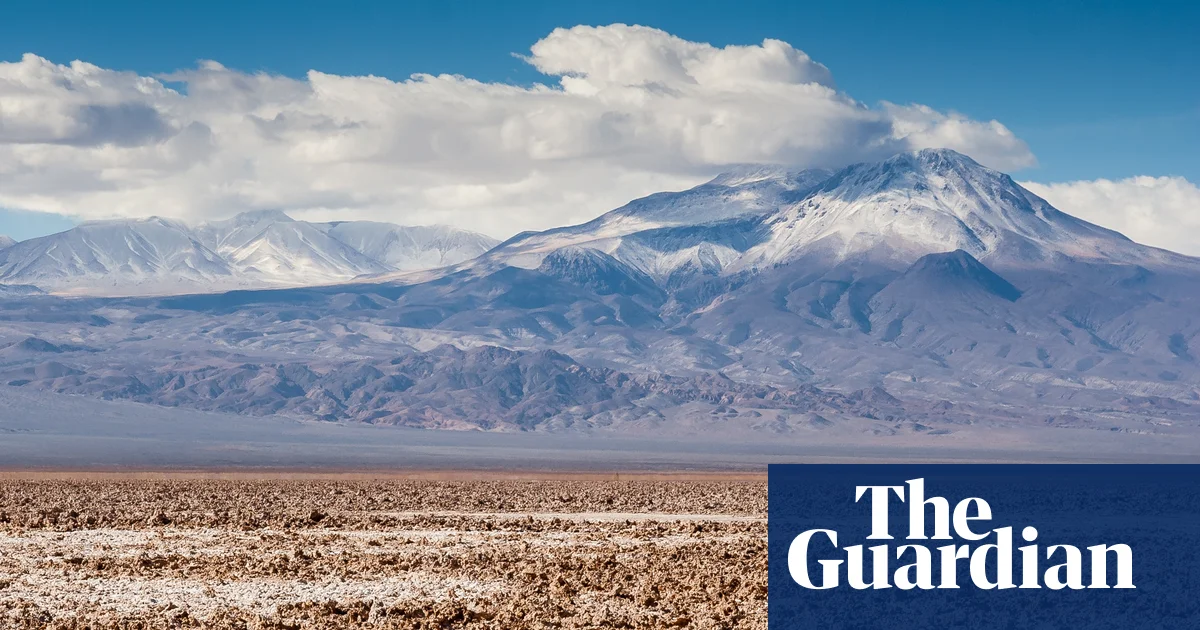
这片景观是对比与轮廓的研究:广阔的盆地突然被 sweeping 曲线切断;广阔的平坦地带被近乎垂直的上升切割。利坎卡布尔火山在我们头顶高耸。随着海拔升高,植被和湿度水平迅速变化,带来更低的温度、更潮湿的空气和更密集的植被。
The landscape is a study in contrasts and contours: broad basins suddenly cut off by sweeping curves; flat expanses sliced by near vertical ascents. The Licancabur volcano looms large above us. Vegetation and humidity levels change rapidly with the rising altitude, bringing cooler temperatures, wetter air and denser plant life.
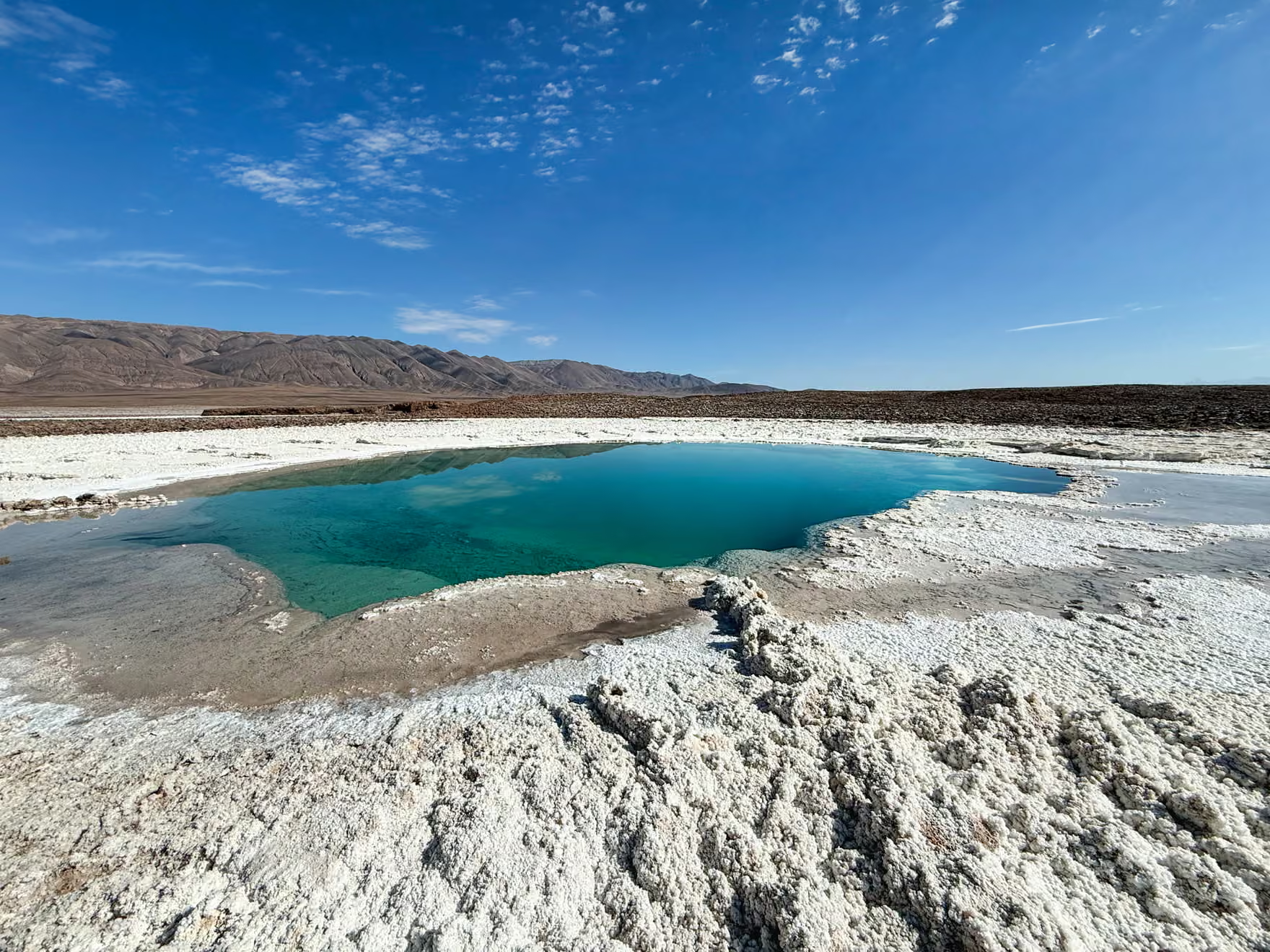
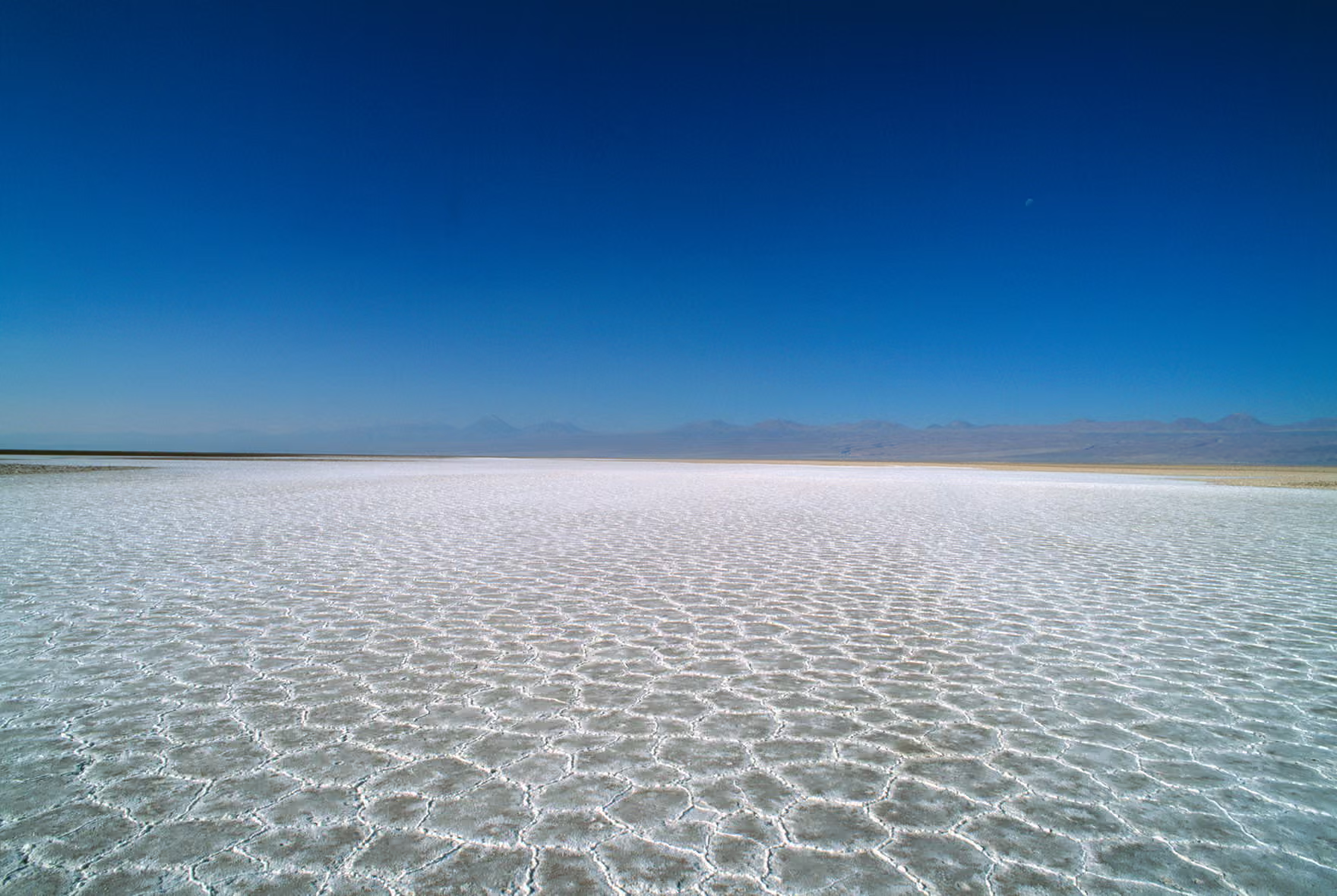
我们正前往阿塔卡马盐湖——即萨拉尔-德-阿塔卡马,这是北智利几十个盐湖中最大的,也是世界第三大的盐湖。这片耀眼的白色平原位于海拔7500英尺的高盆地内,东侧被更高的安第斯山脉环绕,西侧被多梅科山脉环绕。阿塔卡马沙漠的巴尔蒂纳切湖。
We are driving to the Salar de Atacama the Atacama salt flats – the largest of several dozen salt flats in northern Chile, and the third largest in the world. The brilliant white flat lies in a high basin 7,500ft above sea level, enclosed by the even higher Andean mountains to the east and the Domeyko mountains to the west. Lagunas Baltinache in the Atacama desert.
这一引人注目的景观——盐湖、火烈鸟以及邻近的原住民社区——正面临着一个反直觉的威胁:我们为拯救地球免受灾难性气候变化所做的努力。就在我的脚下,几乎四分之一的世界锂储量悬浮在比海水还咸的水中。
This striking landscape the salt flat, the flamingos, and the neighbouring Indigenous communities is under threat from a counterintuitive source: our efforts to save the planet from catastrophic climate change. Just beneath my feet is nearly one-quarter of the world’s lithium reserves, suspended in water saltier than the ocean.
锂是应对气候危机的关键。它是可充电电池的关键成分,这些电池在消除交通和能源领域的碳排放中发挥着主导作用——这两个领域是排放最高的两个行业。但开采这种锂将伴随着日益升高的社会和环境成本。正是这个困境把我带到了这个盐湖。
Lithium is essential to addressing the climate crisis. It is a key ingredient in the rechargeable batteries that play a starring role in eliminating carbon emissions from transportation and energy – the two highest emitting sectors. But extracting this lithium will come at escalating social and environmental costs. It is this dilemma that has brought me to the salt flat.
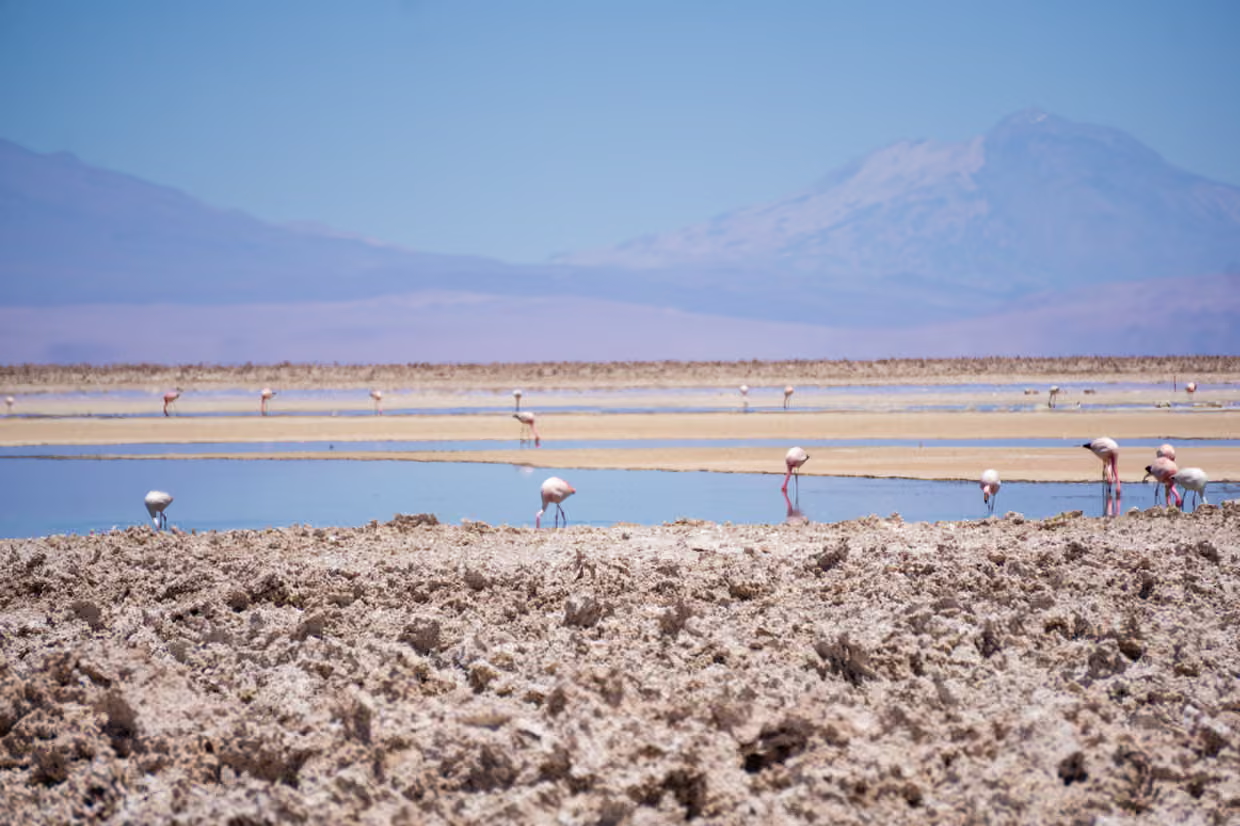
当阿塔卡马沙漠下雨时,洪水的强度难以言喻。我曾亲身经历过所谓的“玻利维亚冬季”(invierno boliviano),这是一个悖论性的名称,指的是一种发生在南半球夏季的天气现象。这些雨锋起源于亚马逊地区,沿着安第斯山脉的陡峭山坡向上移动,随后玻利维亚的高海拔风将它们推上山脊,直至其洪流浸湿了智利的高原。阿塔卡马沙漠拉古纳查沙的火烈鸟。
When it does rain in the Atacama, it’s hard to overstate the intensity of the floods. I once found myself caught in what is called invierno boliviano or Bolivian winter, a paradoxical name for a weather phenomenon that occurs during the southern hemisphere’s summer months. These rainy fronts originate in the Amazon and travel up the steep slopes of the Andean mountains, where Bolivia’s high-altitude winds then drive them up and over the ridges, until their torrents drench the Chilean high plateau. Flamingos in Laguna Chaxa in the Atacama desert.
像阿塔卡马这样的闭流盆地在科学上被称为“内流盆地”(endorheic,词源为“内部”和“流动”),因为水可以流入阿塔卡马盆地,但无法流出——除非通过蒸发。而这正是阿塔卡马卓越锂卤水的关键。
The scientific term for closed basins like the Atacama is “endorheic” (etymologically, “inside” and “flow”), for water can flow down into the Atacama basin but it cannot leave – except by evaporation. And this is the key to Atacama’s extraordinary lithium brine.
在我经历的那场暴雨之后,水倾泻而下,沿着周围的山脉流淌;在暴雨之间的长期干旱期间,水从珍贵的山泉沿着山谷缓缓渗下。随着水流的进行,它会从火山岩中浸出锂,吸附风吹来的锂尘,并将其带至盐湖的中心——即盐湖的核心区域。这种汇聚的地表水只能通过蒸发才能离开,而每蒸发一滴水,剩余卤水中的锂浓度就会增加。如果没有阿塔卡马沙漠极端干燥和烈日炙烤带来的 extraordinarily 高蒸发率,锂浓度就不会达到采矿公司所珍视的“经济可行”水平。
After deluges like the one I experienced, water pours down the surrounding mountains; during the long dry spells between storms, it trickles down ravines from the precious mountain springs. As it flows, the water leeches lithium from the volcanic rock, picks up wind-scoured lithium dust, and carries it down to the nucleus, or centre, of the salar This pooled surface water can only escape through evaporation, and with every drop of water that evaporates, the concentration of lithium in the remaining brine increases. Without the parched and sun-blasted Atacama’s extraordinarily high evaporation rate, lithium concentrations would not reach the “economical” levels prized by mining companies.
然而,进一步的锂富集过程是在看不见的地方进行的。剩余的水逐渐渗入地下,形成富含锂的卤水地下水库。这些水库与复杂的热液系统相连。随后,岩浆的热量——尤其是安第斯山脉活跃断层带附近的岩浆——驱动地下卤水通过裂隙和多孔地质层进行循环,进一步从地下岩石中溶解出更多的锂。
Yet further lithium enrichment takes place out of sight. Remaining water gradually seeps into the ground, creating underground wells of lithium-rich brine. These wells are linked to complex hydrothermal systems. Then the heat of magma, especially near the Andes’ active fault lines, drives circulations of subsurface brine through fissures and porous geological strata, dissolving even more lithium out of the subsurface rock.
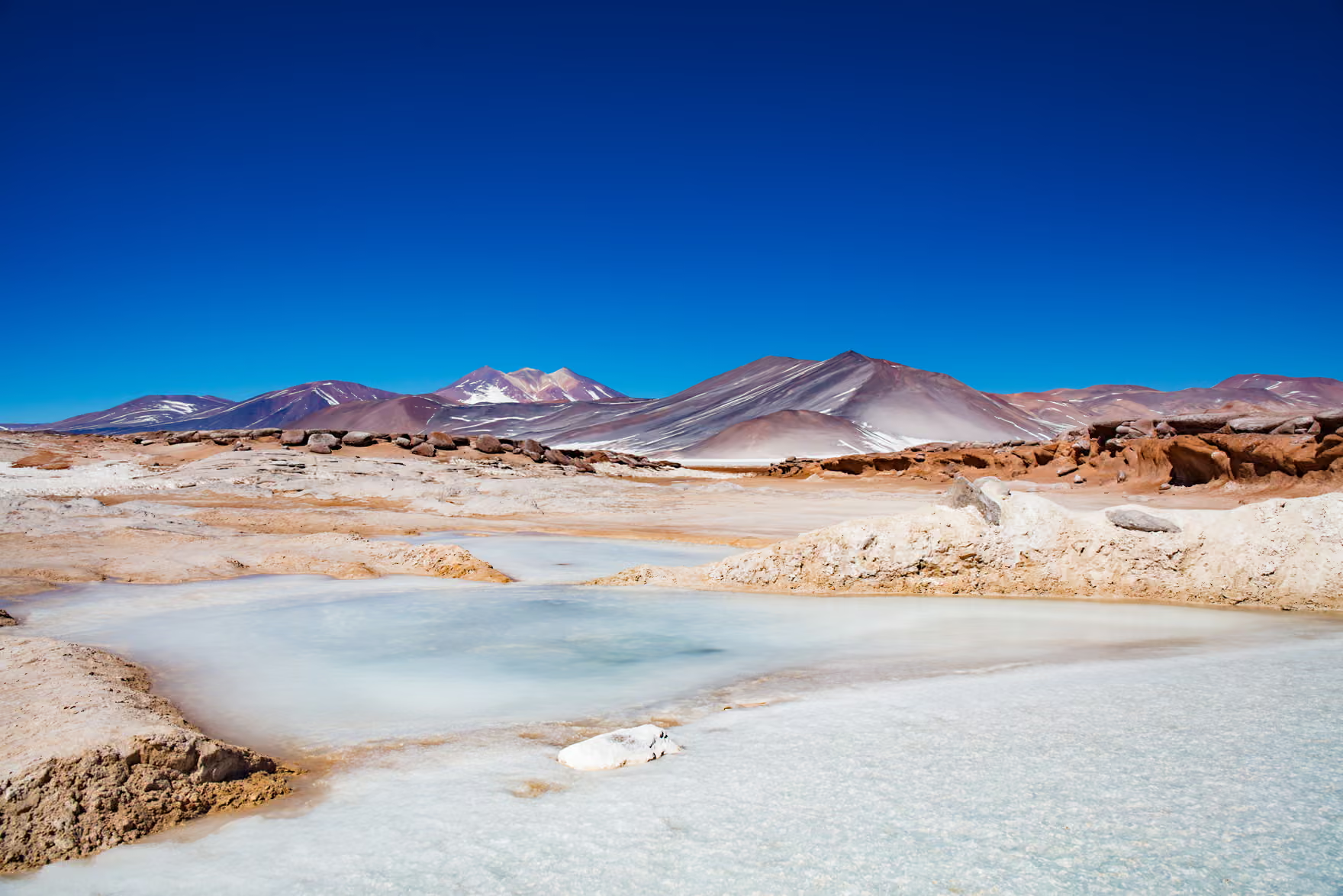
皮德拉斯罗哈斯,即红色岩石,位于阿塔卡马沙漠。摄影:大畑达也/Getty Images/iStockphoto 形成的盐水沉积物分布在阿塔卡马盐壳以下四至200英尺处,代表着对企业而言的潜在巨大利润。阿塔卡马独特的气候、地质、地热和水文条件的巧合,使其成为地球上开采锂成本最低的地区之一。
The Piedras Rojas, or red rocks, of the Atacama desert Photograph: Tatsuya Ohinata/Getty Images/iStockphoto The resulting brine deposits anywhere from four to 200 feet below the Atacama’s salty crust represent a potential bonanza to corporations. The Atacama’s singular coincidence of climactic, geological, geothermal and hydrological conditions makes it one of the least expensive places on Earth to mine lithium.
而且在每一步骤中,“采矿水”的过程与最初形成这些宝贵沉积物的环境条件息息相关:矿工们将地下盐水抽到地表的广大蒸发池中,在那里,自然蒸发进一步浓缩盐水,使其锂含量提高40倍,从大约0.15%增加到惊人的6%。一个循环过程可能需要10到24个月,具体取决于盐水质量和天气条件。
And at each step, the process of “mining water” is intimately related to the very environmental conditions that formed the valuable deposits in the first place: miners pump the underground brine to vast evaporation ponds on the surface, where natural evaporation concentrates the brine yet again, increasing its lithium levels 40-fold, from approximately 0.15% to a whopping 6%. One cycle of the process can take 10 to 24 months, depending on brine quality and weather conditions.
但这种相对低成本、低技术且所谓低影响的开采过程,仍然威胁到称阿塔卡马沙漠为家的物种和社区。它也是一个微观缩影:绿色资本主义扩张的开采前沿。无论何处开采矿山以提供能源转型所需的原材料,全球气候行动总会与当地环境保护发生冲突。阿塔卡马盐湖的广阔。
But this relatively low-cost, low-tech and supposedly low-impact extractive process nonetheless imperils the species and communities that call the Atacama desert home. And it is a microcosm of a planetary phenomenon: the expanding extractive frontiers of green capitalism. Everywhere that mines are dug up to provide raw materials for the energy transition, global climate action comes into conflict with local environmental protection. The expanse of the Atacama salt flat.
采矿总是以许多方式改变其发生的景观,而且这种改变往往是不可逆转的。在以采矿资本的形象重塑地球的过程中,通过物理和化学手段将被视为有价值的物质与常常具有毒性的废物分离,采矿唤起了科幻小说中如此核心的“改造地球”意象。
Mining always transforms, in many ways irrevocably, the landscapes in which it occurs. In remaking the earth in the image of extractive capital, physically and chemically separating what is deemed valuable from often toxic waste, mining evokes the image of terraforming so central to science fiction.
但如果改造行星的目标是让一颗无生命的星球变得像地球一样绿意盎然,那么采矿则恰恰相反,它常常使地球本身的部分地区变得无法居住。虽然肉眼可见的采矿对环境的影响不像山顶剥离那样明显,但提取富锂的卤水实际上确实威胁着一个脆弱的沙漠水系统,以及依赖它的生态系统和人类。
But if terraforming is supposed to make a lifeless planet as verdant as Earth, mining, to the contrary, often leaves parts of Earth itself uninhabitable. While the environmental impacts of mining brine are less obvious to the naked eye than, say, mountaintop removal, extracting the lithium-rich liquid does in fact threaten a fragile, desert water system, along with the ecosystems and people that depend on it.
世界上最古老、最干旱的沙漠可能看起来毫无生机。生态学家称其为“多极端”环境,这是因为其高海拔和强烈的直接太阳辐射、极端干旱、巨大的昼夜温差以及密集的咸水湖。研究这类多极端环境的人有时将其描述为低多样性,生命网络相对简单;有时则惊叹于其生物多样性。这完全取决于视角。植物和动物已经进化,能够在更少且更咸的水中生存,最重要的是,能够利用 relentless 阳光的丰富能量。极端环境刺激了自然的创造力。
The world’s oldest, driest desert may appear bereft of life. Ecologists call it a “polyextreme” environment, given its altitude and high direct solar radiation, its intense aridity, its huge diurnal temperature swings and its densely saline lakes. Those who study such polyextreme environments alternately describe them as low-diversity, with relatively simple webs of life, or astonishing in their biodiversity. It all depends on perspective. Plants and animals have evolved to make do with less and saltier water and, above all, the abundant energy of relentless sun. Extremity stimulates nature’s creativity.
盐虾,或称卤虫,能够在对大多数物种来说 intolerable 的高盐湖中繁衍生息。这些微小的生物是高原食物链中的关键节点。盐虾以细菌和浮游植物(微小植物)为食,而它们又是智利火烈鸟的食物。火烈鸟也适应了咸水湖泊的环境,它们的喙进化出了一种类似牡蛎或鲸鱼层状膜的过滤装置,用来从卤水中过滤出微小的植物和动物。
Artemia, or brine shrimp, thrive in hypersaline lakes that would be intolerable to most species. These tiny creatures are a key node in the plateau’s food chain. The brine shrimp eat bacteria and phytoplankton (microscopic plants) and are, in turn, food for Chilean flamingos. The flamingos, too, have adapted to the saline lagoons, evolving a filter in their bills akin to the lamellar membranes of oysters or whales to strain the microscopic plants and animals from the brine.
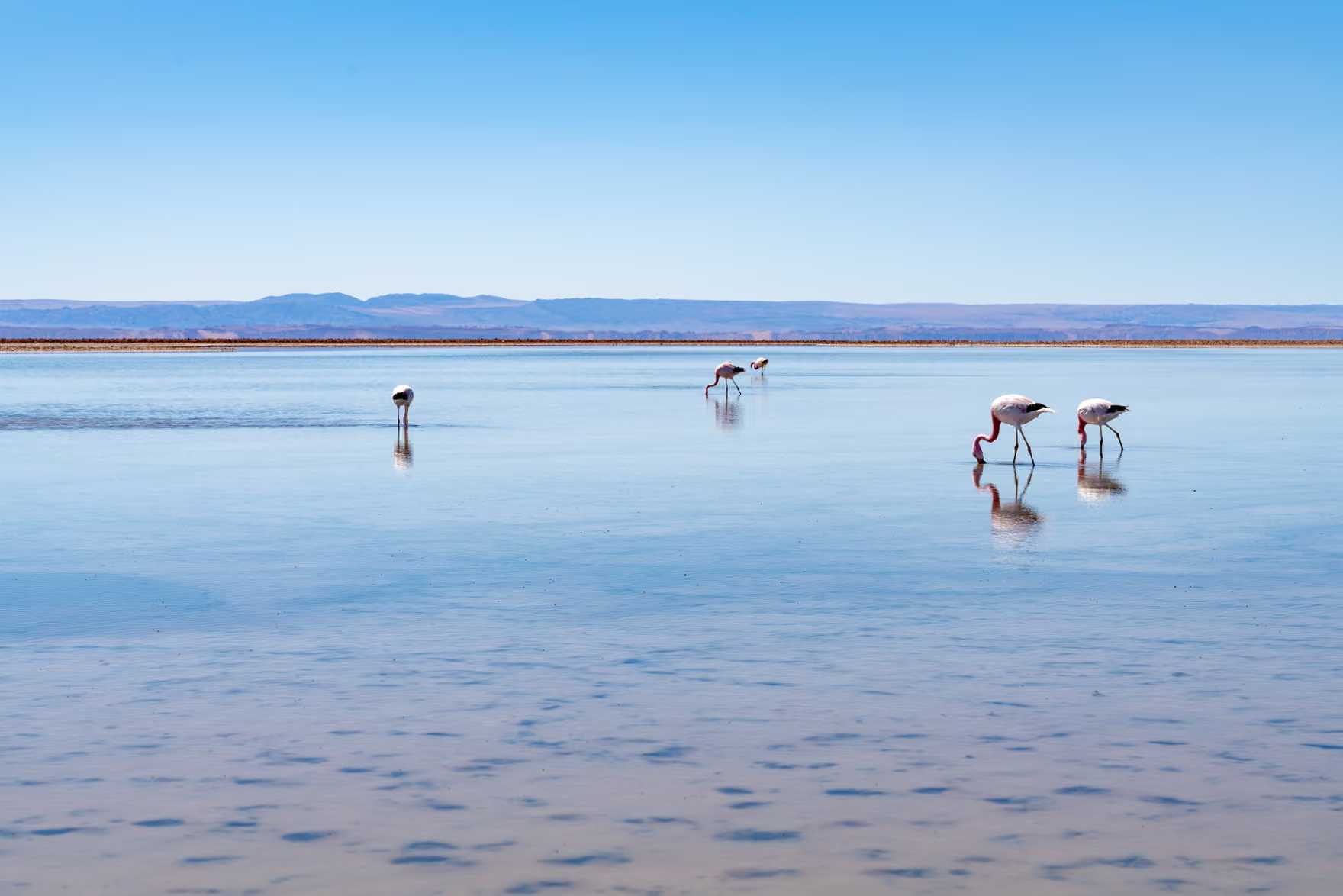
火烈鸟是湿地健康状况的晴雨表。随着这些鸟类在盐 flats 上寻找食物和伴侣(通过同步跳舞的求爱仪式吸引伴侣),它们将咸水湖串联成一个栖息网络。而随着这些栖息地的恶化,火烈鸟种群也随之减少:阿塔卡马盐 flats 上的三种特有火烈鸟物种都在减少。
The flamingos are a barometer of wetland health. As the birds travel the salt flats in search of food and mates (attracted through a courtship ritual of synchronised dancing), they link together the saline lakes into a web of habitats. And as these habitats suffer, so do flamingo populations: all three of the Atacama salt flats’ endemic flamingo species are in decline.
这些导致人口损失的不同因素揭示了困扰这一脆弱环境的复合性危害。由于气候变化导致的平均气温升高,使地表水蒸发得更快,减少了火烈鸟赖以生存的蓝绿藻。而采矿作业带来的噪音和交通似乎直接干扰了火烈鸟的繁殖。
The distinct drivers of this population loss reveal the compounding harms afflicting this fragile environment. Warmer average temperatures due to climate change evaporate surface water faster, reducing the blue-green algae essential to flamingo and diets. And the noise and traffic associated with mining operations appear to directly disrupt the flamingos’ breeding.
研究人员正努力预测正在改变阿塔卡马的多重过程的总体方向。科学只能事后诸葛亮,在危害已经发生很久之后才记录其影响。锂的开采对维持其生态系统的液体资源构成威胁,这是一场缓慢进行的灾难,具有行星层面的原因和后果。这一事实引发了对地球零碳未来的生存性思考。
Researchers are struggling to predict the overall direction of the multiple processes changing the Atacama. Science can only play catchup, documenting the impacts long after the harm has occurred. Lithium extraction’s threat to the liquid supporting its ecosystem is a slow-motion disaster, with planetary causes and consequences. This fact raises existential questions for the planet’s zero-carbon future.
在阿塔卡马,全球供应链与当地食物链交织,经济生产的网络削弱了生命的网络,殖民主义和后殖民时期的国家建设抹去了原住民连续定居的古老历史。而这些意外的交织仅仅是故事的开始。比我当初踏上阿塔卡马盐湖那天所能想象的更多方面,这个开采前线正成为通往我们星球未来的门户。
In the Atacama, global supply chains intersect with local food chains, webs of economic production undermine webs of life, and colonisation and postcolonial state-building erase ancient histories of continuous Indigenous settlement. And these unexpected entanglements are just the beginning of the story. In more ways than I could have imagined when I first stepped foot on the Atacama salt flat on that blustery day, this extractive frontier is a portal into our planetary future.
实现全球公正的能源转型任务艰巨,但它是可能的。实现它需要从我们生产和消费的东西出发,逆向理解供应链,追溯到其物质输入,进而追溯到对新开采前线的 relentless 争夺。促进汽车替代品、减少蔓延、鼓励使用更紧凑电池以及要求回收的政策,都将降低实现无碳交通所需的采矿规模。
The task of achieving a globally just energy transition is daunting. But it is possible. Achieving it requires understanding supply chains in reverse, starting from what we produce and consume and working backwards to their material inputs and, further still, to the relentless scramble for new extractive frontiers. Policies that promote alternatives to car use, reduce sprawl, encourage more compact batteries and require recycling would all reduce the scale of mining needed for carbon-free transportation.
我们可以首先要求供应链围绕着它所触及的每个人的正义来组织,而不是仅为少数人谋取利润。正如任何工作场所既是剥削的场所,也是工人力量的中心,任何矿山既是资源开采的场所,也可能成为社区抵抗的场景一样,绿色技术的供应链既是统治的手段——对人和自然的统治——也是重塑世界的肥沃土壤。
We can start by demanding supply chains organised around justice for everyone they touch, rather than profits for just a few. Just as any workplace is simultaneously a site of exploitation and locus of worker power, and any mine is at once a setting for extraction and a potential scene of community resistance, the supply chains of green technologies are both a means of domination – of people and of nature – and fertile ground for making the world anew.
这是《绿色资本主义的前沿:开采》一书的节选,作者为Thea Riofrancos,由Icon Books在英国出版,售价20英镑。为支持《卫报》,请订购您的副本,可能产生送货费用。
This is an edited extract from Extraction: The Frontiers of Green Capitalism by Thea Riofrancos, published by Icon Books at £20 in the UK. To support the Guardian, order your copy Delivery charges may apply.